

Written By: Jeffrey Atlas, Health Content Writer
Medically Reviewed By: Dr. Gopal Grandhige, MD, FACS, Board-Certified Surgeon
Last Reviewed: April 4, 2026
A hiatal hernia flare-up occurs when stomach acid backs up into the esophagus, causing burning chest pain and an acidic taste in the mouth. While many people with small hiatal hernias never experience symptoms, those who do often find that certain everyday habits, like lying down after meals, overeating, or wearing tight clothing, can trigger uncomfortable episodes.
Understanding what sparks these flare-ups is the key to managing them. Below, we’ll walk through the six most common triggers and practical ways to avoid them so you can reduce symptoms and improve your daily comfort.
Flare-Up Trigger #1: Lying Down After Eating
One of the most frequent culprits is consuming food later in the evening and then reclining. Or perhaps eating earlier but still deciding to stretch out afterward, especially after a large meal when fatigue sets in and the couch starts calling your name. This is exactly what you want to avoid.
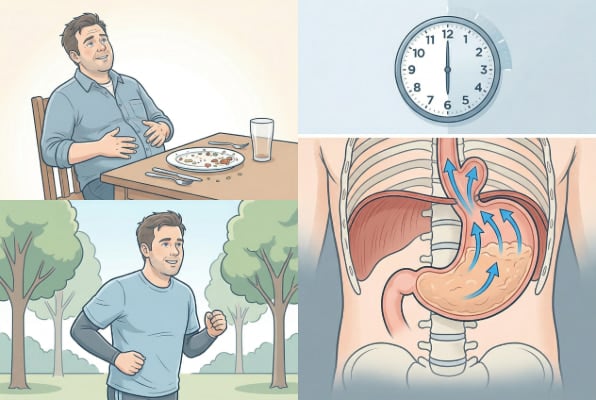
Gravity needs to work in your favor by keeping the stomach pulled downward, and your body requires adequate time for proper digestion. This is precisely why taking a leisurely walk following meals is genuinely beneficial. That gentle movement, improved circulation, and gravitational assistance all contribute to better digestion.
The bottom line: avoid eating close to bedtime and resist the urge to recline immediately after meals.
Flare-Up Trigger #2: Overeating
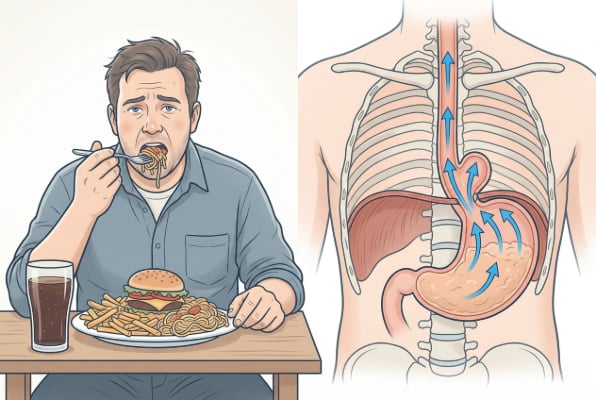
Overindulging at mealtime is another significant trigger. When the stomach stretches beyond its comfortable capacity, it pushes upward against the diaphragm, which can absolutely set off a flare-up episode. According to medical experts at Cleveland Clinic, consuming food too quickly and in excessive amounts causes the esophagus to distend, which over time can stretch the opening in the diaphragm and worsen a hiatal hernia.
This increased abdominal pressure is a key factor in aggravating the condition. When you eat large portions, the volume and pressure inside your stomach rise dramatically. This added pressure forces the upper portion of the stomach to push through the hiatal opening in the diaphragm, leading to acid reflux and GERD and discomfort. The stomach essentially gets squeezed by the diaphragmatic opening, trapping acid that cannot easily clear away. This trapped acid then backs up into the esophagus, causing that familiar burning sensation.
Medical professionals recommend eating smaller portions as a primary strategy for managing hiatal hernia symptoms. Smaller meals reduce overall volume and pressure in the stomach, minimizing the likelihood of triggering a flare-up. Additionally, avoiding rich, fatty foods can help since these meals require more stomach acid and digestive enzymes to break down, further increasing pressure and the potential for reflux.
Flare-Up Trigger #3: Eating Too Quickly
Speed-eating is another habit worth breaking. The nervous system operates in two distinct modes: the “sympathetic” mode, the fight-or-flight response that pumps adrenaline and increases blood flow, preparing the body for action, and the “parasympathetic” mode, which promotes rest, relaxation, and proper digestion. For optimal digestive function, the body needs to be operating in that calm parasympathetic state.
Scarfing down bites while driving or squeezing in a quick meal before dashing to the next appointment works against proper digestion. It’s far more beneficial to hold off until sitting down, decompressing, and eating mindfully becomes possible. Consuming food while stressed or rushed keeps the nervous system in the wrong gear, compromising digestion. In some cases, chronic digestive stress can contribute to related motility disorders such as gastroparesis.
During hectic moments when hunger strikes, a few small nibbles to stabilize blood sugar are acceptable. But ideally, save actual meals for moments of genuine relaxation.
Flare-Up Trigger #4: Exercising on a Full Stomach
Physical activity immediately following a meal is a definite no-go. While the stomach typically empties in around 20 minutes, playing it safe means waiting at least 30 minutes before any vigorous activity. Heavy eating before exercise sessions should be avoided, but if timing forces the issue, ensure that half-hour buffer has passed and any sensation of fullness has subsided. Exerting the body while the stomach is still processing food creates pressure that pushes the stomach upward, a surefire way to trigger a hiatal hernia flare-up.
Flare-Up Trigger #5: Food Sensitivities
This final trigger is perhaps the trickiest and least obvious: individuals with hiatal hernia syndrome frequently have particular foods that don’t agree with them. Those who have already identified their problem foods should steer clear of them completely.
For those who haven’t pinpointed their triggers yet, it’s admittedly challenging to avoid something unknown. However, if certain foods consistently cause trouble, eliminating them from the diet is essential, as they can send the stomach into spasm and provoke a flare-up. Some patients also experience silent reflux (LPR), where symptoms manifest in the throat rather than as traditional heartburn, making trigger identification even more difficult. Additionally, esophageal motility issues like achalasia can present with similar symptoms, so proper diagnosis is crucial.
Flare-Up Trigger #6: Tight Clothing and Bending Over
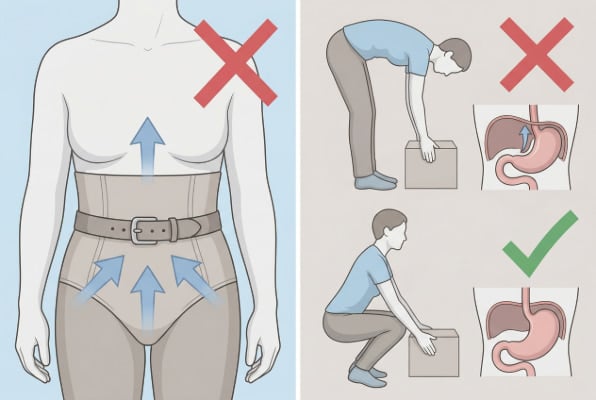
What you wear and how you move throughout the day can significantly impact hiatal hernia symptoms. Tight clothing, including snug belts, control-top hosiery, shapewear, and body shapers, increases pressure on the abdomen, which can push the stomach upward through the diaphragmatic opening and trigger a flare-up. According to Healthline, even moderate external pressure on the midsection can exacerbate symptoms.
Bending over is another common aggravating factor. Whether you’re tying your shoes, picking something up off the floor, or gardening, the forward-folding motion compresses the abdominal cavity and places additional pressure on the stomach. For individuals with larger hiatal hernias, even simple movements like bending can cause discomfort, pain, or worsen digestive disorder symptoms. Some patients report that bending over after meals is particularly problematic, as the combination of a full stomach and increased abdominal pressure creates the perfect conditions for acid to back up into the esophagus.
To minimize these triggers, opt for loose-fitting, comfortable clothing that doesn’t constrict your midsection. When you need to pick something up, try bending at the knees rather than at the waist to reduce pressure on the abdomen. Being mindful of these everyday habits can make a meaningful difference in managing your symptoms and preventing unnecessary flare-ups.
When Lifestyle Changes Aren’t Enough
While avoiding these triggers can help manage hiatal hernia symptoms, some patients continue to struggle with persistent acid reflux and GERD despite their best efforts. Research published in the National Library of Medicine indicates that when lifestyle modifications and medications fail to provide lasting relief, it may be time to explore surgical treatment options. Government health resources at MedlinePlus also provide comprehensive information about when intervention becomes necessary.

Get Expert Help for Your Hiatal Hernia
At Tampa Bay Reflux Institute, Dr. Grandhige specializes in the diagnosis and surgical treatment of hiatal hernias, GERD, and related conditions including abdominal hernia and heartburn. As a national expert in reflux management, Dr. Grandhige offers cutting-edge surgical solutions including:
Robotic Fundoplication Surgery, an outpatient procedure that reinforces a weak lower esophageal sphincter to prevent acid reflux
LINX® Reflux Management System, a minimally invasive solution using magnetic beads to strengthen the esophageal sphincter
TIF (EsophyX®) Procedure, an incision-free endoscopic procedure to reconstruct and strengthen a weak sphincter
The institute also offers incisionless weight loss procedures for patients whose excess weight contributes to their reflux symptoms.
Dr. Grandhige is the only board-certified surgeon in the Tampa Bay area who performs all three of these advanced anti-reflux procedures regularly, with over 1,400 successful surgeries performed. For more information, visit our reflux blog or learn about our hiatal hernia specialists in Tampa.
Conclusion
Managing a hiatal hernia effectively comes down to understanding and avoiding the triggers that cause flare-ups. By making simple lifestyle adjustments, eating smaller meals, avoiding food before bedtime, taking time to eat mindfully, waiting before exercising after meals, identifying personal food sensitivities, and wearing loose clothing, you can significantly reduce the frequency and severity of symptoms. Research from Harvard Health confirms that gravity is your ally, so staying upright after eating and bending at the knees rather than the waist can make a meaningful difference in your daily comfort.
While these strategies work well for many people, persistent symptoms that don’t respond to lifestyle changes may require medical intervention. Studies in peer-reviewed medical journals support that consulting with a specialist about advanced treatment options can help you find lasting relief. If you continue to experience frequent acid reflux and discomfort despite your best efforts, contact Tampa Bay Reflux Institute to explore your options and improve your quality of life.
FAQs
How long should I wait to lie down after eating?
Wait at least 2-3 hours after eating before lying down to allow proper digestion. Taking a gentle walk after meals can also help gravity keep stomach contents down.
Can hiatal hernia symptoms go away on their own?
Many people with small hiatal hernias experience no symptoms at all. However, the hernia itself doesn’t disappear, so managing triggers is essential to prevent flare-ups.
What foods should I avoid with a hiatal hernia?
Avoid rich, fatty foods that require more stomach acid to digest, as well as any personal trigger foods you’ve identified. Eating smaller portions is more important than eliminating specific foods for most people.
Is exercise safe with a hiatal hernia?
Yes, but wait at least 30 minutes after eating before any vigorous activity. Exercising on a full stomach increases abdominal pressure and can trigger a flare-up.
When should I consider surgery for my hiatal hernia?
Consider surgical options when lifestyle changes and medications fail to provide lasting relief from persistent acid reflux. A specialist can evaluate whether procedures like fundoplication or LINX are appropriate for your situation.


An endoscopy cannot tell you if you have reflux. It can only tell you if you have complications of GERD.
If you are unhappy with your reflux symptoms, come in and we can discuss testing and treatments that can accurately diagnose your problem.
#reflux #gerd #hiatalhernia #gastroparesis #linx

CALL US AT 813-922-2920
www.tampareflux.com
If you have a hiatal hernia and fit one of these categories, you should know your options.
Dr. Grandhige is an expert in his field and performs 200 of these surgeries a year. He is the only surgeon in the Tampa Bay Area who offers all surgical options - LINX, Fundoplications, TIF and will be one of 20 surgeons in America introducing the latest procedure RefluxStop in 2026.
We accept most insurances but will verify yours before you come in. These procedures are considered medically necessary and covered by your insurance. You can expect to pay your in-network deductibles and nothing else.
#hiatalhernia #reflux #GERD #LINX #refluxstop
What causes reflux ?
1. Weak lower esophageal sphincter
2. Hiatal hernia
3. Flattening of the Angle of His
4. Poor esophageal motility
5. Gastroparesis (slow stomach)
NOT increased acid production
Don’t let GERD get in the way of living your life. Request your appointment with us today on the link below.
.
.
.
.
https://tampareflux.com/contact-us/
Anyone can be victim to GERD and though weight loss can help reduce GERD symptoms. Many athletes with high impact workouts may continue to have these symptoms. This may be a symptom of a hiatal hernia or other issue. We are more then happy to assist you in finding your solution, just click the link below.
.
.
.
https://tampareflux.com/contact-us/
##healthylifestyle #workout #athletereflux #PPIs #heartburn #LINX #fundoplication #TIF #GERD#tampaheartburn #linx #TIF #fundoplication #tampabayreflux #GERD #acidreflux #acidrefluxsurgery #stopreflux
#nonsurgicalweightloss #ESG #gastricballoon #weightlossjourney #vsg #vsgjourney #spatz3 #orbera #orberaballoon #grandhige #DrG
#tampabayrefluxinstitute #guthealth #roboticsurgery
Heartburn may seem like an annoyance. But if you find yourself having symptoms on a daily basis, it may be time to to talk to Dr. Grandhige as it could be a symptom of something worse.
.
.
.
#chronicheartburn #gerdsymptoms #heartburnrelief #reflux #PPIs #heartburn #LINX #fundoplication #TIF #GERD#tampaheartburn #linx #TIF #fundoplication #tampabayreflux #GERD #acidreflux #acidrefluxsurgery #stopreflux
#nonsurgicalweightloss #ESG #gastricballoon #weightlossjourney #vsg #vsgjourney #spatz3 #orbera #orberaballoon #grandhige #DrG
#tampabayrefluxinstitute #guthealth #roboticsurgery
If you are tired of avoiding your favorite foods or taking daily medications, we can help.
We are the Tampa experts in reflux ! With years of experience and thousands of patients treated successfully, we offer all FDA approved anti-reflux procedures.
Call 813-922-2920 to schedule your appointment
All major insurances accepted.
Not all patients need surgical intervention. Many patients are living a heartburn free life with their PPIs. However 40% of patients taking PPIs are not getting the relief they need. If you are one of those, you have options! Come in and find out more.
.
.
.
.
#letushelpyou #medsnotworking #reflux #PPIs #heartburn #LINX #fundoplication #TIF #GERD#tampaheartburn #linx #TIF #fundoplication #tampabayreflux #GERD #acidreflux #acidrefluxsurgery #stopreflux
#nonsurgicalweightloss #ESG #gastricballoon #weightlossjourney #vsg #vsgjourney #spatz3 #orbera #orberaballoon #grandhige #DrG
#tampabayrefluxinstitute #guthealth #roboticsurgery
#heartburn #stopreflux #hiatalherniarepair #severeheartburn #reflux #tampabayreflux #acidrefluxsurgery #tampaheartburn #GERD #PPIs #achalasia #LINX #TIF #tampareflux #fundoplication #stomach #digestivehealth #ESG #obesity #overweight #weightlossjourney #gastricballoon


