
Written By: Jeffrey Atlas, Health Content Writer
Medically Reviewed By: Dr. Gopal Grandhige, MD, FACS, Board-Certified Surgeon
Last Reviewed: October 4, 2026
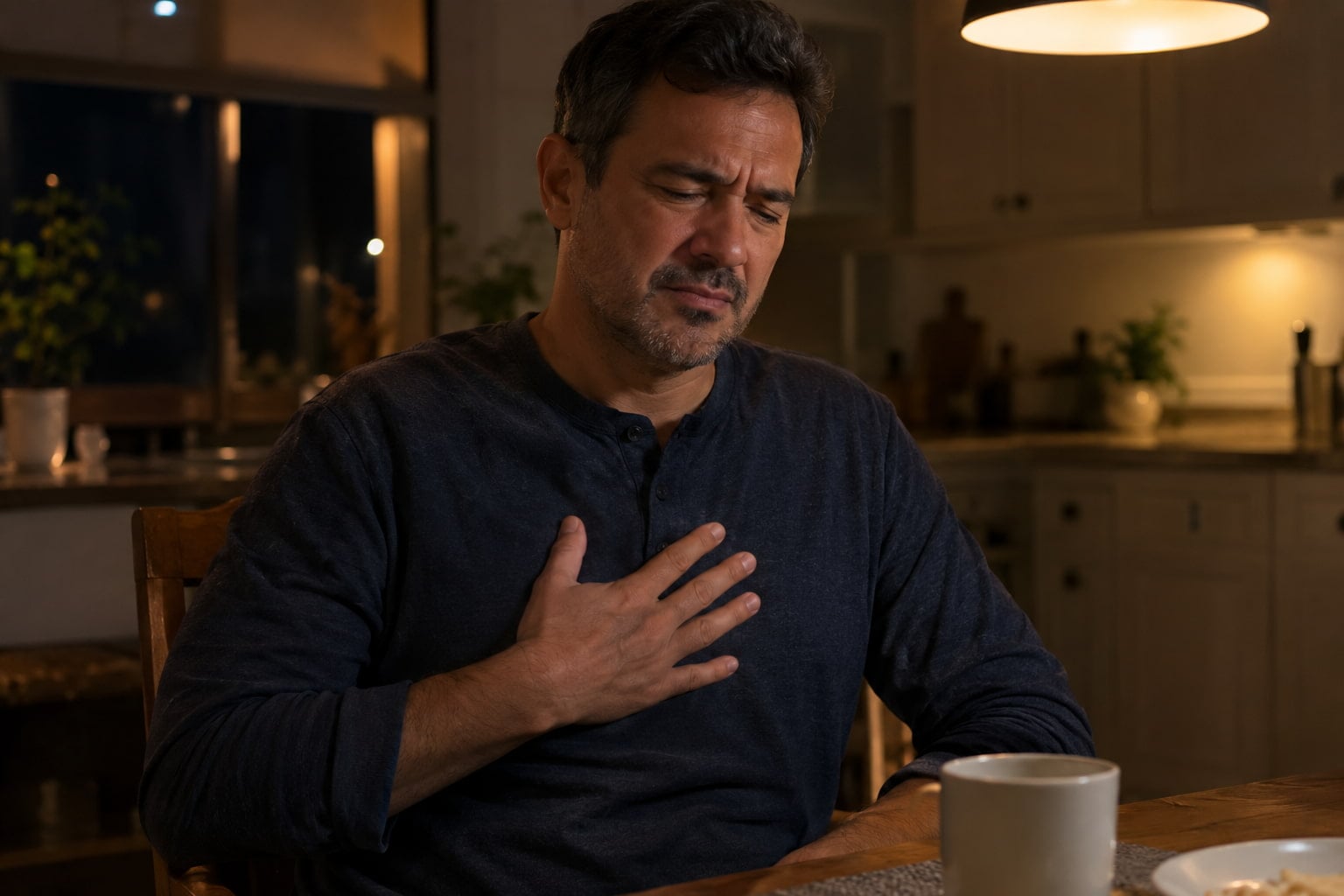
Heartburn feels like a hot, burning pain that starts low behind your breastbone and climbs up toward your throat. NIDDK describes it as a painful burning in the middle of the chest, rising from the lower tip of the breastbone toward the neck. Most people also get a sour or bitter taste in the back of the mouth. It usually shows up within an hour or two of eating, and it gets worse when you lie flat or bend forward. A typical episode fades in a few minutes to a few hours. If the pain feels like squeezing or heavy pressure instead of burning, stop reading and call 911.
I’m a board-certified surgeon at Tampa Bay Reflux Institute, and I repair the anatomy behind this for a living. So I’ll say something most articles on the topic won’t. The burning is the least interesting part. The pattern matters more. How often, how long, what sets it off, and what it’s quietly doing to your esophagus while you keep reaching for antacids.
This article covers adult heartburn. It won’t cover infant reflux, and it won’t tell you which medication to take or at what dose. Those belong with your own doctor.
What is heartburn, exactly?
Heartburn is a burning chest pain caused by stomach acid flowing backward into the esophagus, the tube that carries food from your throat to your stomach. The acid irritates a lining that was never built to handle it. The burn sits behind the breastbone, often climbs toward the neck, and usually follows a meal.
That backward flow has a name: acid reflux. Heartburn is the symptom. Reflux is the event.
Almost everybody refluxes a little. It becomes gastroesophageal reflux disease when it happens often enough to cause symptoms or damage. Published estimates put the share of affected American adults between 18.1% and 27.8%. Worldwide, the numbers are climbing fast. The Global Burden of Disease study counted 825.6 million cases in 2021, up from 450.8 million in 1990, and projects more than 1.2 billion by 2050.
Those numbers point to a mechanical problem, not a personal failing you can discipline your way out of.
The valve that’s supposed to stop this
A ring of muscle called the lower esophageal sphincter sits where your esophagus meets your stomach. It opens to let food down and clamps shut to keep acid where it belongs. Your diaphragm wraps the same spot and adds a second layer of pressure.
When it works, you never think about it. When the muscle weakens or relaxes at the wrong moment, stomach contents travel the wrong way.
A hiatal hernia makes it worse. Your diaphragm has an opening the esophagus passes through, and when it stretches, the top of the stomach slides into the chest. The two layers of protection pull apart. NIDDK lists it as a factor that raises your odds of GERD.
Medications loosen the valve too. NIDDK names benzodiazepines, calcium channel blockers, some asthma medicines, NSAIDs, and tricyclic antidepressants. I’ve met patients who spent three years cutting foods from their diet when the real culprit was a blood pressure pill.
What does heartburn feel like in your chest?
Burning. A rising burn that starts at the bottom of the breastbone and travels upward.
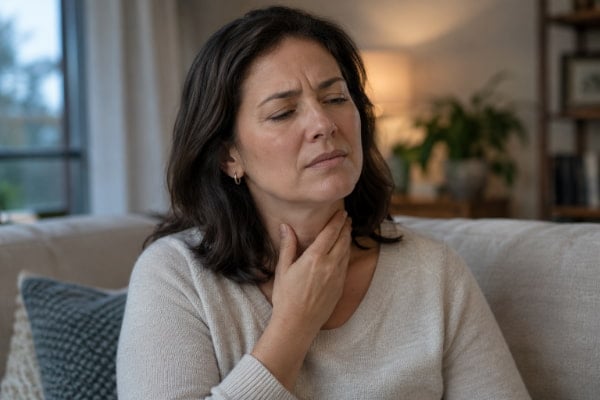
Some people describe hot liquid moving behind the chest wall. Others call it a slow scald. It ranges from mild warmth to sharp enough to wake you from a dead sleep, and often reaches the neck and shoulders.
Alongside the burn, watch for these:
- A sour or bitter taste. Stomach contents reach the back of your mouth. NIDDK calls this regurgitation, and it’s one of the two signature symptoms.
- Trouble swallowing. Food feels stuck in your chest or throat.
- Frequent burping that doesn’t match what you ate.
- Fullness and bloating after an ordinary meal.
- A chronic cough or hoarse voice, often worst in the morning.
That last one surprises people.
How long does heartburn last?
A typical episode runs from a few minutes to a few hours. Cleveland Clinic ties the endpoint to digestion: the burn should settle once your last meal clears the stomach, which takes somewhere between two and five hours depending on what you ate.
Nighttime is worse. Lying flat takes gravity out of the equation, so acid that would normally drain back down just sits there. Nocturnal reflux affects roughly a quarter of the general population, and it tracks with more severe disease, not less.
Pregnancy changes the math. Hormones relax the valve and a growing uterus pushes on the stomach. It usually settles after delivery.
Frequency matters more than duration. Twice a week is the rough line where occasional reflux turns into a chronic condition worth investigating.

Is it heartburn or a heart attack?
Burning that follows a meal and responds to an antacid points toward reflux. Squeezing or crushing pressure that spreads to the arm, jaw, or back, especially with sweating or breathlessness, points toward your heart. When you can’t tell, assume it’s your heart and call 911.
| Clue | Heartburn | Heart attack |
| Quality | Burning, rising | Squeezing, tight, heavy |
| Location | Behind breastbone, up toward throat | Center of chest, spreading to arm, jaw, neck, back |
| Trigger | Usually within an hour or two of eating | Physical effort, stress, or nothing at all |
| Position | Worse lying down or bending over | Position makes little difference |
| Taste | Sour or bitter in the mouth | No taste change |
| Antacid response | Often improves | No improvement |
| Company it keeps | Burping, bloating | Cold sweat, shortness of breath, lightheadedness |
Print that table if you want. Then ignore it the moment you’re actually frightened. Kaiser Permanente reports that more than one in five heart attacks arrive with no obvious symptoms at all. Emergency physicians would rather see a hundred people with reflux than miss one blocked artery. Nobody is going to judge you.
Heartburn and indigestion get mixed up constantly
Indigestion sits higher in the upper abdomen and brings bloating, early fullness, nausea, and a dull ache. Heartburn burns in the chest.
They overlap, and plenty of people have both. The difference is mechanism. Heartburn is acid in the wrong place. Indigestion is the stomach itself behaving badly.
When fullness and nausea dominate and the burning barely registers, the stomach may be emptying too slowly. That’s gastroparesis, and it calls for a different workup entirely.
Angina feels close, but the trigger is different
Angina is chest pressure from reduced blood flow to the heart, and it can feel almost identical to a bad reflux episode.
The tell is what brings it on. Angina follows exertion or cold air and eases within minutes of rest. Kaiser Permanente puts a typical episode between 2 and 20 minutes. Reflux follows food and worsens when you lie down, not when you climb stairs.
Four other conditions that mimic the burn
- Esophageal spasm or a motility disorder. The muscle contracts abnormally, food hangs up mid-chest, and it burns. Achalasia is the version where the valve refuses to open, and it gets misread as reflux for years.
- Gallstones. Pain after a rich meal, usually right-sided and under the ribs.
- Peptic ulcer. Burns in the stomach, spreads upward, and responds to antacids, which is exactly why it fools people.
- Anxiety. Chest tightness and a throat lump are real physical symptoms, and they sit right alongside true reflux in plenty of people.
Reflux damage without the burn
You can have serious reflux and never get classic heartburn. NIDDK states plainly that not all adults with GERD experience heartburn or regurgitation.
When acid reaches the throat and voice box instead of stopping in the chest, it shows up as hoarseness, constant throat clearing, a nagging cough, or the feeling of a lump. That’s silent reflux, and people live with it for years while being treated for allergies or asthma.
What I care about more than any single symptom is this. Acid exposure over years changes the lining of the esophagus. The cells adapt by turning into something closer to intestinal tissue, a condition called Barrett’s esophagus, and that raises the risk of esophageal cancer. It isn’t common. It also isn’t rare enough to ignore for a decade while you manage the burning with pills.
An antacid stops the pain. It does nothing to the valve.
What actually calms heartburn down
- Lose weight if you’re carrying extra. This is the only lifestyle change the American College of Gastroenterology backs with a strong recommendation and moderate-quality evidence. Everything else on their lifestyle list is conditional, resting on low-quality evidence. Belly weight presses on the stomach and works against the valve.
- Raise the head of your bed. Not extra pillows, which fold you at the waist and make things worse. Use blocks under the bedposts or a wedge.
- Stop eating two to three hours before bed. ACG suggests this specifically for nighttime symptoms.
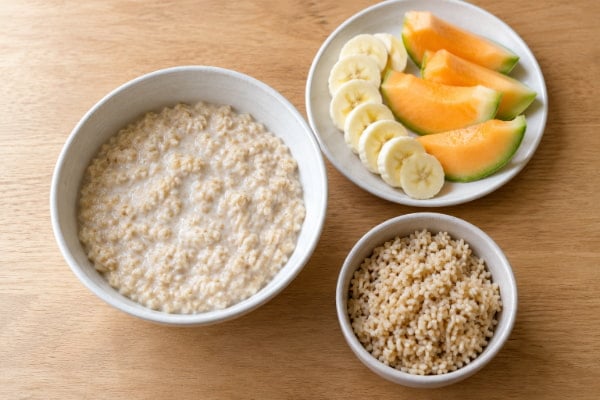
- Eat more fiber. A Clinical Gastroenterology and Hepatology analysis of a large cohort of women found the highest fiber intake group had roughly 25% lower risk of weekly reflux symptoms than the lowest. In a small trial, patients took psyllium three times daily for ten days and the share reporting heartburn fell from 93.3% to 40%, with measurable improvement in valve resting pressure. Johns Hopkins Medicine points toward oatmeal, brown rice, bananas, melons, and cauliflower.
- Take acid medication correctly. ACG gives a strong recommendation for taking a proton pump inhibitor 30 to 60 minutes before a meal rather than at bedtime. Most people take it wrong.
- Repair the anatomy when the anatomy is the problem. If a stretched hiatus or failed valve drives the reflux, a fundoplication or hernia repair treats the cause instead of the acid. That decision requires objective testing first, including pH monitoring and a motility study.
What makes heartburn worse
Now the contrarian part. The standard list tells you to cut coffee, citrus, tomatoes, and spicy food. I think that advice is mostly wasted effort, and the guidelines quietly agree.
ACG’s own review notes that in laboratory studies, coffee, caffeine, citrus, and spicy food had little to no effect on lower esophageal sphincter pressure. Alcohol, chocolate, peppermint, and high-fat foods do lower valve pressure in the lab, but the guideline adds that few studies document any benefit from avoiding them. Trigger food avoidance carries a conditional rating on low-quality evidence. Weight loss carries a strong one.
Sit with what that means for someone who spent two years eating plain chicken and still wakes up choking.
Actually, that framing isn’t quite right either. Foods matter individually. If tomato sauce reliably burns you, skip tomato sauce. What fails is the blanket elimination diet, cutting fifteen things at once off a list somebody printed from the internet, while the mechanical cause goes unexamined.
Three items on the avoid list hold up better:
- Smoking. Nicotine relaxes the valve, and quitting improved symptoms in the studies ACG reviewed.
- Large late meals. Volume plus gravity plus a weak valve.
- Tight waistbands. Belts and shapewear raise abdominal pressure. Cheap problem, cheap fix.
When should you seek medical help for heartburn?
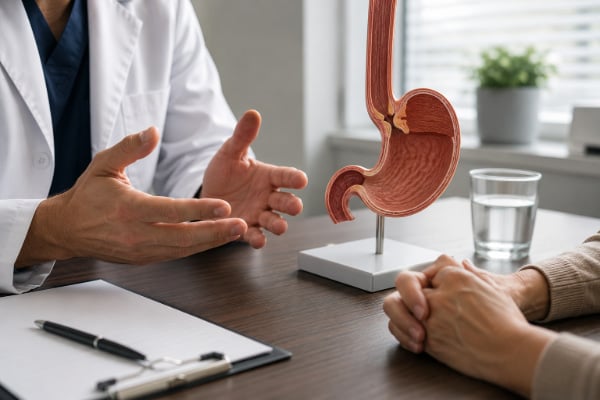
See a doctor if heartburn hits twice a week or more, if over-the-counter medicine stops working, or if you’ve taken it daily for months without anyone asking why.
Some symptoms need attention faster. NIDDK lists these as possible signs of complications:
- Trouble swallowing or pain when swallowing
- Persistent vomiting
- Vomit containing blood or resembling coffee grounds
- Black, tarry stool
- Unexplained weight loss
- Loss of appetite
- Chest pain
Call 911 for chest pain you can’t explain, especially alongside sweating, breathlessness, or pain radiating into the arm or jaw.
The pattern I see most often at Tampa Bay Reflux Institute is the ten-year antacid user who never had a single test. They assume somebody ruled things out years ago. Usually nobody did. If that sounds like you, talk to our team and find out what’s happening at that valve.
Stop treating the burn like background noise
A rising burn behind the breastbone, usually after eating, worse lying down, gone within a few hours. That’s the answer most people came for.
The feeling is simple. The decision isn’t. Occasional heartburn after a big dinner is just biology. Heartburn twice a week for five years is a mechanical problem with a name attached to it, and a pill that stops the burning is not a repair. You came here asking what does heartburn feel like. The better question is how often yours shows up, and whether anyone has looked at the valve letting it happen.
FAQs
What does heartburn feel like compared to a heart attack?
Heartburn feels like a burning sensation that rises from behind the breastbone toward the throat, usually within an hour or two of eating, and it often eases with an antacid. Heart attack pain feels more like squeezing, tightness, or heaviness, and it tends to spread to the arm, jaw, neck, or back. Kaiser Permanente reports that more than one in five heart attacks show up with no obvious symptoms at all, so if you are unsure, call 911.
How long does heartburn last?
A typical heartburn episode lasts from a few minutes to a few hours. Cleveland Clinic explains that the burning should fade once your last meal has cleared the stomach, which takes roughly two to five hours depending on the meal. Heartburn that lingers all day or returns twice a week or more suggests chronic reflux rather than a one-off reaction to food.
Can you have acid reflux damage without heartburn?
Yes. NIDDK states that not all adults with GERD experience heartburn or regurgitation. Some people instead get a chronic cough, hoarseness, constant throat clearing, or a lump-in-the-throat sensation, a pattern known as silent reflux. Years of acid exposure can alter the esophageal lining and raise the risk of Barrett’s esophagus even when the burning never appears.
What does heartburn feel like at night?
Nighttime heartburn feels more intense because lying flat removes gravity, so acid pools in the esophagus instead of draining back down. People often describe waking with a sour taste, a choking sensation, or a cough. Nocturnal reflux affects roughly a quarter of the general population and is linked to more severe disease.
Do I really need to give up coffee and spicy food?
Probably not as a blanket rule. The American College of Gastroenterology notes that in laboratory studies, coffee, caffeine, citrus, and spicy food had little to no effect on lower esophageal sphincter pressure, and its trigger-food recommendation carries only a conditional rating on low-quality evidence. Cut the specific foods that reliably burn you and skip the fifteen-item elimination list.
How often is too often for heartburn?
Twice a week is the practical threshold. Heartburn at that frequency, or any heartburn that needs daily over-the-counter medicine, points toward gastroesophageal reflux disease rather than ordinary indigestion. At that stage the right step is objective testing to find out why the valve is failing.
Does losing weight actually help heartburn?
Weight loss is the single lifestyle change with the strongest evidence behind it. The American College of Gastroenterology gives it a strong recommendation supported by moderate-quality evidence, while most other lifestyle measures earn only conditional ratings on low-quality evidence. Extra abdominal weight raises pressure on the stomach and works directly against the valve that keeps acid down.


An endoscopy cannot tell you if you have reflux. It can only tell you if you have complications of GERD.
If you are unhappy with your reflux symptoms, come in and we can discuss testing and treatments that can accurately diagnose your problem.
#reflux #gerd #hiatalhernia #gastroparesis #linx

CALL US AT 813-922-2920
www.tampareflux.com
If you have a hiatal hernia and fit one of these categories, you should know your options.
Dr. Grandhige is an expert in his field and performs 200 of these surgeries a year. He is the only surgeon in the Tampa Bay Area who offers all surgical options - LINX, Fundoplications, TIF and will be one of 20 surgeons in America introducing the latest procedure RefluxStop in 2026.
We accept most insurances but will verify yours before you come in. These procedures are considered medically necessary and covered by your insurance. You can expect to pay your in-network deductibles and nothing else.
#hiatalhernia #reflux #GERD #LINX #refluxstop
What causes reflux ?
1. Weak lower esophageal sphincter
2. Hiatal hernia
3. Flattening of the Angle of His
4. Poor esophageal motility
5. Gastroparesis (slow stomach)
NOT increased acid production
Don’t let GERD get in the way of living your life. Request your appointment with us today on the link below.
.
.
.
.
https://tampareflux.com/contact-us/
Anyone can be victim to GERD and though weight loss can help reduce GERD symptoms. Many athletes with high impact workouts may continue to have these symptoms. This may be a symptom of a hiatal hernia or other issue. We are more then happy to assist you in finding your solution, just click the link below.
.
.
.
https://tampareflux.com/contact-us/
##healthylifestyle #workout #athletereflux #PPIs #heartburn #LINX #fundoplication #TIF #GERD#tampaheartburn #linx #TIF #fundoplication #tampabayreflux #GERD #acidreflux #acidrefluxsurgery #stopreflux
#nonsurgicalweightloss #ESG #gastricballoon #weightlossjourney #vsg #vsgjourney #spatz3 #orbera #orberaballoon #grandhige #DrG
#tampabayrefluxinstitute #guthealth #roboticsurgery
Heartburn may seem like an annoyance. But if you find yourself having symptoms on a daily basis, it may be time to to talk to Dr. Grandhige as it could be a symptom of something worse.
.
.
.
#chronicheartburn #gerdsymptoms #heartburnrelief #reflux #PPIs #heartburn #LINX #fundoplication #TIF #GERD#tampaheartburn #linx #TIF #fundoplication #tampabayreflux #GERD #acidreflux #acidrefluxsurgery #stopreflux
#nonsurgicalweightloss #ESG #gastricballoon #weightlossjourney #vsg #vsgjourney #spatz3 #orbera #orberaballoon #grandhige #DrG
#tampabayrefluxinstitute #guthealth #roboticsurgery
If you are tired of avoiding your favorite foods or taking daily medications, we can help.
We are the Tampa experts in reflux ! With years of experience and thousands of patients treated successfully, we offer all FDA approved anti-reflux procedures.
Call 813-922-2920 to schedule your appointment
All major insurances accepted.
Not all patients need surgical intervention. Many patients are living a heartburn free life with their PPIs. However 40% of patients taking PPIs are not getting the relief they need. If you are one of those, you have options! Come in and find out more.
.
.
.
.
#letushelpyou #medsnotworking #reflux #PPIs #heartburn #LINX #fundoplication #TIF #GERD#tampaheartburn #linx #TIF #fundoplication #tampabayreflux #GERD #acidreflux #acidrefluxsurgery #stopreflux
#nonsurgicalweightloss #ESG #gastricballoon #weightlossjourney #vsg #vsgjourney #spatz3 #orbera #orberaballoon #grandhige #DrG
#tampabayrefluxinstitute #guthealth #roboticsurgery
#heartburn #stopreflux #hiatalherniarepair #severeheartburn #reflux #tampabayreflux #acidrefluxsurgery #tampaheartburn #GERD #PPIs #achalasia #LINX #TIF #tampareflux #fundoplication #stomach #digestivehealth #ESG #obesity #overweight #weightlossjourney #gastricballoon


