
Written By: Jeffrey Atlas, Health Content Writer
Medically Reviewed By: Dr. Gopal Grandhige, MD, FACS, Board-Certified Surgeon
Last Reviewed: August 16, 2026
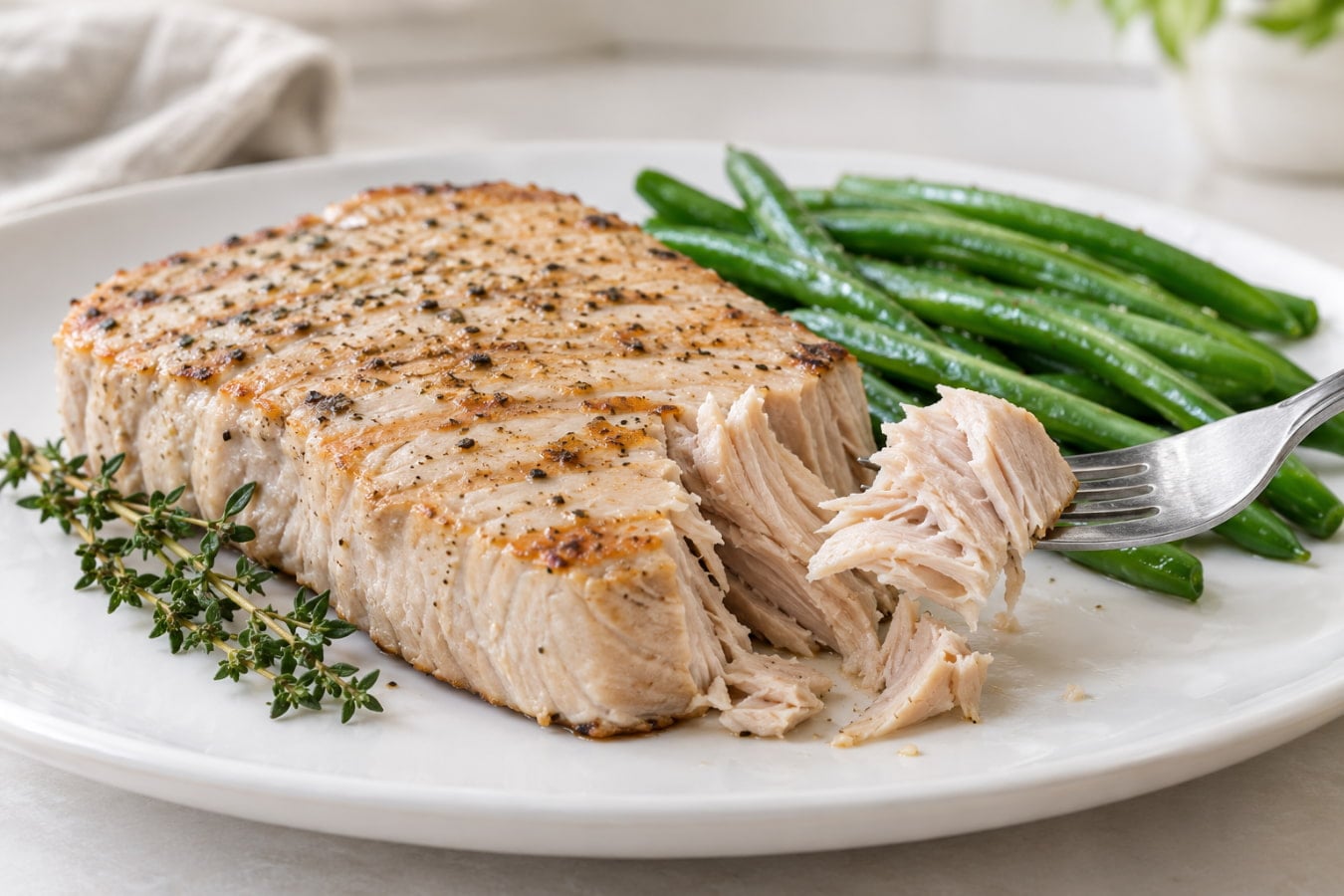
Tuna and acid reflux get along better than almost any other animal protein. A 3-ounce serving of water-packed light tuna carries roughly 20 grams of protein and under a gram of fat, according to USDA FoodData Central. Canned tuna tested at a mean pH of 5.91 in a 2025 analysis published in the journal Foods. Low fat, high protein, barely acidic.
So the fish is rarely your problem.
The mayonnaise is. The oil in the can is. The size of the sandwich is. And for a smaller group nobody warns, the histamine sitting in that can is. I’ve operated on patients who spent eleven years rewriting their grocery list before anyone checked whether their valve still closed.
Tuna and acid reflux are a low-risk pairing for most people. Fresh or water-packed tuna is lean, protein-dense, and close to neutral in acidity, so it seldom triggers heartburn by itself. The real risk sits in preparation, portion size, and the histamine load in canned varieties, which matters most for people with silent reflux.
This article won’t cover mercury toxicity in depth or supplement protocols. Those are separate conversations, and shorter ones than most blogs pretend.
Is Tuna Good for Acid Reflux?
Yes, for the overwhelming majority of people. Tuna sits in the small group of proteins that check every box a reflux diet asks for, and there’s no credible evidence it irritates the esophagus directly.
The Fat Number That Matters
Fat is the macronutrient that earns its bad reputation here. It slows stomach emptying, which keeps food sitting where it can come back up, and it triggers cholecystokinin release, a hormone that tells the lower esophageal sphincter to loosen.
Water-packed light tuna sidesteps both. USDA data puts a 3-ounce drained serving at about 100 calories with less than 1 gram of fat. Compare that to oil-packed, which lands near 168 calories and carries 4 to 6 grams of absorbed oil even after you drain it.
That difference is the single biggest lever you control at the grocery store.
Does Protein Trigger Reflux?
No. Protein behaves well in a reflux stomach. It doesn’t drop sphincter pressure the way fat does, and it doesn’t ferment like high-fiber carbohydrates. Twenty grams per serving also keeps you full, which cuts down on the oversized meals that actually drive symptoms.
How Acidic Is Tuna, Really?
Not acidic enough to matter. The 2025 Foods analysis measured canned tuna at a mean pH of 5.91, and fresh tuna tests in a similar range. Foods start causing trouble for silent reflux around pH 4 and below, so tuna clears that bar with room to spare.
Actually, the pH framing deserves pushback. Patients arrive at my clinic with laminated food pH charts, convinced they’ve found the answer. Stomach acid runs around pH 1.5 to 3.5. A food at pH 5.9 isn’t changing that environment in any meaningful way. What a low-pH food can do is irritate throat tissue that’s already inflamed on the way past. That’s a real mechanism for silent reflux, and a much weaker one for classic heartburn.
Do the Omega-3s Do Anything for Your Esophagus?
Probably less than you’ve been told. In a 2019 review in Frontiers in Pharmacology, fish-oil omega-3s reduced esophageal damage in animal reflux models while omega-6 oils made damage worse. Encouraging.
But a 2024 Mendelian randomization study in BMC Gastroenterology, which tests causation rather than correlation, found no statistically significant causal link between omega-3 intake and reduced GERD risk in humans. Eat tuna because it’s a clean protein. Don’t eat it as medicine.
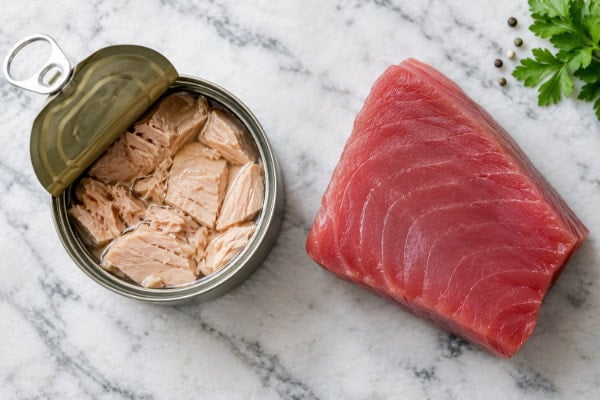
Why Canned Tuna Can Backfire on Silent Reflux
Tuna is a scombroid fish, alongside mackerel and bonito, and scombroid species are loaded with histidine that bacteria convert into histamine as the fish sits. Processing and time both raise the total.
The numbers are messier than anyone admits. The 2025 Foods study of 80 canned fish samples from Türkiye found histamine in 41.25% of them, ranging from 2.51 to 20.97 mg/kg, with canned tuna averaging 7.05 mg/kg. That’s roughly a seventh of the FDA’s 50 mg/kg hazard action level. Reassuring, if that were the whole picture.
It isn’t. A separate analysis of canned tuna sampled in Iran reported a range of 4 to 236 mg/kg, with 18.9% of samples exceeding the FDA action level entirely. Same product category, wildly different results depending on supply chain and storage. Two studies, two stories.
Here is why that matters for the throat and not the chest. A 2020 case report in the Annals of Otology, Rhinology & Laryngology described a patient with diagnosed silent reflux whose chronic cough and throat clearing resolved on a histamine-free diet, after standard treatment and a Nissen fundoplication had both failed. Most people break histamine down fine using the enzyme diamine oxidase. People with reduced DAO activity don’t.
I don’t order histamine workups on every patient. That would be overkill. But if you’ve got laryngeal symptoms, you’re eating canned tuna four times a week, and nothing else explains the flares, a two-week trial on fresh fish costs you nothing and answers the question.
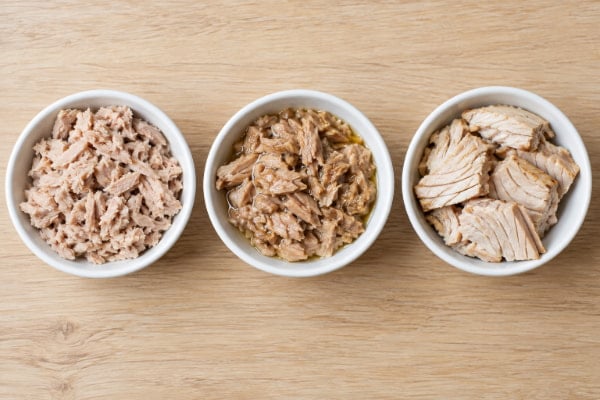
Fresh, Water-Packed, or Oil-Packed: Which Should You Buy?
Fresh or flash-frozen wins on every measure. Water-packed is the practical everyday choice. Oil-packed has no argument in its favor for anyone with reflux.
| Type | Fat per 3 oz | Histamine risk | Verdict for reflux |
| Fresh or flash-frozen | Under 1 g | Lowest | Best choice, especially for silent reflux |
| Canned in water | Under 1 g | Moderate, varies by brand | Fine for most people, watch sodium |
| Canned in oil | 5 to 7 g | Moderate | Avoid |
Fresh or Flash-Frozen
Grill it, bake it, steam it. No added sodium, no packing oil, minimal histamine. Flash-frozen tuna, frozen right on the boat, is equal to fresh on histamine. Thaw it fast under cold running water instead of leaving it in the fridge overnight, since slow thawing hands bacteria more hours to produce histamine.
Canned in Water
Cheap, shelf-stable, and fine for most people with heartburn. Sodium is the open question. A Norwegian population study of over 43,000 people published in Gut found that habitually adding table salt at meals was linked to roughly 70% higher odds of reflux symptoms, and eating salted fish or meat more than twice a month raised risk by about half.
Then again, a 2006 randomized controlled trial in the Scandinavian Journal of Gastroenterology gave healthy volunteers 5 grams of sodium chloride daily for a week and found no increase in measured reflux, even though sphincter pressure dropped. The association is real. The causation isn’t settled. Rinse the can, buy low-sodium when you see it, and don’t lose sleep over it.
Canned in Oil
The packing oil is usually soybean or sunflower, and it adds 4 to 6 grams of fat that survive draining. You gain nothing once it’s mixed into a sandwich. This one’s simple.
What Should You Eat With Tuna?
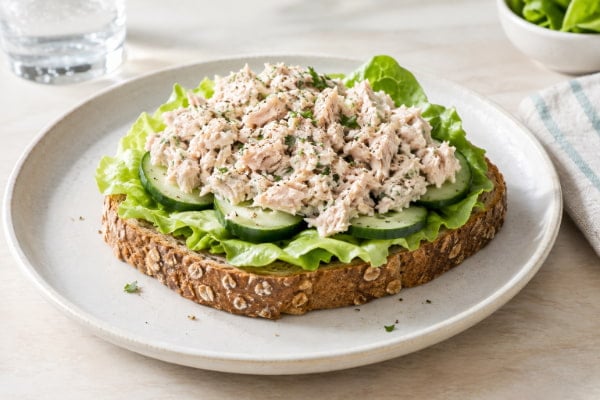
The tuna is almost never what flared you. The build around it is. A tuna sandwich with four tablespoons of mayonnaise is a high-fat meal wearing a healthy costume.
Pairings That Work
- Plain whole grain or sourdough bread with a thin layer of low-fat mayo or mashed avocado
- Cucumber, lettuce, and mild greens
- A small pour of olive oil with rosemary, thyme, parsley, or basil
- Cooked broccoli, zucchini, green beans, or asparagus
- Brown rice or plain pasta as the base
Pairings That Cause Trouble
Raw onion has the strongest evidence against it, and it’s the one people skip past. A controlled study published in the American Journal of Gastroenterology in 1990 put pH probes in 16 normal subjects and 16 heartburn sufferers, fed both groups an identical burger with and without a slice of onion, and found onion raised every reflux measure in the heartburn group while doing nothing in the controls.
Tomato, lemon juice, and vinegar dressings are the usual suspects on every list. The evidence is thinner than the confidence. The ACG’s own guideline rates trigger-food avoidance as a conditional recommendation backed by low-quality evidence, and notes that lab studies found citrus and spicy food had little to no effect on sphincter pressure.
Heavy mayonnaise is the one worth taking seriously, because fat is where the mechanism holds up.
Here’s the finding that reframes all of it. A study in Clinical Gastroenterology and Hepatology found that measured esophageal acid exposure in GERD patients tracked with the calorie density of the meal, independent of its fat percentage. Symptoms, though, ran about 40% higher after high-fat meals. Fat isn’t necessarily producing more acid contact. It’s making you feel every bit of what’s already happening.
So the honest advice isn’t a banned-ingredient list. It’s a smaller sandwich.
How Much Tuna Can You Safely Eat Each Week in 2026?
Two to three servings, with a serving counted as 4 ounces. That’s the practical ceiling for most adults, and it has nothing to do with reflux.
Mercury builds up in big, long-lived predators, and tuna qualifies. The FDA’s fish advice puts canned light tuna (skipjack) in the Best Choices tier at two to three servings a week, even for people who are pregnant or breastfeeding. Albacore and yellowfin land one tier down in Good Choices, at one serving a week for those groups.
Most of my patients aren’t near the limit. They’re eating tuna twice a week and worrying about it daily, which is the wrong ratio.
When Tuna and Acid Reflux Aren’t the Real Problem
Some of you reading this have already done everything on this page. Fresh fish, no onion, small portions, upright after meals. And you still wake up at 2 a.m.
That’s not a diet failure. That’s a mechanical one.
If your sphincter is incompetent or you’ve got a hiatal hernia pulling the junction out of position, no food list closes that gap. Neither does a lifetime of acid suppression, which manages symptoms without touching the cause. Patients with delayed stomach emptying have a different problem again, and low-fat tuna helps them more than most foods, but it isn’t a fix either.
Here’s the part the diet-plan industry won’t tell you: the average patient I see has been symptomatic for six to nine years before anyone ordered pH testing or manometry. Objective testing is what separates people who need a better lunch from people who need a fundoplication. Guessing at food for a decade is the expensive path, and the cost isn’t money. It’s esophageal damage that doesn’t reverse.
If you’ve been managing chronic GERD with food alone for more than a year without real improvement, that’s your signal to get tested. Talk to our team and we’ll tell you honestly whether you’re a surgical candidate or whether you just need a smaller sandwich.
The One Thing to Take Away
Tuna and acid reflux were never really in conflict. Fresh or water-packed, prepared without a cup of mayonnaise and eaten in a normal portion, tuna is one of the better proteins available to anyone with reflux. Canned tuna earns a caveat for silent reflux and histamine sensitivity, and that caveat is worth testing on yourself rather than accepting on faith.
But if you’ve optimized your plate down to the gram and you’re still burning at night, stop auditing the fish. Go find out what your valve is actually doing.
FAQs
Is tuna good for acid reflux?
Yes, for most people. Fresh and water-packed tuna contain under 1 gram of fat and about 20 grams of protein per 3-ounce serving, with a pH near 5.9 that sits well above the level that irritates esophageal tissue. Grilled, baked, or steamed tuna without heavy dressings is one of the safer proteins on a reflux diet.
Can canned tuna trigger acid reflux or silent reflux?
Water-packed canned tuna is fine for most people with heartburn. The concern is histamine, which builds up in scombroid fish like tuna during processing and storage. A 2025 study in Foods detected histamine in 41.25% of canned fish samples tested, with canned tuna averaging 7.05 mg/kg. People with silent reflux and reduced diamine oxidase activity may react to those levels.
Is tuna in oil or tuna in water better for tuna and acid reflux?
Water, without question. Oil-packed tuna retains 4 to 6 grams of fat per 3-ounce serving even after draining, and dietary fat slows stomach emptying while loosening the lower esophageal sphincter. Water-packed tuna delivers the same protein for under 1 gram of fat.
Can I eat a tuna sandwich with GERD?
Yes, if you build it carefully. Use water-packed tuna, plain whole grain or sourdough bread, a thin layer of low-fat mayo or avocado, and mild vegetables like cucumber or lettuce. Leave out the raw onion, which a 1990 study in the American Journal of Gastroenterology found raised every measured reflux variable in heartburn sufferers while having no effect on people without reflux.
How often can I eat tuna each week?
Two to three servings of 4 ounces each is the standard guidance. The FDA lists canned light tuna in its Best Choices category at two to three servings weekly, while albacore and yellowfin fall into Good Choices at one serving a week for people who are pregnant or breastfeeding. This limit relates to mercury, not reflux.
Does tuna cause acid reflux on its own?
Rarely. Tuna isn’t acidic enough to irritate the esophagus directly, and plain tuna is too low in fat to meaningfully slow stomach emptying. Flares after a tuna meal usually trace back to mayonnaise, packing oil, raw onion, portion size, or histamine in canned varieties.
What should I do if tuna and acid reflux symptoms continue despite a clean diet?
Get objective testing. If you’ve eliminated trigger foods for a year and symptoms persist, the cause is more likely mechanical, such as a weak sphincter or a hiatal hernia, than dietary. pH monitoring and esophageal manometry identify which patients need surgical repair rather than another round of food restriction.


An endoscopy cannot tell you if you have reflux. It can only tell you if you have complications of GERD.
If you are unhappy with your reflux symptoms, come in and we can discuss testing and treatments that can accurately diagnose your problem.
#reflux #gerd #hiatalhernia #gastroparesis #linx

CALL US AT 813-922-2920
www.tampareflux.com
If you have a hiatal hernia and fit one of these categories, you should know your options.
Dr. Grandhige is an expert in his field and performs 200 of these surgeries a year. He is the only surgeon in the Tampa Bay Area who offers all surgical options - LINX, Fundoplications, TIF and will be one of 20 surgeons in America introducing the latest procedure RefluxStop in 2026.
We accept most insurances but will verify yours before you come in. These procedures are considered medically necessary and covered by your insurance. You can expect to pay your in-network deductibles and nothing else.
#hiatalhernia #reflux #GERD #LINX #refluxstop
What causes reflux ?
1. Weak lower esophageal sphincter
2. Hiatal hernia
3. Flattening of the Angle of His
4. Poor esophageal motility
5. Gastroparesis (slow stomach)
NOT increased acid production
Don’t let GERD get in the way of living your life. Request your appointment with us today on the link below.
.
.
.
.
https://tampareflux.com/contact-us/
Anyone can be victim to GERD and though weight loss can help reduce GERD symptoms. Many athletes with high impact workouts may continue to have these symptoms. This may be a symptom of a hiatal hernia or other issue. We are more then happy to assist you in finding your solution, just click the link below.
.
.
.
https://tampareflux.com/contact-us/
##healthylifestyle #workout #athletereflux #PPIs #heartburn #LINX #fundoplication #TIF #GERD#tampaheartburn #linx #TIF #fundoplication #tampabayreflux #GERD #acidreflux #acidrefluxsurgery #stopreflux
#nonsurgicalweightloss #ESG #gastricballoon #weightlossjourney #vsg #vsgjourney #spatz3 #orbera #orberaballoon #grandhige #DrG
#tampabayrefluxinstitute #guthealth #roboticsurgery
Heartburn may seem like an annoyance. But if you find yourself having symptoms on a daily basis, it may be time to to talk to Dr. Grandhige as it could be a symptom of something worse.
.
.
.
#chronicheartburn #gerdsymptoms #heartburnrelief #reflux #PPIs #heartburn #LINX #fundoplication #TIF #GERD#tampaheartburn #linx #TIF #fundoplication #tampabayreflux #GERD #acidreflux #acidrefluxsurgery #stopreflux
#nonsurgicalweightloss #ESG #gastricballoon #weightlossjourney #vsg #vsgjourney #spatz3 #orbera #orberaballoon #grandhige #DrG
#tampabayrefluxinstitute #guthealth #roboticsurgery
If you are tired of avoiding your favorite foods or taking daily medications, we can help.
We are the Tampa experts in reflux ! With years of experience and thousands of patients treated successfully, we offer all FDA approved anti-reflux procedures.
Call 813-922-2920 to schedule your appointment
All major insurances accepted.
Not all patients need surgical intervention. Many patients are living a heartburn free life with their PPIs. However 40% of patients taking PPIs are not getting the relief they need. If you are one of those, you have options! Come in and find out more.
.
.
.
.
#letushelpyou #medsnotworking #reflux #PPIs #heartburn #LINX #fundoplication #TIF #GERD#tampaheartburn #linx #TIF #fundoplication #tampabayreflux #GERD #acidreflux #acidrefluxsurgery #stopreflux
#nonsurgicalweightloss #ESG #gastricballoon #weightlossjourney #vsg #vsgjourney #spatz3 #orbera #orberaballoon #grandhige #DrG
#tampabayrefluxinstitute #guthealth #roboticsurgery
#heartburn #stopreflux #hiatalherniarepair #severeheartburn #reflux #tampabayreflux #acidrefluxsurgery #tampaheartburn #GERD #PPIs #achalasia #LINX #TIF #tampareflux #fundoplication #stomach #digestivehealth #ESG #obesity #overweight #weightlossjourney #gastricballoon


