

Written By: Jeffrey Atlas, Health Content Writer
Medically Reviewed By: Dr. Gopal Grandhige, MD, FACS, Board-Certified Surgeon
Last Reviewed: March 10, 2026
Heartburn isn’t always caused by spicy food or caffeine, as many common prescription and over-the-counter medications can trigger or worsen acid reflux symptoms. These medications typically cause heartburn by either irritating the esophageal lining directly or relaxing the lower esophageal sphincter, allowing stomach acid to flow backward. Understanding which medications carry this risk, including NSAIDs, blood pressure drugs, antibiotics, and osteoporosis treatments, can help you work with your doctor to find solutions.
Understanding Heartburn
Beyond acid reflux, this condition goes by several names, including acid indigestion and acid regurgitation. It’s also the hallmark symptom of gastroesophageal reflux disease (GERD), one of the most prevalent digestive disorders. Heartburn manifests as a burning feeling in the upper chest area that may extend toward the throat or upper arms. An acidic or sour taste in the mouth often accompanies it. Those who experience heartburn or GERD frequently report that symptoms tend to flare up at night or following meals.
The root cause of heartburn lies in the improper function of the lower esophageal sphincter (LES), a muscular ring that governs the passage between your esophagus and stomach. Normally, this sphincter opens to allow food through, then seals shut completely. When the LES fails to close properly or allows digestive acids to flow backward into the esophagus, these acids irritate the esophageal tissue and produce the characteristic burning discomfort.
How Medications Lead to Heartburn
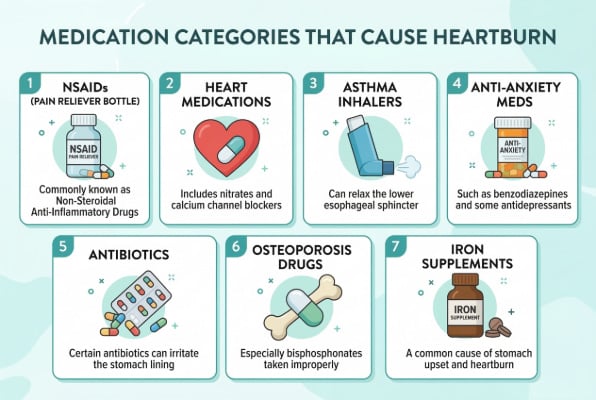
Medications that trigger heartburn typically do so through one of two mechanisms: directly irritating the esophageal lining or causing the LES to relax. The resulting sensation feels similar regardless of the cause. Not everyone who takes these medications will experience heartburn, but awareness is important. Here are the main categories of medications known to potentially cause this issue:
The Scope of Drug-Induced Esophagitis
Research indicates that drug-induced esophagitis affects approximately 3.9 per 100,000 people annually, with middle-aged women being most commonly affected due to higher medication consumption rates. More than 30 different medications have been identified as potential causes of drug-induced esophagitis. Common symptoms include retrosternal chest pain, which occurs in approximately 71.8% of cases, along with difficulty swallowing and painful swallowing. Risk factors that increase the likelihood of medication-related esophageal injury include inadequate water intake when swallowing pills, taking medications while lying down, reduced saliva production, and underlying esophageal motility disorders. Taking medications with a full glass of water and remaining upright for at least 30 minutes afterward can significantly reduce these risks.
NSAIDs (Non-Steroidal Anti-Inflammatory Drugs)
These widely available over-the-counter and prescription medications help reduce pain and inflammation throughout the body. While highly effective for managing discomfort, NSAIDs can aggravate the stomach lining, potentially leading to heartburn, GERD symptoms, or stomach ulcers. Taking them with food may help minimize stomach irritation. Common examples include:
- Aspirin
- Ibuprofen (Advil, Motrin)
Cardiovascular Medications
Certain drugs prescribed for hypertension or heart conditions work by relaxing the smooth muscles surrounding blood vessels. Unfortunately, these same medications may also relax the lower esophageal sphincter muscles, permitting stomach acid to escape into the esophagus. Examples include:
- Calcium channel blockers
- Nitrates
- Beta blockers
Asthma Treatments
People with asthma already face an elevated risk of experiencing heartburn. Compounding this, some asthma medications can intensify heartburn symptoms by impairing the LES’s ability to contract or by relaxing the esophageal muscles. Examples include:
- Theophylline
- Prednisone
- Albuterol
Anti-Anxiety and Antidepressant Medications
Similar to other drugs with relaxing properties, anti-anxiety medications and tricyclic antidepressants can loosen the lower esophageal sphincter while also irritating stomach tissue. Beyond heartburn, patients may experience nausea or additional GERD-related symptoms. Examples include:
- Diazepam (Valium)
- Lorazepam (Ativan)
Antibiotics
These drugs are essential for combating bacterial infections by targeting and eliminating bacteria. However, they sometimes destroy beneficial bacteria residing in the digestive system, which can irritate the stomach lining. This irritation may boost stomach acid production, resulting in heartburn. Examples include:
- Tetracycline
- Clindamycin
- Doxycycline
Osteoporosis Treatments
For patients with osteoporosis, bisphosphonates are prescribed to slow bone deterioration. These antiresorptive medications can directly irritate the esophageal lining. Examples include:
- Alendronate sodium (Fosamax)
- Risedronate sodium (Actonel)
- Ibandronate sodium (Boniva)
Iron Supplements
Commonly used to address iron deficiency anemia, most over-the-counter iron supplements contain ferrous sulfate. While effective at correcting iron deficiencies, this compound can irritate both the esophageal and stomach linings, triggering heartburn or other acid reflux symptoms.
Managing Medication-Induced Heartburn
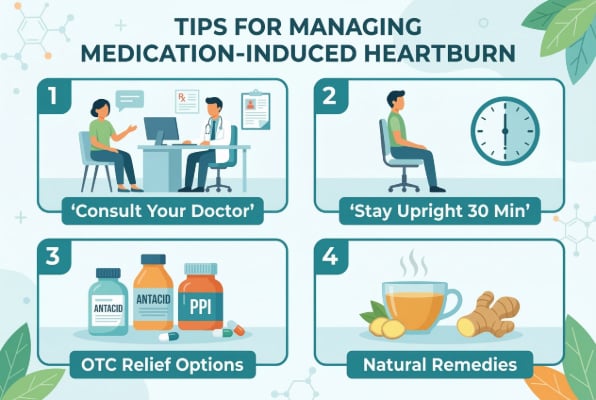
If you suspect a medication is causing your heartburn, the crucial first step is to not discontinue the medication on your own. Instead, reach out to your healthcare provider and describe your symptoms. Depending on your situation, your doctor might prescribe an alternative medication or offer guidance on managing the heartburn. Some medications require specific timing or should be taken with food, so reviewing the dosage instructions is also worthwhile.
Your physician may recommend additional strategies beyond switching prescriptions. For example, certain osteoporosis treatments are available in topical cream form rather than pills that can irritate the digestive tract. Be sure to share a complete list of all medications, supplements, and over-the-counter products you use regularly, as drug interactions could be contributing to your heartburn and may have straightforward solutions. Consider these additional tips:
- Remain upright for at least 30 minutes after taking medication to prevent stomach acid from splashing into the esophagus.
- With your doctor’s approval, use over-the-counter antacids temporarily to neutralize excess stomach acid.
- H2 blockers such as famotidine (Pepcid) can provide relief by temporarily reducing stomach acid production.
- Proton pump inhibitors (PPIs) like omeprazole (Prilosec) or lansoprazole (Prevacid) offer another treatment option by significantly limiting acid production.
- Emerging research suggests that ginger supplements and ginger tea may offer some heartburn relief, though this isn’t yet universally endorsed by medical professionals.
When Professional Help Is Needed
For many individuals, heartburn is simply an occasional nuisance tied to dietary choices. But if you have GERD or experience heartburn regularly as a medication side effect, consulting a reflux specialist is essential. Untreated acid reflux can gradually damage the esophagus over time, potentially leading to serious conditions like Barrett’s esophagus or esophageal cancer. If you’ve noticed a connection between starting a new medication and developing heartburn symptoms, seeking advice from a gastroenterology specialist is a wise step. Heartburn, even when relatively mild, can diminish your quality of life, but effective treatments are available.
Some patients may also have underlying conditions that worsen medication-related heartburn, such as hiatal hernias or silent reflux (LPR). Additionally, digestive motility disorders like gastroparesis or achalasia can complicate how medications affect your digestive system. Learn more about these conditions on our reflux blog.

Find Relief at Tampa Bay Reflux Institute
Are you struggling with persistent heartburn or medication-related acid reflux? At Tampa Bay Reflux Institute, our dedicated team of specialists is passionate about helping patients overcome digestive discomfort and reclaim their quality of life. We offer comprehensive evaluations, personalized treatment plans, and advanced therapies tailored to your unique needs.
For patients requiring surgical intervention, we provide cutting-edge procedures including fundoplication surgery, the LINX Reflux Management System, and TIF EsophyX for minimally invasive relief. We also treat abdominal hernia and heartburn conditions and offer incisionless weight loss procedures that may help reduce reflux symptoms. Our hiatal hernia specialists in Tampa are among the most experienced in the region.
Don’t let heartburn control your daily routine. Contact our team today to schedule a consultation and discover lasting solutions for your reflux symptoms. For additional patient resources on GERD, explore trusted gastroenterology organizations.
Conclusion
Medication-induced heartburn is a common yet often overlooked side effect that can significantly impact your quality of life. While many prescription and over-the-counter drugs are essential for managing various health conditions, understanding their potential to cause or worsen acid reflux empowers you to take proactive steps. By working closely with your healthcare provider, you can explore alternative medications, adjust timing and dosing strategies, or incorporate supportive treatments to minimize discomfort. Remember, you should never stop taking prescribed medications without professional guidance. Instead, communicate openly with your doctor about any symptoms you experience. With the right approach, you can effectively manage both your primary health condition and keep heartburn under control.
FAQs
Why do some medications cause heartburn?
Medications can trigger heartburn by either directly irritating the esophageal lining or by relaxing the lower esophageal sphincter, allowing stomach acid to flow back into the esophagus.
Should I stop taking my medication if it causes heartburn?
Never discontinue a medication on your own. Consult your healthcare provider first, as they can suggest alternatives or strategies to manage the side effects safely.
Can over-the-counter antacids help with medication-induced heartburn?
Yes, with your doctor’s approval, antacids, H2 blockers, or proton pump inhibitors can provide temporary relief by neutralizing or reducing stomach acid production.
Does taking medication with food reduce heartburn risk?
For many medications, especially NSAIDs, taking them with food can help minimize stomach irritation and reduce the likelihood of heartburn symptoms.
When should I see a doctor about medication-related heartburn?
Seek medical advice if heartburn persists, worsens, or interferes with daily life, as untreated acid reflux can lead to serious complications over time.


An endoscopy cannot tell you if you have reflux. It can only tell you if you have complications of GERD.
If you are unhappy with your reflux symptoms, come in and we can discuss testing and treatments that can accurately diagnose your problem.
#reflux #gerd #hiatalhernia #gastroparesis #linx

CALL US AT 813-922-2920
www.tampareflux.com
If you have a hiatal hernia and fit one of these categories, you should know your options.
Dr. Grandhige is an expert in his field and performs 200 of these surgeries a year. He is the only surgeon in the Tampa Bay Area who offers all surgical options - LINX, Fundoplications, TIF and will be one of 20 surgeons in America introducing the latest procedure RefluxStop in 2026.
We accept most insurances but will verify yours before you come in. These procedures are considered medically necessary and covered by your insurance. You can expect to pay your in-network deductibles and nothing else.
#hiatalhernia #reflux #GERD #LINX #refluxstop
What causes reflux ?
1. Weak lower esophageal sphincter
2. Hiatal hernia
3. Flattening of the Angle of His
4. Poor esophageal motility
5. Gastroparesis (slow stomach)
NOT increased acid production
Don’t let GERD get in the way of living your life. Request your appointment with us today on the link below.
.
.
.
.
https://tampareflux.com/contact-us/
Anyone can be victim to GERD and though weight loss can help reduce GERD symptoms. Many athletes with high impact workouts may continue to have these symptoms. This may be a symptom of a hiatal hernia or other issue. We are more then happy to assist you in finding your solution, just click the link below.
.
.
.
https://tampareflux.com/contact-us/
##healthylifestyle #workout #athletereflux #PPIs #heartburn #LINX #fundoplication #TIF #GERD#tampaheartburn #linx #TIF #fundoplication #tampabayreflux #GERD #acidreflux #acidrefluxsurgery #stopreflux
#nonsurgicalweightloss #ESG #gastricballoon #weightlossjourney #vsg #vsgjourney #spatz3 #orbera #orberaballoon #grandhige #DrG
#tampabayrefluxinstitute #guthealth #roboticsurgery
Heartburn may seem like an annoyance. But if you find yourself having symptoms on a daily basis, it may be time to to talk to Dr. Grandhige as it could be a symptom of something worse.
.
.
.
#chronicheartburn #gerdsymptoms #heartburnrelief #reflux #PPIs #heartburn #LINX #fundoplication #TIF #GERD#tampaheartburn #linx #TIF #fundoplication #tampabayreflux #GERD #acidreflux #acidrefluxsurgery #stopreflux
#nonsurgicalweightloss #ESG #gastricballoon #weightlossjourney #vsg #vsgjourney #spatz3 #orbera #orberaballoon #grandhige #DrG
#tampabayrefluxinstitute #guthealth #roboticsurgery
If you are tired of avoiding your favorite foods or taking daily medications, we can help.
We are the Tampa experts in reflux ! With years of experience and thousands of patients treated successfully, we offer all FDA approved anti-reflux procedures.
Call 813-922-2920 to schedule your appointment
All major insurances accepted.
Not all patients need surgical intervention. Many patients are living a heartburn free life with their PPIs. However 40% of patients taking PPIs are not getting the relief they need. If you are one of those, you have options! Come in and find out more.
.
.
.
.
#letushelpyou #medsnotworking #reflux #PPIs #heartburn #LINX #fundoplication #TIF #GERD#tampaheartburn #linx #TIF #fundoplication #tampabayreflux #GERD #acidreflux #acidrefluxsurgery #stopreflux
#nonsurgicalweightloss #ESG #gastricballoon #weightlossjourney #vsg #vsgjourney #spatz3 #orbera #orberaballoon #grandhige #DrG
#tampabayrefluxinstitute #guthealth #roboticsurgery
#heartburn #stopreflux #hiatalherniarepair #severeheartburn #reflux #tampabayreflux #acidrefluxsurgery #tampaheartburn #GERD #PPIs #achalasia #LINX #TIF #tampareflux #fundoplication #stomach #digestivehealth #ESG #obesity #overweight #weightlossjourney #gastricballoon


