

Written By: Jeffrey Atlas, Health Content Writer
Medically Reviewed By: Dr. Gopal Grandhige, MD, FACS, Board-Certified Surgeon
Last Reviewed: March 16, 2026
Hiatal hernia surgery repairs a stomach protrusion through the diaphragm, relieving acid reflux and swallowing difficulties. Inguinal hernia surgery fixes tissue pushing through the lower abdominal wall near the groin, eliminating pain and visible bulging. Both procedures can be performed using minimally invasive or open techniques, with most patients returning to normal activities within a few weeks. The right approach depends on hernia location, size, and your overall health.
What You Should Know About Hiatal Hernia Surgery
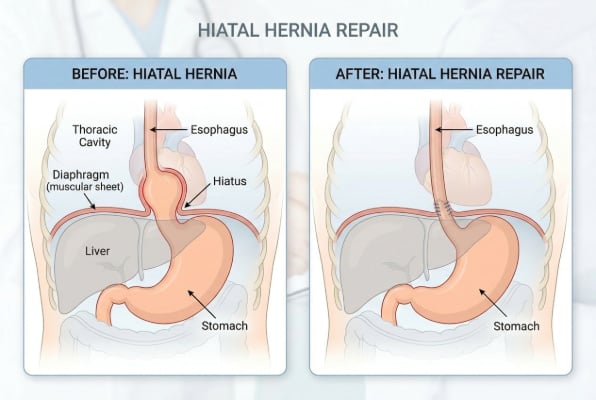
A hiatal hernia develops when the upper section of the stomach slides through the diaphragm into the chest cavity. According to the Mayo Clinic, contributing factors include excess body weight, the natural aging process, and physical exertion. Typical symptoms consist of heartburn, acid reflux, and difficulty swallowing.
A frequently performed procedure is sliding hiatal hernia surgery, during which the stomach is moved back into position and secured beneath the diaphragm. This restores proper anatomy and can dramatically decrease reflux and related symptoms. Minimally invasive fundoplication techniques are commonly employed, potentially leading to quicker recovery and reduced post-operative discomfort.
Like any surgical procedure, hiatal hernia surgery comes with certain risks. The Cleveland Clinic notes that possible complications may include infection, bleeding, or temporary challenges with swallowing. Nevertheless, improvements in surgical methods have enhanced outcomes and minimized complications, making the procedure safer for a broad spectrum of patients.
Exploring Inguinal Hernia Surgery
An inguinal hernia forms when tissue, frequently a section of intestine, protrudes through a weakened area in the abdominal wall near the groin. Causes may include heavy lifting, being overweight, or chronic coughing. Symptoms typically involve pain, a sensation of pressure, or a noticeable bulge, particularly when bending over or straining.
Inguinal hernia surgery repairs the compromised area and commonly utilizes mesh to strengthen the abdominal wall. The procedure may be conducted through open surgery or laparoscopic techniques. Laparoscopic approaches generally involve smaller incisions and shorter recovery periods, similar to what patients experience with abdominal hernia and heartburn treatment.
This surgery is typically safe and highly effective, with minimal risk of the hernia returning. As with all surgical procedures, potential risks like infection or anesthesia-related complications exist, but the majority of patients experience significant symptom relief and enhanced quality of life following recovery.
Key Facts About Hiatal and Inguinal Hernia Surgeries
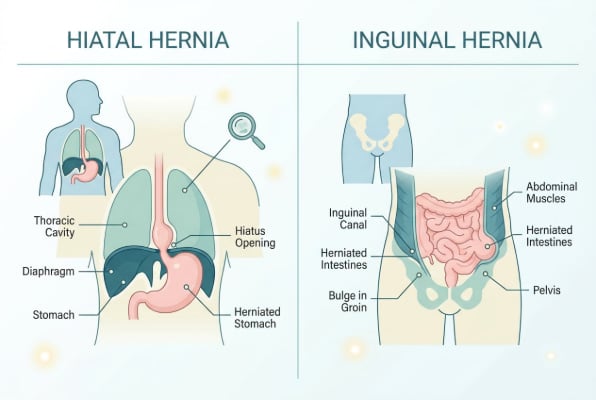
Hernias occur frequently across all age groups, making it valuable to understand the distinctions between hiatal hernia surgery and inguinal hernia surgery. Both procedures provide relief from discomfort and help prevent serious issues that can arise when hernias go untreated. Johns Hopkins Medicine provides comprehensive resources on understanding these conditions.
How Common Are They: Healthcare providers diagnose millions of hernias annually. Many people will need either hiatal hernia surgery or inguinal hernia surgery at some point in their lives.
Hiatal Hernias: These develop when part of the stomach shifts upward through the diaphragm. Common symptoms include acid reflux, chest pain, and swallowing difficulties. Patients suffering from GERD symptoms often discover they have an underlying hiatal hernia.
Inguinal Hernias: Located in the groin area, these hernias occur more frequently in men. They usually cause pain, a visible bulge, and discomfort when lifting or bending.
Surgical Methods: Both hiatal hernia surgery and inguinal hernia surgery can be performed using conventional or minimally invasive techniques. Minimally invasive options are often preferred due to their reduced recovery time.
Recovery Period: Most patients resume their regular activities within several weeks. Complete recovery may take longer based on the surgery’s complexity and the technique employed.
Patient Eligibility: Factors such as age, overall health, and daily habits influence the most suitable surgical approach. Collaborating closely with a surgeon helps determine the optimal choice.
Surgical Approaches: Minimally Invasive vs. Open Surgery
When evaluating hiatal hernia surgery or inguinal hernia surgery, understanding the surgical method matters greatly. Minimally invasive procedures, including laparoscopic and robotic surgery, have grown increasingly popular. The National Institute of Diabetes and Digestive and Kidney Diseases confirms that these techniques utilize smaller incisions, promote faster healing, and cause less discomfort after the operation compared to traditional open surgery.
Emerging technologies such as robotic-assisted surgery continue to enhance the accuracy of both hiatal hernia surgery and inguinal hernia surgery. Options like the LINX reflux management system prove particularly valuable in cases involving intricate anatomy or previous surgical procedures. Patients enjoy fewer complications, briefer hospital stays, and improved overall recovery experiences.
Not every patient qualifies for minimally invasive approaches. The hernia’s size, type, and location, along with the patient’s general health, significantly influence which method is safest and most effective. A comprehensive assessment helps determine whether a laparoscopic or open technique is the better option, as explained by Harvard Health.

Determining the Right Approach for You
Identifying the best strategy for hiatal hernia surgery or inguinal hernia surgery hinges on various personal health considerations. Younger or healthier individuals often bounce back more rapidly from minimally invasive surgery. Others may fare better with traditional methods, depending on their specific condition and medical background. The TIF EsophyX procedure represents one innovative option for qualifying patients.
Patient-focused decision making is essential. Conversations about goals, potential risks, and expectations with a skilled surgeon ensure the selected technique aligns with your overall health and lifestyle needs. WebMD offers helpful guidance on questions to ask your doctor.
Whether you’re getting ready for sliding hiatal hernia surgery or addressing an inguinal hernia, the ideal surgical plan should weigh safety, recovery time, and long-term results. A thoughtful dialogue with your healthcare provider will help you move forward with confidence. The NHS provides additional information on preparing for these procedures.
Recovery and What to Expect After Surgery
The post-surgery recovery phase is critical for both hiatal hernia surgery and inguinal hernia surgery. Patients who undergo minimally invasive procedures typically resume everyday activities sooner than those who have open surgery. Regardless of the method used, carefully adhering to your surgeon’s guidelines is vital for a seamless recovery.
Helpful recovery strategies may include taking pain relievers as directed, avoiding strenuous physical activity, consuming soft foods when needed, and keeping all scheduled follow-up appointments. Healthline emphasizes watching for warning signs of complications like infection or recurrence.
Each patient’s recovery timeline differs. Staying informed and asking questions supports a healing process that is both safe and efficient. Resources like MedlinePlus and the National Library of Medicine offer evidence-based recovery guidance. Preparation, open communication, and active involvement are fundamental to achieving lasting success after hiatal hernia surgery or inguinal hernia surgery.

Expert Hiatal Hernia Treatment at Tampa Bay Reflux Institute
If you’re struggling with hiatal hernia, GERD, or persistent acid reflux, Tampa Bay Reflux Institute offers specialized surgical solutions tailored to your unique needs. Led by Dr. Grandhige, a nationally recognized expert in reflux diagnosis and surgical treatment, the institute focuses exclusively on helping patients eliminate reflux and related conditions including silent reflux (LPR).
Dr. Grandhige has refined three cutting-edge anti-reflux surgical techniques to provide long-term relief:
Robotic Fundoplications, an outpatient procedure that reinforces a weak lower esophageal sphincter using the patient’s own stomach tissue, creating an effective acid barrier.
LINX Reflux Management System, a minimally invasive solution featuring a flexible band of magnetic titanium beads placed around the lower esophageal sphincter to prevent reflux.
TIF (Transoral Incisionless Fundoplication) / EsophyX®, the most successful incision-free endoscopic procedure designed to strengthen a weak sphincter and minimize acid reflux.
With over a decade of experience and more than 1,400 procedures performed, including 600+ fundoplications, 600+ LINX procedures, and 200+ TIF procedures, Dr. Grandhige is the only board-certified surgeon in the Tampa Bay area who regularly performs all three techniques. The institute also addresses related conditions such as achalasia and gastroparesis, along with incisionless weight loss procedures.
Conclusion
Choosing between hiatal hernia surgery and inguinal hernia surgery depends entirely on the type and location of your hernia, as well as your overall health and lifestyle needs. Both procedures have evolved significantly with advancements in minimally invasive techniques, offering patients shorter recovery times, reduced discomfort, and excellent long-term outcomes. Whether you’re dealing with persistent acid reflux from a hiatal hernia or a painful bulge from an inguinal hernia, working closely with an experienced surgeon ensures you receive a personalized treatment plan that prioritizes your safety and quality of life. Taking the time to understand your condition and surgical options empowers you to move forward with confidence toward lasting relief. Visit our blog for more insights, explore our guide to finding the best hiatal hernia doctors in Tampa, or contact us to schedule a consultation.
FAQs
What is the main difference between hiatal and inguinal hernias?
A hiatal hernia occurs when the stomach pushes through the diaphragm into the chest, while an inguinal hernia involves tissue protruding through the lower abdominal wall near the groin. Each requires a different surgical approach based on its location.
Is minimally invasive surgery always the best option?
Minimally invasive techniques offer faster recovery and less pain, but not all patients qualify. Your surgeon will recommend the safest approach based on your hernia’s size, location, and your overall health.
How long does recovery typically take after hernia surgery?
Most patients return to regular activities within a few weeks. Complete recovery may take longer depending on the surgical technique used and the complexity of the procedure.
What are the common risks associated with hernia surgery?
Potential risks include infection, bleeding, and temporary swallowing difficulties for hiatal surgery or recurrence for inguinal surgery. However, modern surgical techniques have significantly reduced these complications.
How do I know if I need hernia surgery?
Surgery is typically recommended when symptoms like pain, reflux, or a visible bulge interfere with daily life. Consulting with a qualified surgeon will help determine if surgery is the right choice for your condition.


An endoscopy cannot tell you if you have reflux. It can only tell you if you have complications of GERD.
If you are unhappy with your reflux symptoms, come in and we can discuss testing and treatments that can accurately diagnose your problem.
#reflux #gerd #hiatalhernia #gastroparesis #linx

CALL US AT 813-922-2920
www.tampareflux.com
If you have a hiatal hernia and fit one of these categories, you should know your options.
Dr. Grandhige is an expert in his field and performs 200 of these surgeries a year. He is the only surgeon in the Tampa Bay Area who offers all surgical options - LINX, Fundoplications, TIF and will be one of 20 surgeons in America introducing the latest procedure RefluxStop in 2026.
We accept most insurances but will verify yours before you come in. These procedures are considered medically necessary and covered by your insurance. You can expect to pay your in-network deductibles and nothing else.
#hiatalhernia #reflux #GERD #LINX #refluxstop
What causes reflux ?
1. Weak lower esophageal sphincter
2. Hiatal hernia
3. Flattening of the Angle of His
4. Poor esophageal motility
5. Gastroparesis (slow stomach)
NOT increased acid production
Don’t let GERD get in the way of living your life. Request your appointment with us today on the link below.
.
.
.
.
https://tampareflux.com/contact-us/
Anyone can be victim to GERD and though weight loss can help reduce GERD symptoms. Many athletes with high impact workouts may continue to have these symptoms. This may be a symptom of a hiatal hernia or other issue. We are more then happy to assist you in finding your solution, just click the link below.
.
.
.
https://tampareflux.com/contact-us/
##healthylifestyle #workout #athletereflux #PPIs #heartburn #LINX #fundoplication #TIF #GERD#tampaheartburn #linx #TIF #fundoplication #tampabayreflux #GERD #acidreflux #acidrefluxsurgery #stopreflux
#nonsurgicalweightloss #ESG #gastricballoon #weightlossjourney #vsg #vsgjourney #spatz3 #orbera #orberaballoon #grandhige #DrG
#tampabayrefluxinstitute #guthealth #roboticsurgery
Heartburn may seem like an annoyance. But if you find yourself having symptoms on a daily basis, it may be time to to talk to Dr. Grandhige as it could be a symptom of something worse.
.
.
.
#chronicheartburn #gerdsymptoms #heartburnrelief #reflux #PPIs #heartburn #LINX #fundoplication #TIF #GERD#tampaheartburn #linx #TIF #fundoplication #tampabayreflux #GERD #acidreflux #acidrefluxsurgery #stopreflux
#nonsurgicalweightloss #ESG #gastricballoon #weightlossjourney #vsg #vsgjourney #spatz3 #orbera #orberaballoon #grandhige #DrG
#tampabayrefluxinstitute #guthealth #roboticsurgery
If you are tired of avoiding your favorite foods or taking daily medications, we can help.
We are the Tampa experts in reflux ! With years of experience and thousands of patients treated successfully, we offer all FDA approved anti-reflux procedures.
Call 813-922-2920 to schedule your appointment
All major insurances accepted.
Not all patients need surgical intervention. Many patients are living a heartburn free life with their PPIs. However 40% of patients taking PPIs are not getting the relief they need. If you are one of those, you have options! Come in and find out more.
.
.
.
.
#letushelpyou #medsnotworking #reflux #PPIs #heartburn #LINX #fundoplication #TIF #GERD#tampaheartburn #linx #TIF #fundoplication #tampabayreflux #GERD #acidreflux #acidrefluxsurgery #stopreflux
#nonsurgicalweightloss #ESG #gastricballoon #weightlossjourney #vsg #vsgjourney #spatz3 #orbera #orberaballoon #grandhige #DrG
#tampabayrefluxinstitute #guthealth #roboticsurgery
#heartburn #stopreflux #hiatalherniarepair #severeheartburn #reflux #tampabayreflux #acidrefluxsurgery #tampaheartburn #GERD #PPIs #achalasia #LINX #TIF #tampareflux #fundoplication #stomach #digestivehealth #ESG #obesity #overweight #weightlossjourney #gastricballoon


