

Written By: Jeffrey Atlas, Health Content Writer
Medically Reviewed By: Dr. Gopal Grandhige, MD, FACS, Board-Certified Surgeon
Last Reviewed: February 16, 2026
A hiatal hernia during pregnancy occurs when part of the stomach pushes through the diaphragm into the chest cavity, causing heartburn, regurgitation, chest pressure, and difficulty swallowing. It’s more common in pregnancy because a growing uterus increases abdominal pressure and progesterone relaxes the lower esophageal sphincter, which worsens reflux.
For most pregnant women, a hiatal hernia is manageable and not dangerous. Treatment follows a step-up approach: starting with dietary changes and smaller meals, then calcium carbonate antacids, H2 blockers like famotidine, and PPIs like omeprazole if needed, all with options that are safe for mother and baby. Surgery is extremely rare and almost never required.
Seek emergency care immediately if you experience severe chest pain, vomiting blood, black stools, or sudden difficulty swallowing.
What Is a Hiatal Hernia in Pregnancy?
A hiatal hernia develops when the diaphragmatic opening, called the hiatus, widens or weakens enough to let part of the stomach slide up into the chest cavity. According to the Mayo Clinic, many people carry a minor hiatal hernia without ever knowing it, but pregnancy changes the equation. Rising abdominal pressure, combined with hormonal loosening of the lower esophageal sphincter (LES), dramatically increases the likelihood of acid reflux.
Typical complaints include heartburn, regurgitation, a sour taste after meals, chest tightness, or the sensation that food is moving too slowly down the esophagus. For most pregnancies, a hiatal hernia poses no serious threat, but left unmanaged, it can become genuinely disruptive. Effective management centers on controlling reflux, adjusting eating habits to reduce internal pressure, and using medications that are safe for both mother and baby.
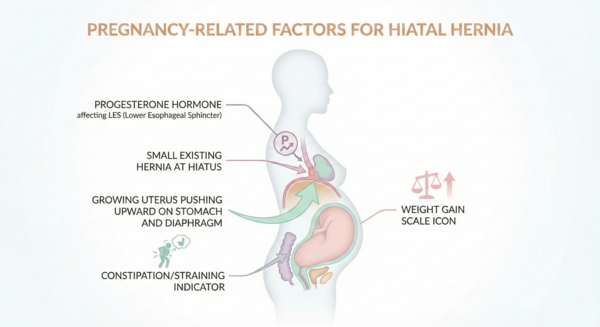
Why Pregnancy Raises the Risk
Several pregnancy-specific factors contribute to hiatal hernia symptoms emerging or intensifying:
- Increased intra-abdominal pressure: As the uterus grows and pushes upward against the stomach and diaphragm, the stomach is more likely to migrate through the hiatus.
- Hormonal influence: Progesterone relaxes smooth muscle throughout the body, including the LES, making it easier for stomach acid to travel upward.
- Pre-existing anatomy: Some women enter pregnancy with a small, previously undetected hernia that only becomes symptomatic once pressure builds.
- Constipation and straining: Both are common during pregnancy and can amplify pressure dynamics that worsen the hernia.
- Pregnancy weight gain: Normal and expected, but rapid gains can accelerate reflux mechanics.
None of these factors make a hiatal hernia inevitable. They simply mean that pregnancy can reveal or escalate symptoms in women who are already predisposed. The Cleveland Clinic notes that understanding your personal risk factors is key to catching symptoms early.
Symptoms to Watch For
Recognize these key signs of a hiatal hernia during pregnancy:
- Intense burning behind the breastbone (heartburn), particularly after eating or when lying down
- Regurgitation or a persistent sour/acidic taste in the mouth
- A sensation of food getting stuck in the chest or mild swallowing difficulty, which can sometimes overlap with symptoms of silent reflux (LPR)
- Pressure or fullness in the upper abdomen after meals
- Frequent belching, bloating, or feeling full too quickly
- Reflux-induced cough or hoarseness upon waking, a pattern also seen in conditions like achalasia, which affects esophageal muscle function
- Less commonly, nausea, vomiting, or chest discomfort that mimics heart-related pain
Act immediately if you experience: severe chest pain, sudden shortness of breath, vomiting blood, or black/tarry stools. These require urgent medical evaluation.
Is Hiatal Hernia Dangerous During Pregnancy?
For most expecting mothers, a sliding hiatal hernia is manageable and not dangerous. The primary concerns with uncontrolled reflux are esophagitis (inflammation of the esophageal lining) or dehydration from persistent vomiting. The more serious risk, though rare, involves a paraesophageal hernia, where the stomach becomes trapped (incarcerated) or loses its blood supply (strangulated). As Johns Hopkins Medicine explains, that scenario is a surgical emergency. For the standard sliding hiatal hernia, the focus stays on symptom control, safe medications, and smart lifestyle adjustments. Complications remain uncommon when warning signs are caught and treated promptly.
Diagnosis and Safe Testing During Pregnancy
In most cases, a clinical diagnosis can be made based on symptoms and how well the patient responds to initial treatment. The NIDDK outlines how clinicians typically approach testing when it becomes necessary:
- Empirical therapy first: Many providers start with lifestyle changes and pregnancy-safe medications before ordering any testing.
- Upper GI endoscopy: Reserved for red-flag symptoms such as bleeding, significant weight loss, or severe swallowing difficulty, performed with pregnancy-specific safety protocols.
- Barium swallow: Used selectively; the benefits must clearly outweigh minimal radiation exposure, and it’s generally postponed unless necessary.
- pH impedance testing: Rarely needed during pregnancy; reserved for complex or treatment-resistant cases.
- Ultrasound: Not a primary diagnostic tool for hiatal hernia, but useful for ruling out other causes of abdominal discomfort.
If you’re unsure where to start, our experienced hiatal hernia specialists in Tampa can guide you through the diagnostic process safely and thoroughly.
Treatment Options for Pregnant Women
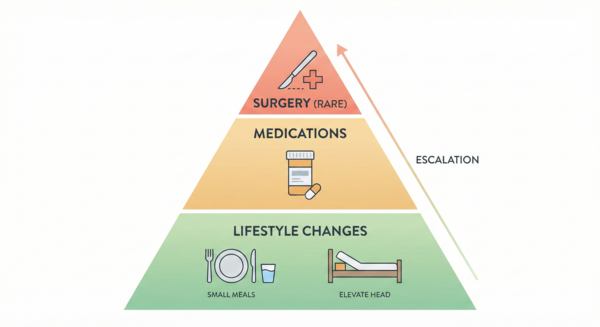
Managing a hiatal hernia during pregnancy follows a step-up approach, starting with the safest, simplest interventions and escalating only when needed. Here’s how that process typically unfolds:
Step 1 – Lifestyle and Diet Adjustments
Smaller, earlier meals, avoiding food close to bedtime, elevating the head of the bed, and identifying personal triggers are the first-line tools. These strategies ease reflux without any medication and carry zero risk for the baby.
Step 2 – Antacids and Alginates
Calcium carbonate or magnesium-based antacids neutralize stomach acid quickly and are widely used when symptoms flare.
Alginates form a protective “raft” over stomach contents, reducing reflux episodes, and can be combined with antacids for added relief. MedlinePlus provides a reliable reference for understanding how these over-the-counter options work during pregnancy.
Avoid: Long-term, high-dose sodium bicarbonate, which carries risks of metabolic imbalances and fluid shifts during pregnancy.
Step 3 – H2 Receptor Blockers
When antacids alone aren’t enough, famotidine is a commonly chosen option with reassuring pregnancy safety data. Observational studies have not shown an increased risk of congenital issues, and H2 blockers are generally considered appropriate before moving to stronger acid suppressants. WebMD offers a helpful overview of how these medications compare.
Step 4 – Proton Pump Inhibitors (PPIs)
For persistent symptoms or confirmed esophagitis, PPIs such as omeprazole may be introduced under obstetric guidance. Large-scale studies and meta-analyses support the overall pregnancy safety of this drug class. You can review the clinical evidence on PubMed for a deeper look at the research.
Step 5 – Prokinetics (Selected Cases)
When delayed gastric emptying is suspected, agents like metoclopramide may be considered, but only with specialist input and careful monitoring.
Step 6 – Surgical Intervention (Rare)
Surgery is almost never required for a sliding hiatal hernia during pregnancy. It becomes relevant only when a paraesophageal hernia leads to incarceration or strangulation, or when symptoms are severe and completely unresponsive to all other treatments. If surgery is unavoidable, the second trimester is the preferred window, managed by a multidisciplinary team. Options like laparoscopic fundoplication or the LINX Reflux Management System are typically deferred until after delivery for elective cases.
Practical Dietary and Lifestyle Tips to Reduce Discomfort
Small, consistent changes make a meaningful difference. Harvard Health and other trusted sources consistently point to these habits as the most impactful starting point:
- Eat smaller meals more frequently, avoid large, heavy dinners
- Stop eating at least three hours before lying down or going to sleep
- Elevate the head of your bed by 6 to 8 inches; a wedge pillow works better than stacking regular pillows
- Choose lean proteins, low-acid fruits, cooked vegetables, oatmeal, and whole grains
- Stay within the weight gain range recommended by your obstetric team
- Take short, light walks after meals to encourage gastric emptying
- Avoid straining and heavy lifting; exhale during any physical effort rather than holding your breath
For women managing both reflux and weight concerns, our incisionless weight loss procedures may be worth exploring postpartum with your care team.

When to Seek Emergency Medical Care
Don’t wait, seek immediate evaluation if you experience any of the following:
- Severe, persistent chest or upper abdominal pain that antacids don’t relieve
- Ongoing vomiting, blood in vomit, or black/tarry stools
- Noticeable trouble swallowing or inability to keep fluids down
- Sudden, severe bloating with pain and an inability to pass gas or stool
- Shortness of breath, dizziness, fainting, or signs of dehydration
- Worsening symptoms despite medication and lifestyle changes
These are potential warning signs of complications that need immediate professional assessment. If you’re in the Tampa Bay area, don’t hesitate to contact our reflux specialists for a prompt evaluation.
Managing Hiatal Hernia After Delivery
Many women experience significant relief after giving birth, as abdominal pressure normalizes and hormone levels stabilize. The NHS and Healthline both highlight the importance of postpartum follow-up, even when symptoms improve. Still, proactive care is worthwhile:
- Reassess symptoms at your 6 to 12 week postpartum checkup
- Continue reflux-conscious habits, including smaller portions, elevated sleeping position, and trigger avoidance
- If symptoms persist, discuss formal diagnostic testing (endoscopy or barium swallow) and long-term management options with a specialist in abdominal hernia and heartburn treatment
- Explore surgical repair or TIF (Transoral Incisionless Fundoplication) if reflux remains significant or if a symptomatic paraesophageal hernia is confirmed
Conclusion
A hiatal hernia during pregnancy is more common than many expecting mothers realize, and while it can be uncomfortable, it is rarely dangerous when managed properly. The combination of hormonal changes, growing abdominal pressure, and pre-existing anatomy can bring symptoms to the surface, but effective, pregnancy-safe tools exist at every stage of management, from simple dietary adjustments to medication when needed. The key is staying proactive: recognize the warning signs early, follow a step-up treatment approach guided by your obstetric team, and act quickly if red-flag symptoms appear. For the vast majority of women, relief comes with consistent lifestyle changes and appropriate care, and for many, symptoms resolve naturally after delivery. Visit Tampa Reflux to explore our full range of reflux and hernia care services, check out our Tampa Reflux blog for more expert guidance, or learn more about our dedicated reflux care team and how we support patients at every stage. With the right knowledge and support, a hiatal hernia does not have to define your pregnancy experience.
FAQs
Can a hiatal hernia harm my baby during pregnancy?
In most cases, a sliding hiatal hernia poses no direct risk to the baby. The primary concern is managing the mother’s comfort and preventing complications like esophagitis or dehydration.
Is it safe to take antacids for hiatal hernia symptoms while pregnant?
Yes, calcium carbonate and magnesium-based antacids are generally considered safe during pregnancy. Always confirm with your doctor before starting any medication, even over-the-counter options.
Will my hiatal hernia symptoms go away after I give birth?
Many women experience significant relief once abdominal pressure and hormone levels normalize after delivery. However, a postpartum follow-up is recommended if symptoms persist beyond 6 to 12 weeks.
How is a hiatal hernia diagnosed during pregnancy?
Diagnosis is often made clinically based on symptoms and response to initial treatment. Invasive testing like endoscopy is reserved for red-flag symptoms such as bleeding or severe swallowing difficulty.
Does having a hiatal hernia mean I will need surgery during pregnancy?
Surgery is extremely rare and almost never required for a standard sliding hiatal hernia during pregnancy. It is only considered in emergency situations, such as hernia incarceration or strangulation, and elective repair is typically deferred until after delivery.


An endoscopy cannot tell you if you have reflux. It can only tell you if you have complications of GERD.
If you are unhappy with your reflux symptoms, come in and we can discuss testing and treatments that can accurately diagnose your problem.
#reflux #gerd #hiatalhernia #gastroparesis #linx

CALL US AT 813-922-2920
www.tampareflux.com
If you have a hiatal hernia and fit one of these categories, you should know your options.
Dr. Grandhige is an expert in his field and performs 200 of these surgeries a year. He is the only surgeon in the Tampa Bay Area who offers all surgical options - LINX, Fundoplications, TIF and will be one of 20 surgeons in America introducing the latest procedure RefluxStop in 2026.
We accept most insurances but will verify yours before you come in. These procedures are considered medically necessary and covered by your insurance. You can expect to pay your in-network deductibles and nothing else.
#hiatalhernia #reflux #GERD #LINX #refluxstop
What causes reflux ?
1. Weak lower esophageal sphincter
2. Hiatal hernia
3. Flattening of the Angle of His
4. Poor esophageal motility
5. Gastroparesis (slow stomach)
NOT increased acid production
Don’t let GERD get in the way of living your life. Request your appointment with us today on the link below.
.
.
.
.
https://tampareflux.com/contact-us/
Anyone can be victim to GERD and though weight loss can help reduce GERD symptoms. Many athletes with high impact workouts may continue to have these symptoms. This may be a symptom of a hiatal hernia or other issue. We are more then happy to assist you in finding your solution, just click the link below.
.
.
.
https://tampareflux.com/contact-us/
##healthylifestyle #workout #athletereflux #PPIs #heartburn #LINX #fundoplication #TIF #GERD#tampaheartburn #linx #TIF #fundoplication #tampabayreflux #GERD #acidreflux #acidrefluxsurgery #stopreflux
#nonsurgicalweightloss #ESG #gastricballoon #weightlossjourney #vsg #vsgjourney #spatz3 #orbera #orberaballoon #grandhige #DrG
#tampabayrefluxinstitute #guthealth #roboticsurgery
Heartburn may seem like an annoyance. But if you find yourself having symptoms on a daily basis, it may be time to to talk to Dr. Grandhige as it could be a symptom of something worse.
.
.
.
#chronicheartburn #gerdsymptoms #heartburnrelief #reflux #PPIs #heartburn #LINX #fundoplication #TIF #GERD#tampaheartburn #linx #TIF #fundoplication #tampabayreflux #GERD #acidreflux #acidrefluxsurgery #stopreflux
#nonsurgicalweightloss #ESG #gastricballoon #weightlossjourney #vsg #vsgjourney #spatz3 #orbera #orberaballoon #grandhige #DrG
#tampabayrefluxinstitute #guthealth #roboticsurgery
If you are tired of avoiding your favorite foods or taking daily medications, we can help.
We are the Tampa experts in reflux ! With years of experience and thousands of patients treated successfully, we offer all FDA approved anti-reflux procedures.
Call 813-922-2920 to schedule your appointment
All major insurances accepted.
Not all patients need surgical intervention. Many patients are living a heartburn free life with their PPIs. However 40% of patients taking PPIs are not getting the relief they need. If you are one of those, you have options! Come in and find out more.
.
.
.
.
#letushelpyou #medsnotworking #reflux #PPIs #heartburn #LINX #fundoplication #TIF #GERD#tampaheartburn #linx #TIF #fundoplication #tampabayreflux #GERD #acidreflux #acidrefluxsurgery #stopreflux
#nonsurgicalweightloss #ESG #gastricballoon #weightlossjourney #vsg #vsgjourney #spatz3 #orbera #orberaballoon #grandhige #DrG
#tampabayrefluxinstitute #guthealth #roboticsurgery
#heartburn #stopreflux #hiatalherniarepair #severeheartburn #reflux #tampabayreflux #acidrefluxsurgery #tampaheartburn #GERD #PPIs #achalasia #LINX #TIF #tampareflux #fundoplication #stomach #digestivehealth #ESG #obesity #overweight #weightlossjourney #gastricballoon


