
Written By: Jeffrey Atlas, Health Content Writer
Medically Reviewed By: Dr. Gopal Grandhige, MD, FACS, Board-Certified Surgeon
Last Reviewed: May 4, 2026
Yes, a hiatal hernia can cause chest pain. The discomfort often feels like burning, pressure, or tightness in the chest and can closely mimic a heart attack, which is why medical evaluation is essential. A hiatal hernia occurs when the upper part of the stomach pushes through the hiatus, an opening in the diaphragm, the thin muscle separating the chest from the abdomen. This displacement allows stomach acid to travel up into the esophagus, triggering heartburn, GERD, and in larger hernias, pressure on the heart and lungs that can lead to shortness of breath.
Hiatal hernias affect up to 60% of people over age 50, though only about 9% experience symptoms requiring treatment. Common signs include chest pain after meals, acid reflux, regurgitation, and difficulty breathing. Treatment ranges from lifestyle changes and antacids to minimally invasive procedures like Transoral Incisionless Fundoplication (TIF), Nissen fundoplication, and LINX. This guide explains what hiatal hernia chest pain feels like, when it signals a worsening condition, and the treatment options available, including expert care from Dr. Gopal Grandhige at Tampa Bay Reflux Institute.

Chest Pain a Symptom of a Hiatal Hernia?
Yes, a hiatal hernia can produce chest pain and is connected to several conditions described below. While many people with a hiatal hernia never develop noticeable symptoms, those who do often report chest discomfort as one of the most common warning signs. The pain may show up high or low in the chest and can sometimes feel like a burning sensation or even mimic the discomfort of a heart attack, which is why medical evaluation is so important. You might also notice the pain becoming more intense when bending over, coughing, or lifting heavy objects, since these actions can put extra pressure on the hernia. In some cases, individuals describe it as recurring chest pain that resembles angina but is actually noncardiac in origin. The exact severity often depends on the size and type of the hernia, with larger paraesophageal hernias more likely to cause noticeable pressure or pain in the upper abdomen and lower chest area.
Acid Reflux, GERD, and That Burning Sensation
In numerous instances, chest pain stemming from a hiatal hernia is tied to stomach acid and its contents flowing back up into the esophagus. This condition is known as gastroesophageal reflux disease (GERD), and it can lead to heartburn. Heartburn typically feels like a burning sensation in the center of the chest and may leave a sour, acidic flavor in the mouth.
Based on a 2019 publication, the chest discomfort linked to GERD can closely resemble the type of pain felt during a heart attack. Notably, this pain can show up even without heartburn being present. On top of that, GERD has the potential to cause the muscles within the esophagus to spasm, and these spasms can also bring on chest pain that someone might confuse with a cardiac event. Patients dealing with related upper-GI conditions such as silent reflux (LPR) or achalasia may also notice overlapping symptoms.
How the Hernia Affects Your Heart and Lungs
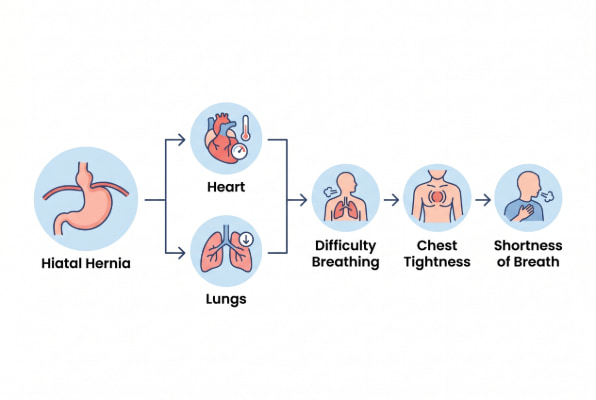
Hiatal hernias have the ability to impact the respiratory system, which can also be a source of chest pain or pressure. As the hernia grows in size and occupies more space, it can press against the arteries in the heart and lungs. This pressure may cause a portion of the lung to collapse, potentially leading to:
- difficulty breathing
- a strong tightness within the chest
- shortness of breath
Hiatal hernias can additionally place pressure on the heart, a condition known as tamponade. When the hernia presses against the heart, it can result in shortness of breath and chest-related discomfort. Conditions like gastroparesis can further compound digestive pressure and worsen overall symptoms.
Could Your Chest Pain Mean the Hernia Is Getting Worse?
Chest pain can be a warning sign of a strangulated or progressing hiatal hernia, and a hernia becomes strangulated when its blood flow is interrupted. A physician might suspect strangulation of a hiatal hernia if a patient reports intense chest or upper stomach pain, generally following a meal, and under these circumstances individuals may also deal with gagging and vomiting. If a person suspects their hernia is getting worse, they should reach out to a healthcare provider, and reading more on our blog can also help patients recognize warning signs early.

Managing and Treating a Hiatal Hernia
Based on how severe a hiatal hernia is, an individual may not need any medical intervention. A 2022 publication points out that although hiatal hernias are widespread and impact as many as 60% of people over the age of 50, only 9% actually develop symptoms, and those who remain symptom-free typically do not need medical treatment.
Lifestyle Changes and At-Home Relief
The following strategies can assist in managing hiatal hernia symptoms:
- quitting smoking, where relevant
- consuming smaller portions
- staying away from greasy or fried foods
- cutting out caffeine
- limiting alcohol intake
- keeping a healthy body weight
- taking over-the-counter (OTC) antacid medications
- remaining upright during meals
- finishing meals at least 3 hours before bedtime
For patients whose symptoms are tied to excess weight, incisionless weight loss procedures may also play a supportive role in long-term reflux management.
Medical and Surgical Options
When a person develops hiatal hernia symptoms, such as GERD, medical care may become necessary. Treatment may include the use of proton pump inhibitors, which are prescription drugs designed to address heartburn, acid reflux, GERD, and stomach ulcers. In some cases, doctors might also suggest surgical options. Procedures and surgical interventions include:
- Transoral incisionless fundoplication: This technique does not require any cuts. The physician inserts an endoscope through the throat and into the esophagus in order to tighten it, then wraps sections of the stomach, specifically the cardia and the fundus, around the esophagus.
- Endoluminal fundoplication: During this procedure, a doctor inserts an endoscope, a tube fitted with a camera and a light, down the throat. They then tighten the junction where the esophagus meets the stomach to block acid from flowing back into the esophagus.
- Nissen fundoplication: Surgeons are able to carry out this procedure laparoscopically, meaning through very small cuts. They use a laparoscope, a tube fitted with a camera and a light, to mend the hernia and tighten the stomach’s opening.
- Open surgery: This approach involves the surgeon creating a larger cut in the abdominal area. The surgeon then lifts the stomach back into the abdominal cavity and wraps the fundus around the bottom of the food pipe, which blocks acid from leaking up into the esophagus.
When It’s Time to See a Doctor
A person should consult a doctor if they experience chest pain, regardless of whether they think a hiatal hernia is the cause, since chest pain has the potential to point to a serious medical issue such as a heart attack. Individuals should also seek out one of the best hiatal hernia doctors in Tampa, FL if their symptoms:
- continue for more than 3 weeks
- fail to ease with the use of OTC antacids
- become worse over time

Get Expert Hiatal Hernia Care at Tampa Bay Reflux Institute
If you’re dealing with chest pain, heartburn, regurgitation, or shortness of breath that may be tied to a hiatal hernia, the team at Tampa Bay Reflux Institute is here to help. Led by Dr. Gopal Grandhige, a national expert in the diagnosis and surgical treatment of GERD and hiatal hernias, our practice focuses exclusively on reflux-related conditions so you receive specialized, individualized care. Dr. Grandhige has performed over 600 fundoplications, more than 600 LINX procedures, and over 200 TIF procedures, and he is the only board-certified surgeon in the Tampa Bay area who regularly performs all three of these advanced anti-reflux techniques. Because roughly 90% of patients with GERD also have a hiatal hernia, addressing the hernia properly is often key to long-term symptom relief. Dr. Grandhige repairs hiatal hernias both robotically and laparoscopically, tailoring each approach to the patient’s anatomy and preferences. Don’t let chest pain or reflux symptoms disrupt your daily life. Visit us at 1315 South Howard Ave., Suite 101, Tampa, Florida 33606, or call 813.922.2920 to schedule an appointment today.
Conclusion
A hiatal hernia is a common condition, especially among adults over 50, and while many people experience no symptoms at all, others may struggle with chest pain, heartburn, GERD, and even breathing difficulties when the hernia grows larger or interferes with surrounding organs. Recognizing the signs early is essential, since chest pain from a hiatal hernia can closely mimic that of a heart attack and should never be ignored. The good news is that most cases can be managed effectively through lifestyle adjustments, over-the-counter remedies, or prescription medications, while more advanced or persistent cases may benefit from minimally invasive surgical procedures such as TIF, Nissen fundoplication, or LINX. If symptoms continue, worsen, or fail to respond to home care, consulting a specialist is the safest path forward. With expert evaluation and personalized treatment, like the care offered by Dr. Gopal Grandhige at Tampa Bay Reflux Institute, patients can find lasting relief and return to enjoying daily life without the burden of reflux-related discomfort.
FAQs
Can a hiatal hernia cause chest pain that feels like a heart attack?
Yes, hiatal hernia chest pain can closely resemble cardiac pain due to acid reflux or esophageal spasms. Always seek medical evaluation to rule out a heart-related issue.
Do all hiatal hernias require treatment?
No, only about 9% of people with a hiatal hernia develop symptoms that need medical care. Those without symptoms typically do not require any treatment.
What lifestyle changes help manage hiatal hernia symptoms?
Eating smaller meals, avoiding fried or greasy foods, limiting caffeine and alcohol, and staying upright after eating can significantly reduce symptoms. Quitting smoking and maintaining a healthy weight also help.
When should I see a doctor about a hiatal hernia?
You should see a doctor if chest pain or symptoms last more than three weeks, worsen over time, or don’t improve with antacids. Sudden, severe chest or upper abdominal pain requires immediate medical attention.
What surgical options are available for a hiatal hernia?
Common procedures include transoral incisionless fundoplication (TIF), endoluminal fundoplication, Nissen fundoplication, and open surgery. The right option depends on the size of the hernia and the patient’s overall health.


An endoscopy cannot tell you if you have reflux. It can only tell you if you have complications of GERD.
If you are unhappy with your reflux symptoms, come in and we can discuss testing and treatments that can accurately diagnose your problem.
#reflux #gerd #hiatalhernia #gastroparesis #linx

CALL US AT 813-922-2920
www.tampareflux.com
If you have a hiatal hernia and fit one of these categories, you should know your options.
Dr. Grandhige is an expert in his field and performs 200 of these surgeries a year. He is the only surgeon in the Tampa Bay Area who offers all surgical options - LINX, Fundoplications, TIF and will be one of 20 surgeons in America introducing the latest procedure RefluxStop in 2026.
We accept most insurances but will verify yours before you come in. These procedures are considered medically necessary and covered by your insurance. You can expect to pay your in-network deductibles and nothing else.
#hiatalhernia #reflux #GERD #LINX #refluxstop
What causes reflux ?
1. Weak lower esophageal sphincter
2. Hiatal hernia
3. Flattening of the Angle of His
4. Poor esophageal motility
5. Gastroparesis (slow stomach)
NOT increased acid production
Don’t let GERD get in the way of living your life. Request your appointment with us today on the link below.
.
.
.
.
https://tampareflux.com/contact-us/
Anyone can be victim to GERD and though weight loss can help reduce GERD symptoms. Many athletes with high impact workouts may continue to have these symptoms. This may be a symptom of a hiatal hernia or other issue. We are more then happy to assist you in finding your solution, just click the link below.
.
.
.
https://tampareflux.com/contact-us/
##healthylifestyle #workout #athletereflux #PPIs #heartburn #LINX #fundoplication #TIF #GERD#tampaheartburn #linx #TIF #fundoplication #tampabayreflux #GERD #acidreflux #acidrefluxsurgery #stopreflux
#nonsurgicalweightloss #ESG #gastricballoon #weightlossjourney #vsg #vsgjourney #spatz3 #orbera #orberaballoon #grandhige #DrG
#tampabayrefluxinstitute #guthealth #roboticsurgery
Heartburn may seem like an annoyance. But if you find yourself having symptoms on a daily basis, it may be time to to talk to Dr. Grandhige as it could be a symptom of something worse.
.
.
.
#chronicheartburn #gerdsymptoms #heartburnrelief #reflux #PPIs #heartburn #LINX #fundoplication #TIF #GERD#tampaheartburn #linx #TIF #fundoplication #tampabayreflux #GERD #acidreflux #acidrefluxsurgery #stopreflux
#nonsurgicalweightloss #ESG #gastricballoon #weightlossjourney #vsg #vsgjourney #spatz3 #orbera #orberaballoon #grandhige #DrG
#tampabayrefluxinstitute #guthealth #roboticsurgery
If you are tired of avoiding your favorite foods or taking daily medications, we can help.
We are the Tampa experts in reflux ! With years of experience and thousands of patients treated successfully, we offer all FDA approved anti-reflux procedures.
Call 813-922-2920 to schedule your appointment
All major insurances accepted.
Not all patients need surgical intervention. Many patients are living a heartburn free life with their PPIs. However 40% of patients taking PPIs are not getting the relief they need. If you are one of those, you have options! Come in and find out more.
.
.
.
.
#letushelpyou #medsnotworking #reflux #PPIs #heartburn #LINX #fundoplication #TIF #GERD#tampaheartburn #linx #TIF #fundoplication #tampabayreflux #GERD #acidreflux #acidrefluxsurgery #stopreflux
#nonsurgicalweightloss #ESG #gastricballoon #weightlossjourney #vsg #vsgjourney #spatz3 #orbera #orberaballoon #grandhige #DrG
#tampabayrefluxinstitute #guthealth #roboticsurgery
#heartburn #stopreflux #hiatalherniarepair #severeheartburn #reflux #tampabayreflux #acidrefluxsurgery #tampaheartburn #GERD #PPIs #achalasia #LINX #TIF #tampareflux #fundoplication #stomach #digestivehealth #ESG #obesity #overweight #weightlossjourney #gastricballoon


