
Written By: Jeffrey Atlas, Health Content Writer
Medically Reviewed By: Dr. Gopal Grandhige, MD, FACS, Board-Certified Surgeon
Last Reviewed: April 20, 2026
A hiatal hernia is a condition in which part of the stomach pushes up through the diaphragm into the chest cavity through an opening called the hiatus. When this happens, it weakens the lower oesophageal sphincter, the valve that keeps stomach acid out of the oesophagus, which is why hiatal hernias are so often linked to heartburn, acid reflux, chest pain, bloating, and difficulty swallowing.
There are two main types: sliding hiatal hernias, which are the most common and closely tied to GERD, and para-oesophageal hernias, which are rarer but can become a medical emergency. This guide explains what causes hiatal hernias, how to recognise the symptoms, how they affect digestion, and the treatment options available, from lifestyle changes to medication to modern surgical repair.
Breaking Down Hiatal Hernias: Categories and Root Causes
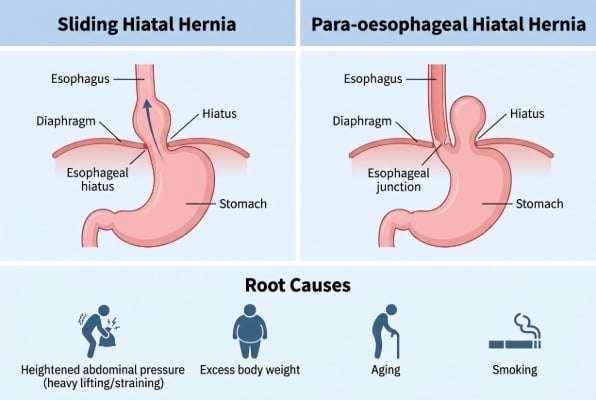
Hiatal hernias generally fall into two primary categories: sliding hiatal hernias and para-oesophageal hiatal hernias. The sliding variety is the more widespread of the two, occurring when the stomach along with the lower portion of the oesophagus slide upward through the hiatus into the chest area. This form is frequently linked to gastro-oesophageal reflux disease (GERD), producing symptoms such as heartburn and acid reflux.
The other category, known as para-oesophageal hiatal hernia, is far less frequent but carries greater risk. Here, a section of the stomach moves through the hiatus and positions itself beside the oesophagus, while the oesophagus stays where it belongs. This arrangement can result in major complications such as stomach strangulation, where circulation to the stomach is interrupted, demanding immediate medical care. Knowing the difference between these categories is key to gauging how serious the condition is and pursuing the right course of treatment.
Numerous elements can trigger the formation of a hiatal hernia. A leading cause is heightened pressure within the abdominal area, which may stem from lifting heavy objects, persistent coughing, vomiting, or straining while having a bowel movement. Carrying excess body weight is another major contributor, since added weight places strain on the abdomen and can force the stomach upward through the diaphragm. For patients dealing with obesity-related reflux, incisionless weight loss procedures can be an effective way to address one of the underlying risk factors.
Getting older is another contributing factor, as the diaphragm naturally loses strength with time, allowing the stomach to slip through more easily. Smoking can worsen these risks by weakening the diaphragm further and boosting acid production. Being mindful of these causes helps you see the connection between everyday habits and the onset of hiatal hernias.
Typical Signs and Symptoms of Hiatal Hernias
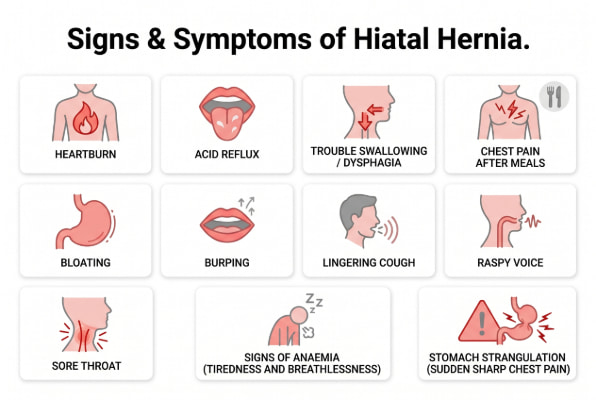
Spotting the signs of a hiatal hernia is the initial move toward successful management and treatment. Among the most recognisable symptoms is heartburn, a burning feeling in the chest that may travel up into the throat. This sensation occurs when stomach acid makes its way back into the oesophagus. Acid reflux is another regular symptom, where a bitter or sour taste in your mouth signals that stomach acid has reached as high as your throat.
Additional symptoms can include trouble swallowing, known as dysphagia, which can make both eating and drinking an uncomfortable experience. Dysphagia can also point to other conditions like achalasia, so proper evaluation is important. Certain individuals also report chest pain, which may be wrongly attributed to heart conditions. Keep in mind that chest pain caused by a hiatal hernia typically shows up after meals and has no link to physical activity. Feelings of bloating and frequent burping are also common, since the hernia can hold gas inside the stomach.
In some situations, hiatal hernias may trigger more intense symptoms. A lingering cough, a raspy voice, or a persistent sore throat can arise when acid continually aggravates the oesophagus, symptoms often associated with silent reflux or LPR. Should the hernia cause noticeable blood loss, you may detect signs of anaemia, including tiredness and breathlessness. In the worst-case scenario, a para-oesophageal hernia can cause stomach strangulation, a true medical emergency indicated by sudden, sharp chest pain and the inability to pass gas or move the bowels. Catching these symptoms early paves the way for prompt medical care and lowers the chances of complications.

How Hiatal Hernias Influence Your Digestive Health
Hiatal hernias can noticeably influence your digestive health. One of the main ways they interfere with digestion is by disrupting the normal flow of food and acid travelling between the stomach and oesophagus. This disturbance frequently triggers gastro-oesophageal reflux disease (GERD), in which stomach acid regularly travels back up into the oesophagus, producing irritation and inflammation. Ongoing acid reflux can injure the oesophageal lining and lead to complications such as oesophagitis, which refers to the inflammation of that lining.
Another consequence of hiatal hernias on digestive health is the risk of compromised digestion. The hernia may prevent the lower oesophageal sphincter (LES), a muscular ring designed to stop stomach contents from flowing backward into the oesophagus, from sealing properly. When the LES fails to close as it should, digestive enzymes and food fragments can travel back upward, leading to discomfort and swallowing difficulties. This situation may cause poor nutrient absorption, unintended weight loss, and additional digestive troubles. In some cases, delayed stomach emptying conditions such as gastroparesis can further complicate the picture.
Hiatal hernias are also capable of producing ongoing bloating and gas, which leads to abdominal discomfort. Since the hernia holds gas within the stomach, air has a harder time moving through the digestive system. This can turn routine daily tasks into uncomfortable experiences and reduce your overall quality of life. Understanding the connection between abdominal hernia and heartburn allows you to keep an eye on your digestive health and act on the symptoms effectively.
Treatment Approaches and Management Tactics for Hiatal Hernias
A range of approaches exists for treating and managing hiatal hernias, with the goal of easing symptoms and enhancing quality of life. Adjusting your lifestyle can be remarkably effective at keeping hiatal hernia symptoms under control. Opting for smaller, more frequent meals rather than heavy ones can ease the pressure on the stomach and cut down on reflux. Steering clear of trigger foods, such as spicy meals, caffeinated drinks, alcohol, and greasy foods, can also help tame the symptoms.
If you’re carrying extra weight, shedding pounds can ease the pressure placed on the abdomen, which in turn eases symptoms. Raising the head of your bed by roughly six to eight inches can stop acid from creeping back into the oesophagus during sleep. Quitting smoking is equally essential, since tobacco use can weaken the lower oesophageal sphincter and increase acid output. For more lifestyle and nutrition tips, the Tampa Bay Reflux Institute blog is a helpful resource.
Taking medication is another widely used treatment approach. Antacids available over the counter can balance out stomach acid and offer rapid relief. Stronger medications such as H2 blockers and proton pump inhibitors (PPIs) can cut back acid production and are commonly prescribed for recurring or severe cases. When lifestyle adjustments and medication fall short, surgical intervention may come into play. Procedures such as laparoscopic fundoplication can restore the stomach to its proper place and mend the hernia, delivering long-term relief. Other advanced options include the LINX reflux management system and TIF (EsophyX®), both designed to strengthen the barrier against reflux with minimal disruption.

Ready to Find Relief from Your Hiatal Hernia?
Struggling with heartburn, chest pain, regurgitation, or swallowing difficulties? You don’t have to live with it. Tampa Bay Reflux Institute is led by Dr. Gopal Grandhige, a nationally recognised reflux specialist who focuses solely on treating hiatal hernias, GERD, and related conditions. His dedicated focus on this single field has made him a trusted name for patients seeking real, long-term solutions rather than temporary fixes.
From robotic and laparoscopic hiatal hernia repair to LINX, fundoplications, and TIF (EsophyX®), every treatment plan is carefully matched to your anatomy, symptoms, and lifestyle, so you get results that actually last. Whether you’re just beginning to explore your options or you’ve already tried medications without success, our team is here to guide you through every step with clarity and care.
Don’t let reflux control your life any longer. Schedule your consultation today and take the first step toward lasting digestive comfort.
Conclusion
Hiatal hernias are more than just a source of occasional discomfort. They can meaningfully shape your digestive wellness and day-to-day quality of life. From heartburn and acid reflux to bloating, chest pain, and swallowing difficulties, the symptoms can quietly interfere with how you eat, sleep, and move through your day. Understanding what causes the condition, recognising the warning signs, and knowing how it affects the inner workings of your digestive system puts you in a much stronger position to take control of your health.
The good news is that hiatal hernias are highly manageable when addressed with the right combination of lifestyle changes, medication, and, when necessary, advanced surgical care. Smaller meals, weight management, avoiding trigger foods, elevating the head of your bed, and working closely with a specialist can dramatically reduce symptoms and prevent complications. For those who need more than conservative care, modern procedures offer lasting relief and a genuine return to comfort.
If reflux, chest discomfort, or ongoing digestive issues have become part of your routine, you don’t have to accept them as normal. With expert guidance and a treatment plan tailored to your needs, long-term relief is well within reach, and your digestive wellness can be restored.
FAQs
Can a hiatal hernia heal on its own without treatment?
No, a hiatal hernia will not heal by itself because it is a structural issue involving the diaphragm. However, many people manage symptoms effectively through lifestyle changes, medication, or surgery when needed.
Is a hiatal hernia a dangerous condition?
Most sliding hiatal hernias are not life-threatening and can be controlled with proper care. Para-oesophageal hernias, however, can become dangerous if the stomach gets strangulated, which requires emergency medical attention.
What foods should I avoid if I have a hiatal hernia?
It’s best to avoid spicy foods, fatty or fried meals, caffeine, alcohol, chocolate, and acidic items like citrus and tomatoes. These can trigger acid reflux and worsen hiatal hernia symptoms.
Can losing weight help reduce hiatal hernia symptoms?
Yes, losing excess weight reduces pressure on the abdomen and lowers the risk of acid reflux. Even modest weight loss can bring noticeable improvement in symptoms and overall comfort.
When should I consider surgery for a hiatal hernia?
Surgery is typically considered when lifestyle changes and medications fail to control symptoms or when complications develop. A specialist can assess your condition and recommend procedures such as laparoscopic repair, LINX, or fundoplication.


An endoscopy cannot tell you if you have reflux. It can only tell you if you have complications of GERD.
If you are unhappy with your reflux symptoms, come in and we can discuss testing and treatments that can accurately diagnose your problem.
#reflux #gerd #hiatalhernia #gastroparesis #linx

CALL US AT 813-922-2920
www.tampareflux.com
If you have a hiatal hernia and fit one of these categories, you should know your options.
Dr. Grandhige is an expert in his field and performs 200 of these surgeries a year. He is the only surgeon in the Tampa Bay Area who offers all surgical options - LINX, Fundoplications, TIF and will be one of 20 surgeons in America introducing the latest procedure RefluxStop in 2026.
We accept most insurances but will verify yours before you come in. These procedures are considered medically necessary and covered by your insurance. You can expect to pay your in-network deductibles and nothing else.
#hiatalhernia #reflux #GERD #LINX #refluxstop
What causes reflux ?
1. Weak lower esophageal sphincter
2. Hiatal hernia
3. Flattening of the Angle of His
4. Poor esophageal motility
5. Gastroparesis (slow stomach)
NOT increased acid production
Don’t let GERD get in the way of living your life. Request your appointment with us today on the link below.
.
.
.
.
https://tampareflux.com/contact-us/
Anyone can be victim to GERD and though weight loss can help reduce GERD symptoms. Many athletes with high impact workouts may continue to have these symptoms. This may be a symptom of a hiatal hernia or other issue. We are more then happy to assist you in finding your solution, just click the link below.
.
.
.
https://tampareflux.com/contact-us/
##healthylifestyle #workout #athletereflux #PPIs #heartburn #LINX #fundoplication #TIF #GERD#tampaheartburn #linx #TIF #fundoplication #tampabayreflux #GERD #acidreflux #acidrefluxsurgery #stopreflux
#nonsurgicalweightloss #ESG #gastricballoon #weightlossjourney #vsg #vsgjourney #spatz3 #orbera #orberaballoon #grandhige #DrG
#tampabayrefluxinstitute #guthealth #roboticsurgery
Heartburn may seem like an annoyance. But if you find yourself having symptoms on a daily basis, it may be time to to talk to Dr. Grandhige as it could be a symptom of something worse.
.
.
.
#chronicheartburn #gerdsymptoms #heartburnrelief #reflux #PPIs #heartburn #LINX #fundoplication #TIF #GERD#tampaheartburn #linx #TIF #fundoplication #tampabayreflux #GERD #acidreflux #acidrefluxsurgery #stopreflux
#nonsurgicalweightloss #ESG #gastricballoon #weightlossjourney #vsg #vsgjourney #spatz3 #orbera #orberaballoon #grandhige #DrG
#tampabayrefluxinstitute #guthealth #roboticsurgery
If you are tired of avoiding your favorite foods or taking daily medications, we can help.
We are the Tampa experts in reflux ! With years of experience and thousands of patients treated successfully, we offer all FDA approved anti-reflux procedures.
Call 813-922-2920 to schedule your appointment
All major insurances accepted.
Not all patients need surgical intervention. Many patients are living a heartburn free life with their PPIs. However 40% of patients taking PPIs are not getting the relief they need. If you are one of those, you have options! Come in and find out more.
.
.
.
.
#letushelpyou #medsnotworking #reflux #PPIs #heartburn #LINX #fundoplication #TIF #GERD#tampaheartburn #linx #TIF #fundoplication #tampabayreflux #GERD #acidreflux #acidrefluxsurgery #stopreflux
#nonsurgicalweightloss #ESG #gastricballoon #weightlossjourney #vsg #vsgjourney #spatz3 #orbera #orberaballoon #grandhige #DrG
#tampabayrefluxinstitute #guthealth #roboticsurgery
#heartburn #stopreflux #hiatalherniarepair #severeheartburn #reflux #tampabayreflux #acidrefluxsurgery #tampaheartburn #GERD #PPIs #achalasia #LINX #TIF #tampareflux #fundoplication #stomach #digestivehealth #ESG #obesity #overweight #weightlossjourney #gastricballoon


