

Written By: Dr. Ahmad Saad, Health Content Writer
Medically Reviewed By: Dr. Gopal Grandhige, MD, FACS, Board-Certified Surgeon
Last Reviewed: January 28, 2026
Quick Answer: GERD cough is a chronic dry cough lasting 8+ weeks caused by stomach acid irritating your esophagus. Treatment includes elevating your bed 6-9 inches, avoiding trigger foods, waiting 3 hours after eating before lying down, maintaining healthy weight, and using prescription medications when lifestyle changes aren’t enough.
A persistent dry cough that won’t go away, especially one that worsens at night, may not be from allergies or a lingering cold. According to the U.S. Library of Medicine, GERD (gastroesophageal reflux disease) is responsible for 25 percent or more of chronic cough cases, making it one of the most common yet overlooked causes of persistent coughing.
Many people are surprised to learn their stubborn cough stems from their digestive system rather than their respiratory system. Even without experiencing traditional heartburn symptoms, GERD can trigger a chronic cough that disrupts sleep, affects daily activities, and resists typical cough treatments.
Can GERD Really Cause Coughing?
Absolutely, yes. According to research from the U.S. Library of Medicine, GERD plays a role in 25 percent or possibly more of all chronic cough cases. That’s one in four people dealing with a stubborn cough that’s actually rooted in their digestive system, not their respiratory system.
While most people associate GERD with heartburn and chest discomfort, coughing is actually one of its most annoying and persistent symptoms.
If you’ve been battling a chronic cough and wondering how to finally get relief, you’re in the right place. Let’s break down what GERD is, why it causes coughing, and most importantly, how to make it stop.

What Exactly Is GERD?
GERD stands for gastroesophageal reflux disease. Here’s what happens: acidic contents from your stomach travel upward through your esophagus (your throat). When this acid reaches certain points, it triggers that familiar burning sensation we call heartburn.
But GERD isn’t your run-of-the-mill heartburn.
The heartburn from GERD sticks around. It doesn’t respond well to over-the-counter antacids. You might struggle to swallow your food. Some people even experience vomiting. In more serious situations, GERD can lead to breathing problems and actually erode your tooth enamel over time.
What’s Behind GERD?
Most of the time, GERD happens because of issues with your lower esophageal sphincter. Think of this as a gate at the bottom of your esophagus that’s supposed to tighten and keep stomach acid where it belongs in your stomach. When this sphincter weakens or doesn’t close properly, acid creeps up into your esophagus, irritating the lining and causing inflammation.
The Mayo Clinic also points out that certain medications can trigger GERD. The culprits include some antibiotics, iron supplements, and even common pain relievers like ibuprofen.
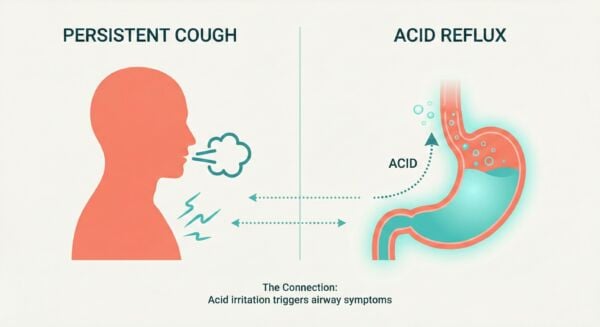
The Connection Between GERD and Your Cough
Here’s where things get interesting. GERD doesn’t just cause a dry cough. It can also make your voice hoarse. The National Institute of Health has found that GERD can aggravate asthma too, leading to symptoms like wheezing.
Here’s the kicker: you don’t even need to experience traditional heartburn symptoms for GERD to be causing your cough. Many people are shocked to discover that their lingering cough isn’t from a cold or allergies. It’s actually gastroesophageal reflux at work.
How to Identify a GERD Cough
So what does a GERD cough actually look and feel like? Here are the telltale signs:
It’s a dry, hacking cough that doesn’t bring up any mucus. The cough is chronic, meaning it’s stuck around for at least eight weeks without improving. You’ll typically notice it gets worse when you lie down at night.
The tricky part? This type of cough often gets mistaken for allergy-related coughs or those caused by postnasal drip.
That’s why getting a proper evaluation from an ENT doctor is so important. A lingering cough combined with hoarseness that doesn’t respond to standard treatments could potentially signal something more serious. An ENT specialist can pinpoint whether your cough stems from allergies, GERD, or another underlying condition and then create a treatment plan tailored to your specific situation.
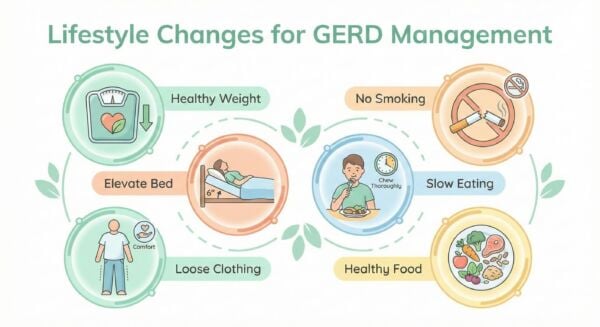
Proven Ways to Stop Your GERD Cough
The good news? Many people can reduce or completely eliminate GERD symptoms through lifestyle changes alone. When lifestyle adjustments aren’t enough, medication can fill the gap.
The Mayo Clinic recommends these practical strategies to ease GERD symptoms:
Get to a Healthy Weight People who are overweight or obese face a significantly higher risk of developing GERD. Shedding extra pounds can make a real difference. For those struggling with weight management, incisionless weight loss procedures may be worth exploring.
Kick the Smoking Habit Smoking interferes with how your esophageal sphincter works. Beyond GERD, smoking causes a laundry list of other serious health issues. If you smoke, quitting should be priority number one.
Elevate Your Bed Raise the head of your bed by six to nine inches. This simple change can significantly reduce nighttime symptoms. Just stacking extra pillows under your head won’t cut it. You need to elevate the entire upper portion of your bed.
Slow Down at Mealtimes Take your time when eating. Rushing through meals can worsen GERD symptoms. Conditions like gastroparesis can also affect digestion and meal timing.
Time Your Meals Right Don’t lie down immediately after eating. Give yourself at least three hours of upright time after meals. Also avoid eating large, heavy meals close to bedtime.
Choose Loose Clothing Tight clothes, especially around your waist, can put pressure on your stomach and worsen reflux.
Watch What You Eat and Drink Stay away from foods and beverages known to trigger GERD and acid reflux.
If these lifestyle changes don’t provide enough relief, prescription medications can often resolve the problem without needing surgery.
Can GERD Cause a Sore Throat Too?
Yes, it can. When stomach acid repeatedly irritates your esophagus, it creates inflammation and soreness, resulting in that scratchy, painful throat feeling.
There’s also a related condition called laryngopharyngeal reflux (LPR). With LPR, stomach acid reaches high enough to damage the delicate tissues of your voice box (larynx).
Both GERD and LPR happen because of malfunctioning muscles in your esophagus, specifically the upper and lower esophageal sphincters. These muscles are supposed to keep food moving in the right direction (toward your stomach) while blocking acid from flowing backward into your throat. When they weaken or stop working properly, you end up with GERD, LPR, or both. Other esophageal disorders like achalasia can also affect swallowing and digestion.
The Surprising GERD-Asthma Link
Researchers are still working out the exact details of how GERD and asthma relate to each other. What we do know is striking: the Cleveland Clinic reports that more than 75 percent of people with asthma also deal with GERD and its accompanying heartburn.
Here’s an interesting twist. Medications used to treat asthma can actually make GERD worse. On the flip side, treating GERD often leads to improvement in asthma symptoms.

Should You Be Worried About Cancer?
When stomach acid constantly irritates your esophageal lining over a long period, it can damage cells. This means chronic GERD may put you at increased risk for esophageal cancer.
Before you panic, here’s some perspective: according to the American Cancer Society, the majority of people with GERD never develop esophageal cancer.
Still, it’s smart to work closely with an ear, nose, and throat doctor who can accurately assess your personal risk. They’ll consider factors like your age, family medical history, tobacco use, and alcohol consumption.
One challenge with throat cancers like esophageal cancer is that they often don’t show obvious warning signs until they’ve progressed to more advanced stages when treatment becomes more difficult.
Schedule an appointment for evaluation if you’re experiencing any of these symptoms:
- Trouble swallowing
- Losing weight without trying
- A cough that won’t go away
- Repeated vomiting
- Persistent hoarseness
- Pain in your bones
- Bleeding in your esophagus
Why an ENT Specialist Is Your Best Bet for GERD Cough
Diagnosing a GERD cough isn’t straightforward. First, you might have a GERD-related cough even if you’re not experiencing heartburn or other typical GERD symptoms.
Second, it’s genuinely difficult to tell the difference between a GERD cough and coughs caused by other factors like allergies or postnasal drip.
That’s where an ENT specialist’s expertise becomes invaluable. They can thoroughly examine your throat, properly evaluate your cough, and prescribe a specific treatment protocol designed for your situation. They’ll also assess your overall GERD condition and determine your risk factors for throat cancer.
Conclusion
Living with a chronic GERD cough doesn’t have to be your reality. While the condition can be frustrating and disruptive to your daily life, understanding the connection between GERD and your persistent cough is the first step toward finding lasting relief. Whether through lifestyle modifications, dietary changes, or medical intervention, effective solutions are available to help you breathe easier and sleep better at night.
Don’t let a stubborn cough control your life any longer. The sooner you seek professional evaluation from an ENT specialist, the sooner you can identify the root cause and begin appropriate treatment. Remember, what seems like a simple cough could be signaling something more significant that deserves medical attention. Take charge of your health today and consult with a qualified ENT doctor who can guide you toward the relief you deserve.
If you’ve been dealing with a hiatal hernia alongside your GERD symptoms, know that advanced treatment options are available. Modern procedures like the LINX Reflux Management System and TIF procedure offer minimally invasive solutions for long-term relief. Some patients may also benefit from traditional fundoplication surgery or other surgical approaches to abdominal hernias. For comprehensive information on digestive health conditions and treatments, visit our reflux and digestive health blog or explore additional resources from the American Gastroenterological Association and MedlinePlus.
FAQs
How long does a GERD cough last?
A GERD cough is considered chronic when it persists for eight weeks or longer without improvement. With proper treatment and lifestyle changes, most people experience significant relief within a few weeks to months.
Can GERD cough go away on its own?
While mild cases might improve with lifestyle changes, GERD coughs rarely disappear completely without intervention. Proper treatment addressing the underlying acid reflux is typically necessary for long-term relief.
What’s the fastest way to stop a GERD cough?
Elevating the head of your bed, avoiding trigger foods, and not lying down within three hours of eating provide quick relief for many people. For persistent symptoms, prescription medications from your doctor offer faster, more effective results.
Is a GERD cough worse at night?
Yes, GERD coughs typically worsen at night when you’re lying flat because gravity no longer helps keep stomach acid down. Elevating your bed’s head by six to nine inches can significantly reduce nighttime coughing episodes.
Can drinking water help a GERD cough?
Drinking water can temporarily wash acid back down into your stomach and soothe throat irritation. However, water alone won’t treat the underlying GERD condition causing your cough.


An endoscopy cannot tell you if you have reflux. It can only tell you if you have complications of GERD.
If you are unhappy with your reflux symptoms, come in and we can discuss testing and treatments that can accurately diagnose your problem.
#reflux #gerd #hiatalhernia #gastroparesis #linx

CALL US AT 813-922-2920
www.tampareflux.com
If you have a hiatal hernia and fit one of these categories, you should know your options.
Dr. Grandhige is an expert in his field and performs 200 of these surgeries a year. He is the only surgeon in the Tampa Bay Area who offers all surgical options - LINX, Fundoplications, TIF and will be one of 20 surgeons in America introducing the latest procedure RefluxStop in 2026.
We accept most insurances but will verify yours before you come in. These procedures are considered medically necessary and covered by your insurance. You can expect to pay your in-network deductibles and nothing else.
#hiatalhernia #reflux #GERD #LINX #refluxstop
What causes reflux ?
1. Weak lower esophageal sphincter
2. Hiatal hernia
3. Flattening of the Angle of His
4. Poor esophageal motility
5. Gastroparesis (slow stomach)
NOT increased acid production
Don’t let GERD get in the way of living your life. Request your appointment with us today on the link below.
.
.
.
.
https://tampareflux.com/contact-us/
Anyone can be victim to GERD and though weight loss can help reduce GERD symptoms. Many athletes with high impact workouts may continue to have these symptoms. This may be a symptom of a hiatal hernia or other issue. We are more then happy to assist you in finding your solution, just click the link below.
.
.
.
https://tampareflux.com/contact-us/
##healthylifestyle #workout #athletereflux #PPIs #heartburn #LINX #fundoplication #TIF #GERD#tampaheartburn #linx #TIF #fundoplication #tampabayreflux #GERD #acidreflux #acidrefluxsurgery #stopreflux
#nonsurgicalweightloss #ESG #gastricballoon #weightlossjourney #vsg #vsgjourney #spatz3 #orbera #orberaballoon #grandhige #DrG
#tampabayrefluxinstitute #guthealth #roboticsurgery
Heartburn may seem like an annoyance. But if you find yourself having symptoms on a daily basis, it may be time to to talk to Dr. Grandhige as it could be a symptom of something worse.
.
.
.
#chronicheartburn #gerdsymptoms #heartburnrelief #reflux #PPIs #heartburn #LINX #fundoplication #TIF #GERD#tampaheartburn #linx #TIF #fundoplication #tampabayreflux #GERD #acidreflux #acidrefluxsurgery #stopreflux
#nonsurgicalweightloss #ESG #gastricballoon #weightlossjourney #vsg #vsgjourney #spatz3 #orbera #orberaballoon #grandhige #DrG
#tampabayrefluxinstitute #guthealth #roboticsurgery
If you are tired of avoiding your favorite foods or taking daily medications, we can help.
We are the Tampa experts in reflux ! With years of experience and thousands of patients treated successfully, we offer all FDA approved anti-reflux procedures.
Call 813-922-2920 to schedule your appointment
All major insurances accepted.
Not all patients need surgical intervention. Many patients are living a heartburn free life with their PPIs. However 40% of patients taking PPIs are not getting the relief they need. If you are one of those, you have options! Come in and find out more.
.
.
.
.
#letushelpyou #medsnotworking #reflux #PPIs #heartburn #LINX #fundoplication #TIF #GERD#tampaheartburn #linx #TIF #fundoplication #tampabayreflux #GERD #acidreflux #acidrefluxsurgery #stopreflux
#nonsurgicalweightloss #ESG #gastricballoon #weightlossjourney #vsg #vsgjourney #spatz3 #orbera #orberaballoon #grandhige #DrG
#tampabayrefluxinstitute #guthealth #roboticsurgery
#heartburn #stopreflux #hiatalherniarepair #severeheartburn #reflux #tampabayreflux #acidrefluxsurgery #tampaheartburn #GERD #PPIs #achalasia #LINX #TIF #tampareflux #fundoplication #stomach #digestivehealth #ESG #obesity #overweight #weightlossjourney #gastricballoon


