

Written By: Jeffrey Atlas, Health Content Writer
Medically Reviewed By: Dr. Gopal Grandhige, MD, FACS, Board-Certified Surgeon
Last Reviewed: April 1, 2026
Gastroparesis is a digestive disorder where the stomach cannot properly empty food into the small intestine due to weakened or damaged stomach muscles, most commonly caused by damage to the vagus nerve. The condition is also called delayed gastric emptying. Diabetes is the leading cause, as prolonged high blood sugar can damage the vagus nerve that controls stomach contractions. Key symptoms include persistent nausea, vomiting undigested food, bloating, feeling full after small meals (early satiety), acid reflux, and unstable blood sugar levels in diabetics. Diagnosis typically involves a symptom review, physical exam, and specialized tests such as gastric emptying scintigraphy, gastroscopy, or abdominal imaging (CT/MRI). Early detection is critical to prevent complications like malnutrition, dehydration, and worsening of underlying conditions.
What Triggers Gastroparesis?
Diabetes stands as one of the most frequent causes of gastroparesis, since extended periods of elevated blood sugar can harm the vagus nerve. Additional potential triggers include surgical trauma to the vagus nerve, viral infections, and certain medications that influence gastric motility. A newer category of weight management medications prescribed for diabetic and obese patients, known as GLP-1 agonists, has also been associated with temporary slowing of gastric emptying. In some instances, gastroparesis develops without any identifiable origin.
This guide examines how you can recognize gastroparesis symptoms and secure a diagnosis through various health screening approaches and diagnostic procedures.
Identifying the Signs of Gastroparesis
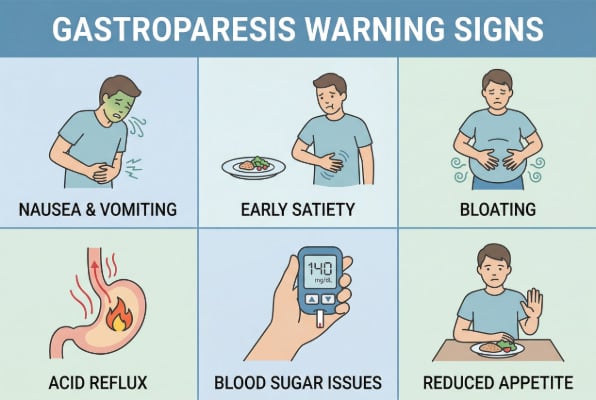
Catching symptoms early proves essential for prompt diagnosis and successful treatment. Below are the primary warning signs to watch for:
Nausea and Vomiting Ongoing nausea represents a frequent symptom, with vomiting potentially occurring, particularly following meals, often containing undigested food from earlier eating occasions.
Early Satiety People with gastroparesis typically experience fullness after consuming only small portions, which may result in insufficient nutrition and unexpected weight loss.
Abdominal Discomfort and Bloating A sensation of fullness or distension in the stomach area commonly occurs, creating discomfort and an overwhelming feeling of being stuffed.
Acid Reflux Heartburn or gastroesophageal reflux disease (GERD) symptoms may develop as food lingers in the stomach beyond normal timeframes.
Blood Sugar Instability For diabetic individuals, irregular gastric emptying can trigger unpredictable blood sugar readings, making diabetes management more challenging.
Diminished Appetite Due to discomfort and persistent fullness, a reduced interest in eating frequently develops, which may eventually cause nutritional shortfalls.
Why Early Detection of Gastroparesis Matters
A major worry with gastroparesis is malnutrition. When gastric emptying slows down, the body struggles to absorb vital nutrients, triggering weight loss and deficiencies that can undermine overall wellbeing. This disorder can also worsen existing conditions like diabetes, making blood sugar regulation more problematic and heightening complication risks. Furthermore, symptoms such as chronic vomiting associated with gastroparesis can induce dehydration and electrolyte disturbances, which may become dangerous if left untreated.
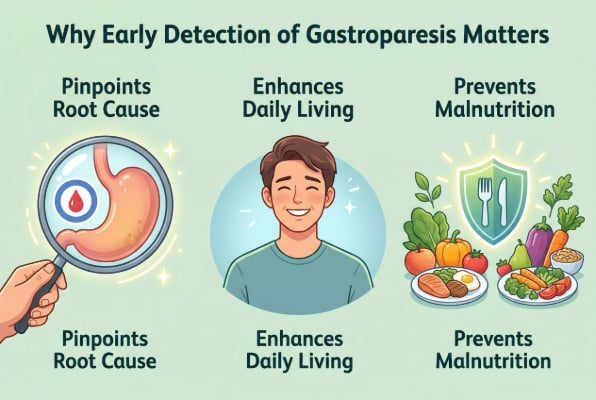
Recognizing and addressing gastroparesis promptly is critical for avoiding serious health consequences. Beyond this, early identification offers several advantages:
Pinpoints the Root Cause Enables faster treatment and complication prevention for conditions like diabetes that may be fueling gastroparesis.
Enhances Daily Living Swift intervention can relieve distressing symptoms including nausea, vomiting, and stomach pain, improving patients’ everyday functioning.
Wards Off Malnutrition Allows for dietary adjustments and nutritional support before malnutrition takes hold.
What Should You Do When These Symptoms Appear?
Consulting a General Practitioner (GP) serves as a crucial first step in the screening journey, as they can identify symptoms, perform preliminary evaluations, and direct patients to digestive health specialists when appropriate. The initial phase of gastroparesis screening involves a thorough assessment of the patient’s symptoms, health history, and physical condition, followed by targeted diagnostic testing.
Symptom Review Patients describe their symptoms, including how often and how severely they experience nausea, vomiting, bloating, and stomach pain. Grasping how these symptoms affect daily activities is vital for accurate diagnosis.
Medical History Assessment Physicians ask about underlying health issues, such as diabetes and neurological conditions, that could contribute to gastroparesis. They also examine current medications and previous surgical procedures that might impact gastric motility, including abdominal hernia repair.
Physical Examination A physical assessment helps detect indicators of dehydration, malnutrition, and abdominal irregularities, offering valuable clues about whether gastroparesis is present.
Many gastroparesis patients only seek help when the disease has progressed significantly. The condition is frequently mistaken for simple gastritis before the correct diagnosis emerges, causing treatment delays. Catching it early empowers patients and medical professionals to tackle gastroparesis challenges before complications set in. For more information on gastroparesis overview and management, trusted resources can provide additional guidance.
Diagnostic Testing for Gastroparesis
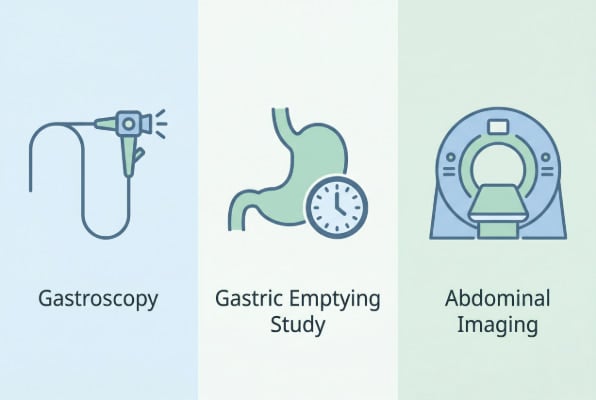
Following the initial health screening, specialized diagnostic tests help evaluate and confirm a gastroparesis diagnosis. Your physician may suggest the following examinations:
1. Gastroscopy
Gastroscopy, alternatively called upper gastrointestinal (GI) endoscopy, is a procedure enabling doctors to inspect the lining of the upper digestive tract, including the esophagus, stomach, and the initial segment of the small intestine. This examination utilizes a slender, flexible tube known as an endoscope, equipped with a miniature camera and light at its tip. The procedure proves invaluable for excluding potential causes of digestive symptoms, such as blockages. Its capability to identify changes in digestive tract lining supports early recognition of conditions including ulcers and early-stage stomach cancers. Conditions like hiatal hernias can also be detected during this examination.
2. Gastric Emptying Scintigraphy
During this test, a patient eats a specialized meal that the scanning equipment can visualize. The scanner monitors how rapidly the stomach evacuates food across several hours. Detection of delayed gastric emptying, where food remains in the stomach for an extended duration, confirms the gastroparesis diagnosis. The National Library of Medicine provides detailed information about this diagnostic procedure.
3. Abdominal Imaging Scans (CT or MRI)
CT or MRI scans of the abdominal region allow physicians to evaluate whether alternative explanations exist for the symptoms, including nausea, vomiting, weight loss, appetite loss, and stomach pain. These same symptoms could also point to digestive tract cancers affecting the stomach, liver, pancreas, small intestine, or colon. Understanding the clinical presentation of gastroparesis helps differentiate it from other conditions.

Get Expert Gastroparesis Care at Tampa Bay Reflux Institute
If you’re experiencing symptoms of gastroparesis, such as persistent nausea, bloating, early satiety, or unexplained blood sugar fluctuations, don’t wait for complications to develop. Seeking specialized care can make all the difference in your diagnosis and treatment outcomes.
At Tampa Bay Reflux Institute, Dr. Gopal Grandhige brings over a decade of specialized expertise in diagnosing and treating complex digestive conditions, including gastroparesis. As a board-certified surgeon and leading hiatal hernia doctor in Tampa, Dr. Grandhige develops individualized treatment strategies tailored to each patient’s unique symptoms and needs. His expertise extends to related conditions such as silent reflux (LPR) and achalasia.
Tampa Bay Reflux Institute offers comprehensive diagnostic evaluations and advanced treatment options, including surgical interventions like fundoplication surgery and the LINX Reflux Management System, to help you regain control of your digestive health and improve your quality of life. Additional options such as TIF EsophyX and incisionless weight loss procedures may also benefit patients with overlapping conditions.
Ready to take the next step? Contact us today to schedule your consultation, or visit our blog for more helpful resources on digestive health. Additional information about gastroparesis causes and treatments can also help you prepare for your appointment. The American College of Gastroenterology offers patient-friendly educational materials as well.
Conclusion
Early detection of gastroparesis is essential for preventing serious complications such as malnutrition, dehydration, and worsening of underlying conditions like diabetes. By recognizing the warning signs, including persistent nausea, bloating, early satiety, and blood sugar fluctuations, and seeking prompt medical evaluation, patients can receive timely treatment that significantly improves their quality of life. Working with healthcare professionals to obtain an accurate diagnosis through screening and specialized tests empowers individuals to manage their condition effectively before it progresses. As Harvard Health explains, understanding this condition is the first step toward better digestive wellness.
FAQs
What is gastroparesis?
Gastroparesis is a digestive disorder where the stomach cannot properly move food into the small intestine due to weakened or damaged stomach muscles. It is often caused by nerve damage, particularly to the vagus nerve that controls stomach contractions.
What are the most common symptoms of gastroparesis?
The most common symptoms include persistent nausea, vomiting (sometimes containing undigested food), bloating, early satiety, and abdominal discomfort. Diabetic patients may also experience unpredictable blood sugar levels.
Who is most at risk for developing gastroparesis?
People with diabetes are at the highest risk because prolonged high blood sugar can damage the vagus nerve. Others at risk include those who have had stomach surgery, viral infections, or take medications that affect gastric motility.
How is gastroparesis diagnosed?
Diagnosis typically begins with a symptom review and physical examination, followed by specialized tests. Gastric emptying scintigraphy, gastroscopy, and abdominal imaging scans (CT or MRI) are commonly used to confirm the condition.
Why is early detection of gastroparesis important?
Early detection helps prevent complications like malnutrition, dehydration, and electrolyte imbalances. It also allows for quicker treatment and better management of underlying conditions such as diabetes.


An endoscopy cannot tell you if you have reflux. It can only tell you if you have complications of GERD.
If you are unhappy with your reflux symptoms, come in and we can discuss testing and treatments that can accurately diagnose your problem.
#reflux #gerd #hiatalhernia #gastroparesis #linx

CALL US AT 813-922-2920
www.tampareflux.com
If you have a hiatal hernia and fit one of these categories, you should know your options.
Dr. Grandhige is an expert in his field and performs 200 of these surgeries a year. He is the only surgeon in the Tampa Bay Area who offers all surgical options - LINX, Fundoplications, TIF and will be one of 20 surgeons in America introducing the latest procedure RefluxStop in 2026.
We accept most insurances but will verify yours before you come in. These procedures are considered medically necessary and covered by your insurance. You can expect to pay your in-network deductibles and nothing else.
#hiatalhernia #reflux #GERD #LINX #refluxstop
What causes reflux ?
1. Weak lower esophageal sphincter
2. Hiatal hernia
3. Flattening of the Angle of His
4. Poor esophageal motility
5. Gastroparesis (slow stomach)
NOT increased acid production
Don’t let GERD get in the way of living your life. Request your appointment with us today on the link below.
.
.
.
.
https://tampareflux.com/contact-us/
Anyone can be victim to GERD and though weight loss can help reduce GERD symptoms. Many athletes with high impact workouts may continue to have these symptoms. This may be a symptom of a hiatal hernia or other issue. We are more then happy to assist you in finding your solution, just click the link below.
.
.
.
https://tampareflux.com/contact-us/
##healthylifestyle #workout #athletereflux #PPIs #heartburn #LINX #fundoplication #TIF #GERD#tampaheartburn #linx #TIF #fundoplication #tampabayreflux #GERD #acidreflux #acidrefluxsurgery #stopreflux
#nonsurgicalweightloss #ESG #gastricballoon #weightlossjourney #vsg #vsgjourney #spatz3 #orbera #orberaballoon #grandhige #DrG
#tampabayrefluxinstitute #guthealth #roboticsurgery
Heartburn may seem like an annoyance. But if you find yourself having symptoms on a daily basis, it may be time to to talk to Dr. Grandhige as it could be a symptom of something worse.
.
.
.
#chronicheartburn #gerdsymptoms #heartburnrelief #reflux #PPIs #heartburn #LINX #fundoplication #TIF #GERD#tampaheartburn #linx #TIF #fundoplication #tampabayreflux #GERD #acidreflux #acidrefluxsurgery #stopreflux
#nonsurgicalweightloss #ESG #gastricballoon #weightlossjourney #vsg #vsgjourney #spatz3 #orbera #orberaballoon #grandhige #DrG
#tampabayrefluxinstitute #guthealth #roboticsurgery
If you are tired of avoiding your favorite foods or taking daily medications, we can help.
We are the Tampa experts in reflux ! With years of experience and thousands of patients treated successfully, we offer all FDA approved anti-reflux procedures.
Call 813-922-2920 to schedule your appointment
All major insurances accepted.
Not all patients need surgical intervention. Many patients are living a heartburn free life with their PPIs. However 40% of patients taking PPIs are not getting the relief they need. If you are one of those, you have options! Come in and find out more.
.
.
.
.
#letushelpyou #medsnotworking #reflux #PPIs #heartburn #LINX #fundoplication #TIF #GERD#tampaheartburn #linx #TIF #fundoplication #tampabayreflux #GERD #acidreflux #acidrefluxsurgery #stopreflux
#nonsurgicalweightloss #ESG #gastricballoon #weightlossjourney #vsg #vsgjourney #spatz3 #orbera #orberaballoon #grandhige #DrG
#tampabayrefluxinstitute #guthealth #roboticsurgery
#heartburn #stopreflux #hiatalherniarepair #severeheartburn #reflux #tampabayreflux #acidrefluxsurgery #tampaheartburn #GERD #PPIs #achalasia #LINX #TIF #tampareflux #fundoplication #stomach #digestivehealth #ESG #obesity #overweight #weightlossjourney #gastricballoon


