

Written By: Jeffrey Atlas, Health Content Writer
Medically Reviewed By: Dr. Gopal Grandhige, MD, FACS, Board-Certified Surgeon
Last Reviewed: February 12, 2026
What is gastroparesis? Gastroparesis is a chronic digestive disorder where stomach muscles fail to function properly, causing food to move abnormally slowly or stop progressing into the small intestine. This condition affects an estimated 5 million Americans, with women comprising 65-75% of diagnosed cases.
Why this matters: If you’re experiencing persistent nausea, vomiting undigested food hours after eating, or feeling uncomfortably full after just a few bites, you may be dealing with gastroparesis. Early recognition and proper diagnosis are crucial, as untreated gastroparesis can lead to severe malnutrition and significantly impact quality of life.
This guide covers the warning signs to watch for, what causes this condition (including the strong link to diabetes), how doctors diagnose it, and the full range of treatment options available, from dietary changes to advanced medical interventions.

Recognizing Gastroparesis Symptoms
Gastroparesis manifests differently across patients, with symptom severity ranging from minor to extreme. Common indicators include:
Persistent Nausea and Vomiting: A hallmark symptom involves continuous nausea, frequently accompanied by vomiting undigested meals several hours post-consumption. Food lingers in the stomach far beyond normal duration, triggering these episodes.
Abdominal Bloating: Individuals commonly describe bloating sensations and feeling overly full, even following minimal food intake. Delayed stomach-to-intestine food transfer causes this discomfort.
Early Satiety: Numerous patients feel completely full after consuming just a few mouthfuls. This sensation disrupts adequate nutrient consumption, potentially leading to malnourishment.
Upper Abdominal Discomfort: Stomach region pain represents a frequent concern, though pain levels differ among individuals.
Unexplained Weight Reduction: Inadequate nutrient uptake combined with eating difficulties often results in weight decline.
Heartburn and Reflux: Stomach emptying delays allow food and digestive acids to reverse flow into the esophagus, producing heartburn and additional GERD-related symptoms.
Experiencing these indicators warrants consultation with a digestive health physician. They’ll evaluate your situation and recommend suitable treatment approaches. Timely intervention helps reduce symptoms and avoid potential complications.
Causes of Gastroparesis
Gastroparesis doesn’t always have an obvious trigger, though multiple factors may contribute to its onset:
Diabetes-Related Damage: Diabetes stands as a primary gastroparesis trigger, especially when blood glucose remains elevated chronically. This damages the vagus nerve controlling stomach muscle function. According to the National Institute of Diabetes and Digestive and Kidney Diseases, research suggests approximately 30-50% of diabetic patients may experience some degree of this disorder.
Post-Surgical Complications: Operations involving the stomach or surrounding structures, including weight-loss procedures or esophageal procedures, can occasionally harm the vagus nerve, triggering gastroparesis.
Viral Infections: Specific viruses, including Epstein-Barr and cytomegalovirus, show connections to gastroparesis development.
Nerve-Related Conditions: Diseases such as Parkinson’s, multiple sclerosis, and additional neurological disorders may compromise gastric movement.
Pharmaceutical Side Effects: Certain medications, notably opioid analgesics and select antidepressants, can decelerate stomach activity.
Unknown Origins: When no identifiable condition or trigger emerges, physicians classify it as idiopathic gastroparesis. This category encompasses a substantial percentage of diagnosed cases.
Determining the root cause remains vital for effective management. A gastrointestinal specialist can identify contributing elements through comprehensive assessment and suggest customized treatment plans.
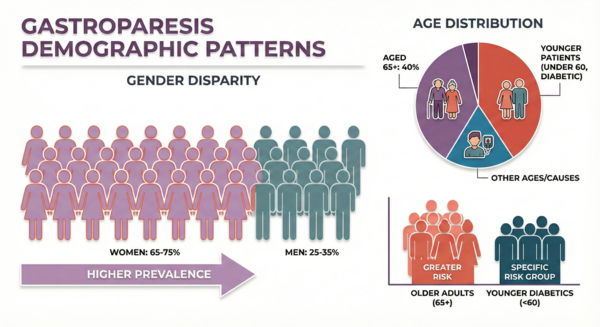
Gender Disparities and Age Patterns in Gastroparesis
While gastroparesis can affect anyone, research reveals striking demographic patterns that healthcare providers and patients should understand. Women are disproportionately affected by this condition, accounting for 65-75% of all diagnosed cases. This significant gender gap may be linked to hormonal influences, particularly estrogen and progesterone, which are known to affect gastrointestinal motility and potentially contribute to delayed gastric emptying. Age also plays a critical role in disease prevalence, with patients aged 65 and older representing approximately 40% of all cases in the United States. Interestingly, among diabetic patients, younger individuals under 60 show higher rates of gastroparesis development compared to older patients, suggesting that the duration and management of diabetes may be more influential than age alone. Understanding these demographic patterns is essential for early identification and intervention, particularly in high-risk groups such as women with diabetes or those experiencing hormonal changes that could impact digestive function.

Evaluation and Diagnosis
Experiencing gastroparesis symptoms requires immediate professional evaluation. Digestive health specialists employ various tests to establish diagnosis:
Gastric Emptying Scintigraphy: This widely-used diagnostic procedure confirms gastroparesis. Patients consume a light meal containing radioactive markers, while specialists track how long the stomach requires to transfer food into the small intestine.
Upper GI Endoscopy: Gastrointestinal endoscopy procedures may be conducted to identify obstructions or stomach lining irregularities that could imitate or intensify gastroparesis symptoms.
Wireless Motility Capsule: This test requires swallowing a compact capsule measuring pH, temperature, and pressure throughout its digestive tract journey. It delivers comprehensive information about food transit duration through stomach and intestines.
Antroduodenal Manometry: This examination assesses stomach muscle contractions, measuring their intensity and coordination to identify irregular movement patterns.
Following these assessments, gastrointestinal physicians will establish an accurate diagnosis and propose the most suitable treatment protocol. For more information on diagnostic procedures, Cleveland Clinic offers detailed insights into the evaluation process.

Management and Treatment of Gastroparesis
Addressing gastroparesis typically demands a comprehensive strategy, incorporating dietary modifications, pharmaceutical interventions, and occasionally surgical procedures. Standard management approaches include:
Dietary Changes
Dietary adjustments represent an initial management step for gastroparesis. Beneficial strategies include:
Frequent Small Portions: Distributing smaller meals across the day reduces stomach workload and prevents excessive fullness.
Reduced Fiber and Fat Content: Since fiber and fat require extended digestion periods, limiting these components can alleviate symptoms.
Blended or Liquid Nutrition: Smooth, easily digestible options work best when solid food consumption becomes challenging.
Medications
Multiple medications exist to enhance stomach muscle activity and control nausea:
Motility Agents: These pharmaceuticals stimulate stomach muscles and accelerate gastric emptying.
Anti-Nausea Medications: These treatments alleviate nausea and vomiting, two predominant gastroparesis symptoms.
Consult digestive health specialists to identify optimal medications for your specific condition. Johns Hopkins Medicine provides additional resources on medication management strategies.
Gastric Electrical Stimulation
Patients not responding to dietary changes and medications may benefit from gastric electrical stimulation (GES). This treatment involves implanting a compact device delivering electrical impulses to stomach muscles, encouraging consistent contractions. Similar to how the LINX reflux management system addresses reflux disorders, GES offers a minimally invasive solution for gastroparesis management.
Surgical Options
Surgery becomes a consideration for severe cases unresponsive to alternative treatments. Available procedures include feeding tube insertion or gastric bypass surgery. However, surgical options typically serve as final alternatives after exhausting conventional treatments. Patients experiencing abdominal hernia and heartburn symptoms may also benefit from exploring fundoplication procedures or TIF Esophyx procedures if they experience concurrent reflux symptoms. Harvard Health Publishing offers evidence-based perspectives on surgical interventions.
Conclusion
Gastroparesis presents significant challenges for those affected, but understanding its symptoms, causes, and treatment options empowers patients to take control of their digestive health. Early recognition of warning signs such as persistent nausea, vomiting, bloating, and unexplained weight loss is crucial for timely intervention and preventing complications. While the condition can stem from various causes, including diabetes, surgical complications, and viral infections, many cases remain idiopathic, underscoring the importance of working closely with gastrointestinal specialists for accurate diagnosis and personalized care.
The demographic patterns, particularly the higher prevalence among women and older adults, highlight the need for increased awareness in these populations. For patients dealing with multiple digestive conditions, understanding related disorders like hiatal hernias, silent reflux (LPR), or achalasia can provide valuable context for comprehensive treatment. Finding the best hiatal hernia doctors in Tampa, FL is essential for those seeking specialized care in the region. Fortunately, multiple management strategies exist, ranging from dietary modifications and medications to advanced interventions like gastric electrical stimulation. With a comprehensive treatment approach tailored to individual needs, most patients can achieve significant symptom relief and improved quality of life.
If you’re experiencing symptoms consistent with gastroparesis, don’t hesitate to consult a digestive health professional who can guide you through diagnostic testing and develop an effective management plan that addresses your unique situation. Additional educational resources are available through WebMD, the American College of Gastroenterology, MedlinePlus, Healthline, and medical literature databases to help you become an informed advocate for your health. For expert care and treatment options, visit the Tampa Reflux Center or explore their blog for additional insights on managing digestive disorders.
FAQs
What is the main difference between gastroparesis and regular indigestion?
Unlike temporary indigestion, gastroparesis is a chronic condition where the stomach muscles fail to function properly, causing persistent delayed emptying. Regular indigestion typically resolves on its own, while gastroparesis requires ongoing medical management and dietary adjustments.
Can gastroparesis be cured completely?
Most cases of gastroparesis cannot be completely cured, but symptoms can be effectively managed through dietary changes, medications, and other treatments. The goal is symptom control and maintaining adequate nutrition rather than complete elimination of the condition.
How long does it take to diagnose gastroparesis?
Diagnosis typically takes several weeks, as it requires specific tests like gastric emptying scintigraphy that measure how quickly food leaves the stomach. Your doctor will schedule these tests after initial consultations and may need multiple evaluations to confirm the diagnosis.
Are there foods that gastroparesis patients should completely avoid?
High-fiber foods, fatty meals, carbonated beverages, and alcohol should generally be avoided as they slow digestion further. Raw vegetables, whole grains, and large portions of red meat are particularly difficult to digest for gastroparesis patients.
Why are women more likely to develop gastroparesis than men?
Hormonal influences, particularly estrogen and progesterone, affect gastrointestinal motility and may contribute to delayed gastric emptying in women. This hormonal connection explains why women account for 65-75% of all diagnosed gastroparesis cases.


An endoscopy cannot tell you if you have reflux. It can only tell you if you have complications of GERD.
If you are unhappy with your reflux symptoms, come in and we can discuss testing and treatments that can accurately diagnose your problem.
#reflux #gerd #hiatalhernia #gastroparesis #linx

CALL US AT 813-922-2920
www.tampareflux.com
If you have a hiatal hernia and fit one of these categories, you should know your options.
Dr. Grandhige is an expert in his field and performs 200 of these surgeries a year. He is the only surgeon in the Tampa Bay Area who offers all surgical options - LINX, Fundoplications, TIF and will be one of 20 surgeons in America introducing the latest procedure RefluxStop in 2026.
We accept most insurances but will verify yours before you come in. These procedures are considered medically necessary and covered by your insurance. You can expect to pay your in-network deductibles and nothing else.
#hiatalhernia #reflux #GERD #LINX #refluxstop
What causes reflux ?
1. Weak lower esophageal sphincter
2. Hiatal hernia
3. Flattening of the Angle of His
4. Poor esophageal motility
5. Gastroparesis (slow stomach)
NOT increased acid production
Don’t let GERD get in the way of living your life. Request your appointment with us today on the link below.
.
.
.
.
https://tampareflux.com/contact-us/
Anyone can be victim to GERD and though weight loss can help reduce GERD symptoms. Many athletes with high impact workouts may continue to have these symptoms. This may be a symptom of a hiatal hernia or other issue. We are more then happy to assist you in finding your solution, just click the link below.
.
.
.
https://tampareflux.com/contact-us/
##healthylifestyle #workout #athletereflux #PPIs #heartburn #LINX #fundoplication #TIF #GERD#tampaheartburn #linx #TIF #fundoplication #tampabayreflux #GERD #acidreflux #acidrefluxsurgery #stopreflux
#nonsurgicalweightloss #ESG #gastricballoon #weightlossjourney #vsg #vsgjourney #spatz3 #orbera #orberaballoon #grandhige #DrG
#tampabayrefluxinstitute #guthealth #roboticsurgery
Heartburn may seem like an annoyance. But if you find yourself having symptoms on a daily basis, it may be time to to talk to Dr. Grandhige as it could be a symptom of something worse.
.
.
.
#chronicheartburn #gerdsymptoms #heartburnrelief #reflux #PPIs #heartburn #LINX #fundoplication #TIF #GERD#tampaheartburn #linx #TIF #fundoplication #tampabayreflux #GERD #acidreflux #acidrefluxsurgery #stopreflux
#nonsurgicalweightloss #ESG #gastricballoon #weightlossjourney #vsg #vsgjourney #spatz3 #orbera #orberaballoon #grandhige #DrG
#tampabayrefluxinstitute #guthealth #roboticsurgery
If you are tired of avoiding your favorite foods or taking daily medications, we can help.
We are the Tampa experts in reflux ! With years of experience and thousands of patients treated successfully, we offer all FDA approved anti-reflux procedures.
Call 813-922-2920 to schedule your appointment
All major insurances accepted.
Not all patients need surgical intervention. Many patients are living a heartburn free life with their PPIs. However 40% of patients taking PPIs are not getting the relief they need. If you are one of those, you have options! Come in and find out more.
.
.
.
.
#letushelpyou #medsnotworking #reflux #PPIs #heartburn #LINX #fundoplication #TIF #GERD#tampaheartburn #linx #TIF #fundoplication #tampabayreflux #GERD #acidreflux #acidrefluxsurgery #stopreflux
#nonsurgicalweightloss #ESG #gastricballoon #weightlossjourney #vsg #vsgjourney #spatz3 #orbera #orberaballoon #grandhige #DrG
#tampabayrefluxinstitute #guthealth #roboticsurgery
#heartburn #stopreflux #hiatalherniarepair #severeheartburn #reflux #tampabayreflux #acidrefluxsurgery #tampaheartburn #GERD #PPIs #achalasia #LINX #TIF #tampareflux #fundoplication #stomach #digestivehealth #ESG #obesity #overweight #weightlossjourney #gastricballoon


