
Written By: Jeffrey Atlas, Health Content Writer
Medically Reviewed By: Dr. Gopal Grandhige, MD, FACS, Board-Certified Surgeon
Last Reviewed: April 14, 2026
Gastroparesis can be hereditary in some cases. Research has identified specific genes, including SCN9A and the RET proto-oncogene, that are associated with the condition and can be passed from parent to child through autosomal dominant, autosomal recessive, or X-linked inheritance patterns. Studies show that gastroparesis clusters in families, with approximately 15% of affected individuals having one or more family members with the condition.
However, gastroparesis is not purely genetic. The condition results from a combination of factors including diabetes, autoimmune disorders, certain medications (opioids, antidepressants), viral infections, and lifestyle factors. Many cases have no identifiable genetic cause.
If gastroparesis runs in your family, genetic testing and counseling can help assess your personal risk and guide treatment decisions.
What Is Gastroparesis?
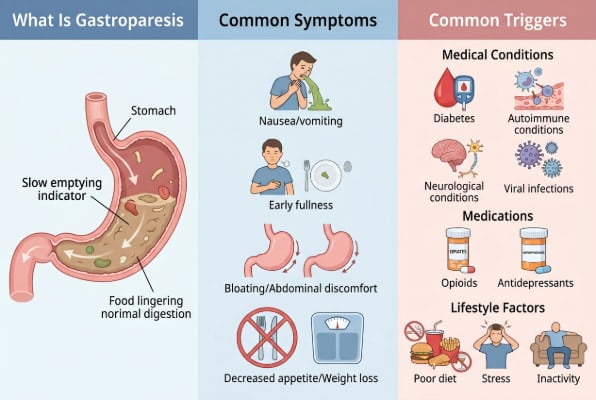
Gastroparesis occurs when stomach muscles don’t contract as they should, causing food to empty from the stomach more slowly than normal. This disruption throws off the digestive process and triggers a range of symptoms and complications throughout the gastrointestinal system.
People living with gastroparesis commonly experience symptoms such as:
- Nausea and episodes of vomiting
- Feeling full after consuming only small portions
- Bloating and abdominal discomfort
- Diminished appetite resulting in weight loss
The exact trigger for gastroparesis frequently remains a mystery, though several contributing factors exist. While this article centers on genetic influences, additional potential causes include:
Diabetes: Gastroparesis commonly develops in diabetic patients, especially when blood glucose levels aren’t well controlled.
Additional health conditions: The disorder may connect to autoimmune diseases, neurological conditions, or viral infections.
Certain medications including opioid painkillers and antidepressants can slow stomach emptying and trigger gastroparesis.
Lifestyle choices like poor dietary habits, chronic stress, and sedentary behavior can compromise stomach function and contribute to gastroparesis.
To fully appreciate how genetics influence gastroparesis, examining its genetic components and hereditary potential becomes essential. The sections ahead explore the connection between your DNA and the condition’s onset.
Common Gastroparesis Triggers at a Glance
| Category | Examples |
| Medical Conditions | Diabetes, Autoimmune disorders, Neurological conditions, Viral infections |
| Medications | Opioid pain medications, Antidepressants |
| Lifestyle Factors | Unhealthy diet, Chronic stress, Physical inactivity |
How Genetics Influence Gastroparesis
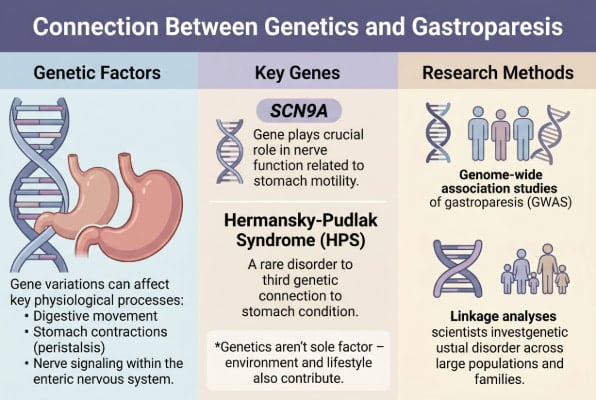
Gastroparesis, a disorder that hampers the stomach’s emptying mechanism, has connections to genetic factors. Certain gene variations can elevate risk levels and may account for its tendency to run in families.
Scientific investigations have identified specific genes associated with gastroparesis, genes that govern digestive movement, stomach contractions, and nerve signaling. When mutations or alterations occur in these genes, stomach activity can become impaired, setting the stage for the condition.
The SCN9A gene, responsible for encoding a protein vital to nerve function, has undergone extensive study regarding gastroparesis. Alterations in this gene show associations with slowed gastric emptying and the condition’s emergence.
The Genetic Dimensions of Hermansky-Pudlak Syndrome
Hermansky-Pudlak syndrome (HPS), an uncommon genetic condition affecting various organs including the stomach, represents another genetic link to gastroparesis. Evidence shows that HPS-related mutations can disrupt pigment granule movement, heightening gastroparesis risk.
While genetic factors can shape gastroparesis development, they aren’t the sole drivers. Environmental circumstances and lifestyle choices also contribute to when and how the condition manifests and advances.
Investigating the Genetic Roots of Gastroparesis
Scientists have conducted genome-wide association studies and linkage analyses to decode the genetic factors underlying gastroparesis. These research efforts aim to pinpoint relevant genes and genetic markers, illuminating the biological pathways driving the disorder.
Genetic investigation into gastroparesis can enhance our comprehension of its fundamental causes and pave the way for targeted, individualized therapies. By identifying individuals carrying genetic risk, medical professionals can deploy early interventions and customized care strategies to optimize patient outcomes.
Congenital Gastroparesis: When It Runs in the Family
Inherited gastroparesis describes situations where delayed stomach emptying appears across family generations. This section explores how particular genetic mutations might enable its transmission from parent to child.
The Genetic Foundation
Genetic elements can trigger gastroparesis by interfering with normal digestive operations. Research has identified specific gene mutations connected to the condition, particularly those governing stomach motility and digestive processes.
The RET proto-oncogene plays a pivotal role in regulating gastric motility. Mutations affecting this gene can weaken stomach contractions, leading to delayed gastric emptying and gastroparesis development.
How Gastroparesis Gets Passed Down
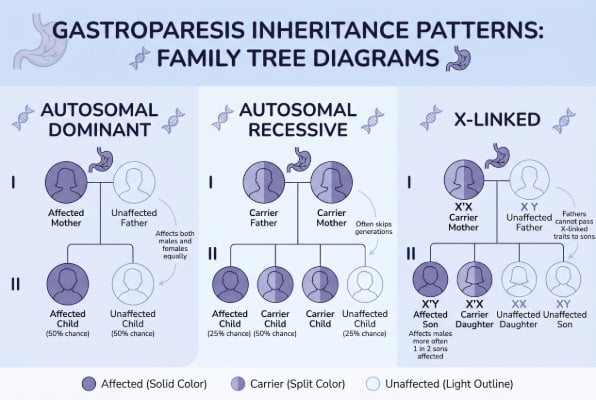
Gastroparesis inheritance depends on the specific genetic mutation involved, manifesting through autosomal dominant, autosomal recessive, or X-linked patterns.
Autosomal dominant inheritance means a parent carrying the mutated gene has a 50% probability of transmitting it to each child. Each offspring therefore faces a one-in-two chance of inheriting the gastroparesis-causing mutation and potentially developing the disorder.
Autosomal recessive inheritance occurs when both parents carry a mutated gene. Their child then has a 25% likelihood of receiving the mutation from both parents, which can result in gastroparesis.
X-linked inheritance involves a gene located on the X chromosome. Males who inherit the mutation from carrier mothers face higher gastroparesis risk compared to females.
Genetic Testing and Professional Counseling
Genetic testing can uncover mutations associated with gastroparesis, proving particularly valuable for those with family history or who experience early-onset, severe symptoms.
Genetic counseling delivers crucial guidance for individuals and families navigating inherited gastroparesis. Counselors help assess personal risk, clarify inheritance mechanisms, and support informed decisions about family planning.
Gastroparesis Inheritance Patterns Explained
| Inheritance Type | How It Works |
| Autosomal Dominant | Single gene mutation that causes gastroparesis |
| Autosomal Recessive | Mutations in both gene copies inherited from each parent |
| X-Linked | Mutation on X chromosome, typically affecting males more severely |
Comprehending the genetic inheritance of gastroparesis proves vital for proper diagnosis, counseling, and effective disease management. Clarifying its genetic origins may also drive the creation of more precise treatments and therapeutic interventions.
The Role of Family History in Gastroparesis
Understanding the connection between family history and gastroparesis reveals important clues about its genetic nature. Many individuals diagnosed with this condition have family members who are also affected, suggesting a potential hereditary link.
When gastroparesis appears in your family tree, it signals that genetics may influence its development. Certain genes or genetic variations can pass between generations, amplifying risk across family lines.
Research demonstrates that gastroparesis frequently clusters within families, with multiple relatives experiencing the condition. This familial pattern points toward a genetic component and emphasizes how crucial family history becomes in understanding its development.
Identifying a family history of gastroparesis matters greatly for accurate diagnosis and personalized treatment planning. It enables healthcare providers to weigh genetic influences and deliver targeted management approaches. Moreover, understanding inheritance patterns supports genetic counseling efforts and helps individuals recognize potential risks for future generations.
Family Occurrence Statistics for Gastroparesis
| Number of Affected Family Members | Percentage of Families |
| 0 | 40% |
| 1 | 45% |
| 2 | 12% |
| 3 or more | 3% |
Take Action: If you suspect gastroparesis runs in your family, discuss your family medical history with your healthcare provider. Early awareness and genetic counseling can help you take proactive steps toward better digestive health management.

Get Expert Care at Tampa Bay Reflux Institute
Patients seeking specialized care may benefit from consulting with experienced digestive health specialists who can evaluate the full spectrum of motility disorders, including conditions like achalasia that share certain characteristics with gastroparesis. Modern treatment options range from dietary modifications to surgical interventions such as fundoplications, the LINX reflux management system, or TIF procedures for related conditions. Some patients may also explore incisionless weight loss procedures to address contributing factors. To learn more about comprehensive care options, contact a specialist or find qualified physicians in your area who can address abdominal and digestive concerns.
Conclusion
Understanding the genetic dimensions of gastroparesis represents a significant step forward in managing this challenging digestive condition. While environmental factors, medications, and underlying health conditions like diabetes remain important contributors, the emerging evidence of hereditary patterns, through genes like SCN9A and the RET proto-oncogene, offers valuable insights for patients and healthcare providers alike. Recognizing that gastroparesis can run in families empowers individuals to take proactive measures, from discussing family medical history with doctors to pursuing genetic testing and counseling when appropriate.
As research continues to uncover the specific genetic mechanisms behind gastroparesis, the potential for personalized treatment approaches grows. If you have relatives affected by this condition, staying informed about your genetic risk and maintaining open communication with your healthcare team can lead to earlier detection, more targeted interventions, and ultimately better outcomes for you and future generations. For those experiencing related digestive issues such as GERD, hiatal hernias, or silent reflux, understanding your complete gastrointestinal health picture is equally important.
For additional information about gastroparesis symptoms and management, trusted resources from Harvard Health, WebMD, MedlinePlus, and the American College of Gastroenterology provide valuable educational materials.
FAQs
Is gastroparesis a hereditary condition?
Gastroparesis can have genetic components, and research shows it sometimes runs in families. However, it’s not purely hereditary. Environmental factors and other health conditions also play significant roles.
What genes are associated with gastroparesis?
The SCN9A gene and RET proto-oncogene have been linked to gastroparesis. Mutations in these genes can affect nerve function and stomach motility, contributing to delayed gastric emptying.
Should I get genetic testing if a family member has gastroparesis?
Genetic testing may be beneficial if multiple family members are affected or if symptoms appear early and severe. Consult with a genetic counselor to determine whether testing is appropriate for your situation.
How is gastroparesis inherited?
Gastroparesis can follow autosomal dominant, autosomal recessive, or X-linked inheritance patterns. The specific pattern depends on which gene mutation is involved.
Can knowing my family history help with gastroparesis treatment?
Yes, sharing your family history helps doctors assess genetic risk factors and create personalized treatment plans. Early awareness can lead to more proactive management and better long-term outcomes.


An endoscopy cannot tell you if you have reflux. It can only tell you if you have complications of GERD.
If you are unhappy with your reflux symptoms, come in and we can discuss testing and treatments that can accurately diagnose your problem.
#reflux #gerd #hiatalhernia #gastroparesis #linx

CALL US AT 813-922-2920
www.tampareflux.com
If you have a hiatal hernia and fit one of these categories, you should know your options.
Dr. Grandhige is an expert in his field and performs 200 of these surgeries a year. He is the only surgeon in the Tampa Bay Area who offers all surgical options - LINX, Fundoplications, TIF and will be one of 20 surgeons in America introducing the latest procedure RefluxStop in 2026.
We accept most insurances but will verify yours before you come in. These procedures are considered medically necessary and covered by your insurance. You can expect to pay your in-network deductibles and nothing else.
#hiatalhernia #reflux #GERD #LINX #refluxstop
What causes reflux ?
1. Weak lower esophageal sphincter
2. Hiatal hernia
3. Flattening of the Angle of His
4. Poor esophageal motility
5. Gastroparesis (slow stomach)
NOT increased acid production
Don’t let GERD get in the way of living your life. Request your appointment with us today on the link below.
.
.
.
.
https://tampareflux.com/contact-us/
Anyone can be victim to GERD and though weight loss can help reduce GERD symptoms. Many athletes with high impact workouts may continue to have these symptoms. This may be a symptom of a hiatal hernia or other issue. We are more then happy to assist you in finding your solution, just click the link below.
.
.
.
https://tampareflux.com/contact-us/
##healthylifestyle #workout #athletereflux #PPIs #heartburn #LINX #fundoplication #TIF #GERD#tampaheartburn #linx #TIF #fundoplication #tampabayreflux #GERD #acidreflux #acidrefluxsurgery #stopreflux
#nonsurgicalweightloss #ESG #gastricballoon #weightlossjourney #vsg #vsgjourney #spatz3 #orbera #orberaballoon #grandhige #DrG
#tampabayrefluxinstitute #guthealth #roboticsurgery
Heartburn may seem like an annoyance. But if you find yourself having symptoms on a daily basis, it may be time to to talk to Dr. Grandhige as it could be a symptom of something worse.
.
.
.
#chronicheartburn #gerdsymptoms #heartburnrelief #reflux #PPIs #heartburn #LINX #fundoplication #TIF #GERD#tampaheartburn #linx #TIF #fundoplication #tampabayreflux #GERD #acidreflux #acidrefluxsurgery #stopreflux
#nonsurgicalweightloss #ESG #gastricballoon #weightlossjourney #vsg #vsgjourney #spatz3 #orbera #orberaballoon #grandhige #DrG
#tampabayrefluxinstitute #guthealth #roboticsurgery
If you are tired of avoiding your favorite foods or taking daily medications, we can help.
We are the Tampa experts in reflux ! With years of experience and thousands of patients treated successfully, we offer all FDA approved anti-reflux procedures.
Call 813-922-2920 to schedule your appointment
All major insurances accepted.
Not all patients need surgical intervention. Many patients are living a heartburn free life with their PPIs. However 40% of patients taking PPIs are not getting the relief they need. If you are one of those, you have options! Come in and find out more.
.
.
.
.
#letushelpyou #medsnotworking #reflux #PPIs #heartburn #LINX #fundoplication #TIF #GERD#tampaheartburn #linx #TIF #fundoplication #tampabayreflux #GERD #acidreflux #acidrefluxsurgery #stopreflux
#nonsurgicalweightloss #ESG #gastricballoon #weightlossjourney #vsg #vsgjourney #spatz3 #orbera #orberaballoon #grandhige #DrG
#tampabayrefluxinstitute #guthealth #roboticsurgery
#heartburn #stopreflux #hiatalherniarepair #severeheartburn #reflux #tampabayreflux #acidrefluxsurgery #tampaheartburn #GERD #PPIs #achalasia #LINX #TIF #tampareflux #fundoplication #stomach #digestivehealth #ESG #obesity #overweight #weightlossjourney #gastricballoon


