

Written By: Jeffrey Atlas, Health Content Writer
Medically Reviewed By: Dr. Gopal Grandhige, MD, FACS, Board-Certified Surgeon
Last Reviewed: June 14, 2026
Yes, constipation and acid reflux are connected, and the link is more direct than most people realize. When you strain on the toilet, pressure inside your abdomen spikes. That pressure pushes upward against the valve at the bottom of your esophagus, the lower esophageal sphincter. When that valve gives way, stomach acid comes up. Heartburn follows. So if you’ve been dealing with both, you’re not imagining things.
Here’s the part most articles miss. The two conditions don’t just share a mechanical link. They often share underlying motility problems, meaning the nerves and muscles in your gut aren’t moving things along the way they should. Treat one and you often help the other. Treat them in the wrong order and you can make things worse.
I’ve seen patients spend years on acid blockers that quietly worsen their constipation, then take laxatives that work poorly because the acid blockers are interfering with them. It’s a loop. And it’s avoidable.
What Does the Research Actually Say About Constipation and Acid Reflux?
A large database analysis found constipation associated with roughly a 60% increased risk of GERD after adjustments. That’s not a small bump. In a Japanese survey of 10,000 people on acid-suppressing medications, between 24% and 33% were also being treated for constipation. Depending on which guidelines researchers used to define constipation, overlap ran as high as 59%.
One trial pitted omeprazole against psyllium fiber in people with both GERD and functional constipation. Both helped reflux symptoms. The fiber group had fewer flare-ups over time. The authors concluded that treating the constipation seemed to keep reflux from coming back.
This is the part the broader medical world is slow to act on. If you have both, fixing the bowel side often matters as much as suppressing acid. Maybe more.
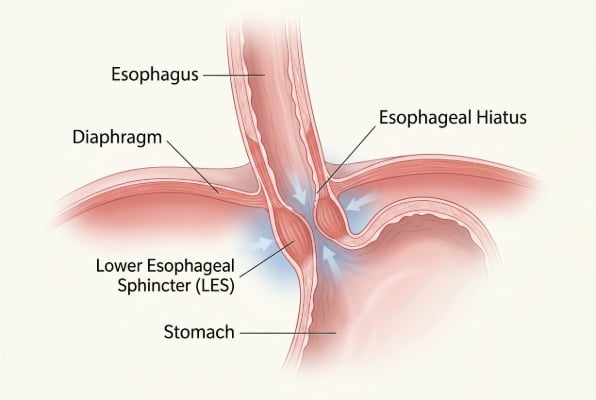
How Does Straining Cause Acid Reflux?
Straining raises intra-abdominal pressure. A 2025 study found that a simple leg-raise maneuver increasing belly pressure by about 11 mmHg was enough to predict reflux in patients with weakened anti-reflux barriers. Sitting on the toilet pushing against a hard stool generates far more pressure than that.
Here’s the chain reaction. You bear down. Pressure inside your belly climbs. The lower esophageal sphincter, which normally holds stomach contents in place, gets overwhelmed. Acid splashes upward into your esophagus. Burning starts in your chest, sometimes climbing into your throat.
People with a hiatal hernia feel this even more sharply, because the anatomy is already compromised. The top of the stomach pokes up through the diaphragm, so the natural valve mechanism is weakened before you ever sit down.
Can Acid Reflux Medications Cause Constipation?
Yes, and this is one of the more frustrating cycles in gastroenterology. The drugs prescribed to calm reflux frequently slow the bowels.
Antacids containing aluminum or calcium bind stool and slow transit. Proton pump inhibitors like omeprazole and esomeprazole have constipation listed as a side effect. H2 blockers like famotidine carry the same risk. Even sucralfate, sometimes used as a coating agent, has constipation as a common side effect according to MedlinePlus.
So someone shows up with heartburn, gets a PPI, develops constipation, strains harder, refluxes more, and gets told to double the PPI. That’s not treatment. That’s a spiral.
Why Do the Same People Get Both Conditions?
Because both are often motility disorders. The muscles and nerves in your gastrointestinal tract are supposed to keep things moving in a coordinated way. When that coordination breaks down, food sits too long in the stomach (slow gastric emptying) and stool sits too long in the colon. Both problems push pressure upward.
Gastroparesis, or delayed stomach emptying, is a perfect example. Food lingers. Pressure builds. Acid escapes. Patients with gastroparesis often have sluggish bowels too, because whatever’s slowing the stomach is often slowing everything else.
The pelvic floor matters here. Those muscles coordinate the act of having a bowel movement. When they don’t relax properly, you strain. That’s called dyssynergic defecation. Hard to diagnose. Worth ruling out if constipation isn’t responding to fiber and water.
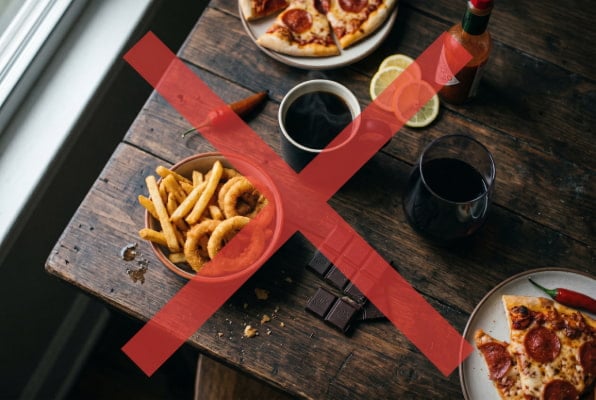
What Foods Make Both Constipation and Acid Reflux Worse?
The standard reflux trigger list overlaps surprisingly little with the standard constipation trigger list. That’s the trap. You can eat in a way that helps one and hurts the other.
Foods that commonly trigger reflux according to Harvard Health:
- Fried and fatty foods
- Chocolate
- Coffee and caffeinated tea
- Alcohol
- Carbonated drinks
- Citrus and tomato-based foods
- Spicy foods
- Peppermint
- Onions and garlic
Foods that worsen constipation:
- Low-fiber processed foods
- Cheese and full-fat dairy in large amounts
- Red meat as a dietary staple
- Fried foods
- Anything that displaces fruits, vegetables, and whole grains
Notice the overlap. Fried foods. Heavy dairy. These hit both ends. Cut them and you’re already winning on two fronts.
What works for both? Fiber from real food. Cooked vegetables. Oatmeal. Whole grains your gut tolerates. Plenty of water. The trick is not to dump 40 grams of fiber on a system that’s been running on 8 grams. Ramp up slowly or you’ll bloat, gas up, and feel worse for a week.
How Does the Esophagus Actually Work?
The esophagus is the tube running from the back of your throat to your stomach. Two ring-shaped muscles, the upper and lower esophageal sphincters, sit at each end. Their job is to open when food needs to pass through and stay closed the rest of the time.
The lower esophageal sphincter is the one that matters for reflux. When it’s working, it’s tighter than the pressure inside your stomach, so nothing comes back up. When it’s weakened, or when belly pressure overwhelms it, acid escapes upward.
Chronic exposure to that acid damages the lining of the esophagus. Over years, this is how reflux turns into GERD and sometimes into precancerous changes. That’s why ignoring it for a decade is a bad strategy.
How Often Should You Be Going?
Most people land somewhere between three times a day and three times a week, and that’s a normal range. Constipation kicks in below that floor. Stools that are hard, dry, painful to pass, or require straining count even if frequency is fine.
A few days between bowel movements means stool sits longer, water gets pulled out of it, and it gets harder. Then you strain. Then you reflux. Loop closed.
What Actually Helps Both Conditions?
Lifestyle first. The list isn’t glamorous but it works.
- Eat smaller meals. Big meals stretch the stomach and increase pressure.
- Don’t lie down for three hours after eating. Gravity is doing free work for you when you stay upright.
- Elevate the head of the bed by 6 to 8 inches. Pillows don’t cut it. You need to raise the frame.
- Drink water steadily through the day, not chugged at once.
- Add fiber gradually. Aim for 25 to 35 grams from food when possible.
- Walk after meals. Movement helps gastric emptying and bowel transit.
- Lose weight if your provider recommends it. Belly fat raises abdominal pressure constantly.
- Quit smoking. Nicotine weakens the lower esophageal sphincter.
Fiber supplements help when food isn’t enough. According to research published through StatPearls, psyllium husk is well-tolerated and effective for chronic constipation in most people. Start small. Mix with full glasses of water.
For medications, talk to a provider before adding more. If a PPI is causing your constipation, the answer isn’t always another pill. Sometimes it’s a different medication. Sometimes it’s a different strategy entirely.

When Should You Stop Managing This Yourself?
When over-the-counter approaches stop working. When you’re on acid blockers daily for more than a few weeks. When you’re straining hard or seeing blood. When swallowing feels different. When food gets stuck.
Long-term proton pump inhibitor use carries its own risks. Kidney issues, bone density problems, nutrient deficiencies, and infections show up in the literature. The American Gastroenterological Association recommends reassessing PPI use regularly rather than continuing it indefinitely by default.
For chronic reflux with anatomic problems like a hiatal hernia, surgical and endoscopic options have improved dramatically. LINX is a magnetic ring placed around the lower esophageal sphincter to support its function. TIF (transoral incisionless fundoplication) rebuilds the valve from inside the esophagus, no incisions. Fundoplication wraps the top of the stomach around the lower esophagus to reinforce the barrier.
These aren’t experimental. TIF data extends to 9 years now, with success rates between 69% and 80% for sustained symptom control. LINX shows around 85% of patients off PPIs at 5 years in trial settings. Outcomes are notably better at high-volume centers with surgeons who do these procedures regularly.
Dr. Gopal Grandhige, a board-certified surgeon at Tampa Bay Reflux Institute, handles this kind of work. The institute helps patients eliminate reflux and GERD rather than managing it indefinitely with pills.

What Are the Risks of Constant Straining?
Straining isn’t neutral. Repeated bearing down causes real damage. Hemorrhoids develop when veins in the rectum swell from chronic pressure. Anal fissures (small tears) cause pain and bleeding. Rectal prolapse, where part of the rectum pushes out through the anus, happens in severe long-term cases. Fecal incontinence can develop when the anal sphincter weakens from years of stress.
And of course, every strain potentially worsens your reflux. So you’re stacking complications.
If you’ve been straining for months, it’s worth a conversation with someone who actually evaluates the cause rather than just hands you a stool softener.
How Do You Get Specialty Care for This in Tampa?
Start with insurance. Check the back of the card for the member services number. Find out if you need a referral to see a gastroenterologist or a foregut specialist.
If you do, your primary care provider can write one. If you don’t, you can often book directly. Tampa Bay Reflux Institute focuses specifically on reflux, GERD, hiatal hernias, and motility disorders, so you’re not getting general GI care that touches reflux occasionally. You’re getting concentrated expertise.
Telehealth visits are an option for the initial consultation if travel is a barrier. The first appointment is mostly history-taking and planning, and most of that can happen remotely.
The Bottom Line on Constipation and Acid Reflux in 2026
Don’t treat these as separate problems. They feed each other, the medications for one often worsen the other, and the underlying motility issues are frequently shared. Fix the bowel side with fiber, water, and movement first. If reflux persists, get the actual anatomy evaluated rather than escalating acid blockers indefinitely. The longer chronic reflux runs untreated, the more damage accumulates in the esophagus. Acting earlier almost always means simpler treatment.
FAQs
Can constipation cause acid reflux to flare up?
Yes. Straining during bowel movements raises intra-abdominal pressure, which pushes against the lower esophageal sphincter and allows stomach acid to escape upward. Studies show constipation is linked to roughly a 60% increased risk of GERD in adults.
Do acid reflux medications make constipation worse?
Often, yes. Proton pump inhibitors, H2 blockers, and antacids containing aluminum or calcium can slow bowel transit. In a survey of 10,000 patients on acid-suppressing medications, between 24% and 33% were also being treated for constipation.
What’s the fastest way to relieve constipation and acid reflux together?
Stay upright after meals, drink water throughout the day, add fiber gradually from real food, and walk after eating. These four habits address both conditions without medication side effects. Avoid lying flat for at least 3 hours after eating.
Is psyllium fiber safe if you have GERD?
Generally yes, and it may help. One study comparing psyllium to omeprazole found both reduced GERD symptoms, with psyllium users having fewer flare-ups over time. Mix it with plenty of water and start with a small dose to avoid bloating.
When should you see a specialist for chronic constipation and acid reflux?
When over-the-counter treatments stop working, when you’re using acid blockers daily for more than a few weeks, when swallowing feels off, or when you see blood. A foregut specialist can evaluate whether anatomic issues like a hiatal hernia are driving the symptoms.
Can fixing constipation cure acid reflux?
Not always, but it often reduces flare-ups significantly. If the reflux is driven by straining and abdominal pressure rather than anatomy, treating constipation can resolve most symptoms. Anatomic problems usually require additional treatment.
Does a hiatal hernia make constipation-related reflux worse?
Yes. A hiatal hernia weakens the natural valve between the stomach and esophagus, so any increase in abdominal pressure (including straining) triggers reflux more easily. Repair of the hernia is often part of definitive treatment.


An endoscopy cannot tell you if you have reflux. It can only tell you if you have complications of GERD.
If you are unhappy with your reflux symptoms, come in and we can discuss testing and treatments that can accurately diagnose your problem.
#reflux #gerd #hiatalhernia #gastroparesis #linx

CALL US AT 813-922-2920
www.tampareflux.com
If you have a hiatal hernia and fit one of these categories, you should know your options.
Dr. Grandhige is an expert in his field and performs 200 of these surgeries a year. He is the only surgeon in the Tampa Bay Area who offers all surgical options - LINX, Fundoplications, TIF and will be one of 20 surgeons in America introducing the latest procedure RefluxStop in 2026.
We accept most insurances but will verify yours before you come in. These procedures are considered medically necessary and covered by your insurance. You can expect to pay your in-network deductibles and nothing else.
#hiatalhernia #reflux #GERD #LINX #refluxstop
What causes reflux ?
1. Weak lower esophageal sphincter
2. Hiatal hernia
3. Flattening of the Angle of His
4. Poor esophageal motility
5. Gastroparesis (slow stomach)
NOT increased acid production
Don’t let GERD get in the way of living your life. Request your appointment with us today on the link below.
.
.
.
.
https://tampareflux.com/contact-us/
Anyone can be victim to GERD and though weight loss can help reduce GERD symptoms. Many athletes with high impact workouts may continue to have these symptoms. This may be a symptom of a hiatal hernia or other issue. We are more then happy to assist you in finding your solution, just click the link below.
.
.
.
https://tampareflux.com/contact-us/
##healthylifestyle #workout #athletereflux #PPIs #heartburn #LINX #fundoplication #TIF #GERD#tampaheartburn #linx #TIF #fundoplication #tampabayreflux #GERD #acidreflux #acidrefluxsurgery #stopreflux
#nonsurgicalweightloss #ESG #gastricballoon #weightlossjourney #vsg #vsgjourney #spatz3 #orbera #orberaballoon #grandhige #DrG
#tampabayrefluxinstitute #guthealth #roboticsurgery
Heartburn may seem like an annoyance. But if you find yourself having symptoms on a daily basis, it may be time to to talk to Dr. Grandhige as it could be a symptom of something worse.
.
.
.
#chronicheartburn #gerdsymptoms #heartburnrelief #reflux #PPIs #heartburn #LINX #fundoplication #TIF #GERD#tampaheartburn #linx #TIF #fundoplication #tampabayreflux #GERD #acidreflux #acidrefluxsurgery #stopreflux
#nonsurgicalweightloss #ESG #gastricballoon #weightlossjourney #vsg #vsgjourney #spatz3 #orbera #orberaballoon #grandhige #DrG
#tampabayrefluxinstitute #guthealth #roboticsurgery
If you are tired of avoiding your favorite foods or taking daily medications, we can help.
We are the Tampa experts in reflux ! With years of experience and thousands of patients treated successfully, we offer all FDA approved anti-reflux procedures.
Call 813-922-2920 to schedule your appointment
All major insurances accepted.
Not all patients need surgical intervention. Many patients are living a heartburn free life with their PPIs. However 40% of patients taking PPIs are not getting the relief they need. If you are one of those, you have options! Come in and find out more.
.
.
.
.
#letushelpyou #medsnotworking #reflux #PPIs #heartburn #LINX #fundoplication #TIF #GERD#tampaheartburn #linx #TIF #fundoplication #tampabayreflux #GERD #acidreflux #acidrefluxsurgery #stopreflux
#nonsurgicalweightloss #ESG #gastricballoon #weightlossjourney #vsg #vsgjourney #spatz3 #orbera #orberaballoon #grandhige #DrG
#tampabayrefluxinstitute #guthealth #roboticsurgery
#heartburn #stopreflux #hiatalherniarepair #severeheartburn #reflux #tampabayreflux #acidrefluxsurgery #tampaheartburn #GERD #PPIs #achalasia #LINX #TIF #tampareflux #fundoplication #stomach #digestivehealth #ESG #obesity #overweight #weightlossjourney #gastricballoon


