
Written By: Jeffrey Atlas, Health Content Writer
Medically Reviewed By: Dr. Gopal Grandhige, MD, FACS, Board-Certified Surgeon
Last Reviewed: September 23, 2026
In almost every case, no. Reflux happens when the valve between your stomach and your esophagus stops holding. Yeast doesn’t loosen that valve. What yeast can do is set up an infection in the esophagus that burns in the same spot as heartburn and gets mistaken for it, and that infection turns up most often in people who’ve been on acid-blocking pills for a long stretch. I’ve scoped plenty of patients in Tampa who walked in certain they had a yeast problem. A few of them did. Most had a hiatal hernia nobody had ever measured.
The Short Answer, Without the Hedging
Candida is a yeast that lives in your gut and mouth without causing trouble. It does not cause gastroesophageal reflux disease, because reflux disease is a mechanical failure of the lower esophageal sphincter. Candida can infect the esophagus and produce burning and painful swallowing that feels identical to reflux, which is why the two get confused.
That’s the whole article in six sentences.
What this piece won’t cover: reflux in children. Different disease, different rules.
Reflux Is a Valve Problem First
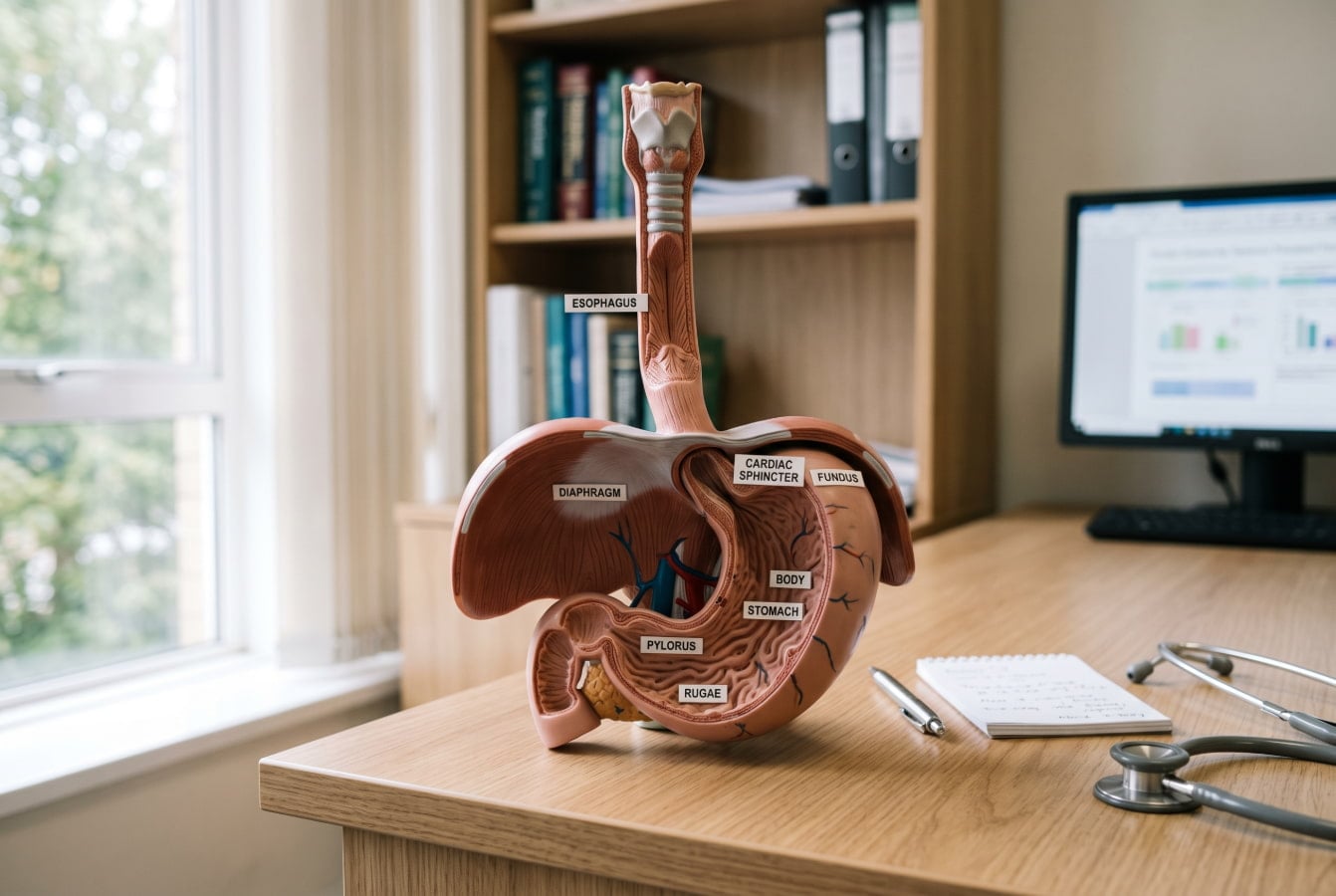
Reflux is what happens when stomach contents wash back up because the barrier at the bottom of your esophagus has failed. That barrier is a ring of muscle called the lower esophageal sphincter, working alongside your diaphragm. When it weakens, stretches, or slides up through the diaphragm as a hernia, the contents come back.
Nothing about yeast changes that geometry.
What reflux actually feels like
Burning behind the breastbone. Sour liquid rising into the throat, worse flat on your back. A cough that won’t quit. Hoarseness by mid-afternoon. Some people never get heartburn at all and notice only throat symptoms, a separate condition called silent reflux.
How common is reflux in 2026?
Common enough that the numbers stop being abstract. The American College of Gastroenterology puts GERD at roughly 20% of the U.S. population. A national survey of 71,812 people published in Gastroenterology found nearly 31% had reflux symptoms in the previous week alone.
One number matters more. In that same survey, about half of people taking proton pump inhibitors still had symptoms. Half. That’s the group reading this page.
What Is Candida?
Candida is a genus of yeast that already lives in you. Candida albicans is the species people mean. It sits in the mouth, gut, and skin, kept quiet by friendly bacteria, stomach acid, and a working immune system. Research on esophageal infection notes that Candida albicans colonizes the esophagus in up to 20% of people with no symptoms whatsoever.
Finding yeast is not the same as finding a problem.

Overgrowth and Infection Are Two Different Things
Two ideas get blended in almost every candida article online, and that’s where readers get misled.
Candida overgrowth is a functional-medicine label for yeast becoming dominant in the gut ecosystem. It’s tied to bloating, fatigue, and sugar cravings. It has no agreed diagnostic standard.
Esophageal candidiasis is a real, biopsy-confirmable fungal infection. It has white plaques you can see through a scope. It has a treatment that works.
Only the second is a medical diagnosis. When somebody tells you your reflux is candida, ask which one they mean. The answer tells you plenty about the advice that follows.
Does Candida Cause Acid Reflux Symptoms?
Yes, it can produce symptoms that feel like reflux, and no, it doesn’t cause reflux disease. Those are separate statements and both are true.
An esophageal infection inflames the lining. Inflamed lining burns. Patients describe it as heartburn because heartburn is the word they have. The tell is usually swallowing. Candidiasis tends to hurt sharply when food goes down. Reflux burns worse when you lie flat.
| What you notice | Points toward GERD | Points toward esophageal candidiasis |
| Burning behind the breastbone | Worse lying flat or after meals | Constant, not positional |
| Swallowing | Food sticks only if scarring formed | Sharp pain with every swallow |
| Sour liquid in the throat | Typical | Uncommon |
| White patches in the mouth | Absent | Often present |
| Response to acid blockers | Partial relief at minimum | None |
| How it’s confirmed | pH study off medication | Endoscopy with biopsy |
Can Candida Cause Acid Reflux Without GERD?
Yes, in a small and specific group of people. Weakened immunity is the usual driver behind an esophageal yeast infection, which shows up as chest pain, heartburn, and pain on swallowing in patients whose valve works fine.
How small is this group? A risk factor analysis of 7,736 endoscopies published in Scientific Reports found esophageal candidiasis in 2.4% of patients.
So it happens. It is not what’s happening to most of you.
Why Your PPIs Stopped Working
Because a pill that reduces acid cannot repair a valve. Proton pump inhibitors change what the refluxate is made of. They don’t stop the refluxing.
If your medication controlled things for a year and then quit, that’s not tolerance and it’s usually not yeast. That’s progression. A hernia that was two centimeters is now four.
I’ll push back on something the whole internet repeats here. Refractory reflux gets blamed on the microbiome constantly, and the microbiome is the least likely explanation in a patient who has never had a pH study done off medication. Most people labeled refractory were never properly tested. They were prescribed, doubled, and eventually told to try a diet.
The Acid Suppression Paradox
Long-term acid suppression raises your risk of the exact yeast infection that mimics reflux. That’s the uncomfortable part.
The Scientific Reports analysis found PPI use carried an odds ratio of 1.69 for developing esophageal candidiasis, climbing to 3.13 alongside atrophic gastritis. A separate series in Gastroenterology Research looked at 80 immunocompetent patients with candida esophagitis and found nearly 70% were on PPIs. Fifteen of them had documented reflux esophagitis first, went on acid suppression, and turned up with candidiasis on repeat endoscopy after an average of 21.6 months.
Actually, that framing is too tidy. Stomach acid is one of your defenses against yeast, and suppressing it for years removes part of that defense. But long PPI use is also a marker for longer, worse, untreated disease, so some of that signal is severity rather than the drug.
Then there’s a finding that complicates everything. A 2026 study of 5,221 adults in Internal Medicine found a negative association between esophageal candidiasis and reflux esophagitis. Acid in the esophagus appears to hold yeast back. Meanwhile a separate 2026 study of 455 patients reported the opposite direction, with reflux symptoms linked to confirmed candida esophagitis at an odds ratio of 3.49.
Both can be right. One measured endoscopic damage. The other measured what patients reported feeling.
Sugar, Gas, and Pressure
Cutting sugar helps reflux, and the reason has nothing to do with starving yeast. A randomized controlled trial of 98 veterans published in the American Journal of Gastroenterology cut simple sugar intake by about 62 grams a day for nine weeks and measured less acid exposure time, fewer reflux episodes, and less heartburn.
That’s real evidence. It’s just not evidence about fungus.
Alcohol earns its reputation too. A meta-analysis in Alcohol and Alcoholism pooled 29 studies and put drinkers at 1.48 times the odds of GERD, rising to 2.12 for people drinking more than three to five times a week.
Carbonation is where I’d tell you to relax. Manometry work showed fizzy drinks drop sphincter pressure 30% to 50% for about twenty minutes. A systematic review in Alimentary Pharmacology and Therapeutics found no consistent evidence they cause or worsen GERD. Conflicting data, and I’d rather you know it than pretend it’s settled.
How Each Problem Gets Treated
They’re treated separately, because they’re separate problems.
Clearing a confirmed fungal infection
An antifungal, usually fluconazole, prescribed after endoscopy confirms the infection. Simple, when the diagnosis is real.
One caution that matters: a single-center series in Clinical Gastroenterology and Hepatology reported that treating candida esophagitis doesn’t reliably resolve esophageal symptoms. Patients get the fungus cleared and still burn. That result should tell you something about what was causing the burning.
Repairing the valve
If the valve is the problem, the valve is what gets fixed. Any hernia gets repaired first, then the barrier gets rebuilt. A wrap of the stomach around the lower esophagus is the oldest and most durable option. Magnetic sphincter augmentation places a small ring of beads that opens to let food pass and closes behind it. For smaller hernias there’s an incisionless repair performed entirely through the mouth.
Which one fits depends on your hernia size, your motility study, and how much you care about being able to belch. Those trade-offs are a real conversation, not a brochure.
Can Low Stomach Acid Cause Reflux?
Probably not in the way the internet claims, and the supplement usually recommended for it is the riskiest advice in this entire topic.
The theory says weak acid slows digestion, food sits, pressure builds, reflux follows. Plausible. The evidence is thin.
Betaine hydrochloride is the supplement sold for it. One study showed it temporarily lowers stomach pH in people whose acid was blocked by medication, but that trial was built around drug absorption. Betaine HCl has never been tested as a reflux treatment.
Adding acid to an esophagus that’s already inflamed is a bad trade. If you have erosions or a raw throat and you swallow an acidifier, you’ll find out fast. Don’t self-experiment with this one.
What Tests Actually Answer This Question?
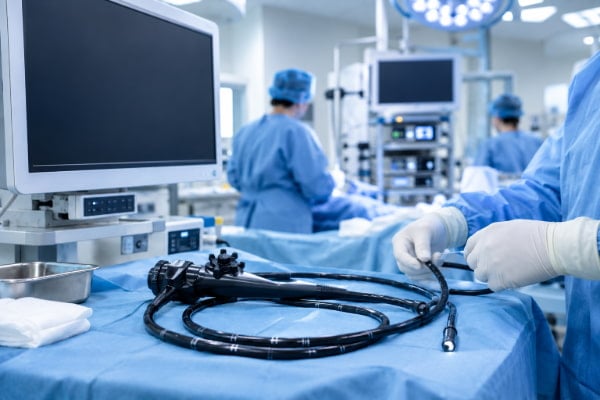
Endoscopy, pH monitoring, and manometry. In that order, and none of them come in a box you order online.
- Upper endoscopy. A direct look at the esophagus. It’s the only way to see white plaques, biopsy them, measure a hernia, and grade the valve.
- pH or impedance study off medication. Measures how much acid actually reaches your esophagus over 24 hours. This test separates true reflux disease from something else wearing its costume.
- High-resolution manometry. Measures how your esophagus squeezes. It determines which repair is safe for you and which would leave you unable to swallow comfortably.
Direct-to-consumer stool panels with fungal markers can’t diagnose reflux, see your esophagus, or measure a hernia. I’ve had patients hand me a colorful report showing yeast while their scope showed a four-centimeter hernia. The report wasn’t wrong. It was answering a question nobody needed answered.
Stop Chasing Yeast
If you’ve spent eighteen months on antifungals and elimination diets while your heartburn stayed exactly the same, the diet isn’t the variable.
So, can candida cause acid reflux? Not the disease, and not in the way you’ve been told. It imitates reflux convincingly in roughly one of every forty people getting scoped. Get the scope, get the pH study off your medication, and find out whether your valve still works, because that answer is knowable within weeks of your first visit, and I’ve watched too many people spend years without it.
FAQs
Can candida cause acid reflux?
No. Acid reflux is a mechanical failure of the lower esophageal sphincter, and yeast does not affect that valve. Candida can infect the esophagus and create burning that feels like heartburn, but that infection appeared in only 2.4% of 7,736 patients in a Scientific Reports endoscopy analysis.
Can candida cause acid reflux that doesn’t respond to PPIs?
Rarely. Non-response to acid suppression is far more often caused by a hiatal hernia, a motility disorder, or non-acid reflux. A national survey published in Gastroenterology found about half of all PPI users still have symptoms, and almost none of those cases turn out to be fungal.
How do I know if it’s esophageal candidiasis or GERD?
Candidiasis usually causes sharp pain with swallowing and is often paired with white patches in the mouth. GERD burns worse when you lie flat and produces sour regurgitation. Only an upper endoscopy with biopsy can tell them apart for certain.
Does treating candida cure reflux?
Usually not. A single-center series published in Clinical Gastroenterology and Hepatology found that treating candida esophagitis does not reliably resolve esophageal symptoms. If your burning continues after the fungus is cleared, the fungus was not the cause.
Can PPIs cause a yeast infection in the esophagus?
Long-term acid suppression raises the risk. PPI use carried an odds ratio of 1.69 for esophageal candidiasis in one analysis of 7,736 endoscopies, and a separate series found nearly 70% of immunocompetent candida esophagitis patients were taking PPIs.
Should I get a stool test for candida before reflux surgery?
No. Stool panels cannot see your esophagus, measure a hiatal hernia, or confirm reflux. The useful pre-surgical workup is endoscopy, a pH or impedance study performed off medication, and high-resolution manometry.
Does cutting sugar help acid reflux?
Yes, but not by starving yeast. A randomized controlled trial of 98 veterans in the American Journal of Gastroenterology reduced simple sugar intake by roughly 62 grams daily for nine weeks and measured lower esophageal acid exposure, fewer reflux episodes, and less heartburn.


An endoscopy cannot tell you if you have reflux. It can only tell you if you have complications of GERD.
If you are unhappy with your reflux symptoms, come in and we can discuss testing and treatments that can accurately diagnose your problem.
#reflux #gerd #hiatalhernia #gastroparesis #linx

CALL US AT 813-922-2920
www.tampareflux.com
If you have a hiatal hernia and fit one of these categories, you should know your options.
Dr. Grandhige is an expert in his field and performs 200 of these surgeries a year. He is the only surgeon in the Tampa Bay Area who offers all surgical options - LINX, Fundoplications, TIF and will be one of 20 surgeons in America introducing the latest procedure RefluxStop in 2026.
We accept most insurances but will verify yours before you come in. These procedures are considered medically necessary and covered by your insurance. You can expect to pay your in-network deductibles and nothing else.
#hiatalhernia #reflux #GERD #LINX #refluxstop
What causes reflux ?
1. Weak lower esophageal sphincter
2. Hiatal hernia
3. Flattening of the Angle of His
4. Poor esophageal motility
5. Gastroparesis (slow stomach)
NOT increased acid production
Don’t let GERD get in the way of living your life. Request your appointment with us today on the link below.
.
.
.
.
https://tampareflux.com/contact-us/
Anyone can be victim to GERD and though weight loss can help reduce GERD symptoms. Many athletes with high impact workouts may continue to have these symptoms. This may be a symptom of a hiatal hernia or other issue. We are more then happy to assist you in finding your solution, just click the link below.
.
.
.
https://tampareflux.com/contact-us/
##healthylifestyle #workout #athletereflux #PPIs #heartburn #LINX #fundoplication #TIF #GERD#tampaheartburn #linx #TIF #fundoplication #tampabayreflux #GERD #acidreflux #acidrefluxsurgery #stopreflux
#nonsurgicalweightloss #ESG #gastricballoon #weightlossjourney #vsg #vsgjourney #spatz3 #orbera #orberaballoon #grandhige #DrG
#tampabayrefluxinstitute #guthealth #roboticsurgery
Heartburn may seem like an annoyance. But if you find yourself having symptoms on a daily basis, it may be time to to talk to Dr. Grandhige as it could be a symptom of something worse.
.
.
.
#chronicheartburn #gerdsymptoms #heartburnrelief #reflux #PPIs #heartburn #LINX #fundoplication #TIF #GERD#tampaheartburn #linx #TIF #fundoplication #tampabayreflux #GERD #acidreflux #acidrefluxsurgery #stopreflux
#nonsurgicalweightloss #ESG #gastricballoon #weightlossjourney #vsg #vsgjourney #spatz3 #orbera #orberaballoon #grandhige #DrG
#tampabayrefluxinstitute #guthealth #roboticsurgery
If you are tired of avoiding your favorite foods or taking daily medications, we can help.
We are the Tampa experts in reflux ! With years of experience and thousands of patients treated successfully, we offer all FDA approved anti-reflux procedures.
Call 813-922-2920 to schedule your appointment
All major insurances accepted.
Not all patients need surgical intervention. Many patients are living a heartburn free life with their PPIs. However 40% of patients taking PPIs are not getting the relief they need. If you are one of those, you have options! Come in and find out more.
.
.
.
.
#letushelpyou #medsnotworking #reflux #PPIs #heartburn #LINX #fundoplication #TIF #GERD#tampaheartburn #linx #TIF #fundoplication #tampabayreflux #GERD #acidreflux #acidrefluxsurgery #stopreflux
#nonsurgicalweightloss #ESG #gastricballoon #weightlossjourney #vsg #vsgjourney #spatz3 #orbera #orberaballoon #grandhige #DrG
#tampabayrefluxinstitute #guthealth #roboticsurgery
#heartburn #stopreflux #hiatalherniarepair #severeheartburn #reflux #tampabayreflux #acidrefluxsurgery #tampaheartburn #GERD #PPIs #achalasia #LINX #TIF #tampareflux #fundoplication #stomach #digestivehealth #ESG #obesity #overweight #weightlossjourney #gastricballoon


