

Written By: Jeffrey Atlas, Health Content Writer
Medically Reviewed By: Dr. Gopal Grandhige, MD, FACS, Board-Certified Surgeon
Last Reviewed: January 31, 2026
No, hernias cannot heal naturally or disappear on their own over time. A hernia occurs when internal organs or tissues push through a weakened area in the muscle wall or connective tissue, similar to a tear in fabric that won’t spontaneously close. Unlike minor injuries that heal with rest, the compromised muscle tissue doesn’t regenerate to close the defect, and the opening typically persists or enlarges over time.
While not every hernia requires immediate surgery, particularly small, asymptomatic ones that can be monitored under medical supervision, surgery remains the only definitive treatment to repair the muscular weakness. The timing of surgical intervention depends on factors including the hernia’s size, location, symptoms, and your individual risk factors. Left untreated, even minor hernias risk progressive enlargement, incarceration (trapped tissue), or strangulation (blocked blood flow), a life-threatening emergency requiring immediate surgery.
If you’ve been diagnosed with or suspect you have a hernia, early consultation with a healthcare provider offers significant advantages: more treatment options, planned rather than emergency surgery, and typically simpler procedures with better outcomes.
Understanding Hernias
A hernia develops when internal organs or tissues protrude through a weakened area in the muscular wall or connective tissue, typically occurring in the abdominal region. Think of it like a tear in a fabric, once the material is compromised, the opening doesn’t spontaneously close on its own.
Patients often detect a visible protrusion, sensation of pressure, or mild discomfort. The hernia might become more prominent during activities such as lifting objects, coughing fits, or prolonged standing. Some people notice their hernia appears when standing but seems to disappear when lying down, as gravity affects how the tissue protrudes through the weakened area.
Frequently occurring hernia varieties include inguinal hernias located in the groin region, umbilical hernias positioned around the navel, hiatal hernias found in the upper gastric area, and incisional hernias that develop at previous surgical wound sites. Each type has unique characteristics, but all share the common feature of tissue pushing through a weakness in the body’s natural barriers.

Why Hernias Don’t Self-Repair
Unlike many minor injuries that heal with rest and time, hernias won’t disappear without medical intervention. The compromised area in the muscular or connective tissue structure generally persists and may progressively enlarge. This is because the tissues that form the abdominal wall don’t regenerate in a way that would close the defect.
Although certain small hernias might not trigger pain or interfere with daily functioning initially, they continue to pose risks of deterioration or developing complications. The opening in the muscle wall may gradually expand due to normal daily activities, increased abdominal pressure, or simply the passage of time.
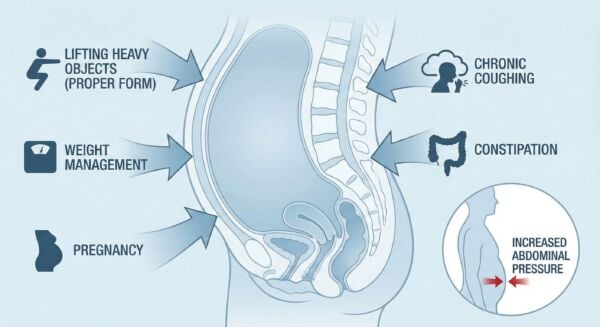
The Role of Lifestyle Factors in Hernia Development
While hernias cannot heal on their own, understanding the factors that contribute to their development can help you make informed decisions about managing your condition and preventing future hernias. Chronic coughing, heavy lifting, obesity, pregnancy, and chronic constipation all increase abdominal pressure, which can worsen existing hernias or create new ones. If you’ve been diagnosed with a hernia, modifying these risk factors won’t repair the muscular defect, but it can help prevent the hernia from enlarging rapidly and reduce your risk of developing additional hernias after surgical repair. Simple changes like maintaining a healthy weight, using proper lifting techniques, managing chronic coughs, and addressing constipation through diet and hydration can complement your treatment plan. However, these lifestyle modifications should never replace medical consultation or necessary surgical intervention, they’re supportive measures that work alongside, not instead of, professional medical care.
The Importance of Early Medical Consultation
Many people delay seeking medical advice for a hernia, hoping it will improve on its own or fearing the prospect of surgery. However, early consultation with a healthcare provider offers significant advantages. When a hernia is evaluated in its early stages, you have more treatment options and can plan surgery at a convenient time rather than facing an emergency situation. Your doctor can establish a baseline assessment, monitor any changes over time, and help you understand your specific risk factors. Early detection also means that if surgery becomes necessary, it’s typically simpler, less invasive, and has better outcomes than procedures performed after complications develop. Rather than viewing a medical consultation as a commitment to immediate surgery, think of it as gathering the information you need to make the best decision for your long-term health and peace of mind.
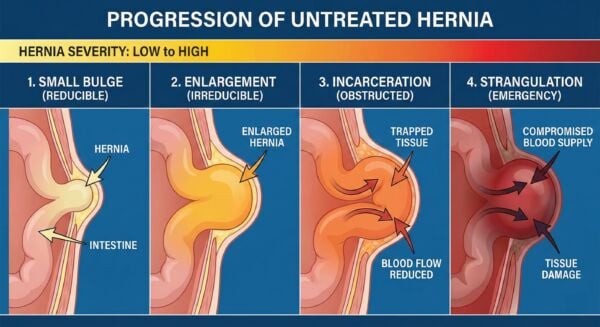
Risks of Leaving a Hernia Untreated
Even minor, non-painful hernias can result in:
Progressive enlargement due to strain from routine physical activities like bending, lifting, or even sneezing and coughing.
Intensifying symptoms, such as pain, burning sensations, or gastrointestinal complications including acid reflux, difficulty swallowing, or digestive discomfort.
Incarceration, occurring when protruding tissue becomes trapped and cannot be gently pushed back into place. This can cause significant pain and requires prompt medical attention.
Under certain circumstances, a hernia may become strangulated, a critical medical emergency where blood circulation to the trapped tissue gets blocked. This situation can lead to tissue death and requires immediate emergency surgery. Strangulated hernias can develop suddenly and are life-threatening if not treated promptly.
Neglecting a hernia won’t eliminate it. Rather, it amplifies complication risks and may necessitate more extensive surgical procedures down the line. What starts as a simple repair may become a complex emergency operation if complications develop.
When Conservative Management May Be Appropriate
In some cases, particularly for very small, completely asymptomatic hernias in patients with certain health conditions that make surgery risky, doctors may recommend a period of careful observation. This approach involves regular monitoring to ensure the hernia isn’t growing or causing problems. However, this is a medical decision that should be made in consultation with your healthcare provider, not a choice to simply ignore the condition. According to MedlinePlus, understanding when watchful waiting is appropriate requires professional medical evaluation.

Signs That Surgical Intervention Is Necessary
While not every hernia demands urgent surgery, particularly smaller, asymptomatic ones, surgery remains the exclusive method to correct the muscular deficiency and prevent additional complications.
Elective surgery may be advised when:
- The hernia demonstrates growth over time
- Pain or discomfort manifests during daily activities
- Regular activities become impaired or limited
- You prefer preventing emergency surgical situations
- The hernia becomes visible or increasingly bothersome
Modern surgical techniques have advanced significantly. The surgical team at Tampa Bay Reflux Institute provides minimally invasive and robotic surgical options that facilitate faster recovery periods and superior results compared to traditional methods. These approaches typically involve smaller incisions, less post-operative pain, and quicker return to normal activities.
Our experienced hernia specialists also offer advanced procedures including the LINX Reflux Management System and TIF procedures for patients dealing with heartburn and abdominal hernia concerns. According to the National Institute of Diabetes and Digestive and Kidney Diseases, understanding your treatment options is crucial for making informed decisions about hernia repair. Research published in medical literature emphasizes the importance of timely intervention.
Conclusion
While the hope for natural healing is understandable, hernias require a realistic approach to treatment. The weakened muscle wall that creates a hernia cannot repair itself, and waiting for spontaneous resolution may lead to progressive enlargement and serious complications like incarceration or strangulation. Although not every hernia demands immediate surgery, consulting with experienced medical professionals is essential for developing an appropriate treatment plan tailored to your specific situation.
The specialists at Tampa Bay Reflux Institute can evaluate your condition, discuss your options, and help you make an informed decision about whether watchful waiting or surgical repair is the best course of action for your health and quality of life. For additional resources on hernia management and related digestive conditions, visit our blog or explore information from trusted sources like Harvard Health, WebMD, the NHS, and Healthline. We also treat related conditions including silent reflux, achalasia, gastroparesis, and offer incisionless weight loss procedures for comprehensive digestive health care.
FAQs
Can exercise or specific movements make my hernia heal faster?
No, exercise cannot heal a hernia and may actually worsen it by increasing abdominal pressure. The muscular defect requires surgical repair to close properly.
How do I know if my hernia is becoming an emergency?
Severe pain, nausea, vomiting, inability to push the bulge back in, or a firm, tender bulge are warning signs. These symptoms require immediate medical attention as they may indicate strangulation.
Are there any non-surgical treatments that can fix my hernia?
No non-surgical treatments can repair the muscular weakness that causes a hernia. Surgery is the only definitive treatment, though small asymptomatic hernias may be monitored under medical supervision.
Will wearing a hernia belt or truss cure my condition?
Hernia belts may provide temporary symptom relief but cannot heal or fix the hernia. They’re sometimes used as a short-term measure until surgery can be performed.
How long can I safely wait before getting hernia surgery?
The timing depends on your hernia’s size, symptoms, and risk factors, which should be evaluated by a healthcare provider. Small, asymptomatic hernias may be monitored, but any growing or symptomatic hernia should be addressed promptly to avoid emergency situations.


An endoscopy cannot tell you if you have reflux. It can only tell you if you have complications of GERD.
If you are unhappy with your reflux symptoms, come in and we can discuss testing and treatments that can accurately diagnose your problem.
#reflux #gerd #hiatalhernia #gastroparesis #linx

CALL US AT 813-922-2920
www.tampareflux.com
If you have a hiatal hernia and fit one of these categories, you should know your options.
Dr. Grandhige is an expert in his field and performs 200 of these surgeries a year. He is the only surgeon in the Tampa Bay Area who offers all surgical options - LINX, Fundoplications, TIF and will be one of 20 surgeons in America introducing the latest procedure RefluxStop in 2026.
We accept most insurances but will verify yours before you come in. These procedures are considered medically necessary and covered by your insurance. You can expect to pay your in-network deductibles and nothing else.
#hiatalhernia #reflux #GERD #LINX #refluxstop
What causes reflux ?
1. Weak lower esophageal sphincter
2. Hiatal hernia
3. Flattening of the Angle of His
4. Poor esophageal motility
5. Gastroparesis (slow stomach)
NOT increased acid production
Don’t let GERD get in the way of living your life. Request your appointment with us today on the link below.
.
.
.
.
https://tampareflux.com/contact-us/
Anyone can be victim to GERD and though weight loss can help reduce GERD symptoms. Many athletes with high impact workouts may continue to have these symptoms. This may be a symptom of a hiatal hernia or other issue. We are more then happy to assist you in finding your solution, just click the link below.
.
.
.
https://tampareflux.com/contact-us/
##healthylifestyle #workout #athletereflux #PPIs #heartburn #LINX #fundoplication #TIF #GERD#tampaheartburn #linx #TIF #fundoplication #tampabayreflux #GERD #acidreflux #acidrefluxsurgery #stopreflux
#nonsurgicalweightloss #ESG #gastricballoon #weightlossjourney #vsg #vsgjourney #spatz3 #orbera #orberaballoon #grandhige #DrG
#tampabayrefluxinstitute #guthealth #roboticsurgery
Heartburn may seem like an annoyance. But if you find yourself having symptoms on a daily basis, it may be time to to talk to Dr. Grandhige as it could be a symptom of something worse.
.
.
.
#chronicheartburn #gerdsymptoms #heartburnrelief #reflux #PPIs #heartburn #LINX #fundoplication #TIF #GERD#tampaheartburn #linx #TIF #fundoplication #tampabayreflux #GERD #acidreflux #acidrefluxsurgery #stopreflux
#nonsurgicalweightloss #ESG #gastricballoon #weightlossjourney #vsg #vsgjourney #spatz3 #orbera #orberaballoon #grandhige #DrG
#tampabayrefluxinstitute #guthealth #roboticsurgery
If you are tired of avoiding your favorite foods or taking daily medications, we can help.
We are the Tampa experts in reflux ! With years of experience and thousands of patients treated successfully, we offer all FDA approved anti-reflux procedures.
Call 813-922-2920 to schedule your appointment
All major insurances accepted.
Not all patients need surgical intervention. Many patients are living a heartburn free life with their PPIs. However 40% of patients taking PPIs are not getting the relief they need. If you are one of those, you have options! Come in and find out more.
.
.
.
.
#letushelpyou #medsnotworking #reflux #PPIs #heartburn #LINX #fundoplication #TIF #GERD#tampaheartburn #linx #TIF #fundoplication #tampabayreflux #GERD #acidreflux #acidrefluxsurgery #stopreflux
#nonsurgicalweightloss #ESG #gastricballoon #weightlossjourney #vsg #vsgjourney #spatz3 #orbera #orberaballoon #grandhige #DrG
#tampabayrefluxinstitute #guthealth #roboticsurgery
#heartburn #stopreflux #hiatalherniarepair #severeheartburn #reflux #tampabayreflux #acidrefluxsurgery #tampaheartburn #GERD #PPIs #achalasia #LINX #TIF #tampareflux #fundoplication #stomach #digestivehealth #ESG #obesity #overweight #weightlossjourney #gastricballoon


