
Written By: Jeffrey Atlas, Health Content Writer
Medically Reviewed By: Dr. Gopal Grandhige, MD, FACS, Board-Certified Surgeon
Last Reviewed: June 24, 2026
Acid reflux and diabetes feed each other. If you have type 2 diabetes, you’re more likely to deal with chronic reflux. And if you’ve been on acid-blocking pills for years, your diabetes risk may climb. The link runs in both directions, driven mostly by nerve damage, blood sugar, and a class of medication that millions of people take without a second thought.
That last part is where most articles get soft. I’ll be blunt about it instead.
Roughly 1 in 5 Americans has GERD, the chronic form of acid reflux. About 1 in 10 has diabetes. When you put those two groups side by side, the overlap is bigger than chance would predict. Studies have found that close to 40% of people with type 2 diabetes also have GERD, and that holds up even after you account for weight. So something deeper is going on than “both conditions happen to be common.”
What Is Acid Reflux, Really?
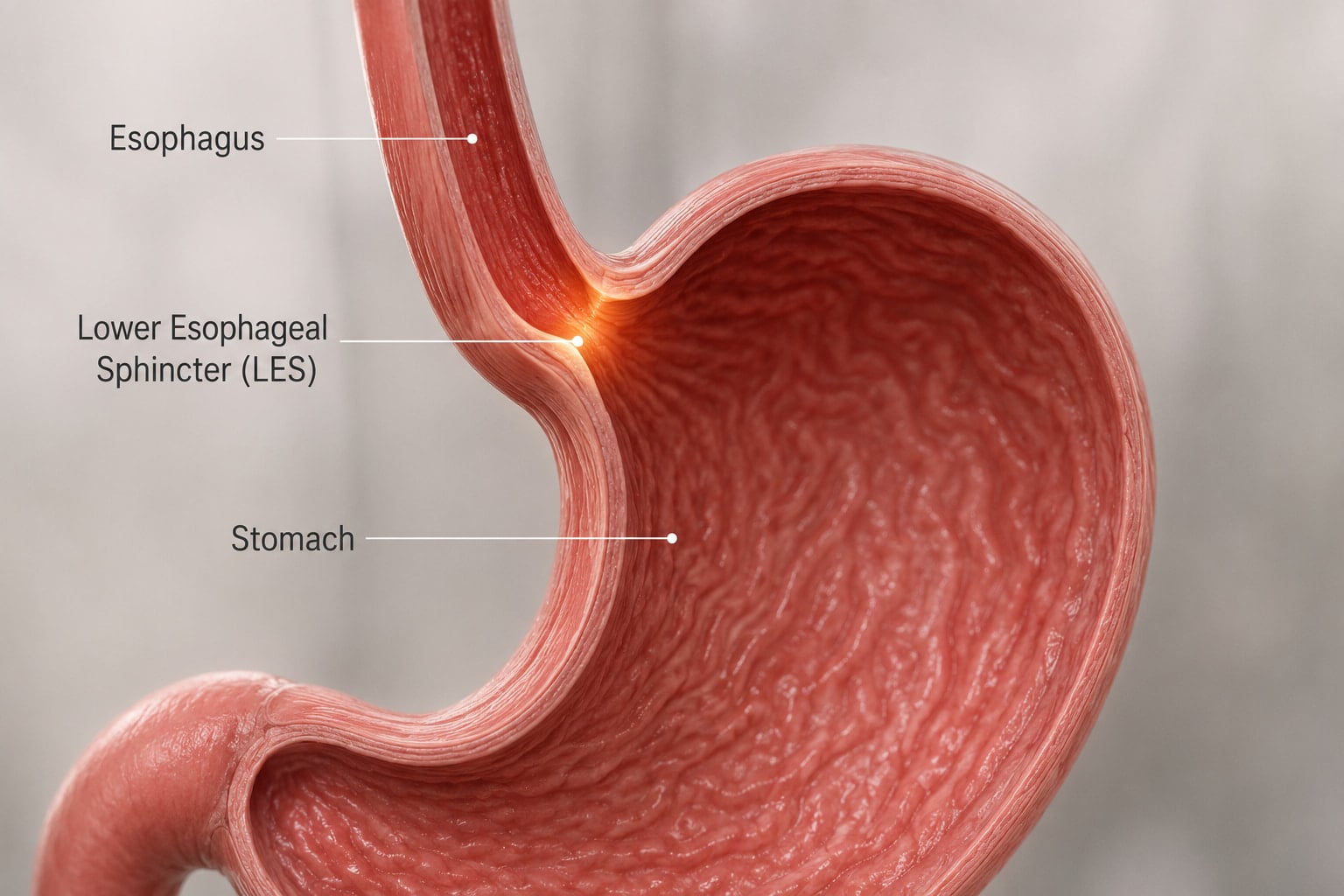
Acid reflux is stomach contents flowing backward into the esophagus. Your stomach is built to handle acid. Your esophagus is not. When acid washes up where it doesn’t belong, you get that burning feeling behind your breastbone. We call it heartburn, though it has nothing to do with your heart.
There’s a ring of muscle at the bottom of your esophagus called the lower esophageal sphincter, or LES. Think of it as a one-way door. It opens to let food drop into the stomach, then snaps shut. When that door gets weak or relaxes when it shouldn’t, acid escapes upward. Do this a few times a month and it’s an annoyance. Do it a few times a week and you may have the chronic form of acid reflux, which can scar the esophagus and, left alone for years, raise your risk of more serious problems. This is the kind of progression Dr. Gopal Grandhige sees in patients who waited too long to get checked.
Common symptoms:
- Heartburn, especially after meals or lying down
- Sour liquid or food backing up into your throat
- Chest pain
- Trouble swallowing
- A dry cough, hoarseness, or worsening asthma when acid reaches the throat
What Is Diabetes?
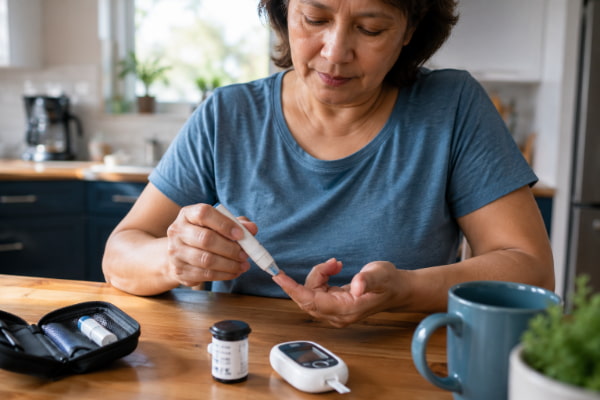
Diabetes is chronically high blood sugar. In type 2, your cells stop responding to insulin, the hormone that moves sugar out of your blood and into your cells for fuel. Sugar piles up in the bloodstream instead. Over time, all that excess glucose quietly damages nerves and blood vessels throughout the body, often before anyone’s been diagnosed.
The classic warning signs are constant thirst, frequent urination, and being hungry all the time. Other clues include fatigue, blurry vision, slow-healing cuts, and numbness or tingling in the hands and feet.
That nerve and blood vessel damage is the bridge to your gut. Hold that thought, because it’s the whole reason these two conditions travel together.

Why Are Acid Reflux and Diabetes Connected?
Three reasons, mainly: nerve damage, body weight, and the medication used to treat reflux. Here’s how each one works.
Nerve Damage Is the Real Culprit
Most people assume the reflux-diabetes link is just about weight. It isn’t. The bigger driver is nerve damage.
High blood sugar over many years injures the vagus nerve, the main cable running between your brain and your digestive system. The vagus nerve tells your stomach when to contract and when to empty. Damage it, and the whole system slows down.
When the stomach can’t empty on schedule, food and acid sit there longer than they should. That backed-up pressure pushes acid up through a weakened LES. Doctors call the slow-emptying problem gastroparesis, and it shows up in roughly 3 in 10 people with type 2 diabetes, usually after a decade or more of poorly controlled blood sugar. Gastroparesis brings its own misery too: nausea, bloating, feeling full after a few bites, and yes, more reflux.
So the chain looks like this. High blood sugar damages the vagus nerve. The damaged nerve slows stomach emptying. The full stomach refluxes acid. It’s a direct mechanical consequence, not a coincidence.
Carrying Extra Weight
Weight still matters. People who are overweight are about 50% more likely to develop reflux, and the odds climb higher with obesity. Belly fat presses on the stomach and squeezes its contents upward. It also raises the chance of a hiatal hernia, where part of the stomach pushes up through the diaphragm and makes reflux worse.
Most people with type 2 diabetes carry extra weight. So overweight diabetics get hit twice: once from the nerve damage, once from the mechanical pressure.
The PPI Problem Nobody Mentions
Here’s the part that should make you sit up. The most common treatment for reflux may raise your risk of diabetes.
Proton pump inhibitors, or PPIs, shut down acid production in the stomach. They’re among the ten most-prescribed drugs on the planet, and most people take them like candy. They work well for reflux. But a large study tracking over two million person-years found that regular PPI users had a 24% higher risk of developing type 2 diabetes than non-users. The longer you stay on them, the more that risk grows.
Now, the evidence here is still debated. Some researchers think the gut bacteria changes from long-term acid suppression are the cause. Others aren’t convinced the link is direct. The honest answer in 2026 is that we don’t have it nailed down. But “we’re not sure” is not the same as “ignore it.”
Here’s my take after years of watching this play out. The old advice of “just take a PPI forever” is lazy medicine. It controls a symptom while ignoring the mechanical problem causing the reflux, a weak valve or a hiatal hernia that a pill will never fix. If you’ve been on a PPI for more than two years, get your blood sugar checked. And ask whether your reflux has a structural cause that a daily pill is just papering over.

What You Can Actually Do About It
If you have both conditions, blood sugar control is your first lever. Keeping glucose in a healthy range protects the vagus nerve and slows the whole reflux cascade. This is one of the few moves that helps both problems at the same time.
A few practical changes that earn their keep:
- Get blood sugar under control. This is the root fix. Everything downstream improves when your glucose does.
- Drop excess weight if you’re carrying it. Even a modest loss takes pressure off the stomach.
- Swap the trigger drinks. Coffee, alcohol, and carbonated drinks can all loosen the LES or stir up acid. Plain water doesn’t. One large study found that replacing coffee, tea, or soda with water lowered reflux symptoms.
- Stop eating three hours before bed. A full stomach plus lying flat is a recipe for nighttime reflux.
- Don’t self-manage forever. Over-the-counter acid blockers are fine for the occasional flare. They are not a long-term plan.
Notice what this list doesn’t promise: that diet alone fixes everything. It won’t. Weight loss and clean eating help, but they don’t repair a large hiatal hernia or a failed valve. For that, you need someone to actually look at the anatomy.
That’s the gap a specialist fills. Tampa Bay Reflux Institute focuses on finding the real cause of reflux instead of masking it, and Dr. Grandhige, a board-certified surgeon, works to eliminate reflux and GERD at the source rather than committing patients to pills for life. Proper testing comes first, because not all reflux is the same and not all of it is even acid.
The bottom line on acid reflux and diabetes: these two conditions reinforce each other, and the connection is real, not vague. If you’ve had reflux and a long PPI history, get screened for diabetes. If you’re diabetic with constant reflux, get checked for nerve-related stomach problems before it progresses. Waiting is the one move I’ve seen people regret most.
FAQs
Can diabetes make my acid reflux worse?
Yes. High blood sugar over time damages the vagus nerve that controls stomach emptying. When the stomach empties too slowly, acid backs up and refluxes more easily. This is why close to 40% of people with type 2 diabetes also experience GERD, even at a normal weight.
Is long-term PPI use safe if I have diabetes?
This is debated. One large study found regular PPI users had a 24% higher risk of developing type 2 diabetes, possibly through changes in gut bacteria. The evidence isn’t settled, but if you’ve taken a PPI for more than two years, it’s worth getting your blood sugar checked and asking your doctor whether you still need it.
What is diabetic gastroparesis?
Gastroparesis is delayed stomach emptying caused by nerve damage from high blood sugar. It affects roughly 30% of people with type 2 diabetes, usually after years of poor glucose control. Symptoms include nausea, bloating, early fullness, and worsening acid reflux.
Does losing weight help both acid reflux and diabetes?
Yes, and it’s one of the few changes that improves both at once. Extra belly fat pushes stomach contents upward and worsens reflux, while also driving insulin resistance. Even modest weight loss eases pressure on the stomach and helps blood sugar control.
What drinks should I avoid with acid reflux?
Coffee, alcohol, and carbonated drinks are common triggers because they can relax the lower esophageal sphincter or increase acid. Research shows that swapping these for plain water reduces reflux symptoms. Personal tolerance varies, so a short food diary can help you spot your own triggers.
Should I see a specialist for acid reflux and diabetes together?
If you have both, yes. Blood sugar control and diet help, but they can’t fix a structural problem like a hiatal hernia or a weak valve. A specialist can run proper testing to find the actual cause instead of masking symptoms with medication indefinitely.


An endoscopy cannot tell you if you have reflux. It can only tell you if you have complications of GERD.
If you are unhappy with your reflux symptoms, come in and we can discuss testing and treatments that can accurately diagnose your problem.
#reflux #gerd #hiatalhernia #gastroparesis #linx

CALL US AT 813-922-2920
www.tampareflux.com
If you have a hiatal hernia and fit one of these categories, you should know your options.
Dr. Grandhige is an expert in his field and performs 200 of these surgeries a year. He is the only surgeon in the Tampa Bay Area who offers all surgical options - LINX, Fundoplications, TIF and will be one of 20 surgeons in America introducing the latest procedure RefluxStop in 2026.
We accept most insurances but will verify yours before you come in. These procedures are considered medically necessary and covered by your insurance. You can expect to pay your in-network deductibles and nothing else.
#hiatalhernia #reflux #GERD #LINX #refluxstop
What causes reflux ?
1. Weak lower esophageal sphincter
2. Hiatal hernia
3. Flattening of the Angle of His
4. Poor esophageal motility
5. Gastroparesis (slow stomach)
NOT increased acid production
Don’t let GERD get in the way of living your life. Request your appointment with us today on the link below.
.
.
.
.
https://tampareflux.com/contact-us/
Anyone can be victim to GERD and though weight loss can help reduce GERD symptoms. Many athletes with high impact workouts may continue to have these symptoms. This may be a symptom of a hiatal hernia or other issue. We are more then happy to assist you in finding your solution, just click the link below.
.
.
.
https://tampareflux.com/contact-us/
##healthylifestyle #workout #athletereflux #PPIs #heartburn #LINX #fundoplication #TIF #GERD#tampaheartburn #linx #TIF #fundoplication #tampabayreflux #GERD #acidreflux #acidrefluxsurgery #stopreflux
#nonsurgicalweightloss #ESG #gastricballoon #weightlossjourney #vsg #vsgjourney #spatz3 #orbera #orberaballoon #grandhige #DrG
#tampabayrefluxinstitute #guthealth #roboticsurgery
Heartburn may seem like an annoyance. But if you find yourself having symptoms on a daily basis, it may be time to to talk to Dr. Grandhige as it could be a symptom of something worse.
.
.
.
#chronicheartburn #gerdsymptoms #heartburnrelief #reflux #PPIs #heartburn #LINX #fundoplication #TIF #GERD#tampaheartburn #linx #TIF #fundoplication #tampabayreflux #GERD #acidreflux #acidrefluxsurgery #stopreflux
#nonsurgicalweightloss #ESG #gastricballoon #weightlossjourney #vsg #vsgjourney #spatz3 #orbera #orberaballoon #grandhige #DrG
#tampabayrefluxinstitute #guthealth #roboticsurgery
If you are tired of avoiding your favorite foods or taking daily medications, we can help.
We are the Tampa experts in reflux ! With years of experience and thousands of patients treated successfully, we offer all FDA approved anti-reflux procedures.
Call 813-922-2920 to schedule your appointment
All major insurances accepted.
Not all patients need surgical intervention. Many patients are living a heartburn free life with their PPIs. However 40% of patients taking PPIs are not getting the relief they need. If you are one of those, you have options! Come in and find out more.
.
.
.
.
#letushelpyou #medsnotworking #reflux #PPIs #heartburn #LINX #fundoplication #TIF #GERD#tampaheartburn #linx #TIF #fundoplication #tampabayreflux #GERD #acidreflux #acidrefluxsurgery #stopreflux
#nonsurgicalweightloss #ESG #gastricballoon #weightlossjourney #vsg #vsgjourney #spatz3 #orbera #orberaballoon #grandhige #DrG
#tampabayrefluxinstitute #guthealth #roboticsurgery
#heartburn #stopreflux #hiatalherniarepair #severeheartburn #reflux #tampabayreflux #acidrefluxsurgery #tampaheartburn #GERD #PPIs #achalasia #LINX #TIF #tampareflux #fundoplication #stomach #digestivehealth #ESG #obesity #overweight #weightlossjourney #gastricballoon


