
Written By: Jeffrey Atlas, Health Content Writer
Medically Reviewed By: Dr. Gopal Grandhige, MD, FACS, Board-Certified Surgeon
Last Reviewed: June 17, 2026
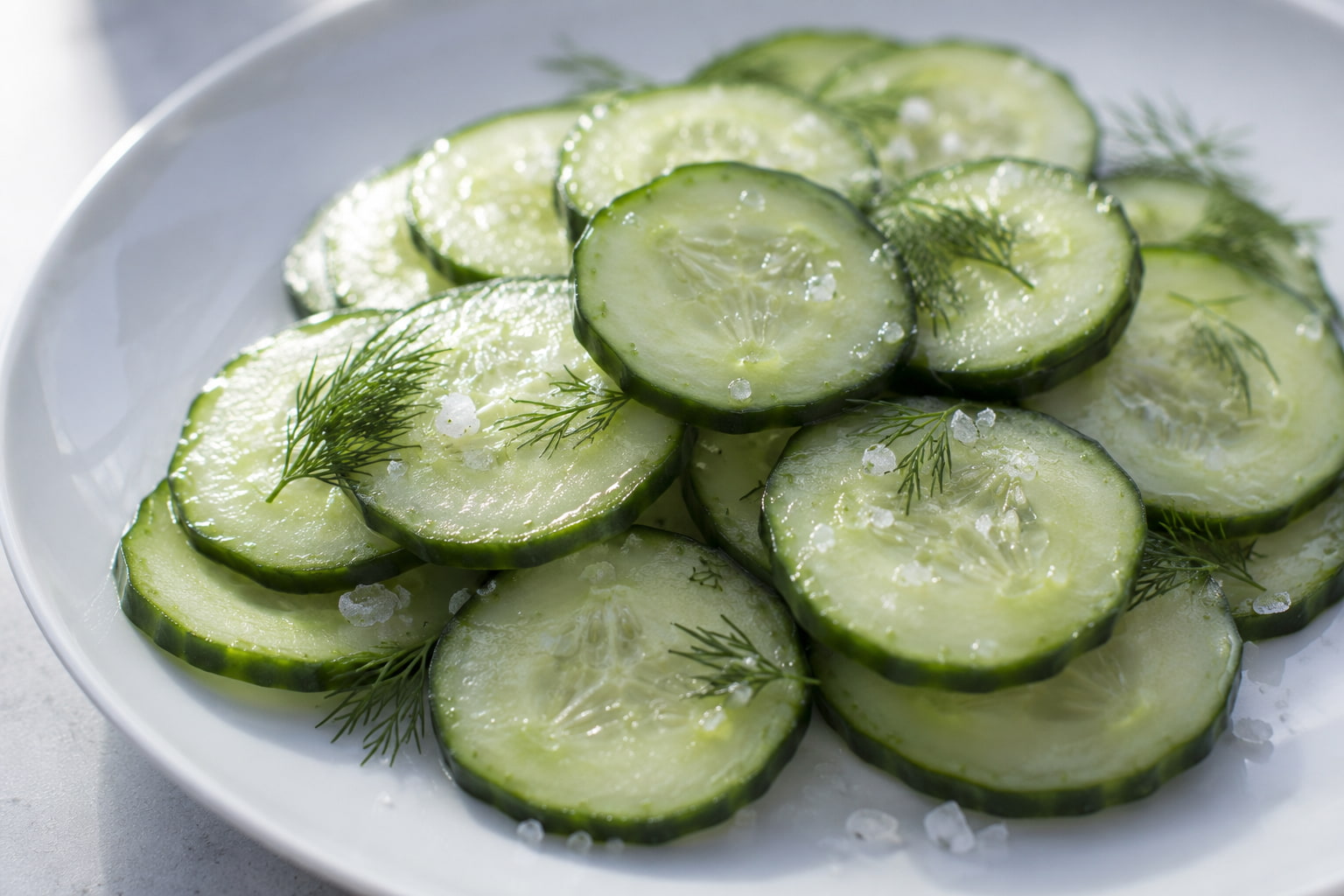
Yes, fresh cucumbers are good for acid reflux for most people. They sit at a near-neutral pH of 5.12 to 5.78 on the FDA’s food acidity reference, they’re about 96% water, and they contain almost no fat, no caffeine, and none of the other compounds that loosen the valve between your stomach and esophagus. If you have GERD or LPR (silent reflux), a fresh cucumber is one of the lower-risk things on your plate.
That’s the short version. Here’s the part most reflux articles skip: pickled cucumber and fresh cucumber are not the same food, and the difference matters more than almost anything else in this conversation.
I’m Dr. Gopal Grandhige. I’m a board-certified surgeon at Tampa Bay Reflux Institute, and most of what I do is help people stop reflux for good, not paper over it with diet hacks. So when I tell you cucumber is safe, I’m also going to tell you when it isn’t, and when “what you eat” stops being the real question.
The Quick Answer for Busy Readers
Fresh cucumber is one of the safest foods you can eat with acid reflux, GERD, or LPR. Its pH is high enough to stay above the threshold that reactivates pepsin in the throat, its water content dilutes stomach acid, and it has essentially no fat to relax the lower esophageal sphincter (LES). Pickled cucumber is the opposite. Dill pickles drop to a pH of 3.20 to 3.70, which is acidic enough to make symptoms worse.
That paragraph is the whole article in 80 words. Everything below is the why and the how.
What’s Actually in a Cucumber? (And Why It Matters for Reflux)
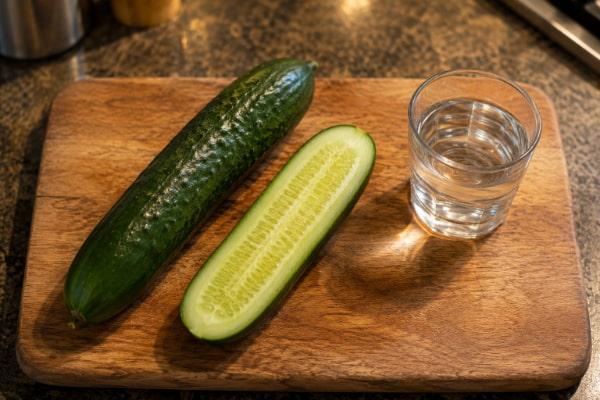
A 100-gram serving of raw cucumber with the skin is about 95% water, around 16 calories, 0.62 grams of protein, 0.18 grams of fat, and 2.95 grams of carbohydrate. The skin adds a small amount of fiber. That’s it. From a reflux standpoint, this is about as quiet a food as you can put on a plate.
Four things drive whether a food causes reflux. Cucumber loses on none of them.
Acidity. The pepsin in your throat (the digestive enzyme that drives LPR damage) reactivates below pH 4. Cucumbers sit at pH 5.12 to 5.78. They’re not alkaline, they’re mildly acidic, but they’re well above the line where things get ugly.
Fat content. High-fat meals delay gastric emptying and relax the LES. Research from 2019 noted that drinking full-fat cow’s milk and eating other high-fat foods may relax the lower esophageal sphincter, potentially causing or worsening reflux symptoms. Cucumber has 0.18 grams of fat per 100 grams. That isn’t a concern.
LES-relaxing compounds. Caffeine, peppermint, alcohol, and chocolate all loosen the valve at the top of your stomach. Cucumber contains none of them.
Gastric emptying. Anything dense, heavy, or fatty sits in your stomach and gives acid more time to escape upward. Cucumber is mostly water. It moves through.
By every measure that matters, cucumber gets a green light.
Is Cucumber Alkaline or Acidic? Sorting Out the pH Myth
Here’s a claim you’ll find all over the internet: cucumbers have a pH of 7.5 and are an alkaline food. That’s wrong on the first part and complicated on the second.
The FDA food acidity reference puts cucumbers at pH 5.12 to 5.78. That’s mildly acidic. The confusion comes from a different system called Potential Renal Acid Load, or PRAL, which classifies foods by the acid-alkaline residue they leave in the body after digestion. By that measure, cucumber is alkalizing. Both can be true. But the number that matters for your esophagus is the actual pH of the food going in, not the metabolic effect on your blood chemistry. And that number is 5.1 to 5.8.
Why does that matter? Because the dietary trigger for LPR damage is pepsin reactivation, and pepsin reactivates below pH 4. Fresh cucumber stays comfortably above that line. Pickles, which I’ll get to in a minute, don’t.
What Does the Research Actually Show?
The cucumber-and-reflux conversation isn’t built on vibes. There’s published work behind it.
In 2017, researchers at K. M. Kundnani College of Pharmacy in Mumbai tested seven common foods (broccoli, kale, radish, cucumber, lemon juice, cold milk, and curd) for their acid-neutralizing effect in an artificial stomach model. All samples except lemon showed significantly higher acid neutralizing effect than water (p<0.05 for cucumber, p<0.001 for the rest), and the highest antacid activity was demonstrated by cold milk and broccoli, comparable with sodium bicarbonate and ENO. Cucumber’s antacid effect was real, just smaller than the standout performers. So cucumber isn’t just neutral. It actively buffers acid, mildly.
Fiber matters too. A 2018 trial by Morozov and colleagues found that 12.5 grams of soluble fiber per day in 30 non-erosive GERD patients reduced heartburn from 93.3% of patients at baseline to 40% at the end of the study, and increased minimal lower esophageal sphincter resting pressure from 5.41 to 11.3 mmHg. Total number of gastroesophageal refluxes dropped from 67.9 to 42.4. Cucumber with the skin on isn’t a fiber bomb, but it adds to the daily total, and the daily total is what counts.
The bigger dietary picture: a 2017 retrospective study by Zalvan and colleagues at New York Medical College compared 184 patients with LPR treated either with PPI plus standard reflux precautions or a 90% plant-based Mediterranean-style diet with alkaline water plus the same precautions. The dietary approach matched and slightly outperformed the medication approach on symptom scores. Cucumber fits squarely inside that kind of diet.
Are Cucumbers Good for LPR Specifically?
Yes, for the same reason they’re safe for GERD, with one added benefit: cucumber is cool, wet, and gentle on an irritated throat. That matters with LPR more than with classic heartburn, because LPR damage happens in the larynx, not the chest. Cucumber doesn’t sting. It doesn’t burn. And it doesn’t take pepsin past its reactivation threshold.
For LPR, I usually tell patients to think in two categories: foods above pH 4, and foods below it. Cucumber lives well above. Many of the things people instinctively reach for when their throat feels raw (lemon water, ginger tea, mint candies) do not. Cucumber is a much safer reach.
When Cucumbers Don’t Sit Right (And Why It Usually Isn’t the Cucumber)
I’ll be honest with you. Patients tell me cucumber upsets their stomach. So do online forums. Some people genuinely do react to cucumber, and writing an article that pretends otherwise is dishonest.
But in most cases, the cucumber isn’t the problem. The dressing is.
Think about what shows up on the same plate as cucumber. Vinaigrette. Tzatziki with garlic. Hummus with citric acid and garlic. A spicy chili-lime sprinkle. A drenching of ranch. Each of those is a known reflux trigger. Cucumber gets blamed because it’s the most visible ingredient.
A small subset of people are genuinely sensitive to a compound called cucurbitacin, which gives cucumbers their occasional bitterness and can cause burping and stomach upset in sensitive individuals with a weak LES. If you eat plain raw cucumber with nothing on it and it consistently bothers you, that’s the likely culprit. Try peeling them, choose less bitter varieties (English or Persian), or just back off.
The other situation worth naming: if you’re getting reflux from foods most people tolerate, including cucumber, that’s not a cucumber problem. That’s a structural problem. Hiatal hernias, weak sphincters, and motility issues don’t get fixed by removing one more food from your list. If you’ve cleaned up your diet, dropped trigger foods, and still need acid blockers daily to function, you don’t have a food problem. You have a structural problem. That’s the conversation that needs to happen, not another round of elimination.
The Pickled Cucumber Problem
This is the part of the article I care most about.
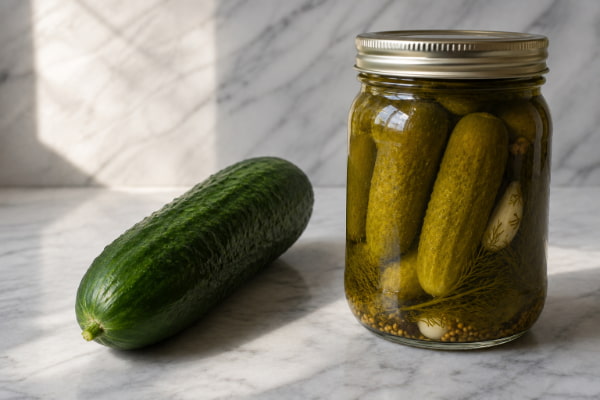
Fresh cucumber and pickled cucumber are nutritionally and chemically different foods. Dill pickles drop to a pH of 3.20 to 3.70, and regular pickled cucumbers sit at 4.20 to 4.60. Both are below or right at the pH 4 line where pepsin reactivates. The acidity comes from vinegar, which is mostly acetic acid, and vinegar typically carries a low pH, generally falling somewhere between 2 and 3.
So here’s the simple version:
Fresh cucumber: pH 5.1–5.8. Safe. Vinegar-brined pickles: pH 3.2–4.6. Not safe for active reflux.
What about pickle juice as a heartburn remedy? You’ll see this trick on TikTok every few months. There is no scientific evidence supporting the belief that pickle juice can help with heartburn. If anything, the acidic liquid may make symptoms worse. Individuals with acid reflux, GERD, or stomach ulcers may find that the vinegar and acidity in pickle juice worsens their symptoms. Don’t do it.
Fermented pickles (the lacto-fermented kind, not vinegar-brined) are a slightly different story. They’re still acidic from the lactic acid produced during fermentation, but the acid load is gentler and there are real probiotic benefits in unpasteurized versions. For deeper detail on the trade-offs, our breakdown of pickled foods and acid reflux covers fermented versus vinegar in detail. The summary I give patients: in an active flare, skip both. Once symptoms calm down, lacto-fermented pickles in small amounts are reasonable. Vinegar pickles, not really.
How to Eat Cucumber with Reflux (Without Wrecking the Win)
Eat them raw and fresh. Cooking softens cucumber and pulls out the water content that makes it useful in the first place. Raw is the way.
Keep the portions sensible. A medium cucumber is 200 to 300 grams, which is plenty. Eating an entire family-size container of cucumber sticks in one sitting will increase stomach pressure, and stomach pressure increases reflux regardless of what the food is.
Watch what you put on top. Olive oil and fresh herbs (basil, dill) are fine. Sea salt is fine. Vinegar, balsamic, citrus, garlic-heavy dressings, and most commercial ranches and Caesars are not. For safer pairings, our list of low-acid produce picks to calm acid reflux covers vegetables that play well with cucumber on the same plate.
Try peeling if you bloat. The skin adds fiber, which is generally good for reflux, but if you find cucumber leaves you gassy, the skin is the most likely culprit. Peel and see.
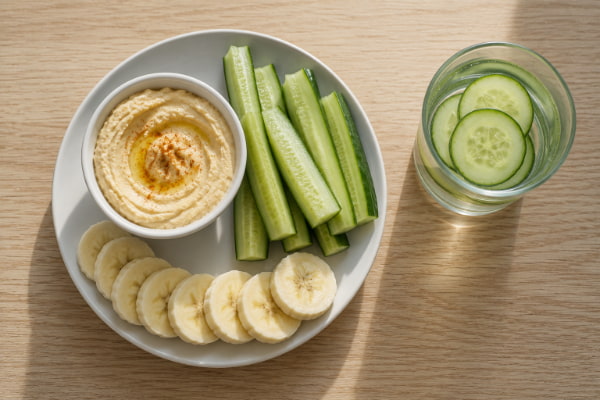
Pair smart for snacks. Cucumber with a small amount of plain hummus (avoid the garlic-heavy or lemon-spiked versions), a few slices alongside a banana, or cucumber sticks with cottage cheese all work for most GERD patients. LPR patients should be more careful with anything containing tomato, citrus, or vinegar.
Cucumber Water? Yes. Cucumber Juice? Be Careful.
Cucumber-infused water is fine. Cucumbers are about 95% water, which can contribute to daily fluid intake, and adding cucumber slices to a pitcher gives you flavor without adding acidity. Drink it freely.
A word of caution. If you go on a cucumber-juice cleanse and start putting in lemon, mint, and ginger, you’ve turned a safe drink into a potential trigger. Lemon and citrus drop pH fast. Mint relaxes the LES. Ginger is more variable, but enough patients react to it that I tell people to be careful. Plain cucumber water, yes. Loaded green juice, no.
Our best drinks for acid reflux and GERD article goes deeper on what to put in your glass beyond water.

When Diet Stops Being the Answer
I want to push back on something the reflux internet repeats without questioning.
You can do everything right with food. You can eat the cucumber, skip the pickles, drink the right water, and time your meals perfectly. And if your reflux is being driven by a hiatal hernia or a sphincter that has structurally failed, none of it is going to fix the underlying problem. Diet manages symptoms. It doesn’t repair anatomy.
I’ve seen this play out hundreds of times. Patients spend years cycling through PPIs, elimination diets, alkaline water, every supplement on Amazon, and they still wake up at 3 a.m. with acid in their throat. The food is a piece of the puzzle, but the puzzle has more than one piece. If your symptoms are daily, if you’ve been on a PPI for more than eight weeks without real relief, or if you’ve started avoiding foods just to function, the question to ask isn’t “what else should I eliminate?” It’s “what’s wrong structurally?”
For most patients in that situation, the next step is a proper workup. That usually means upper endoscopy, pH-impedance testing, and sometimes manometry. If those tests show a hiatal hernia or a damaged LES, we have repair options that actually fix the problem instead of muting it. Procedures like the LINX reflux management system or TIF (transoral incisionless fundoplication) restore the valve mechanism so you can eat a cucumber salad without thinking twice.
I’m not telling you to skip the dietary work. Diet matters. But if you’ve done the dietary work and you’re still suffering, that’s a different conversation.
Conclusion
Fresh cucumber is a green light for GERD and LPR. It’s mildly acidic but well above the pepsin-reactivation threshold, it’s 96% water, it has almost no fat, and the research that exists shows it has a small but real acid-buffering effect. Eat it raw, watch what you put on it, and don’t confuse fresh cucumber with the vinegar-brined pickle version, because the second one is a real problem.
That’s the food answer. But food isn’t always the answer.
If you’re reading reflux articles every week, cycling through diets, and still not feeling better, the issue probably isn’t whether cucumbers are good for acid reflux in 2026. The issue is that your reflux has a structural cause that diet alone won’t fix. At Tampa Bay Reflux Institute, we help patients stop the disease, not just manage around it. If you’ve done the work and you’re still stuck, that’s the conversation worth having. Reach out through our contact page and we’ll figure out what’s actually going on.
FAQs
Is cucumber good for acid reflux?
Yes. Fresh cucumber is one of the safest foods to eat with acid reflux or GERD. Its pH of 5.12 to 5.78, 96% water content, and near-zero fat make it gentle on the stomach and the LES. About 20% of US adults have GERD symptoms weekly, and cucumber is on virtually every reflux-friendly food list compiled by gastroenterologists.
Can cucumber cause heartburn or acid reflux?
Not usually. Cucumber lacks the acidity, fat, caffeine, or LES-relaxing compounds that drive heartburn. When patients report reflux after cucumber, the trigger is almost always the dressing, dip, or seasoning, not the cucumber itself. A small number of people are sensitive to cucurbitacin, the compound that occasionally makes cucumbers bitter, but this is uncommon.
What is the pH of cucumber, and is it acidic or alkaline?
The FDA lists cucumbers at pH 5.12 to 5.78, which is mildly acidic. The popular claim that cucumber sits at pH 7.5 isn’t accurate. Cucumber is alkalizing in the PRAL metabolic sense (the residue it leaves after digestion is alkaline), but the food itself is mildly acidic. For reflux purposes, what matters is that 5.12 to 5.78 is well above the pH 4 line where pepsin reactivates.
Are pickled cucumbers bad for acid reflux?
Yes, for most people with active reflux. Dill pickles have a pH of 3.20 to 3.70 and regular pickled cucumbers run 4.20 to 4.60, all of which are at or below the threshold that reactivates pepsin and irritates the throat. Pickle juice is essentially diluted acetic acid and is a poor heartburn remedy despite what social media suggests. If you want a tangy snack, fresh cucumber with a sprinkle of dill and sea salt gives you the flavor without the acid load.
Are cucumbers safe for LPR (silent reflux)?
Yes. For LPR, the central dietary rule is keeping foods above pH 4 to prevent pepsin reactivation in the larynx. Cucumbers at 5.12 to 5.78 are well clear of that line. They also have a cooling, gentle effect on an irritated throat, which is why most LPR food lists include them. The Zalvan study at New York Medical College found that a 90% plant-based Mediterranean diet, which includes foods like cucumber, matched PPI therapy for LPR symptom control across 184 patients.
Should I peel cucumbers if I have GERD?
For most people, no. The skin adds fiber, which research suggests can increase LES resting pressure and reduce reflux episodes. The Morozov 2018 trial showed that adding 12.5 grams of fiber per day cut heartburn frequency from 93% of patients at baseline to 40% after 10 days. If you find cucumber skin causes bloating or burping, peeling is reasonable, but try the skin first.
Is cucumber water good for acid reflux?
Yes. Plain cucumber-infused water is one of the most reflux-friendly drinks available. The cucumber adds flavor without acidity and the extra hydration helps dilute stomach acid. Skip the lemon, mint, and ginger add-ins that turn a safe drink into a potential trigger.
Why am I getting reflux from cucumbers when I do everything right with diet?
If you’ve eliminated obvious triggers and even mild foods like cucumber are causing symptoms, the problem usually isn’t the food. It’s the anatomy. Hiatal hernias, weakened lower esophageal sphincters, and motility issues don’t respond to dietary changes the way mild reflux does. At Tampa Bay Reflux Institute, this is what we evaluate when patients have done the dietary work and still aren’t getting better.


An endoscopy cannot tell you if you have reflux. It can only tell you if you have complications of GERD.
If you are unhappy with your reflux symptoms, come in and we can discuss testing and treatments that can accurately diagnose your problem.
#reflux #gerd #hiatalhernia #gastroparesis #linx

CALL US AT 813-922-2920
www.tampareflux.com
If you have a hiatal hernia and fit one of these categories, you should know your options.
Dr. Grandhige is an expert in his field and performs 200 of these surgeries a year. He is the only surgeon in the Tampa Bay Area who offers all surgical options - LINX, Fundoplications, TIF and will be one of 20 surgeons in America introducing the latest procedure RefluxStop in 2026.
We accept most insurances but will verify yours before you come in. These procedures are considered medically necessary and covered by your insurance. You can expect to pay your in-network deductibles and nothing else.
#hiatalhernia #reflux #GERD #LINX #refluxstop
What causes reflux ?
1. Weak lower esophageal sphincter
2. Hiatal hernia
3. Flattening of the Angle of His
4. Poor esophageal motility
5. Gastroparesis (slow stomach)
NOT increased acid production
Don’t let GERD get in the way of living your life. Request your appointment with us today on the link below.
.
.
.
.
https://tampareflux.com/contact-us/
Anyone can be victim to GERD and though weight loss can help reduce GERD symptoms. Many athletes with high impact workouts may continue to have these symptoms. This may be a symptom of a hiatal hernia or other issue. We are more then happy to assist you in finding your solution, just click the link below.
.
.
.
https://tampareflux.com/contact-us/
##healthylifestyle #workout #athletereflux #PPIs #heartburn #LINX #fundoplication #TIF #GERD#tampaheartburn #linx #TIF #fundoplication #tampabayreflux #GERD #acidreflux #acidrefluxsurgery #stopreflux
#nonsurgicalweightloss #ESG #gastricballoon #weightlossjourney #vsg #vsgjourney #spatz3 #orbera #orberaballoon #grandhige #DrG
#tampabayrefluxinstitute #guthealth #roboticsurgery
Heartburn may seem like an annoyance. But if you find yourself having symptoms on a daily basis, it may be time to to talk to Dr. Grandhige as it could be a symptom of something worse.
.
.
.
#chronicheartburn #gerdsymptoms #heartburnrelief #reflux #PPIs #heartburn #LINX #fundoplication #TIF #GERD#tampaheartburn #linx #TIF #fundoplication #tampabayreflux #GERD #acidreflux #acidrefluxsurgery #stopreflux
#nonsurgicalweightloss #ESG #gastricballoon #weightlossjourney #vsg #vsgjourney #spatz3 #orbera #orberaballoon #grandhige #DrG
#tampabayrefluxinstitute #guthealth #roboticsurgery
If you are tired of avoiding your favorite foods or taking daily medications, we can help.
We are the Tampa experts in reflux ! With years of experience and thousands of patients treated successfully, we offer all FDA approved anti-reflux procedures.
Call 813-922-2920 to schedule your appointment
All major insurances accepted.
Not all patients need surgical intervention. Many patients are living a heartburn free life with their PPIs. However 40% of patients taking PPIs are not getting the relief they need. If you are one of those, you have options! Come in and find out more.
.
.
.
.
#letushelpyou #medsnotworking #reflux #PPIs #heartburn #LINX #fundoplication #TIF #GERD#tampaheartburn #linx #TIF #fundoplication #tampabayreflux #GERD #acidreflux #acidrefluxsurgery #stopreflux
#nonsurgicalweightloss #ESG #gastricballoon #weightlossjourney #vsg #vsgjourney #spatz3 #orbera #orberaballoon #grandhige #DrG
#tampabayrefluxinstitute #guthealth #roboticsurgery
#heartburn #stopreflux #hiatalherniarepair #severeheartburn #reflux #tampabayreflux #acidrefluxsurgery #tampaheartburn #GERD #PPIs #achalasia #LINX #TIF #tampareflux #fundoplication #stomach #digestivehealth #ESG #obesity #overweight #weightlossjourney #gastricballoon


