
Written By: Jeffrey Atlas, Health Content Writer
Medically Reviewed By: Dr. Gopal Grandhige, MD, FACS, Board-Certified Surgeon
Last Reviewed: March 15, 2026
Medications that commonly cause heartburn and reflux include doxycycline and tetracycline antibiotics, NSAIDs like ibuprofen, aspirin, bisphosphonates (Fosamax, Boniva), clindamycin, potassium supplements, iron supplements, and quinidine. These drugs can irritate or damage the esophageal lining, a condition called pill esophagitis, which worsens GERD symptoms and may lead to ulcers if left untreated.
Below, we explain how each medication affects your digestive system and share practical strategies to reduce your risk of drug-induced heartburn.
1. Doxycycline and Other Tetracycline Antibiotics
Antibiotics, particularly those in the tetracycline family, account for roughly half of all esophagitis cases. These medications are highly acidic and can directly irritate the stomach and esophageal lining, often triggering discomfort within just a few hours of ingestion.
Doxycycline stands out as a major offender. It’s capable of creating ulcers along the esophageal and stomach walls. Research shows that 82.1% of drug-induced esophagitis cases present with ulcers on endoscopy, with the middle third of the esophagus being the most commonly affected location in approximately 78% of patients. To help ease stomach upset, consider taking doxycycline and similar tetracyclines alongside food.
2. Clindamycin
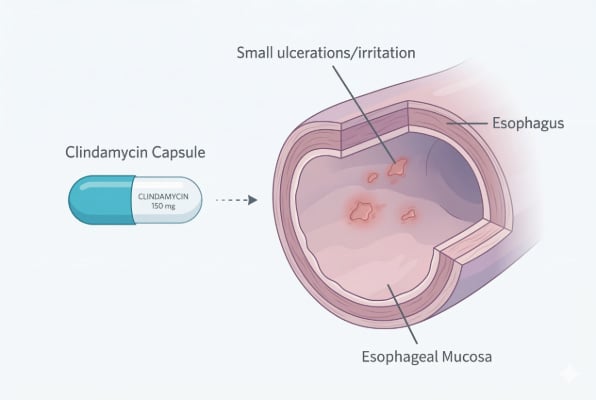
Clindamycin, another antibiotic variety, has been linked to esophageal irritation and erosions. In one small yet informative study, researchers examined patients who experienced painful swallowing after using clindamycin. Endoscopy revealed that every single participant had developed visible esophageal ulcers. Studies confirm that antibiotics like clindamycin create an acidic solution when in contact with water, which can cause localized ulcers that typically heal after discontinuing the medication.
3. Aspirin
Daily aspirin use is common among those managing cardiovascular conditions. It works by preventing platelets from clumping, which helps ward off the blood clots responsible for strokes and heart attacks.
However, aspirin also interferes with prostaglandins, protective molecules that help shield and repair the gut lining. By disrupting these compounds, aspirin can contribute to both esophagitis and gastrointestinal bleeding. Using lower aspirin doses can help reduce this risk. The National Institute of Diabetes and Digestive and Kidney Diseases provides additional guidance on managing acid reflux caused by various factors.
4. Ibuprofen and Other NSAIDs
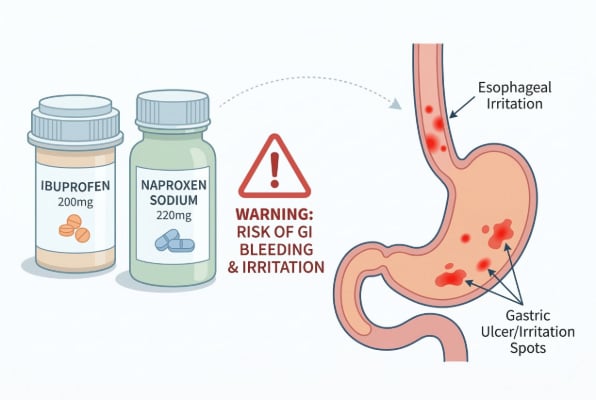
Nonsteroidal anti-inflammatory drugs (NSAIDs), such as ibuprofen (Motrin, Advil) and naproxen (Aleve), similarly affect prostaglandins and may cause ulcers in the esophagus and stomach. Symptoms can include chronic heartburn, abdominal pain, or dark-colored stool if bleeding occurs.
If you’re experiencing these issues while taking NSAIDs, speak with your physician about trying a different option like celecoxib (Celebrex). This NSAID operates through a slightly different mechanism and tends to be gentler on the digestive system.
Keep in mind that combining higher ibuprofen doses with daily aspirin substantially raises your risk of GI bleeding. Research indicates that while NSAIDs are not the most common cause of esophagitis, as many as 40-50% of affected patients may develop strictures, and most had prior symptoms of gastroesophageal reflux disease.
5. Bisphosphonates
Bisphosphonates are commonly prescribed for osteoporosis treatment. Familiar examples include alendronate (Fosamax) and ibandronate (Boniva).
These medications can harm the esophagus in ways that lead to esophageal stricture, a dangerous narrowing of the esophagus. In fact, bisphosphonates carry the highest risk of causing this complication compared to other pills. Studies have documented 127 cases of pill-induced esophagitis associated with alendronate, with 26 of those cases complicated by strictures, representing approximately a 20% chance of stricture development. That said, risedronate (Actonel) may produce fewer gastrointestinal side effects than alendronate, potentially making it a safer choice.
Given the stricture risk, contact your physician immediately if you notice:
- Chest pain
- New or intensifying heartburn
- Trouble swallowing
- A sensation of food becoming lodged
- Discomfort when swallowing
According to Hopkins Medicine, these symptoms may indicate serious complications requiring prompt evaluation.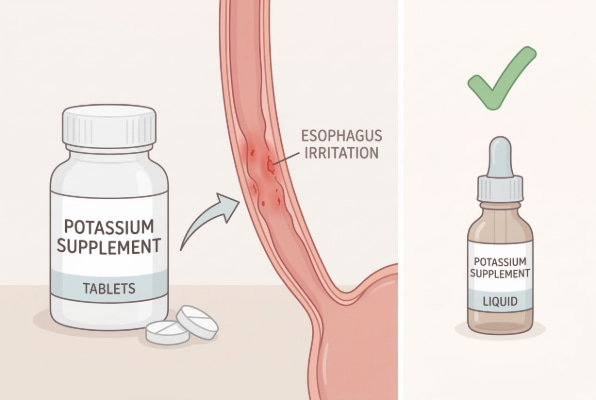
6. Potassium Supplements
Potassium chloride supplements, prescribed for individuals with low potassium levels, are well-established triggers of medication-induced esophagitis. Another form, potassium citrate (Urocit-K), may also cause esophageal irritation. Drug-induced esophagitis was first reported in 1970 when a patient was found to have esophageal ulcers after taking potassium chloride tablets.
Solid forms like tablets and capsules tend to be more problematic. If you’re experiencing issues, ask your doctor about switching to a liquid potassium formulation.
7. Iron Supplements
Ferrous sulfate, the active ingredient in most OTC iron supplements, can cause direct chemical damage to the esophagus. Like tetracyclines, it becomes highly acidic when dissolved in saliva, meaning it can injure esophageal or stomach tissue as it breaks down.
Fortunately, gentler iron supplement options exist. Consider trying Pur-Absorb iron packets, Feosol natural release, or products containing ferrous fumarate instead. The American Gastroenterological Association offers resources on protecting your digestive health while taking necessary supplements.
8. Quinidine
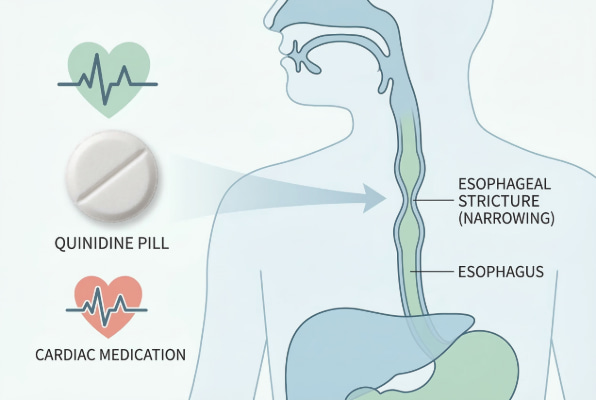
Quinidine is an older medication used to treat irregular heart rhythms such as atrial fibrillation. Similar to bisphosphonates, it can damage the esophagus and result in stricture formation. However, newer heart rhythm medications have largely replaced quinidine in modern practice.
Who Is Most at Risk for Pill Esophagitis?
The incidence of drug-induced esophagitis is estimated at 3.9 per 100,000 population per year, with women being affected more often than men. Elderly patients are more likely to develop pill-induced esophagitis than younger patients when taking the same medications. Geriatric-related low saliva production, altered esophageal anatomy, taking medication just before sleeping, and motility disorders can all result in increased esophageal transit time for drugs. Other risk factors include decreased salivary flow due to sicca syndrome or consumption of anticholinergic medications, and esophageal motility disorders such as achalasia and strictures.
How to Prevent Heartburn When Taking These Medications
Esophagitis generally resolves within a few weeks once you discontinue the problematic medication. But you can take proactive steps to minimize or prevent damage altogether:
Stay upright after taking medication. Remain standing or seated for at least 30 to 60 minutes after swallowing any of these drugs. Avoid taking them right before bed. Harvard Health emphasizes this as one of the most effective preventive measures.
Hydrate adequately when swallowing pills. Aim to take your medication with about half a cup (4 oz) of water rather than a tiny sip (1 oz). Ideally, use a full 8-oz glass to reduce the chance of pills lodging in your esophagus. Research on healthy volunteers showed delayed esophageal transit in subjects taking medications in the recumbent position and with less than 100 ml of water, with many preparations sticking to the esophageal mucosa.
Consider taking medications with food. However, check with your pharmacist first because sometimes what you eat or drink can affect how your body absorbs the medication.
Ask about alternatives. Some medications come in different formulations that are easier on your digestive tract and cause less irritation. Using a liquid form instead of pills or using sugar- or film-coated tablets instead of gelatin capsules can be beneficial, as these drug formulations have a shorter esophageal transit time.
Address minor heartburn symptoms. OTC antacids can provide relief, though some may interact with your medications. Your physician may recommend a protective medication like a proton pump inhibitor (PPI), which blocks acid production to prevent further irritation and promote healing. Common PPIs include omeprazole (Prilosec), pantoprazole (Protonix), and esomeprazole (Nexium). WebMD’s heartburn guide provides comprehensive information on these treatment options.
When Medication-Related Reflux Becomes a Bigger Problem
If you’ve been experiencing persistent heartburn or reflux symptoms, whether caused by medications or other factors, and over-the-counter treatments aren’t providing lasting relief, it may be time to explore more definitive solutions. At Tampa Bay Reflux Institute, Dr. Grandhige specializes in diagnosing and surgically treating GERD and its variants, including silent reflux and LPR.
Medication-induced reflux can sometimes occur alongside other digestive conditions such as hiatal hernias, which may require specialized intervention. Our team also treats related conditions including achalasia and gastroparesis.
Contact us today to discuss whether advanced treatment options like fundoplication surgery, the LINX procedure, or TIF/EsophyX treatment may be right for you. The NHS and American College of Gastroenterology both recommend seeking specialist care when symptoms persist despite lifestyle modifications.
Conclusion
Medication-induced heartburn and esophagitis are more common than many patients realize, but they’re also largely preventable. By understanding which drugs carry the highest risk, from tetracycline antibiotics and NSAIDs to bisphosphonates and potassium supplements, you can take simple precautions to protect your esophagus and stomach lining. Always take medications with plenty of water, remain upright afterward, and discuss gentler alternatives with your healthcare provider when needed. For additional patient education resources, visit MedlinePlus.
If you’re following these guidelines but still experiencing persistent heartburn, chest discomfort, or difficulty swallowing, don’t ignore these warning signs. Visit our reflux blog for more helpful articles, or learn about our specialists, including the best hiatal hernia doctors in Tampa. We provide expert care for abdominal hernia and heartburn and also offer incisionless weight loss procedures for patients whose reflux is related to excess weight.
FAQs
How long does pill esophagitis typically take to heal?
Most cases resolve within one to three weeks after stopping the offending medication. However, healing time depends on the severity of the irritation and whether protective measures are followed.
Can I continue taking my medication if it’s causing heartburn?
You should never stop a prescribed medication without consulting your doctor first. They can recommend alternatives, adjust dosages, or prescribe protective medications like PPIs.
Why does lying down after taking pills make heartburn worse?
Lying down allows the pill to remain in contact with your esophageal lining longer, increasing irritation. Staying upright helps gravity move the medication into your stomach more quickly.
Are coated or extended-release pills safer for my stomach?
Some coated formulations are designed to reduce direct contact with the esophagus and stomach. Ask your pharmacist whether a gentler formulation is available for your specific medication.
When should I see a specialist about medication-related reflux?
If symptoms persist despite preventive measures or if you experience difficulty swallowing, chest pain, or blood in your stool, schedule a consultation promptly. These could indicate ulcers or strictures requiring specialized treatment.


An endoscopy cannot tell you if you have reflux. It can only tell you if you have complications of GERD.
If you are unhappy with your reflux symptoms, come in and we can discuss testing and treatments that can accurately diagnose your problem.
#reflux #gerd #hiatalhernia #gastroparesis #linx

CALL US AT 813-922-2920
www.tampareflux.com
If you have a hiatal hernia and fit one of these categories, you should know your options.
Dr. Grandhige is an expert in his field and performs 200 of these surgeries a year. He is the only surgeon in the Tampa Bay Area who offers all surgical options - LINX, Fundoplications, TIF and will be one of 20 surgeons in America introducing the latest procedure RefluxStop in 2026.
We accept most insurances but will verify yours before you come in. These procedures are considered medically necessary and covered by your insurance. You can expect to pay your in-network deductibles and nothing else.
#hiatalhernia #reflux #GERD #LINX #refluxstop
What causes reflux ?
1. Weak lower esophageal sphincter
2. Hiatal hernia
3. Flattening of the Angle of His
4. Poor esophageal motility
5. Gastroparesis (slow stomach)
NOT increased acid production
Don’t let GERD get in the way of living your life. Request your appointment with us today on the link below.
.
.
.
.
https://tampareflux.com/contact-us/
Anyone can be victim to GERD and though weight loss can help reduce GERD symptoms. Many athletes with high impact workouts may continue to have these symptoms. This may be a symptom of a hiatal hernia or other issue. We are more then happy to assist you in finding your solution, just click the link below.
.
.
.
https://tampareflux.com/contact-us/
##healthylifestyle #workout #athletereflux #PPIs #heartburn #LINX #fundoplication #TIF #GERD#tampaheartburn #linx #TIF #fundoplication #tampabayreflux #GERD #acidreflux #acidrefluxsurgery #stopreflux
#nonsurgicalweightloss #ESG #gastricballoon #weightlossjourney #vsg #vsgjourney #spatz3 #orbera #orberaballoon #grandhige #DrG
#tampabayrefluxinstitute #guthealth #roboticsurgery
Heartburn may seem like an annoyance. But if you find yourself having symptoms on a daily basis, it may be time to to talk to Dr. Grandhige as it could be a symptom of something worse.
.
.
.
#chronicheartburn #gerdsymptoms #heartburnrelief #reflux #PPIs #heartburn #LINX #fundoplication #TIF #GERD#tampaheartburn #linx #TIF #fundoplication #tampabayreflux #GERD #acidreflux #acidrefluxsurgery #stopreflux
#nonsurgicalweightloss #ESG #gastricballoon #weightlossjourney #vsg #vsgjourney #spatz3 #orbera #orberaballoon #grandhige #DrG
#tampabayrefluxinstitute #guthealth #roboticsurgery
If you are tired of avoiding your favorite foods or taking daily medications, we can help.
We are the Tampa experts in reflux ! With years of experience and thousands of patients treated successfully, we offer all FDA approved anti-reflux procedures.
Call 813-922-2920 to schedule your appointment
All major insurances accepted.
Not all patients need surgical intervention. Many patients are living a heartburn free life with their PPIs. However 40% of patients taking PPIs are not getting the relief they need. If you are one of those, you have options! Come in and find out more.
.
.
.
.
#letushelpyou #medsnotworking #reflux #PPIs #heartburn #LINX #fundoplication #TIF #GERD#tampaheartburn #linx #TIF #fundoplication #tampabayreflux #GERD #acidreflux #acidrefluxsurgery #stopreflux
#nonsurgicalweightloss #ESG #gastricballoon #weightlossjourney #vsg #vsgjourney #spatz3 #orbera #orberaballoon #grandhige #DrG
#tampabayrefluxinstitute #guthealth #roboticsurgery
#heartburn #stopreflux #hiatalherniarepair #severeheartburn #reflux #tampabayreflux #acidrefluxsurgery #tampaheartburn #GERD #PPIs #achalasia #LINX #TIF #tampareflux #fundoplication #stomach #digestivehealth #ESG #obesity #overweight #weightlossjourney #gastricballoon


