

Written By: Jeffrey Atlas, Health Content Writer
Medically Reviewed By: Dr. Gopal Grandhige, MD, FACS, Board-Certified Surgeon
Last Reviewed: February 25, 2026
Acid reflux disease, or GERD, progresses through four distinct stages: Stage 1 (mild) involves occasional heartburn and minor esophageal inflammation, manageable with lifestyle changes. Stage 2 (moderate) features symptoms multiple times weekly, often requiring prescription medications. Stage 3 (severe) causes daily symptoms with erosive tissue damage, affecting about 15% of patients. Stage 4 involves precancerous changes (Barrett’s esophagus) or esophageal cancer, occurring in roughly 10% of long-term GERD sufferers. Early intervention at any stage can prevent progression and serious complications.
What exactly is acid reflux?
Acid reflux, commonly referred to as gastroesophageal reflux disease (GERD), affects millions of people worldwide. Medical professionals categorize this condition into four distinct stages based on symptom severity.
GERD is a chronic digestive disorder that tends to fluctuate over time and rarely disappears entirely. According to the National Institute of Diabetes and Digestive and Kidney Diseases, the condition occurs when stomach acid travels backward into the esophagus, the passageway connecting your throat to your stomach.
The frequency and duration of these episodes determine the severity of your condition. Some individuals experience reflux several times weekly, endure prolonged episodes, and develop persistent esophageal irritation. As these occurrences intensify and become more regular, cumulative damage to the esophageal lining increases.
Despite being widespread, many individuals remain unaware they have GERD. Without proper diagnosis and treatment from experienced reflux specialists, this condition can lead to significant health complications.
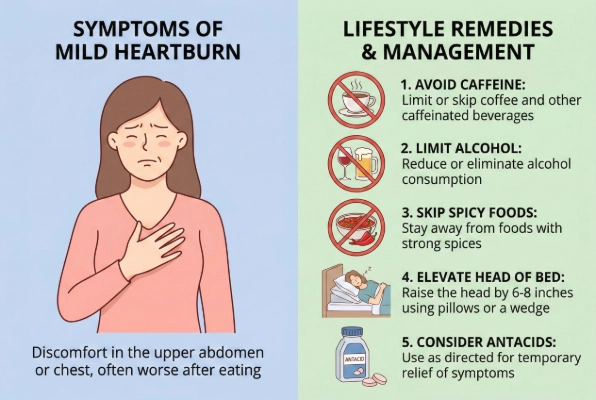
Stage 1: Mild acid reflux
The initial stage represents the most common form of GERD. At this level, you’ll typically notice minor inflammation in the lower esophageal region.
What you might notice
People with stage 1 GERD often report:
- Burning sensation in the chest (heartburn)
- Chest discomfort
- Sensation of something stuck in the throat
- Food or liquid coming back up
How to address it
Managing mild reflux primarily involves behavioral modifications. Steering clear of trigger foods and beverages, including caffeinated drinks, alcoholic beverages, spicy dishes, and high-fat meals, can significantly reduce symptoms. Maintaining balanced eating habits, using non-prescription antacids, and finishing meals at least three hours before bedtime also help. Elevating your head during sleep may provide additional nighttime relief, as noted by Mayo Clinic’s heartburn guidelines.
The Science Behind Lifestyle Modifications
While the blog mentions behavioral changes for managing GERD, clinical research strongly validates these recommendations. Randomized controlled trials have shown reduced reflux symptoms and esophageal acid exposure with weight loss, and studies demonstrate that elevation of the head of the bed by a 10-inch wedge significantly decreased esophageal acid exposure compared to lying flat. A crossover trial demonstrated that consuming dinner two hours before bedtime resulted in significantly higher nocturnal acid exposure compared to having dinner six hours before sleep, underscoring the importance of pre-bedtime fasting intervals. Tobacco cessation is also strongly recommended, as tobacco worsens GERD symptoms by reducing lower esophageal sphincter pressure and decreasing saliva production, a key component of the normal esophageal acid barrier. Research also highlights the role of psychological stress in aggravating gastroesophageal reflux symptoms, suggesting that a multidisciplinary approach addressing both physical and mental factors can significantly improve treatment success and quality of life.
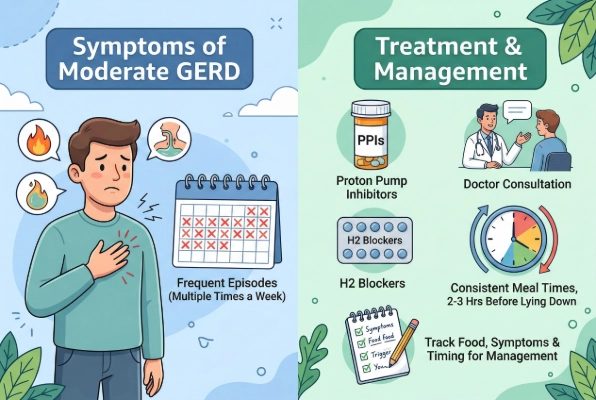
Stage 2: Moderate acid reflux
Approximately one-third of GERD sufferers experience stage 2 symptoms. The distinguishing factor here is symptom frequency—episodes occur multiple times weekly, causing heightened esophageal inflammation.
Without intervention, moderate GERD can interfere with routine activities. Daily acid-reducing medications typically become necessary. Some patients at this stage may also have an underlying hiatal hernia contributing to their symptoms.
What you might notice
Stage 2 symptoms mirror those of mild reflux:
- Heartburn
- Chest discomfort
- Throat tightness sensation
- Food and liquid regurgitation
How to address it
Though symptoms resemble milder cases, they prove harder to manage. Store-bought remedies often fall short. Cleveland Clinic’s heartburn resources recommend consulting your physician about prescription antisecretory treatments like proton pump inhibitors or H2 receptor antagonists. Seeking specialized care at this juncture can help you better control these escalating symptoms.
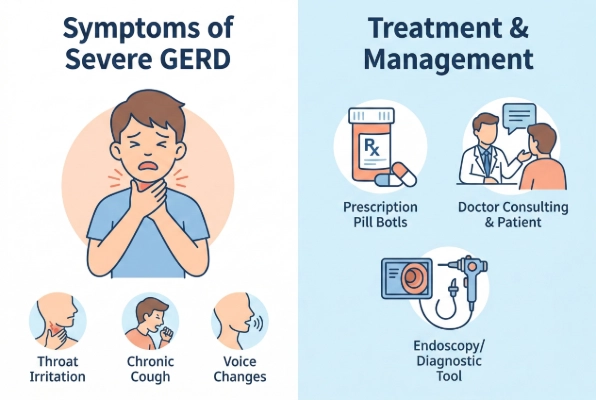
Stage 3: Severe acid reflux
Those reaching stage three typically already rely on prescription medications while battling intense daily symptoms. Erosive damage to the esophageal tissue is common at this point.
Roughly 15% of acid reflux patients progress to this stage.
What you might notice
Severe GERD may cause:
- Persistent heartburn
- Regurgitation of food and beverages
- Throat irritation
- Voice changes
- Chronic cough
Many patients at this stage also experience silent reflux (LPR), where acid reaches the throat and voice box without typical heartburn symptoms.
How to address it
Prescription medication becomes essential for managing stage 3 reflux. The risk of developing serious complications rises substantially. If you haven’t connected with a gastroenterologist or reflux specialist, doing so becomes critical. Comprehensive diagnostic testing may be recommended to ensure your treatment approach is appropriate. Johns Hopkins Medicine emphasizes the importance of professional evaluation at this stage.
Why Early Intervention Matters
Understanding the progressive nature of GERD underscores why seeking treatment early is crucial. When acid reflux goes untreated over time, repeated exposure to stomach acid can erode the esophageal lining, promote inflammation, and ultimately cause tissue damage. Approximately 5 to 12 percent of patients with chronic GERD symptoms will develop Barrett’s esophagus, a precancerous condition where the normal esophageal cells are replaced by abnormal intestinal-type cells. While the annual risk of this condition progressing to esophageal cancer is relatively low (around 0.1 to 0.5 percent per year for those without dysplasia), the risk increases significantly once abnormal cellular changes begin. Additional complications from untreated reflux include esophageal ulcers that can cause bleeding and strictures, scar tissue that narrows the esophagus and makes swallowing difficult. The good news is that these outcomes are largely preventable with proper management, making it essential to address symptoms at earlier stages before cumulative damage occurs. The American College of Gastroenterology provides comprehensive guidelines on managing these risks.
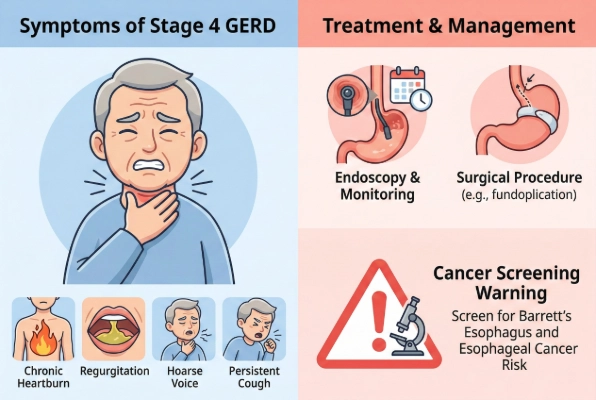
Stage 4: Precancerous changes and esophageal cancer
Years of unmanaged severe reflux can eventually lead to precancerous cellular changes or esophageal malignancy. Approximately 10% of long-term GERD patients reach this advanced stage. This condition, often called Barrett’s esophagus, carries cancer risk if left untreated.
What you might notice
Stage four indicators include:
- Ongoing heartburn
- Regurgitation
- Chronic sore throat
- Voice hoarseness
- Persistent coughing
- Difficulty swallowing or food becoming lodged
How to address it
At this advanced stage, specialists conduct extensive testing and ongoing monitoring to detect precancerous or cancerous developments. Surgical procedures such as fundoplication surgery or the LINX Reflux Management System may become necessary. Some patients benefit from the TIF EsophyX procedure, an incisionless option for treating chronic reflux. In cases involving abdominal hernia and heartburn, combined treatment approaches may be recommended.
Getting the care you need
Effective acid reflux management requires understanding your specific stage. Partner with your healthcare provider to develop a treatment strategy tailored to your GERD severity. The American Gastroenterological Association offers patient-centered guidance on navigating treatment options. While complete symptom elimination may not be possible, you can take meaningful steps to keep them under control.
For patients dealing with related digestive motility issues like gastroparesis or swallowing disorders such as achalasia, comprehensive evaluation becomes even more important. Additionally, those considering incisionless weight loss procedures should understand how excess weight impacts reflux symptoms.
Conclusion
Understanding which stage of acid reflux you’re experiencing is the first step toward effective management and preventing long-term complications. Whether you’re dealing with occasional heartburn or more persistent symptoms, the key takeaway is that GERD is a progressive condition, and what starts as mild discomfort can escalate if left unaddressed. Harvard Health and WebMD’s heartburn guide both emphasize the importance of early recognition and treatment.
The good news is that at every stage, there are actionable steps you can take, from simple lifestyle adjustments to working with specialists for advanced treatment options. Resources like MedlinePlus and the NHS heartburn guidance provide additional educational support for patients. Don’t wait for symptoms to worsen before seeking help; early intervention not only improves your quality of life but also protects your esophageal health for years to come.
If you’re experiencing persistent acid reflux symptoms, consider consulting with the best hiatal hernia doctors in Tampa or exploring our reflux treatment blog for more information. Ready to take the next step? Contact us at Tampa Bay Reflux Institute to schedule your consultation.
FAQs
Can acid reflux go away on its own?
GERD is a chronic condition that rarely resolves completely without intervention. However, lifestyle changes and proper treatment can effectively control symptoms and prevent progression.
What foods should I avoid if I have GERD?
Common triggers include spicy foods, fatty meals, caffeine, alcohol, citrus, and tomato-based products. Identifying your personal triggers through a food diary can help you manage symptoms more effectively.
When should I see a doctor about my acid reflux?
Consult a physician if you experience symptoms more than twice a week or if over-the-counter medications aren’t providing relief. Difficulty swallowing, unexplained weight loss, or persistent throat symptoms also warrant medical attention.
Is acid reflux the same as heartburn?
Heartburn is actually a symptom of acid reflux, characterized by a burning sensation in the chest. Acid reflux (GERD) is the underlying condition where stomach acid flows back into the esophagus.
Can GERD lead to cancer?
Chronic, untreated GERD can lead to Barrett’s esophagus, a precancerous condition that increases esophageal cancer risk. Regular monitoring and proper treatment significantly reduce this risk.


An endoscopy cannot tell you if you have reflux. It can only tell you if you have complications of GERD.
If you are unhappy with your reflux symptoms, come in and we can discuss testing and treatments that can accurately diagnose your problem.
#reflux #gerd #hiatalhernia #gastroparesis #linx

CALL US AT 813-922-2920
www.tampareflux.com
If you have a hiatal hernia and fit one of these categories, you should know your options.
Dr. Grandhige is an expert in his field and performs 200 of these surgeries a year. He is the only surgeon in the Tampa Bay Area who offers all surgical options - LINX, Fundoplications, TIF and will be one of 20 surgeons in America introducing the latest procedure RefluxStop in 2026.
We accept most insurances but will verify yours before you come in. These procedures are considered medically necessary and covered by your insurance. You can expect to pay your in-network deductibles and nothing else.
#hiatalhernia #reflux #GERD #LINX #refluxstop
What causes reflux ?
1. Weak lower esophageal sphincter
2. Hiatal hernia
3. Flattening of the Angle of His
4. Poor esophageal motility
5. Gastroparesis (slow stomach)
NOT increased acid production
Don’t let GERD get in the way of living your life. Request your appointment with us today on the link below.
.
.
.
.
https://tampareflux.com/contact-us/
Anyone can be victim to GERD and though weight loss can help reduce GERD symptoms. Many athletes with high impact workouts may continue to have these symptoms. This may be a symptom of a hiatal hernia or other issue. We are more then happy to assist you in finding your solution, just click the link below.
.
.
.
https://tampareflux.com/contact-us/
##healthylifestyle #workout #athletereflux #PPIs #heartburn #LINX #fundoplication #TIF #GERD#tampaheartburn #linx #TIF #fundoplication #tampabayreflux #GERD #acidreflux #acidrefluxsurgery #stopreflux
#nonsurgicalweightloss #ESG #gastricballoon #weightlossjourney #vsg #vsgjourney #spatz3 #orbera #orberaballoon #grandhige #DrG
#tampabayrefluxinstitute #guthealth #roboticsurgery
Heartburn may seem like an annoyance. But if you find yourself having symptoms on a daily basis, it may be time to to talk to Dr. Grandhige as it could be a symptom of something worse.
.
.
.
#chronicheartburn #gerdsymptoms #heartburnrelief #reflux #PPIs #heartburn #LINX #fundoplication #TIF #GERD#tampaheartburn #linx #TIF #fundoplication #tampabayreflux #GERD #acidreflux #acidrefluxsurgery #stopreflux
#nonsurgicalweightloss #ESG #gastricballoon #weightlossjourney #vsg #vsgjourney #spatz3 #orbera #orberaballoon #grandhige #DrG
#tampabayrefluxinstitute #guthealth #roboticsurgery
If you are tired of avoiding your favorite foods or taking daily medications, we can help.
We are the Tampa experts in reflux ! With years of experience and thousands of patients treated successfully, we offer all FDA approved anti-reflux procedures.
Call 813-922-2920 to schedule your appointment
All major insurances accepted.
Not all patients need surgical intervention. Many patients are living a heartburn free life with their PPIs. However 40% of patients taking PPIs are not getting the relief they need. If you are one of those, you have options! Come in and find out more.
.
.
.
.
#letushelpyou #medsnotworking #reflux #PPIs #heartburn #LINX #fundoplication #TIF #GERD#tampaheartburn #linx #TIF #fundoplication #tampabayreflux #GERD #acidreflux #acidrefluxsurgery #stopreflux
#nonsurgicalweightloss #ESG #gastricballoon #weightlossjourney #vsg #vsgjourney #spatz3 #orbera #orberaballoon #grandhige #DrG
#tampabayrefluxinstitute #guthealth #roboticsurgery
#heartburn #stopreflux #hiatalherniarepair #severeheartburn #reflux #tampabayreflux #acidrefluxsurgery #tampaheartburn #GERD #PPIs #achalasia #LINX #TIF #tampareflux #fundoplication #stomach #digestivehealth #ESG #obesity #overweight #weightlossjourney #gastricballoon


