
Why most reflux gets misdiagnosed, and how testing changes the answer
Most reflux is treated as an acid problem based on symptoms alone. In this practice, no one is offered surgery until testing proves that reflux is happening, how often, and whether it lines up with your symptoms. That single step is the difference between a repair that works and one that does not.
Each test answers a different question, and skipping any of them leads to the wrong plan:
An upper endoscopy looks for damage such as inflammation, Barrett’s esophagus, or a visible hernia. It does not diagnose reflux, and a normal endoscopy does not mean reflux is absent. Small hernias are missed on a scope all the time.
pH monitoring is the test that actually measures reflux. Using a wireless Bravo capsule or a thin catheter, it records how often reflux happens, how long each episode lasts, how acidic it is, when it occurs, and whether your symptoms match real reflux events, all over 48 to 72 hours while you eat, sleep, and go about a normal day.
Esophageal manometry measures the strength and coordination of your esophagus. This is what tells Dr. Grandhige which procedure is safe for you and rules out motility disorders like achalasia that mimic reflux but need a completely different treatment. Operate without it and you risk trouble swallowing afterward.
A barium swallow, or functional esophagram, shows how the esophagus behaves while you actually swallow food or a pill. It matters because where you feel food stick is only the real location about 60 percent of the time. Many patients feel a problem in the throat when the delay is actually low in the esophagus.
The biggest gap in ordinary reflux testing shows up with silent reflux. Silent reflux, or silent reflux (LPR), sends reflux up past the throat and voice box, where even one episode a day can cause symptoms, while the esophagus can shrug off 40 to 50. Standard testing only measures reflux above the lower sphincter, so it misses this entirely. Dr. Grandhige uses a customized 24-hour pH-impedance dual-channel probe that measures reflux above both the lower and the upper esophageal sphincters, and it detects non-acid reflux like bile and pepsin that acid-only tests cannot see. Most practices do not run this test. The payoff is real: LPR patients are often quoted a coin-flip 50 percent chance from surgery, and accurate testing raises meaningful improvement to about 80 percent by selecting the right patients and steering the wrong ones away from an operation that would not help.
The anti-reflux procedures, and how the right one gets chosen
There is no single best reflux operation. There is only the right operation for your anatomy, your esophageal function, and your goals, and sometimes the right answer is no operation at all. Dr. Grandhige performs the full range, so the procedure gets matched to you rather than to whichever operation a surgeon happens to favor. He is the only board-certified surgeon in the Tampa Bay area who performs fundoplication, LINX, and TIF with regularity, with 600 or more fundoplications, 600 or more LINX procedures, and 200 or more TIF procedures behind him.
When hiatal hernia surgery makes sense, and when it does not
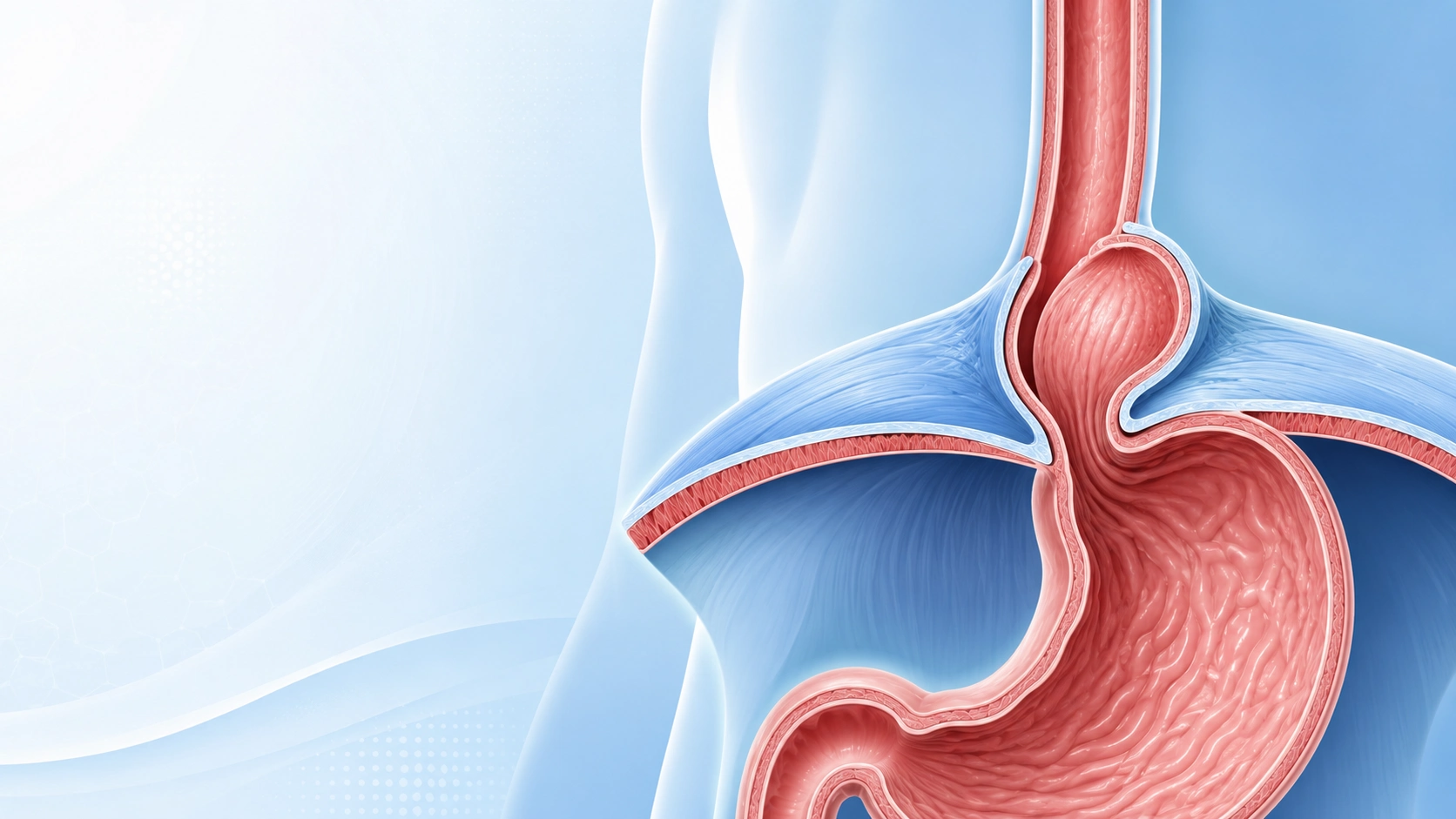
Surgery is worth considering when a hiatal hernia is larger than 3 centimeters, when reflux continues despite daily medication, when you need more than once-a-day medication, or when reflux has already caused damage like severe esophagitis or Barrett’s esophagus. A large hernia also carries a rare but serious risk called gastric volvulus, where the stomach twists on itself, which is a reason to repair it before it grows.
Just as often, the honest answer is no. Many patients arrive expecting an operation and leave with a non-surgical plan, because testing showed either that surgery would not help or that the real cause was not reflux at all. Esophageal hypersensitivity, motility disorders, functional chest pain, and ENT or lung conditions can all look like reflux but do not respond to reflux surgery. A technically perfect operation on the wrong patient is a failure, so Dr. Grandhige operates on fewer patients and on the right ones. That approach lines up with the national guidelines from the Society of American Gastrointestinal and Endoscopic Surgeons, which recommend repair for patients with objective evidence of reflux and stress shared decision-making over treating every patient the same.
What the process looks like for St. Petersburg patients
You do not need a St. Petersburg address to be treated here. St. Pete patients are a regular part of the practice, and the office sits in South Tampa on South Howard Avenue, a short drive over the Gandy Bridge. The address is 1315 South Howard Avenue, Suite 101, Tampa, next to Sally O’Neill’s Pizza, with parking behind the building.
Getting seen is usually quick, typically within about 2 weeks and within 4 weeks at the latest. The practice is built to save cross-bay patients from repeat trips. When a test can be done closer to St. Petersburg, the office arranges it locally, and whatever has to happen in Tampa is grouped onto the fewest visits possible.
Start by sending your records. Email prior endoscopy reports, pH testing, manometry, imaging, and notes from any gastroenterologist, ENT, pulmonologist, or allergist to info@tampareflux.com before your appointment. Dr. Grandhige reviews all of it ahead of time, so the consultation is spent on answers instead of gathering paperwork.
The timeline from there is predictable. If your testing is already done, it is often one consultation and then surgery within about 4 weeks, depending on scheduling. If testing is still needed, expect two visits about 4 weeks apart and surgery within roughly 8 weeks. Every reflux and hiatal hernia procedure is performed at HCA South Tampa Hospital with the same operating-room team and the same physician assistant on every case, which keeps the surgery consistent and your recovery supported by people who know your specific operation.
Your surgeon: Gopal Grandhige, MD

Gopal Grandhige, MD, is a board-certified general surgeon who has focused on foregut disease, the esophagus, diaphragm, and stomach, since 2009, which is more than 16 years. He founded Tampa Bay Reflux Center in 2009 and evolved it into Tampa Bay Reflux Institute in 2022, keeping the same single focus the entire time.
His training: a Bachelor of Science in Biology from Johns Hopkins University, a medical degree from the University of Michigan, and a general surgery residency at Yale-New Haven Hospital, followed by two fellowships at Yale-New Haven, one in Foregut Surgery and Minimally Invasive Surgery and one in Burn and Critical Care. He is a Fellow of the American College of Surgeons (FACS), a member of the Society of American Gastrointestinal and Endoscopic Surgeons (SAGES), and a founding member of the American Foregut Society. All of his reflux and hiatal hernia surgeries are performed at HCA South Tampa Hospital.
You can confirm any of this yourself. Board certification is listed with the American Board of Surgery, and active licensure is public through the Florida Department of Health.
FAQS
Get clear answers about your hiatal hernia
You have probably spent years being told to keep taking medication. Testing can tell you whether that is still the right plan or whether a repair would fix the mechanical problem underneath. Send your prior records to info@tampareflux.com and book a visit from anywhere in the St. Petersburg area.


An endoscopy cannot tell you if you have reflux. It can only tell you if you have complications of GERD.
If you are unhappy with your reflux symptoms, come in and we can discuss testing and treatments that can accurately diagnose your problem.
#reflux #gerd #hiatalhernia #gastroparesis #linx


CALL US AT 813-922-2920
www.tampareflux.com
If you have a hiatal hernia and fit one of these categories, you should know your options.
Dr. Grandhige is an expert in his field and performs 200 of these surgeries a year. He is the only surgeon in the Tampa Bay Area who offers all surgical options - LINX, Fundoplications, TIF and will be one of 20 surgeons in America introducing the latest procedure RefluxStop in 2026.
We accept most insurances but will verify yours before you come in. These procedures are considered medically necessary and covered by your insurance. You can expect to pay your in-network deductibles and nothing else.
#hiatalhernia #reflux #GERD #LINX #refluxstop

What causes reflux ?
1. Weak lower esophageal sphincter
2. Hiatal hernia
3. Flattening of the Angle of His
4. Poor esophageal motility
5. Gastroparesis (slow stomach)
NOT increased acid production


Don’t let GERD get in the way of living your life. Request your appointment with us today on the link below.
.
.
.
.
https://tampareflux.com/contact-us/

Anyone can be victim to GERD and though weight loss can help reduce GERD symptoms. Many athletes with high impact workouts may continue to have these symptoms. This may be a symptom of a hiatal hernia or other issue. We are more then happy to assist you in finding your solution, just click the link below.
.
.
.
https://tampareflux.com/contact-us/
##healthylifestyle #workout #athletereflux #PPIs #heartburn #LINX #fundoplication #TIF #GERD#tampaheartburn #linx #TIF #fundoplication #tampabayreflux #GERD #acidreflux #acidrefluxsurgery #stopreflux
#nonsurgicalweightloss #ESG #gastricballoon #weightlossjourney #vsg #vsgjourney #spatz3 #orbera #orberaballoon #grandhige #DrG
#tampabayrefluxinstitute #guthealth #roboticsurgery

Heartburn may seem like an annoyance. But if you find yourself having symptoms on a daily basis, it may be time to to talk to Dr. Grandhige as it could be a symptom of something worse.
.
.
.
#chronicheartburn #gerdsymptoms #heartburnrelief #reflux #PPIs #heartburn #LINX #fundoplication #TIF #GERD#tampaheartburn #linx #TIF #fundoplication #tampabayreflux #GERD #acidreflux #acidrefluxsurgery #stopreflux
#nonsurgicalweightloss #ESG #gastricballoon #weightlossjourney #vsg #vsgjourney #spatz3 #orbera #orberaballoon #grandhige #DrG
#tampabayrefluxinstitute #guthealth #roboticsurgery

If you are tired of avoiding your favorite foods or taking daily medications, we can help.
We are the Tampa experts in reflux ! With years of experience and thousands of patients treated successfully, we offer all FDA approved anti-reflux procedures.
Call 813-922-2920 to schedule your appointment
All major insurances accepted.

Not all patients need surgical intervention. Many patients are living a heartburn free life with their PPIs. However 40% of patients taking PPIs are not getting the relief they need. If you are one of those, you have options! Come in and find out more.
.
.
.
.
#letushelpyou #medsnotworking #reflux #PPIs #heartburn #LINX #fundoplication #TIF #GERD#tampaheartburn #linx #TIF #fundoplication #tampabayreflux #GERD #acidreflux #acidrefluxsurgery #stopreflux
#nonsurgicalweightloss #ESG #gastricballoon #weightlossjourney #vsg #vsgjourney #spatz3 #orbera #orberaballoon #grandhige #DrG
#tampabayrefluxinstitute #guthealth #roboticsurgery

#heartburn #stopreflux #hiatalherniarepair #severeheartburn #reflux #tampabayreflux #acidrefluxsurgery #tampaheartburn #GERD #PPIs #achalasia #LINX #TIF #tampareflux #fundoplication #stomach #digestivehealth #ESG #obesity #overweight #weightlossjourney #gastricballoon
