
When a hiatal hernia actually needs to be repaired
Dr. Grandhige recommends surgical repair in four situations: any hiatal hernia larger than 3 centimeters, any hernia paired with real reflux symptoms and especially regurgitation, any hernia alongside a complication of reflux, and any hernia found during a workup for anti-reflux surgery.
Size drives the first one. At more than 3 centimeters, the hernia is almost always contributing mechanically, medication cannot correct it, and it tends to grow. Larger hernias carry a risk of gastric volvulus, and the bigger the hernia, the more likely the stomach becomes atonic, which may or may not recover after repair.
Complications that move a smaller hernia into the surgical category include severe esophagitis, Barrett’s esophagus, and peptic strictures. These represent damage that acid suppression alone has not prevented.
Almost every reflux patient has some hiatal hernia, even when endoscopy does not show one. Small hernias are frequently missed on endoscopy. That is one reason a normal scope is such a poor reason to stop looking.
Worth knowing before anyone quotes you certainty: the 2024 SAGES guidelines for the surgical treatment of hiatal hernias produced exactly one conditional recommendation and two expert opinions for adults. The panel suggested routinely performing a fundoplication during hiatal hernia repair, and graded that suggestion on low-certainty evidence. On mesh, the panel declined to recommend for or against it. On operating versus watching an asymptomatic hernia, the evidence base was called poor. Dr. Grandhige’s position is that this is precisely why judgment and testing carry the weight they do. The literature does not hand anyone a formula.
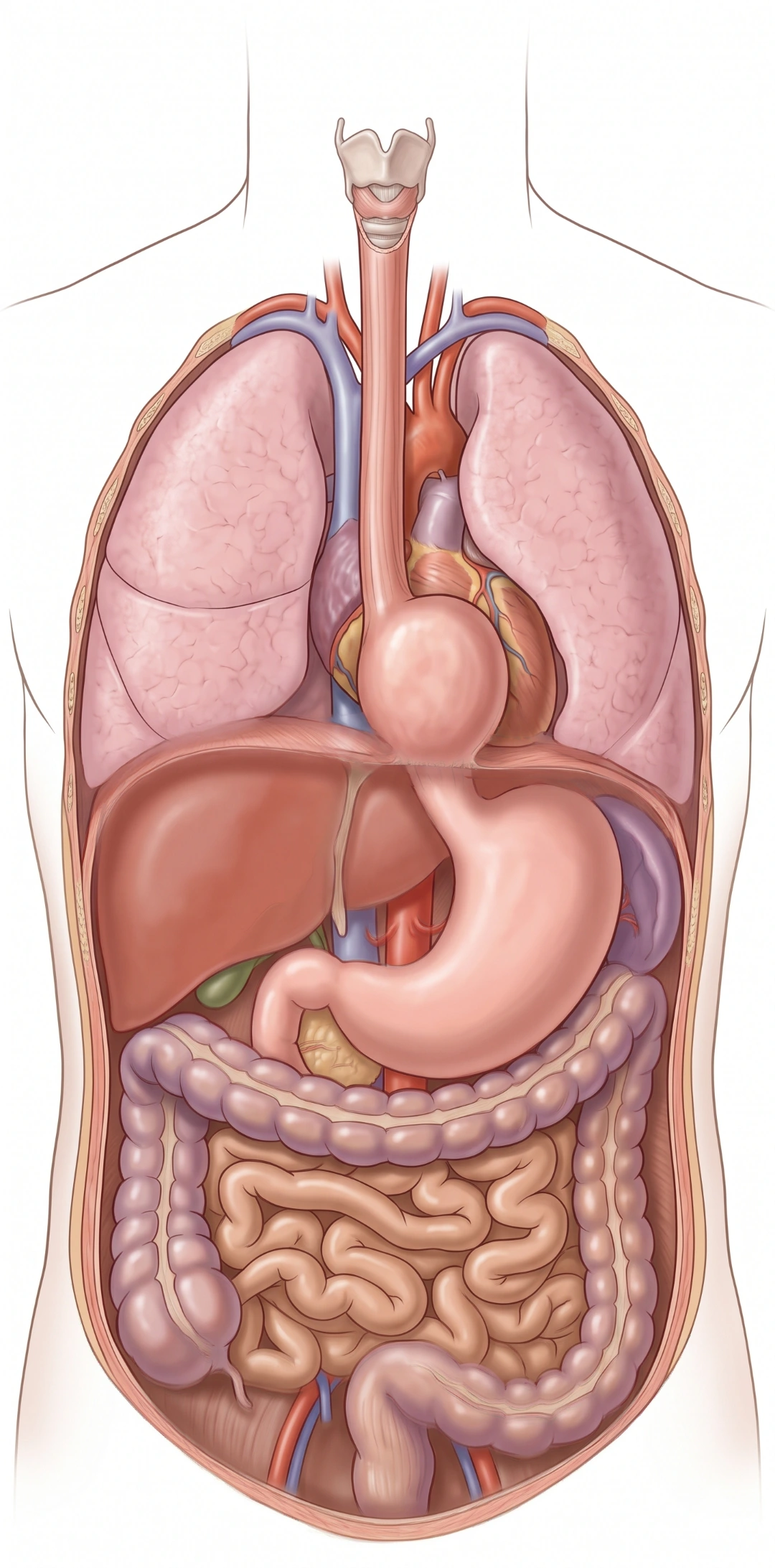
Which repair fits your anatomy
There is no best reflux operation. Hiatal hernia repair is the foundation, and the anti-reflux procedure built on top of it is chosen from anatomy, motility, symptom pattern, and your own priorities. Because Dr. Grandhige performs all of them, the recommendation is not shaped by which one he is comfortable with.
Every repair starts the same way: the stomach is brought back below the diaphragm, the esophagus is restored to its normal position, and the hiatus is repaired and tightened. Skipping the diaphragm and reinforcing only the sphincter is one of the most common reasons reflux treatment fails.
Fundoplication wraps the upper stomach around the lower esophagus to rebuild the barrier. Dr. Grandhige performs Nissen (360 degrees), Toupet (posterior 270), Watson (anterior 270), and Dor (anterior partial). Motility findings drive the choice, and a weaker esophagus generally points toward a partial wrap. Performed laparoscopically or robotically, typically 1.5 to 2 hours, usually same-day discharge. He has performed more than 600. The honest downside is gas bloat and a reduced ability to burp or vomit, which may be temporary or lasting depending on the configuration.
LINX is a ring of magnetic titanium beads placed around the lower esophagus. It does not raise resting sphincter pressure. It resists opening when stomach pressure rises and opens when you swallow, which is why most patients keep the ability to burp and vomit once early inflammation settles. Hernia size does not disqualify you, as long as the hernia is repaired at the same time. Good motility does qualify you, and poor motility rules it out. Current devices are MRI compatible to 1.5 Tesla, and the device is removable. He has performed more than 600. Early dysphagia is common and a small long-term risk exists. One observation from his own practice: patients who are unusually aware of their own body, including those who could feel a Bravo probe while it was in place, frequently report sensing the LINX device.
TIF is performed entirely through the mouth with the EsophyX device, folding the stomach around the lower esophagus from the inside and securing it with fasteners. No incisions, 45 to 60 minutes, same-day discharge, and heavy lifting restricted for six weeks. It cannot repair a hiatal hernia, because the diaphragm is unreachable from inside. Dr. Grandhige quotes a failure rate of 2 percent per year, or roughly 20 percent per decade, and describes it as the best endoscopic option available rather than a permanent solution. He does not offer it to patients with more than a minimal hernia or to patients who are obese, which is why his TIF outcomes differ from the mixed reputation the procedure carries. He has performed more than 200.
RefluxStop is not yet available in the United States. The manufacturer, Implantica, submitted its final response to FDA feedback on the Module 3 PMA application in May 2026, and a decision remains pending as of August 2026. European long-term data exist. U.S. patients cannot access the device. Dr. Grandhige intends to offer it once it clears FDA review. Until then, any page telling you it is available in Tampa Bay is ahead of the regulator.
Recovery, realistic results, and who gets turned away
Fundoplication and LINX patients typically go home the same day, walking and drinking liquids shortly after surgery. Diet progresses in stages over roughly two to three months. TIF patients also go home the same day, usually with chest, left shoulder, and upper abdominal discomfort from swelling and the internal fasteners rather than incision pain, and some experience muscle spasms that are treated with medication.
The dietary restrictions are not optional. The internal repair has to heal in position. Vomiting after surgery is associated with early failure of a hiatal hernia repair, which is one reason Dr. Grandhige works with the same anesthesia team on every case at HCA South Tampa Hospital.
Typical reflux symptoms often resolve almost immediately. LPR symptoms are a different timeline entirely, and he counsels those patients that throat clearing, cough, and voice changes usually take four to six months to improve. Patients told to expect overnight relief from throat symptoms are being set up to feel that a technically successful operation failed.
For appropriately selected patients with typical heartburn and regurgitation, objective evidence of reflux, workable anatomy, and good esophageal function, Dr. Grandhige reports greater than 95 percent success across three measures: meaningful symptom relief, elimination of daily reflux medication, and patient satisfaction. He is equally direct that no procedure has a 100 percent success rate, that outcomes drop in patients with reduced motility, large or recurrent hernias, prior foregut surgery, or previous bariatric surgery, and that these procedures are functional operations subject to wear over a lifetime, like a joint replacement.

The patients he says no to
Some people are not candidates and are told so. Patients with untreated severe motility disorders. Patients whose testing shows esophageal hypersensitivity, functional chest pain, rumination, or achalasia rather than reflux. Patients with reflux-like symptoms and no objective reflux, regardless of how convincing the symptoms are.
Dr. Grandhige is blunt about the cost of that policy: the patients he declines to operate on are often the least happy people to leave his office. They are also the patients who would have been far unhappier after an operation that did not touch the cause of their symptoms.
The related expectation he sets in every consultation is that surgery fixes reflux, not every symptom you arrived with. He states explicitly which symptoms he expects to improve, which may improve partially, and which are unlikely to be reflux-related at all.
Your timeline from Clearwater, first call to surgery
Most patients are seen within two weeks, and the practice holds itself to four weeks at the outside. From the first consultation to surgery, the target is four to eight weeks depending on where your testing stands.
Before your visit, send your records to info@tampareflux.com. Dr. Grandhige personally reviews everything before you walk in, including prior endoscopy and pathology reports, pH studies, manometry, barium swallow or other imaging, operative reports from any previous surgery, medication history, and the office notes from your gastroenterologist, ENT, pulmonologist, or allergist. Studies from years ago are still useful for tracking progression. Signed record releases are submitted immediately, but fax-based systems and incompatible electronic records mean the fastest path is usually you.
If your testing is already complete, one consultation is typically all that is needed. Diagnosis is confirmed at the first visit, options are discussed, and authorization begins immediately. Surgery can often be scheduled about four weeks out.
If testing is not complete, the first visit covers education, record review, and test planning. Studies are ordered and grouped onto as few days as possible, with anything that can be done near Clearwater done near Clearwater. A second consultation about four weeks later reviews the results and finalizes the plan. Surgery generally follows around eight weeks from the first visit.
Insurance authorization runs in parallel and can take four to six weeks on complex cases. The office handles the submissions and the back-and-forth. Authorization is completed before surgery is scheduled, never after.
All foregut and reflux surgery is performed at HCA South Tampa Hospital. Dr. Grandhige holds privileges at St. Joseph’s Main, St. Joseph’s South, and HCA Brandon as well, and deliberately operates at one facility so that the operating room team, anesthesiologists, surgical technologists, and his physician assistant are the same people on every case.
About Dr. Gopal Grandhige, MD
Dr. Gopal Grandhige is a board-certified general surgeon and the founder and medical director of Tampa Bay Reflux Institute. He founded and ran Tampa Bay Reflux Center from 2009 to 2022 before the practice took its current form. His training: Bachelor of Science in Biology from Johns Hopkins University, medical degree from the University of Michigan, Ann Arbor, general surgery residency at Yale-New Haven Hospital, and two fellowships at Yale-New Haven, one in Burn and Critical Care and one in Foregut Surgery and Minimally Invasive Surgery. You can read more about his background and philosophy on the practice site.
He is a Fellow of the American College of Surgeons, a member of the Society of American Gastrointestinal and Endoscopic Surgeons, and a founding member of the American Foregut Society. Board certification can be verified through the American Board of Surgery, and active licensure through the Florida Department of Health physician license lookup.
The team is unusually stable. His physician assistant is employed by the practice, assists on every case, participates in operative decision-making, and handles postoperative care, so patients are never routed to a provider who does not know their anatomy. Several medical assistants have worked with him for more than a decade. After hours, patients reach Dr. Grandhige directly.
Tampa Bay Reflux Institute 1315 South Howard Ave., Suite 101 Tampa, FL 33606 Phone: 813.922.2920 Fax: 813.742.0711 Hours: 9:00 AM to 6:00 PM, Monday through Friday
The office is in the yellow brick building next to Sally O’Neill’s Pizza, with parking behind the restaurant. From Clearwater, the drive is roughly 25 miles across the Courtney Campbell Causeway.
Frequently Asked Questions
Stop guessing whether your symptoms are reflux.
Send your records, get them read by a surgeon who does nothing but foregut disease, and find out what your testing actually shows. If surgery is not the answer, you will hear that too.


An endoscopy cannot tell you if you have reflux. It can only tell you if you have complications of GERD.
If you are unhappy with your reflux symptoms, come in and we can discuss testing and treatments that can accurately diagnose your problem.
#reflux #gerd #hiatalhernia #gastroparesis #linx


CALL US AT 813-922-2920
www.tampareflux.com
If you have a hiatal hernia and fit one of these categories, you should know your options.
Dr. Grandhige is an expert in his field and performs 200 of these surgeries a year. He is the only surgeon in the Tampa Bay Area who offers all surgical options - LINX, Fundoplications, TIF and will be one of 20 surgeons in America introducing the latest procedure RefluxStop in 2026.
We accept most insurances but will verify yours before you come in. These procedures are considered medically necessary and covered by your insurance. You can expect to pay your in-network deductibles and nothing else.
#hiatalhernia #reflux #GERD #LINX #refluxstop

What causes reflux ?
1. Weak lower esophageal sphincter
2. Hiatal hernia
3. Flattening of the Angle of His
4. Poor esophageal motility
5. Gastroparesis (slow stomach)
NOT increased acid production


Don’t let GERD get in the way of living your life. Request your appointment with us today on the link below.
.
.
.
.
https://tampareflux.com/contact-us/

Anyone can be victim to GERD and though weight loss can help reduce GERD symptoms. Many athletes with high impact workouts may continue to have these symptoms. This may be a symptom of a hiatal hernia or other issue. We are more then happy to assist you in finding your solution, just click the link below.
.
.
.
https://tampareflux.com/contact-us/
##healthylifestyle #workout #athletereflux #PPIs #heartburn #LINX #fundoplication #TIF #GERD#tampaheartburn #linx #TIF #fundoplication #tampabayreflux #GERD #acidreflux #acidrefluxsurgery #stopreflux
#nonsurgicalweightloss #ESG #gastricballoon #weightlossjourney #vsg #vsgjourney #spatz3 #orbera #orberaballoon #grandhige #DrG
#tampabayrefluxinstitute #guthealth #roboticsurgery

Heartburn may seem like an annoyance. But if you find yourself having symptoms on a daily basis, it may be time to to talk to Dr. Grandhige as it could be a symptom of something worse.
.
.
.
#chronicheartburn #gerdsymptoms #heartburnrelief #reflux #PPIs #heartburn #LINX #fundoplication #TIF #GERD#tampaheartburn #linx #TIF #fundoplication #tampabayreflux #GERD #acidreflux #acidrefluxsurgery #stopreflux
#nonsurgicalweightloss #ESG #gastricballoon #weightlossjourney #vsg #vsgjourney #spatz3 #orbera #orberaballoon #grandhige #DrG
#tampabayrefluxinstitute #guthealth #roboticsurgery

If you are tired of avoiding your favorite foods or taking daily medications, we can help.
We are the Tampa experts in reflux ! With years of experience and thousands of patients treated successfully, we offer all FDA approved anti-reflux procedures.
Call 813-922-2920 to schedule your appointment
All major insurances accepted.

Not all patients need surgical intervention. Many patients are living a heartburn free life with their PPIs. However 40% of patients taking PPIs are not getting the relief they need. If you are one of those, you have options! Come in and find out more.
.
.
.
.
#letushelpyou #medsnotworking #reflux #PPIs #heartburn #LINX #fundoplication #TIF #GERD#tampaheartburn #linx #TIF #fundoplication #tampabayreflux #GERD #acidreflux #acidrefluxsurgery #stopreflux
#nonsurgicalweightloss #ESG #gastricballoon #weightlossjourney #vsg #vsgjourney #spatz3 #orbera #orberaballoon #grandhige #DrG
#tampabayrefluxinstitute #guthealth #roboticsurgery

#heartburn #stopreflux #hiatalherniarepair #severeheartburn #reflux #tampabayreflux #acidrefluxsurgery #tampaheartburn #GERD #PPIs #achalasia #LINX #TIF #tampareflux #fundoplication #stomach #digestivehealth #ESG #obesity #overweight #weightlossjourney #gastricballoon
