
What the procedure treats, and what it leaves alone
Endoscopic pyloromyotomy widens the stomach’s outlet. It does not repair the stomach muscle. An endoscope is passed through the mouth, a tunnel is created under the pyloric muscle, and that muscle is divided so food leaves the stomach more freely. Nothing is cut on the outside of the body.
That single sentence explains most of the disappointment patients report after the procedure. Gastroparesis is a motility problem, and in some people the failure is in the stomach body rather than at the outlet. Widening a valve does not help a stomach that cannot generate contractions to push food toward it. Selection exists to sort those two groups apart before anyone books an operating room.
Dr. Grandhige also performs robotic and laparoscopic pyloroplasty, and manages patients who need feeding access before any definitive procedure is safe. The full treatment ladder, from diet and prokinetic medication through the surgical options, is laid out on our gastroparesis condition page, so this page stays on the question that page does not answer: whether you personally qualify.
What the 2025 AGA guideline actually says
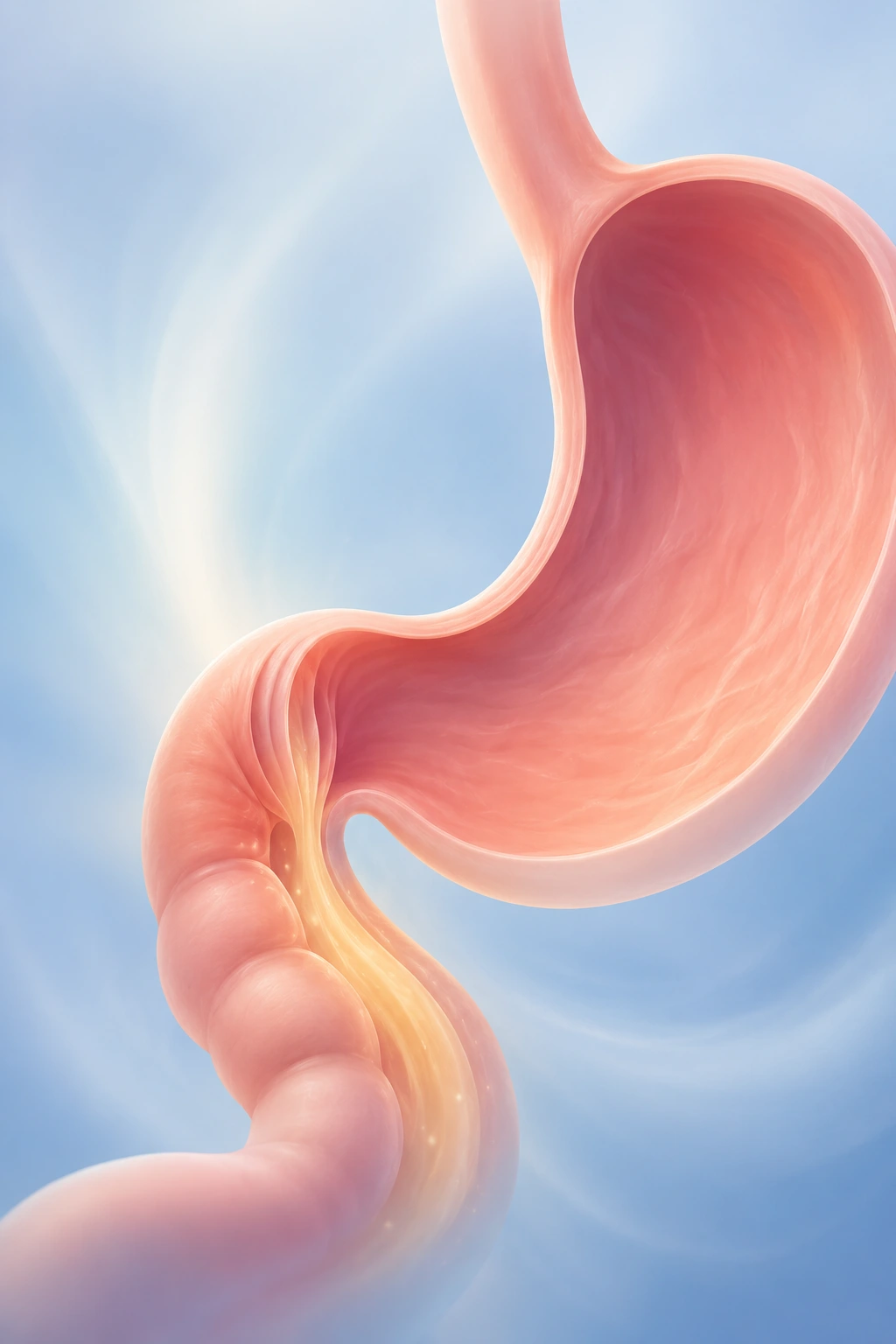
The AGA published its first clinical practice guideline on gastroparesis management on September 19, 2025, in Gastroenterology. It contains twelve recommendations, and all twelve are conditional. The panel’s language on procedures is more restrained than most clinic pages suggest.
The guideline suggests against the routine use of G-POEM in patients refractory to medical therapy, reserving it for selected patients. On surgical pyloric intervention, meaning pyloromyotomy or pyloroplasty performed surgically rather than endoscopically, the panel issued no recommendation at all and named the evidence gap directly. It also suggests against routine gastric electrical stimulation and against pyloric botulinum toxin injection. Metoclopramide and erythromycin are the two agents it supports first. Domperidone, prucalopride, aprepitant, nortriptyline, buspirone, and cannabidiol all received conditional recommendations against use as first-line therapy. The full recommendation set is published by the American Gastroenterological Association.
None of this means the procedure does not work. It means the evidence base supports careful selection and shared decision-making, not routine use. A page that quotes you a success rate without telling you the guideline advises against routine use has given you half the picture.
When the answer is no
A significant share of patients who consult for this procedure leave without one, and that is by design. Dr. Grandhige’s stated position is that a technically perfect operation performed on the wrong patient is a failure, and that the most important skill in this field is knowing when not to operate.
If testing points somewhere else, the plan changes accordingly. Patients whose delay is mild or absent get redirected toward the correct diagnosis. Patients with severe weight loss or malnutrition may need feeding access before any definitive procedure is safe to consider. Patients whose problem is the stomach body rather than the outlet are not helped by widening a valve, and are told so.
Timing is also worth raising. As of mid-2026 there is a prokinetic drug moving toward approval that did not exist as an option a year ago. Naronapride met its primary endpoint in MOVE-IT, a 328-patient international Phase 2b trial in idiopathic and diabetic gastroparesis, with results announced in May 2026 and the program advancing into Phase 3 registration studies. It is not available to prescribe today and there is no approval date. For a patient with moderate symptoms who is not yet clearly refractory, that is a reason to have the conversation about sequence rather than to assume a procedure is the only remaining step.
Your surgeon and care team

Gopal Grandhige, MD is a board-certified general surgeon who has practiced foregut surgery in Tampa Bay since 2009. He founded Tampa Bay Reflux Center in 2009 and Tampa Bay Reflux Institute in 2022, and his practice is limited to benign conditions of the esophagus, diaphragm, and stomach.
His training is a biology degree from Johns Hopkins University, medical school at the University of Michigan, general surgery residency at Yale-New Haven Hospital, and two Yale-New Haven fellowships, one in burn and critical care and one in foregut and minimally invasive surgery. He is a Fellow of the American College of Surgeons, a member of the Society of American Gastrointestinal and Endoscopic Surgeons, and a founding member of the American Foregut Society. He is one of a small number of surgeons performing endoscopic pyloromyotomy in the Tampa Bay area. More detail on his background is on our about the practice page.
You can verify all of this independently. Board certification is searchable through the American Board of Surgery physician lookup and the American College of Surgeons directory. Active Florida licensure and any disciplinary history are searchable through the Florida Department of Health medical license lookup.
The team is stable, which matters more in follow-up than it does on the day of the procedure. Several of the medical assistants have worked with Dr. Grandhige for over a decade. His physician assistant assists on every surgical case and stays involved through recovery, so questions after you get home go to someone who was in the room. Dr. Grandhige is reachable directly after hours when the situation calls for it.
Common questions from Clearwater patients
Take the next step
Bring your records, get an objective answer, and find out whether you are a candidate before anyone talks about scheduling. If you are not one, you will be told that plainly, along with what to do instead.


An endoscopy cannot tell you if you have reflux. It can only tell you if you have complications of GERD.
If you are unhappy with your reflux symptoms, come in and we can discuss testing and treatments that can accurately diagnose your problem.
#reflux #gerd #hiatalhernia #gastroparesis #linx


CALL US AT 813-922-2920
www.tampareflux.com
If you have a hiatal hernia and fit one of these categories, you should know your options.
Dr. Grandhige is an expert in his field and performs 200 of these surgeries a year. He is the only surgeon in the Tampa Bay Area who offers all surgical options - LINX, Fundoplications, TIF and will be one of 20 surgeons in America introducing the latest procedure RefluxStop in 2026.
We accept most insurances but will verify yours before you come in. These procedures are considered medically necessary and covered by your insurance. You can expect to pay your in-network deductibles and nothing else.
#hiatalhernia #reflux #GERD #LINX #refluxstop

What causes reflux ?
1. Weak lower esophageal sphincter
2. Hiatal hernia
3. Flattening of the Angle of His
4. Poor esophageal motility
5. Gastroparesis (slow stomach)
NOT increased acid production


Don’t let GERD get in the way of living your life. Request your appointment with us today on the link below.
.
.
.
.
https://tampareflux.com/contact-us/

Anyone can be victim to GERD and though weight loss can help reduce GERD symptoms. Many athletes with high impact workouts may continue to have these symptoms. This may be a symptom of a hiatal hernia or other issue. We are more then happy to assist you in finding your solution, just click the link below.
.
.
.
https://tampareflux.com/contact-us/
##healthylifestyle #workout #athletereflux #PPIs #heartburn #LINX #fundoplication #TIF #GERD#tampaheartburn #linx #TIF #fundoplication #tampabayreflux #GERD #acidreflux #acidrefluxsurgery #stopreflux
#nonsurgicalweightloss #ESG #gastricballoon #weightlossjourney #vsg #vsgjourney #spatz3 #orbera #orberaballoon #grandhige #DrG
#tampabayrefluxinstitute #guthealth #roboticsurgery

Heartburn may seem like an annoyance. But if you find yourself having symptoms on a daily basis, it may be time to to talk to Dr. Grandhige as it could be a symptom of something worse.
.
.
.
#chronicheartburn #gerdsymptoms #heartburnrelief #reflux #PPIs #heartburn #LINX #fundoplication #TIF #GERD#tampaheartburn #linx #TIF #fundoplication #tampabayreflux #GERD #acidreflux #acidrefluxsurgery #stopreflux
#nonsurgicalweightloss #ESG #gastricballoon #weightlossjourney #vsg #vsgjourney #spatz3 #orbera #orberaballoon #grandhige #DrG
#tampabayrefluxinstitute #guthealth #roboticsurgery

If you are tired of avoiding your favorite foods or taking daily medications, we can help.
We are the Tampa experts in reflux ! With years of experience and thousands of patients treated successfully, we offer all FDA approved anti-reflux procedures.
Call 813-922-2920 to schedule your appointment
All major insurances accepted.

Not all patients need surgical intervention. Many patients are living a heartburn free life with their PPIs. However 40% of patients taking PPIs are not getting the relief they need. If you are one of those, you have options! Come in and find out more.
.
.
.
.
#letushelpyou #medsnotworking #reflux #PPIs #heartburn #LINX #fundoplication #TIF #GERD#tampaheartburn #linx #TIF #fundoplication #tampabayreflux #GERD #acidreflux #acidrefluxsurgery #stopreflux
#nonsurgicalweightloss #ESG #gastricballoon #weightlossjourney #vsg #vsgjourney #spatz3 #orbera #orberaballoon #grandhige #DrG
#tampabayrefluxinstitute #guthealth #roboticsurgery

#heartburn #stopreflux #hiatalherniarepair #severeheartburn #reflux #tampabayreflux #acidrefluxsurgery #tampaheartburn #GERD #PPIs #achalasia #LINX #TIF #tampareflux #fundoplication #stomach #digestivehealth #ESG #obesity #overweight #weightlossjourney #gastricballoon
