
Why Your Gastric Emptying Study May Have to Be Repeated
A 90-minute or two-hour gastric emptying study cannot rule out gastroparesis, and both major U.S. guidelines now say so.
The 2022 American College of Gastroenterology guideline recommends scintigraphic solid-food emptying over at least three to four hours and states that shorter studies, particularly 90-minute protocols, should not be used because they produce false negatives. The American Gastroenterological Association went further in its 2025 gastroparesis guideline, its first devoted to the condition, and suggested against two-hour or shorter studies compared with the four-hour version. Both define delayed emptying as more than 10 percent of the meal still in the stomach at four hours. You can read the ACG gastroparesis guideline in full if you want to see the recommendation grading yourself.
Duration is only half of it. The standardized protocol endorsed by the Society of Nuclear Medicine and the American Neurogastroenterology and Motility Society uses a low-fat egg-white meal with imaging at zero, one, two, and four hours, after an overnight fast. Anything that changes stomach motility has to come off first, and that list is longer than most patients are told. The ACG guideline calls for stopping pro-motility agents, antiemetics, opioids, cannabis, and neuromodulators such as nortriptyline for 48 hours before the study. Research protocols commonly require patients to be narcotic-free for three days. Diabetic patients need blood sugar controlled going in, and are typically instructed to take half of their usual long-acting insulin dose that morning, because high glucose slows emptying on its own and will produce a delayed result that reflects the glucose, not the stomach.
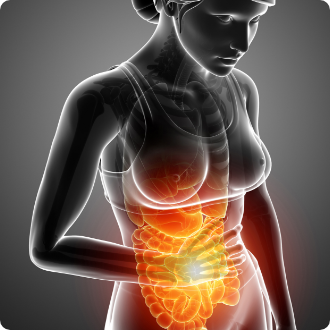
Miss any of these and you get a number that describes your medication list rather than your anatomy. Dr. Grandhige reviews the actual protocol used for any outside study before he accepts the result, and orders a repeat when the study was too short or run without the holds. This is the single most common reason a Wesley Chapel patient’s workup gets restarted here.
What Changed in 2025 and 2026
Two things moved recently, and neither has reached most of the pages ranking for gastroparesis in this area.
The AGA published its first gastroparesis-specific clinical practice guideline in late 2025, built on the GRADE framework with 12 conditional recommendations. It supports metoclopramide and erythromycin as first-line drug therapy and suggests against domperidone, prucalopride, aprepitant, nortriptyline, and buspirone in that role. It takes a more conservative line on procedures and off-label therapies than earlier guidance, and puts a confirmed four-hour study ahead of starting medication. The AGA clinical guidance on gastroparesis lists all 12 recommendations.
The second development is a drug. On May 4, 2026, Dr. Falk Pharma and Renexxion reported results from MOVE-IT, a global Phase 2b randomized placebo-controlled trial of naronapride, an oral prokinetic that combines 5-HT4 receptor agonism with dopamine D2 receptor antagonism and is designed to act locally in the gut with minimal systemic absorption. The 12-week study enrolled 328 adults with moderate to severe idiopathic or diabetic gastroparesis and objective delayed emptying. The 20 mg and 40 mg three-times-daily arms met the primary endpoint against placebo, with improvement across nausea, early satiety, post-prandial fullness, and upper abdominal pain. The data were presented as a late-breaking oral abstract at Digestive Disease Week in Chicago on May 3, 2026. On June 1, 2026 the sponsors announced they are advancing into Phase 3 registration studies with the goal of a U.S. new drug application. Trial details are public at ClinicalTrials.gov under NCT05621811.
To be clear about what this does and does not mean: naronapride is investigational. It is not FDA approved, it is not available by prescription, and Phase 2b results do not always hold up in Phase 3. Dr. Grandhige raises it with patients who ask what is coming after metoclopramide, because the honest answer changed this year. It does not change what you can do this month.
Coming From Wesley Chapel: How the Process Actually Runs
Wesley Chapel sits at the northern terminus of I-275, where it splits from I-75 at the Pasco county line. The office is a straight run south down that one interstate to South Tampa, no transfers.
The structure keeps that drive to a minimum. First consultations are usually scheduled within two weeks and always within four. Dr. Grandhige personally reviews every prior study before you arrive, which is why the office asks you to email records ahead to info@tampareflux.com rather than relying on a signed release. Releases get delayed, arrive incomplete, and lose the raw data that matters.
Send these if you have them: reports from prior upper endoscopies with pathology, any gastric emptying study including the protocol used and the four-hour retention percentage, esophageal manometry, pH or Bravo studies, barium swallow or other imaging, office notes from your gastroenterologist and any ENT, pulmonology, or allergy visits, a current and prior medication list, and a list of previous surgeries. Old studies still count. They show progression.
From there the path splits. If your testing is already complete, one visit is usually enough to confirm the diagnosis and discuss a plan. If testing is missing, the first visit covers education, record review, and test planning, and a second visit follows roughly four weeks later to go through results and finalize the recommendation. Total time from first consultation to a procedure, when one is indicated, runs about four to eight weeks. Insurance authorization is handled entirely by the office and runs in parallel, though it can add several weeks on complex cases.
The practice works with a small number of testing sites deliberately, for consistent protocol quality and faster turnaround. For patients coming from outside Hillsborough County, studies that can be done closer to home are arranged closer to home whenever the protocol quality holds up, so the trips to Tampa are the ones that require Dr. Grandhige in the room. New patient paperwork can be completed in advance through the patient forms page.
Your Care Team and How to Verify It
Gopal Grandhige, MD is a board-certified general surgeon practicing foregut surgery in Tampa Bay since 2009.
He completed a Bachelor of Science in Biology at Johns Hopkins University, his medical degree at the University of Michigan, and his general surgery residency at Yale-New Haven Hospital, followed by fellowships there in Burn and Critical Care and in Foregut Surgery and Minimally Invasive Surgery. He is a Founding Member of the American Foregut Society, a Fellow of the American College of Surgeons, and a member of SAGES. He founded Tampa Bay Reflux Center in 2009 and Tampa Bay Reflux Institute in 2022. More detail is on the about the practice page, and the practice also treats GERD across the full range of surgical and endoscopic options.
Verify this independently rather than taking a website’s word for it. Board certification is searchable through the American Board of Surgery physician lookup and the American College of Surgeons directory. Active Florida licensure and any disciplinary history are public through the Florida Department of Health Medical Quality Assurance license search.
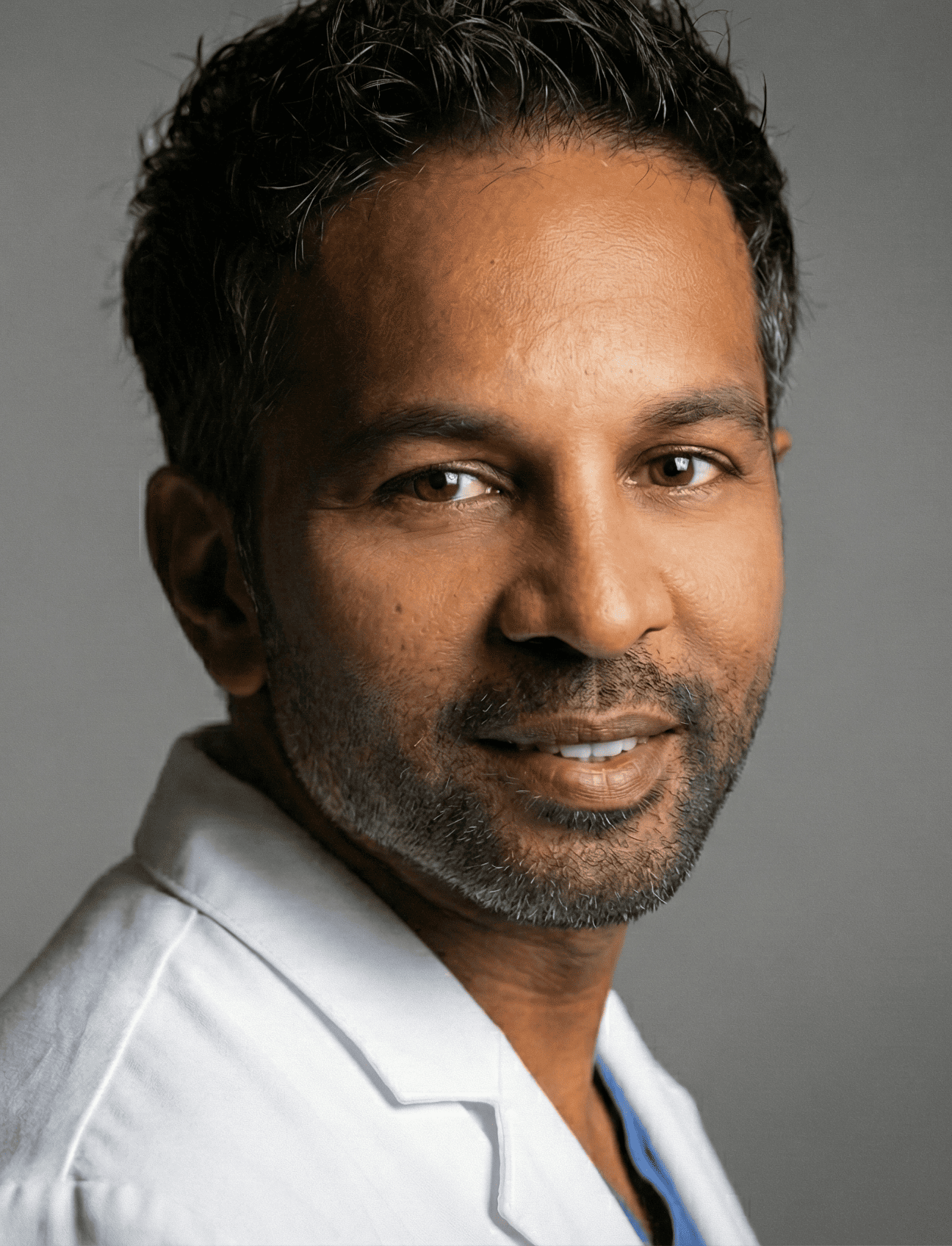
Several of the office medical assistants have worked with Dr. Grandhige for more than a decade. His physician assistant, employed directly by the practice, assists on every surgical case, participates in operative planning, and handles postoperative questions with full knowledge of your anatomy and procedure. After hours, patients reach Dr. Grandhige directly rather than a call service.
Tampa Bay Reflux Institute 1315 South Howard Avenue, Suite 101 Tampa, FL 33606 Phone: 813.922.2920 Fax: 813.742.0711 Hours: Monday through Friday, 9:00 AM to 6:00 PM
The office is in the yellow brick building next to Sally O’Neill’s Pizza. Parking is behind the restaurant.
Questions Wesley Chapel Patients Ask
Get an Answer About Your Stomach
If you have been managing nausea, early fullness, and bloating for months on a diagnosis nobody has confirmed with a proper four-hour study, that is the place to start. Dr. Grandhige reviews your prior testing before you arrive, tells you what it can and cannot prove, and recommends a procedure only when the physiology supports one. Wesley Chapel patients are typically seen within two weeks.


An endoscopy cannot tell you if you have reflux. It can only tell you if you have complications of GERD.
If you are unhappy with your reflux symptoms, come in and we can discuss testing and treatments that can accurately diagnose your problem.
#reflux #gerd #hiatalhernia #gastroparesis #linx


CALL US AT 813-922-2920
www.tampareflux.com
If you have a hiatal hernia and fit one of these categories, you should know your options.
Dr. Grandhige is an expert in his field and performs 200 of these surgeries a year. He is the only surgeon in the Tampa Bay Area who offers all surgical options - LINX, Fundoplications, TIF and will be one of 20 surgeons in America introducing the latest procedure RefluxStop in 2026.
We accept most insurances but will verify yours before you come in. These procedures are considered medically necessary and covered by your insurance. You can expect to pay your in-network deductibles and nothing else.
#hiatalhernia #reflux #GERD #LINX #refluxstop

What causes reflux ?
1. Weak lower esophageal sphincter
2. Hiatal hernia
3. Flattening of the Angle of His
4. Poor esophageal motility
5. Gastroparesis (slow stomach)
NOT increased acid production


Don’t let GERD get in the way of living your life. Request your appointment with us today on the link below.
.
.
.
.
https://tampareflux.com/contact-us/

Anyone can be victim to GERD and though weight loss can help reduce GERD symptoms. Many athletes with high impact workouts may continue to have these symptoms. This may be a symptom of a hiatal hernia or other issue. We are more then happy to assist you in finding your solution, just click the link below.
.
.
.
https://tampareflux.com/contact-us/
##healthylifestyle #workout #athletereflux #PPIs #heartburn #LINX #fundoplication #TIF #GERD#tampaheartburn #linx #TIF #fundoplication #tampabayreflux #GERD #acidreflux #acidrefluxsurgery #stopreflux
#nonsurgicalweightloss #ESG #gastricballoon #weightlossjourney #vsg #vsgjourney #spatz3 #orbera #orberaballoon #grandhige #DrG
#tampabayrefluxinstitute #guthealth #roboticsurgery

Heartburn may seem like an annoyance. But if you find yourself having symptoms on a daily basis, it may be time to to talk to Dr. Grandhige as it could be a symptom of something worse.
.
.
.
#chronicheartburn #gerdsymptoms #heartburnrelief #reflux #PPIs #heartburn #LINX #fundoplication #TIF #GERD#tampaheartburn #linx #TIF #fundoplication #tampabayreflux #GERD #acidreflux #acidrefluxsurgery #stopreflux
#nonsurgicalweightloss #ESG #gastricballoon #weightlossjourney #vsg #vsgjourney #spatz3 #orbera #orberaballoon #grandhige #DrG
#tampabayrefluxinstitute #guthealth #roboticsurgery

If you are tired of avoiding your favorite foods or taking daily medications, we can help.
We are the Tampa experts in reflux ! With years of experience and thousands of patients treated successfully, we offer all FDA approved anti-reflux procedures.
Call 813-922-2920 to schedule your appointment
All major insurances accepted.

Not all patients need surgical intervention. Many patients are living a heartburn free life with their PPIs. However 40% of patients taking PPIs are not getting the relief they need. If you are one of those, you have options! Come in and find out more.
.
.
.
.
#letushelpyou #medsnotworking #reflux #PPIs #heartburn #LINX #fundoplication #TIF #GERD#tampaheartburn #linx #TIF #fundoplication #tampabayreflux #GERD #acidreflux #acidrefluxsurgery #stopreflux
#nonsurgicalweightloss #ESG #gastricballoon #weightlossjourney #vsg #vsgjourney #spatz3 #orbera #orberaballoon #grandhige #DrG
#tampabayrefluxinstitute #guthealth #roboticsurgery

#heartburn #stopreflux #hiatalherniarepair #severeheartburn #reflux #tampabayreflux #acidrefluxsurgery #tampaheartburn #GERD #PPIs #achalasia #LINX #TIF #tampareflux #fundoplication #stomach #digestivehealth #ESG #obesity #overweight #weightlossjourney #gastricballoon
