
Why Clearwater patients cross the bay for hiatal hernia care
For most Clearwater and Pinellas residents, the trip to South Tampa runs about 25 to 30 minutes over the Courtney Campbell Causeway or the Howard Frankland Bridge, and the practice is set up so that drive pays off.
Before your first visit, Dr. Grandhige personally reviews your prior records. Send any past endoscopy reports, pH studies, manometry results, imaging, and notes from your GI, ENT, or pulmonologist to info@tampareflux.com, and most of the groundwork is done before you arrive. When more testing is needed, the office coordinates it and, where possible, arranges studies closer to home so Pinellas patients aren’t making the drive over and over.
If your testing is already complete, one visit is often enough to confirm the diagnosis and lay out your options. If it isn’t, the plan usually takes two visits about four weeks apart. Whether you’re in Clearwater, Largo, Dunedin, Safety Harbor, or Palm Harbor, the office also helps out-of-area patients with scheduling and timing. You’ll find it in the yellow brick building next to Sally O’Neill’s Pizza on South Howard Avenue, with parking behind the restaurant.

The hiatal hernia procedures we perform, and how we match them
There’s no single best hiatal hernia operation. The right one depends on your anatomy, how well your esophagus moves, and what matters most to you, which is exactly why it helps to see a surgeon who performs several instead of defaulting to the one he knows.
A fundoplication rebuilds the reflux barrier by wrapping the top of the stomach around the lower esophagus, and it repairs the hiatal hernia at the same time. It’s the most durable option, it handles large hernias, and it comes in full and partial versions (Nissen, Toupet, Dor, Watson) chosen from your motility results. It’s outpatient and usually takes about 1.5 to 2 hours. The tradeoff: depending on the wrap, it can make belching and vomiting harder and cause some gas and bloating.
The LINX system is a ring of magnetic titanium beads placed around the lower esophagus. It leaves the stomach anatomy alone, usually preserves your ability to burp and vomit once early swelling settles, and can be removed if it ever needs to be. It needs a reasonably strong esophagus to work well, the hernia is still repaired at the same time, and current devices are compatible with MRI up to 1.5 Tesla. The tradeoff: more difficulty swallowing in the first few weeks than with a fundoplication.
TIF, or transoral incisionless fundoplication, rebuilds the valve from inside through the mouth, with no incisions. It fits a narrow group: mild to moderate reflux, little or no hiatal hernia, no Barrett’s esophagus, and it isn’t for patients who are obese. Because it works through the mouth, it can’t repair the diaphragm, so it’s less durable than surgery. Dr. Grandhige quotes a failure rate of about 2% per year and describes it honestly as the best endoscopic option available, not a permanent fix.
RefluxStop is the newest option. Dr. Grandhige is adding it in 2026, which will make him the only surgeon in the Tampa Bay area offering all four anti-reflux procedures. Having every tool on the table is what lets the decision be driven by your anatomy rather than by what a surgeon happens to offer.
Recovery, durability, and the honest tradeoffs
Most hiatal hernia repairs here are outpatient. You go home the same day, walk and drink liquids soon after, and build your diet back over about two to three months.
Some difficulty swallowing in the first weeks is normal as swelling resolves, and it usually settles within one to three months. Gas, bloating, and changes to belching or vomiting depend on which procedure you had and how your esophagus works. These operations are functional repairs, not permanent hardware, so like a joint replacement they can wear over a lifetime, and a small number of patients need a revision later.
Large hernias carry risks that smaller ones don’t. Above a certain size the stomach can twist (a gastric volvulus) or become sluggish, and that sluggishness may or may not recover after repair, which is one reason large hernias shouldn’t be left to grow. Dr. Grandhige repairs large and complex hernias, including redo operations after surgery elsewhere, but he’s equally willing to say no. Patients whose symptoms aren’t coming from reflux are the ones most likely to be unhappy after an operation, so he doesn’t perform one.
Silent reflux (LPR): the testing most centers skip
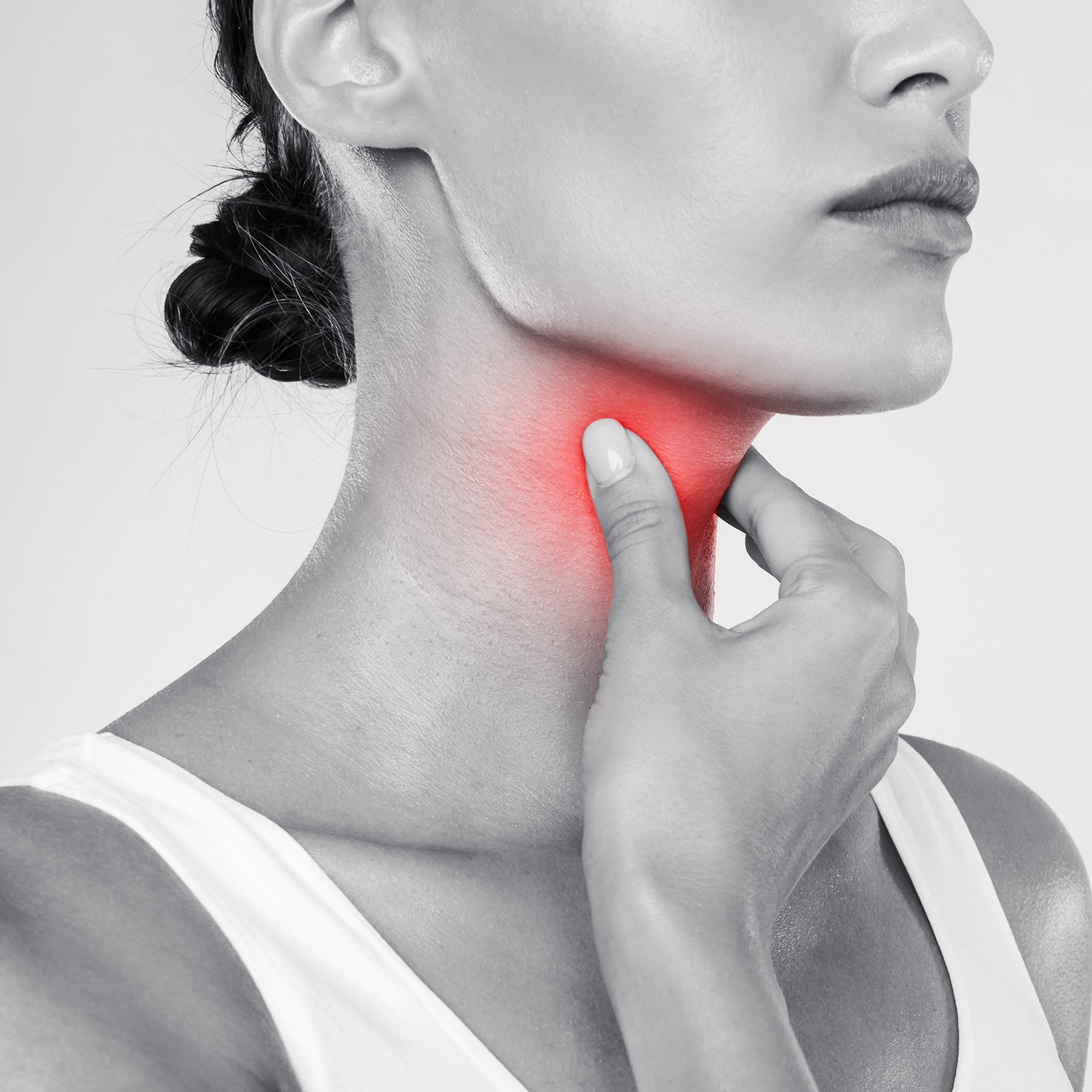
If your main problems are a chronic cough, throat clearing, or hoarseness and your endoscopy was normal, standard reflux testing may have missed the cause. Silent reflux (LPR) is reflux that travels above the esophagus into the throat and voice box, where even a small amount irritates tissue far more sensitive than the esophageal lining.
Most reflux testing only measures acid low in the esophagus, so it can read normal while reflux is still reaching the throat. Dr. Grandhige uses a specialized 24-hour dual-channel pH-impedance probe that measures reflux above both the lower and upper esophageal sphincters, and it detects non-acid reflux such as bile and pepsin that acid-only tests can’t see. That precision changes who gets operated on. With standard testing, LPR patients are often quoted around a 50% chance surgery helps. By selecting patients with dual-channel testing, Dr. Grandhige reports symptom improvement closer to 80%. It means fewer operations, done on the right people. LPR symptoms also take longer to settle than heartburn, usually four to six months.
FAQS
Take the first step
Bring your prior testing and get a straight answer. Email your past endoscopy, pH, manometry, and imaging results to info@tampareflux.com before your visit, and Dr. Grandhige will review everything and walk you through what’s happening and which options fit your anatomy.


An endoscopy cannot tell you if you have reflux. It can only tell you if you have complications of GERD.
If you are unhappy with your reflux symptoms, come in and we can discuss testing and treatments that can accurately diagnose your problem.
#reflux #gerd #hiatalhernia #gastroparesis #linx


CALL US AT 813-922-2920
www.tampareflux.com
If you have a hiatal hernia and fit one of these categories, you should know your options.
Dr. Grandhige is an expert in his field and performs 200 of these surgeries a year. He is the only surgeon in the Tampa Bay Area who offers all surgical options - LINX, Fundoplications, TIF and will be one of 20 surgeons in America introducing the latest procedure RefluxStop in 2026.
We accept most insurances but will verify yours before you come in. These procedures are considered medically necessary and covered by your insurance. You can expect to pay your in-network deductibles and nothing else.
#hiatalhernia #reflux #GERD #LINX #refluxstop

What causes reflux ?
1. Weak lower esophageal sphincter
2. Hiatal hernia
3. Flattening of the Angle of His
4. Poor esophageal motility
5. Gastroparesis (slow stomach)
NOT increased acid production


Don’t let GERD get in the way of living your life. Request your appointment with us today on the link below.
.
.
.
.
https://tampareflux.com/contact-us/

Anyone can be victim to GERD and though weight loss can help reduce GERD symptoms. Many athletes with high impact workouts may continue to have these symptoms. This may be a symptom of a hiatal hernia or other issue. We are more then happy to assist you in finding your solution, just click the link below.
.
.
.
https://tampareflux.com/contact-us/
##healthylifestyle #workout #athletereflux #PPIs #heartburn #LINX #fundoplication #TIF #GERD#tampaheartburn #linx #TIF #fundoplication #tampabayreflux #GERD #acidreflux #acidrefluxsurgery #stopreflux
#nonsurgicalweightloss #ESG #gastricballoon #weightlossjourney #vsg #vsgjourney #spatz3 #orbera #orberaballoon #grandhige #DrG
#tampabayrefluxinstitute #guthealth #roboticsurgery

Heartburn may seem like an annoyance. But if you find yourself having symptoms on a daily basis, it may be time to to talk to Dr. Grandhige as it could be a symptom of something worse.
.
.
.
#chronicheartburn #gerdsymptoms #heartburnrelief #reflux #PPIs #heartburn #LINX #fundoplication #TIF #GERD#tampaheartburn #linx #TIF #fundoplication #tampabayreflux #GERD #acidreflux #acidrefluxsurgery #stopreflux
#nonsurgicalweightloss #ESG #gastricballoon #weightlossjourney #vsg #vsgjourney #spatz3 #orbera #orberaballoon #grandhige #DrG
#tampabayrefluxinstitute #guthealth #roboticsurgery

If you are tired of avoiding your favorite foods or taking daily medications, we can help.
We are the Tampa experts in reflux ! With years of experience and thousands of patients treated successfully, we offer all FDA approved anti-reflux procedures.
Call 813-922-2920 to schedule your appointment
All major insurances accepted.

Not all patients need surgical intervention. Many patients are living a heartburn free life with their PPIs. However 40% of patients taking PPIs are not getting the relief they need. If you are one of those, you have options! Come in and find out more.
.
.
.
.
#letushelpyou #medsnotworking #reflux #PPIs #heartburn #LINX #fundoplication #TIF #GERD#tampaheartburn #linx #TIF #fundoplication #tampabayreflux #GERD #acidreflux #acidrefluxsurgery #stopreflux
#nonsurgicalweightloss #ESG #gastricballoon #weightlossjourney #vsg #vsgjourney #spatz3 #orbera #orberaballoon #grandhige #DrG
#tampabayrefluxinstitute #guthealth #roboticsurgery

#heartburn #stopreflux #hiatalherniarepair #severeheartburn #reflux #tampabayreflux #acidrefluxsurgery #tampaheartburn #GERD #PPIs #achalasia #LINX #TIF #tampareflux #fundoplication #stomach #digestivehealth #ESG #obesity #overweight #weightlossjourney #gastricballoon
