

Written By: Dr. Ahmad Saad, Health Content Writer
Medically Reviewed By: Dr. Gopal Grandhige, MD, FACS, Board-Certified Surgeon
Last Reviewed: January 21, 2026
Acid reflux during fasting is common and happens because your stomach continues producing acid even when empty. Without food to neutralize it, this acid can rise into your esophagus, causing that familiar burning sensation in your chest, especially during extended fasts like Ramadan or intermittent fasting schedules.
If you’ve been struggling with heartburn, nausea, or that uncomfortable burning feeling while fasting, you’re not alone. The good news? There are proven strategies to manage and even prevent these symptoms without breaking your fast.
In this guide, you’ll discover why fasting triggers acid reflux, how to recognize the warning signs, and most importantly, practical, actionable steps you can take during your fasting window and when breaking your fast to find relief. Whether this is your first time experiencing acid reflux while fasting or you’re looking for better solutions, these evidence-based tips will help you fast more comfortably.
Why Does Fasting Trigger Acid Reflux?
Here’s the thing about fasting: when you go without food for extended periods, sometimes 12 hours or more, your stomach stays empty. But here’s what many people don’t realize: your stomach doesn’t stop producing acid just because there’s no food to digest.
Normally, the food you eat helps neutralize stomach acid and balance your pH levels. Without food acting as that buffer, the acid can travel upward into your esophagus, causing all those unpleasant symptoms we associate with GERD.

How Do You Know It’s Acid Reflux?
Let me break down the most common signs you might experience during your fast:
That Burning Chest Pain (Heartburn)
This is usually the first clue. You’ll feel a burning sensation right in the center of your chest, behind your breastbone. It can be mild or intense, and sometimes it radiates upward toward your throat. According to the National Institute of Diabetes and Digestive and Kidney Diseases, these episodes can last anywhere from a few minutes to several hours.
Nausea and Sometimes Vomiting
When acid repeatedly hits your esophagus, it can irritate the protective lining and trigger waves of nausea. In more severe cases, this might even lead to vomiting.
Uncomfortable Bloating
That tight, full feeling in your stomach? That’s gas buildup creating pressure and discomfort, often accompanied by feeling overly stuffed even though you haven’t eaten.
Constant Burping
If you’re burping more than usual, and it doesn’t smell pleasant, that’s trapped gas trying to escape. You might also notice you’re running to the bathroom more frequently, as excess acid can put pressure on your bladder.
Regurgitation
This is when stomach contents flow back up into your esophagus, leaving that characteristic sour or bitter taste in your mouth. Cleveland Clinic explains that this is one of the telltale signs of gastroesophageal reflux.

What Can You Do During Your Fast?
Since you can’t eat or drink while fasting, here are some strategies to help manage the discomfort:
1. Choose Your Drinks Wisely When You Break Your Fast
Once it’s time to break your fast, skip the coffee, tea, energy drinks, and citrus juices. These stimulate acid production and will only make things worse. Stick with plain water or mild fruit juices instead. And definitely avoid smoking during this time.
2. Break Your Fast on Time
Don’t push it. When it’s time to break your fast, eat something right away. Your stomach has been empty long enough, don’t make it wait longer than necessary. Choose gentle foods and avoid anything too fatty, spicy, or oily. Lower-carb options tend to work well too. If you’re dealing with chronic symptoms, consider consulting specialists in reflux treatment for personalized guidance.
3. Start Small and Eat Often
I know you’re hungry after fasting all day, but resist the urge to overeat. Begin with small portions and eat multiple smaller meals rather than one huge one. This reduces pressure on your stomach and helps prevent acid reflux symptoms from flaring up. Just make sure you finish eating at least 1-2 hours before bedtime.
4. Stay Upright After Eating
Give your body time to digest before lying down. Wait at least 2-3 hours after your meal before getting horizontal. If you need to rest, prop yourself up with pillows in a semi-upright position. This simple change can make a significant difference in managing silent reflux symptoms as well.
5. Prioritize Sleep (and Sleep Smart)
Getting enough quality sleep and managing stress can actually help prevent acid reflux. Here’s an interesting tip: try sleeping on your left side. Studies show this can reduce acid reflux by about 71% because it makes it harder for acid to reach your esophageal sphincter. Elevating your head with extra pillows can help too.
While many fasting practitioners focus solely on what they eat, the position you sleep in can be just as crucial for managing acid reflux. The recommendation to sleep on your left side isn’t just folk wisdom, it’s backed by anatomy. Your stomach naturally curves to the left, and when you lie on this side, the junction where your esophagus meets your stomach (the lower esophageal sphincter) sits higher than the stomach contents. This positioning uses gravity to your advantage, making it significantly more difficult for acid to escape upward into your esophagus. Combined with an elevated head position using 2-3 pillows, this creates a double barrier against nighttime reflux, which tends to be more severe during fasting periods when your stomach has been producing acid for hours without food to neutralize it.
6. Watch Your Weight
Carrying extra weight, especially around your midsection, increases pressure in your abdomen and can weaken your esophageal sphincter. Maintaining a healthy weight is one of the best long-term strategies for managing acid reflux. For those struggling with weight-related reflux issues, minimally invasive weight loss procedures may offer additional support alongside lifestyle modifications.
Preventing Acid Reflux Before It Starts
Prevention is always better than treatment, right? Here’s what you can do:
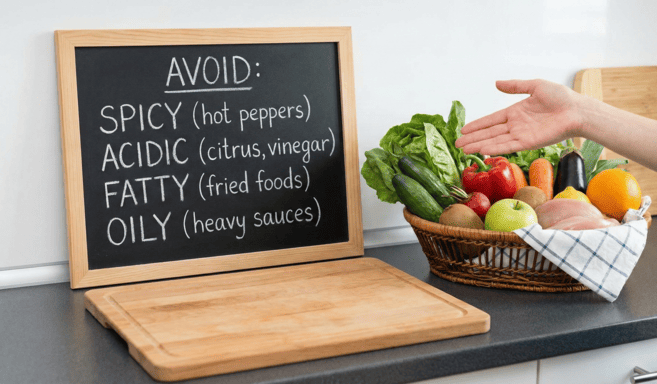
- Cut back on spicy, acidic, fatty, and oily foods during both suhoor (pre-dawn meal) and iftar (breaking fast)
- Don’t overeat when breaking your fast pace yourself
- Consider adding sugar water to your meals, which can help reduce digestive issues (but don’t overdo it)
- Work toward achieving or maintaining a healthy weight
- Never lie down right after eating
For comprehensive information on dietary modifications, Harvard Health provides evidence-based recommendations for heartburn prevention.

When to Seek Help
If you’re consistently struggling with acid reflux during fasting despite these tips, it’s time to talk to a doctor. An internal medicine specialist can provide personalized treatment recommendations and help you adjust your lifestyle and diet for better symptom management.
In some cases, persistent reflux might indicate an underlying condition like a hiatal hernia, which occurs when part of your stomach pushes through your diaphragm. Other conditions such as achalasia or gastroparesis can also contribute to reflux symptoms and may require specialized treatment approaches.
Modern treatment options have evolved significantly. Procedures like fundoplication surgery, the LINX Reflux Management System, and TIF (Transoral Incisionless Fundoplication) offer effective solutions for those who don’t respond to lifestyle changes alone. According to WebMD, understanding your treatment options is crucial for long-term management.
Remember, fasting shouldn’t mean suffering. With the right approach and some mindful adjustments, you can observe your fast comfortably and peacefully. For additional resources and information, visit our blog or explore treatment options for abdominal hernia and heartburn.
Conclusion
Experiencing acid reflux during fasting doesn’t mean you have to compromise your religious or health practices. By understanding how prolonged fasting affects stomach acid production and implementing simple strategies like choosing the right foods when breaking your fast, staying upright after meals, and sleeping on your left side, you can significantly reduce or even eliminate these uncomfortable symptoms.
The NHS guidance on heartburn emphasizes that everyone’s body responds differently, so pay attention to what works best for you and don’t hesitate to consult a healthcare professional if symptoms persist. The American Gastroenterological Association provides detailed patient resources for understanding GERD management.
With mindful eating habits and proper self-care, you can complete your fasts comfortably while protecting your digestive health. If you need expert guidance, don’t hesitate to contact our team or consult with experienced hiatal hernia doctors in Tampa. For additional medical information, MedlinePlus offers comprehensive resources on heartburn and related conditions.
FAQs
Can I take antacids during my fast if I have acid reflux?
No, taking antacids breaks your fast since they’re consumed orally and provide relief by neutralizing stomach acid. If you need medication, consult your doctor about taking it during non-fasting hours or discussing alternative management strategies.
Why does acid reflux get worse at night during fasting?
Lying flat makes it easier for stomach acid to flow back into your esophagus due to gravity. Elevating your head and sleeping on your left side can help prevent this nighttime reflux.
Should I avoid water during suhoor to prevent acid reflux?
No, staying hydrated during suhoor is important and doesn’t cause acid reflux. Drink plenty of water but avoid caffeinated beverages, citrus juices, and carbonated drinks that can trigger acid production.
How long should I wait after iftar before praying or exercising?
Wait at least 2-3 hours after eating before engaging in physical activities or prayers that involve bending. This gives your stomach time to digest and prevents acid from moving upward.
Can fasting actually help with acid reflux in the long term?
Intermittent fasting may help some people lose weight, which can reduce abdominal pressure and improve acid reflux symptoms over time. However, the immediate fasting period itself can trigger reflux if not managed properly.


An endoscopy cannot tell you if you have reflux. It can only tell you if you have complications of GERD.
If you are unhappy with your reflux symptoms, come in and we can discuss testing and treatments that can accurately diagnose your problem.
#reflux #gerd #hiatalhernia #gastroparesis #linx

CALL US AT 813-922-2920
www.tampareflux.com
If you have a hiatal hernia and fit one of these categories, you should know your options.
Dr. Grandhige is an expert in his field and performs 200 of these surgeries a year. He is the only surgeon in the Tampa Bay Area who offers all surgical options - LINX, Fundoplications, TIF and will be one of 20 surgeons in America introducing the latest procedure RefluxStop in 2026.
We accept most insurances but will verify yours before you come in. These procedures are considered medically necessary and covered by your insurance. You can expect to pay your in-network deductibles and nothing else.
#hiatalhernia #reflux #GERD #LINX #refluxstop
What causes reflux ?
1. Weak lower esophageal sphincter
2. Hiatal hernia
3. Flattening of the Angle of His
4. Poor esophageal motility
5. Gastroparesis (slow stomach)
NOT increased acid production
Don’t let GERD get in the way of living your life. Request your appointment with us today on the link below.
.
.
.
.
https://tampareflux.com/contact-us/
Anyone can be victim to GERD and though weight loss can help reduce GERD symptoms. Many athletes with high impact workouts may continue to have these symptoms. This may be a symptom of a hiatal hernia or other issue. We are more then happy to assist you in finding your solution, just click the link below.
.
.
.
https://tampareflux.com/contact-us/
##healthylifestyle #workout #athletereflux #PPIs #heartburn #LINX #fundoplication #TIF #GERD#tampaheartburn #linx #TIF #fundoplication #tampabayreflux #GERD #acidreflux #acidrefluxsurgery #stopreflux
#nonsurgicalweightloss #ESG #gastricballoon #weightlossjourney #vsg #vsgjourney #spatz3 #orbera #orberaballoon #grandhige #DrG
#tampabayrefluxinstitute #guthealth #roboticsurgery
Heartburn may seem like an annoyance. But if you find yourself having symptoms on a daily basis, it may be time to to talk to Dr. Grandhige as it could be a symptom of something worse.
.
.
.
#chronicheartburn #gerdsymptoms #heartburnrelief #reflux #PPIs #heartburn #LINX #fundoplication #TIF #GERD#tampaheartburn #linx #TIF #fundoplication #tampabayreflux #GERD #acidreflux #acidrefluxsurgery #stopreflux
#nonsurgicalweightloss #ESG #gastricballoon #weightlossjourney #vsg #vsgjourney #spatz3 #orbera #orberaballoon #grandhige #DrG
#tampabayrefluxinstitute #guthealth #roboticsurgery
If you are tired of avoiding your favorite foods or taking daily medications, we can help.
We are the Tampa experts in reflux ! With years of experience and thousands of patients treated successfully, we offer all FDA approved anti-reflux procedures.
Call 813-922-2920 to schedule your appointment
All major insurances accepted.
Not all patients need surgical intervention. Many patients are living a heartburn free life with their PPIs. However 40% of patients taking PPIs are not getting the relief they need. If you are one of those, you have options! Come in and find out more.
.
.
.
.
#letushelpyou #medsnotworking #reflux #PPIs #heartburn #LINX #fundoplication #TIF #GERD#tampaheartburn #linx #TIF #fundoplication #tampabayreflux #GERD #acidreflux #acidrefluxsurgery #stopreflux
#nonsurgicalweightloss #ESG #gastricballoon #weightlossjourney #vsg #vsgjourney #spatz3 #orbera #orberaballoon #grandhige #DrG
#tampabayrefluxinstitute #guthealth #roboticsurgery
#heartburn #stopreflux #hiatalherniarepair #severeheartburn #reflux #tampabayreflux #acidrefluxsurgery #tampaheartburn #GERD #PPIs #achalasia #LINX #TIF #tampareflux #fundoplication #stomach #digestivehealth #ESG #obesity #overweight #weightlossjourney #gastricballoon


