

Written By: Dr. Ahmad Saad, Health Content Writer
Medically Reviewed By: Dr. Gopal Grandhige, MD, FACS, Board-Certified Surgeon
Last Reviewed: January 19, 2026
Quick Answer: Hiatal hernias measuring 5 cm or larger typically require surgery, especially paraesophageal types (Type 2, 3, and 4). Smaller hernias under 5 cm can usually be managed with lifestyle changes and medications.
If you’ve been diagnosed with a hiatal hernia, you’re likely wondering whether it needs surgical treatment or can be managed conservatively. The decision depends on three key factors: size, type, and symptoms.
Surgery is typically needed when:
- Hernia measures 5 cm or greater
- You have symptomatic Type 2, 3, or 4 hernias
- Conservative treatments fail to control symptoms
This guide explains the different hernia types, warning signs to watch for, and when surgical intervention becomes necessary for your health and safety.
The Underlying Cause of Hernias
Your organs stay positioned correctly thanks to muscles and connective tissue. Occasionally, deterioration weakens these structures, allowing an organ to bulge through the compromised area into spaces where it shouldn’t be. This abnormal protrusion is what we define as a hernia, most commonly developing between your chest and hip region. You’ll typically notice it as a visible bump or swelling on your abdomen or groin area.
Certain hernias develop internally, making them impossible to detect through external observation. These internal hernias are known as hiatal hernias, which may produce noticeable symptoms or remain completely asymptomatic.
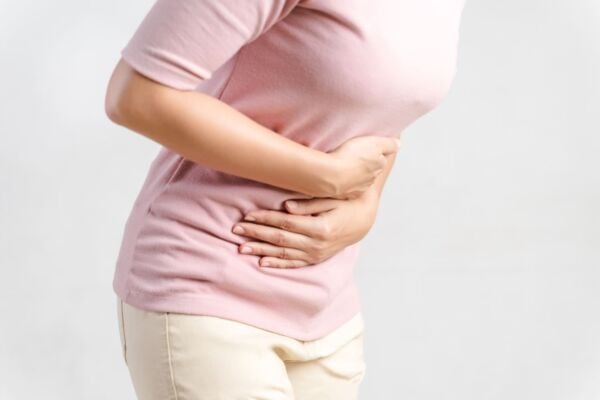
Common Hernia Varieties
People most frequently encounter these hernia types:
Inguinal Hernia
Develops in the internal groin region.
Femoral Hernia
Forms in the external groin area.
Incisional Hernia
Appears at the site of a prior surgical cut.
Umbilical Hernia
Occurs at or near the navel area.
Hiatal Hernia
Internal hernias develop in the stomach’s upper section. According to the Mayo Clinic, two distinct hiatal hernia types exist:
Sliding Variety
This type happens when portions of the stomach along with the gastroesophageal junction shift upward into the chest cavity through the hiatus (where the diaphragm and esophagus meet).
Paraesophageal Variety
A more extensive sliding hernia where a substantial stomach portion and potentially other organs push through the hiatal opening.
Recognizing Hiatal Hernia Symptoms
Sliding hiatal hernias appear quite regularly, approximately 25% of adults develop one before reaching age 40. These hernias frequently trigger persistent GERD.
Paraesophageal hernias occur less frequently but warrant greater concern. Some cases simply require medical observation without intervention. Others produce symptoms and carry elevated risks of incarceration, when the protruding stomach portion gets trapped, blocking blood flow and necessitating urgent surgical treatment.
Every hiatal hernia carries an association with GERD development. Initial management typically involves lifestyle modifications like avoiding late-night eating, elevating the head during sleep, and using acid-reducing medications.
Medical professionals generally recommend repairing symptomatic paraesophageal hernias to prevent symptom progression toward emergency situations.
Paraesophageal Hernia Warning Signs
- Chest Discomfort
While chest pain has multiple potential causes, patients with known large paraesophageal hernias should undergo cardiac assessment to rule out heart-related issues. Some patients experience consistent post-meal discomfort while others have sporadic pain. Additional mealtime symptoms may include:
- Swallowing difficulties
- Upper or mid-abdominal discomfort
- Unusually rapid fullness when eating with prolonged satiety
- Breathing Difficulty
Patients may develop easy breathlessness. Extremely large paraesophageal hernias can compress the diaphragm or lungs, creating sensations of being unable to breathe deeply. - Gastric Ulcers
Rarely, the stomach may twist on itself, producing an ulcer called Cameron’s Erosion that occasionally causes dangerous bleeding.
This leads to gradual blood depletion, resulting in anemia, a condition where insufficient healthy red blood cells exist to transport oxygen throughout your body. As noted by Cleveland Clinic, anemia triggers multiple symptoms including severe tiredness, weakness, lightheadedness, breathing problems, chest discomfort, cold hands and feet, and headaches.
Numerous people with paraesophageal hernias simultaneously deal with acid reflux and heartburn.
Hernia Size Categories
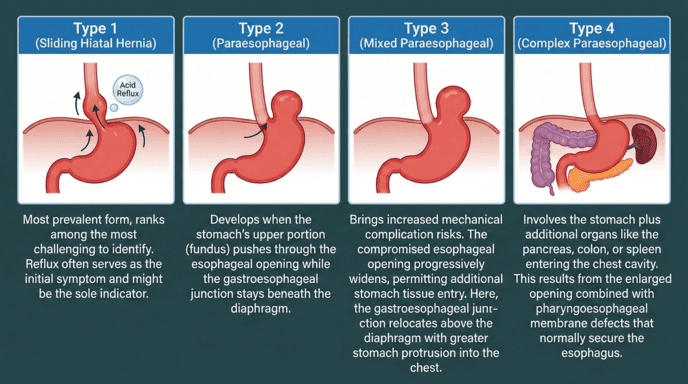
Hiatal hernias vary in dimension, small ones measure approximately 2-3 cm, while medium-sized hernias span 4-5 cm. Hernias exceeding 5 cm fall into the large category. Treatment approach depends on hernia advancement. Medical professionals categorize hiatal hernias from 1 through 4 based on their severity of protrusion into the esophageal opening.
Type 1 or sliding hiatal hernia represents the most prevalent form and ranks among the most challenging to identify. Reflux often serves as the initial symptom and might be the sole indicator.
Type 2 develops when the stomach’s upper portion (fundus) pushes through the esophageal opening while the gastroesophageal junction stays beneath the diaphragm.
Type 3 brings increased mechanical complication risks. The compromised esophageal opening progressively widens, permitting additional stomach tissue entry. Here, the gastroesophageal junction relocates above the diaphragm with greater stomach protrusion into the chest.
Type 4 involves the stomach plus additional organs like the pancreas, colon, or spleen entering the chest cavity. This results from the enlarged opening combined with pharyngoesophageal membrane defects that normally secure the esophagus.
Types 2-4 represent paraesophageal hernia variations, accounting for 5% to 15% of all hiatal hernias, according to Johns Hopkins Medicine.

Surgical Repair Methods
Hiatal hernia treatment varies based on accompanying symptoms.
Physicians generally address mild hiatal hernias (type 1) using reflux medications without special interventions.
Symptomatic type 2 or 3 hernias typically necessitate surgical repair.
Type 4 hiatal hernias demand surgery.
Laparoscopic techniques handle most hernia repairs. Your physician determines the appropriate timing and surgical approach for your situation.
- Laparoscopic Technique
Surgeons make approximately five tiny abdominal incisions during laparoscopic repair, using them to reposition the protruding stomach portion correctly.
Surgeons then seal the diaphragm at the esophageal hiatus junction, preventing stomach re-entry. In certain situations, they wrap the fundus with mesh material to ensure proper diaphragm closure, blocking stomach return to the chest.
Most patients undergoing laparoscopic hernia surgery go home the same day. Hospital stays may be necessary for those receiving abdominal wall reconstruction or more complex repairs.
- Open Surgical Approach
Some patients cannot undergo laparoscopic procedures and need open surgery. The surgeon makes a larger abdominal incision to relocate the stomach properly, then wraps the fundus with specialized surgical mesh preventing future movement.
A temporary tube may be placed to secure the stomach during the healing phase.
Determining Surgical Need Based on Hernia Size
Generally, hernias progressively enlarge and can produce serious complications without repair.
Hernias under 5 cm (2½ inches) can usually be self-managed through lifestyle adjustments and medication. Most patient difficulties stem from large or moderate-sized hiatal hernias.
A research study evaluated 192 patients with varying hiatal hernia sizes and reflux, seeking to establish whether hernia dimensions influenced reflux severity.
Investigators tracked patient pH levels during reclined and upright positions. Small hernias measured 2-4 cm while large ones measured 5 cm or greater.
Reflux pain intensity and duration correlated directly with hiatal hernia size. More frequent and prolonged symptoms resulted in increased esophageal erosion. Patients with 5 cm+ hernias experienced symptoms twice as severe as those with smaller hernias.

Home Management Possibilities
Hiatal hernias don’t self-repair, but patients can minimize symptoms. Smaller hernias offer better chances for home symptom management through:
Medications
Antacids available without prescription sometimes offer rapid relief but may cause kidney problems with extended use. H-2 receptor blockers like Tagamet HB and Pepcid AC, or proton pump inhibitors such as Prevacid 24HR that block stomach acid production, provide stronger relief than H-2 blockers. MedlinePlus provides additional information on medication options.
Physical Activity
Achieving and maintaining healthy weight alongside regular exercise routines. For patients who also struggle with weight management, exploring incisionless weight loss procedures may provide additional benefits for reducing hernia symptoms.
Daily Habit Modifications
- Quit tobacco use
- Refrain from late-day eating
- Sleep with elevated head position
- Consume multiple small meals daily rather than 1-2 large ones
- Eliminate reflux and heartburn triggers including fried, acidic, and high-fat foods
If you suspect a hiatal hernia, seeking evaluation from a qualified medical professional is crucial. Since hernias don’t self-repair and progressively worsen, management through lifestyle modifications and/or surgical correction becomes essential. Contact Tampa Bay Reflux Institute to schedule a consultation. Their qualified specialists perform hernia repair procedures that deliver relief from painful hernia symptoms.
Additionally, if you’re experiencing heartburn and acid reflux issues, visit Tampa Bay Reflux Institute to use our complimentary Online GERD Calculator to assess your GERD score and stage.
Conclusion
Understanding when a hiatal hernia requires surgical intervention depends primarily on its size, type, and symptoms. While smaller hernias under 5 cm can often be managed through lifestyle modifications and medications, larger hernias, particularly paraesophageal types, frequently necessitate surgical repair to prevent serious complications. The key is recognizing warning signs such as persistent chest pain, difficulty swallowing, breathing problems, or anemia, which indicate the need for medical evaluation. Don’t wait for symptoms to worsen, consult with experienced physicians who can assess your specific situation and recommend the most appropriate treatment path. Whether you need fundoplication surgery, the LINX reflux management system, or minimally invasive TIF procedures, remember that hiatal hernias don’t heal on their own, so proactive management through either conservative measures or surgical correction is essential for maintaining your quality of life and preventing potentially dangerous complications. For more information on digestive health conditions, explore our resources on silent reflux, achalasia, and gastroparesis, or visit our blog for expert insights. You can also listen to this informative podcast about hiatal hernia diagnosis and treatment from Cleveland Clinic, or consult the National Institute of Diabetes and Digestive and Kidney Diseases for additional medical information about transoral incisionless fundoplication.
FAQs
What size hiatal hernia typically requires surgery?
Hernias measuring 5 cm or larger generally require surgical intervention, especially if they’re symptomatic. Smaller hernias under 5 cm can usually be managed with lifestyle changes and medication.
Can a hiatal hernia heal on its own without surgery?
No, hiatal hernias cannot heal by themselves and typically worsen over time. However, symptoms can be managed through medications and lifestyle modifications for smaller hernias.
What are the main symptoms indicating I need hiatal hernia surgery?
Key warning signs include persistent chest pain after meals, difficulty swallowing, breathing problems, and anemia from bleeding. Type 2, 3, and 4 paraesophageal hernias with symptoms typically require surgical repair.
Is laparoscopic hiatal hernia surgery performed as an outpatient?
Yes, most laparoscopic hiatal hernia repairs allow patients to go home the same day. More complex repairs or those involving abdominal wall reconstruction may require an overnight hospital stay.
Will lifestyle changes alone fix my hiatal hernia symptoms?
Lifestyle modifications like eating smaller meals, avoiding late-night eating, and elevating your head while sleeping can significantly reduce symptoms. These measures work best for Type 1 sliding hernias under 5 cm but won’t eliminate the hernia itself.


An endoscopy cannot tell you if you have reflux. It can only tell you if you have complications of GERD.
If you are unhappy with your reflux symptoms, come in and we can discuss testing and treatments that can accurately diagnose your problem.
#reflux #gerd #hiatalhernia #gastroparesis #linx

CALL US AT 813-922-2920
www.tampareflux.com
If you have a hiatal hernia and fit one of these categories, you should know your options.
Dr. Grandhige is an expert in his field and performs 200 of these surgeries a year. He is the only surgeon in the Tampa Bay Area who offers all surgical options - LINX, Fundoplications, TIF and will be one of 20 surgeons in America introducing the latest procedure RefluxStop in 2026.
We accept most insurances but will verify yours before you come in. These procedures are considered medically necessary and covered by your insurance. You can expect to pay your in-network deductibles and nothing else.
#hiatalhernia #reflux #GERD #LINX #refluxstop
What causes reflux ?
1. Weak lower esophageal sphincter
2. Hiatal hernia
3. Flattening of the Angle of His
4. Poor esophageal motility
5. Gastroparesis (slow stomach)
NOT increased acid production
Don’t let GERD get in the way of living your life. Request your appointment with us today on the link below.
.
.
.
.
https://tampareflux.com/contact-us/
Anyone can be victim to GERD and though weight loss can help reduce GERD symptoms. Many athletes with high impact workouts may continue to have these symptoms. This may be a symptom of a hiatal hernia or other issue. We are more then happy to assist you in finding your solution, just click the link below.
.
.
.
https://tampareflux.com/contact-us/
##healthylifestyle #workout #athletereflux #PPIs #heartburn #LINX #fundoplication #TIF #GERD#tampaheartburn #linx #TIF #fundoplication #tampabayreflux #GERD #acidreflux #acidrefluxsurgery #stopreflux
#nonsurgicalweightloss #ESG #gastricballoon #weightlossjourney #vsg #vsgjourney #spatz3 #orbera #orberaballoon #grandhige #DrG
#tampabayrefluxinstitute #guthealth #roboticsurgery
Heartburn may seem like an annoyance. But if you find yourself having symptoms on a daily basis, it may be time to to talk to Dr. Grandhige as it could be a symptom of something worse.
.
.
.
#chronicheartburn #gerdsymptoms #heartburnrelief #reflux #PPIs #heartburn #LINX #fundoplication #TIF #GERD#tampaheartburn #linx #TIF #fundoplication #tampabayreflux #GERD #acidreflux #acidrefluxsurgery #stopreflux
#nonsurgicalweightloss #ESG #gastricballoon #weightlossjourney #vsg #vsgjourney #spatz3 #orbera #orberaballoon #grandhige #DrG
#tampabayrefluxinstitute #guthealth #roboticsurgery
If you are tired of avoiding your favorite foods or taking daily medications, we can help.
We are the Tampa experts in reflux ! With years of experience and thousands of patients treated successfully, we offer all FDA approved anti-reflux procedures.
Call 813-922-2920 to schedule your appointment
All major insurances accepted.
Not all patients need surgical intervention. Many patients are living a heartburn free life with their PPIs. However 40% of patients taking PPIs are not getting the relief they need. If you are one of those, you have options! Come in and find out more.
.
.
.
.
#letushelpyou #medsnotworking #reflux #PPIs #heartburn #LINX #fundoplication #TIF #GERD#tampaheartburn #linx #TIF #fundoplication #tampabayreflux #GERD #acidreflux #acidrefluxsurgery #stopreflux
#nonsurgicalweightloss #ESG #gastricballoon #weightlossjourney #vsg #vsgjourney #spatz3 #orbera #orberaballoon #grandhige #DrG
#tampabayrefluxinstitute #guthealth #roboticsurgery
#heartburn #stopreflux #hiatalherniarepair #severeheartburn #reflux #tampabayreflux #acidrefluxsurgery #tampaheartburn #GERD #PPIs #achalasia #LINX #TIF #tampareflux #fundoplication #stomach #digestivehealth #ESG #obesity #overweight #weightlossjourney #gastricballoon


