
A normal endoscopy does not rule out reflux
A normal endoscopy tells you reflux hasn’t caused visible damage yet. It does not tell you whether reflux is occurring.
Endoscopy is a camera. It’s excellent at finding esophagitis, Barrett’s esophagus, ulcers, strictures and narrowing, and at taking biopsies. It cannot count reflux events, time them, or measure sphincter function. Patients on acid-suppressing medication frequently have significant reflux and a completely clean endoscopy. Small hiatal hernias are also missed on endoscopy routinely.
Four tests answer four different questions, and skipping one is how patients end up with the wrong procedure:
- Upper endoscopy (EGD) answers: has reflux caused damage, and what does the anatomy look like?
- pH monitoring, by wireless Bravo capsule or catheter, records 48 to 72 hours of normal life. It answers: is reflux happening, how often, how long does each episode last, and do your symptoms line up with the events?
- Esophageal manometry answers: can your esophagus actually push food through? It measures contraction strength, coordination and sphincter relaxation, and it identifies achalasia, spasm and ineffective motility, all of which can look like reflux and none of which improve with anti-reflux surgery.
- Barium swallow answers: what happens when you actually swallow? It’s used selectively, mostly for food sticking, suspected strictures, unclear anatomy, or prior foregut surgery. Here’s a detail worth knowing before that test: where a patient feels food catching matches the real anatomic location only about 60 percent of the time. People routinely point at their throat when the delay is in the lower esophagus.
Hiatal hernia size drives much of what follows, so it gets measured rather than estimated. Any hernia larger than 3 centimeters almost always contributes mechanically to reflux, is unlikely to be controlled with medication, and tends to enlarge over time. How hiatal hernias cause reflux is covered in more depth on its own page.
Silent reflux: why standard reflux testing misses it
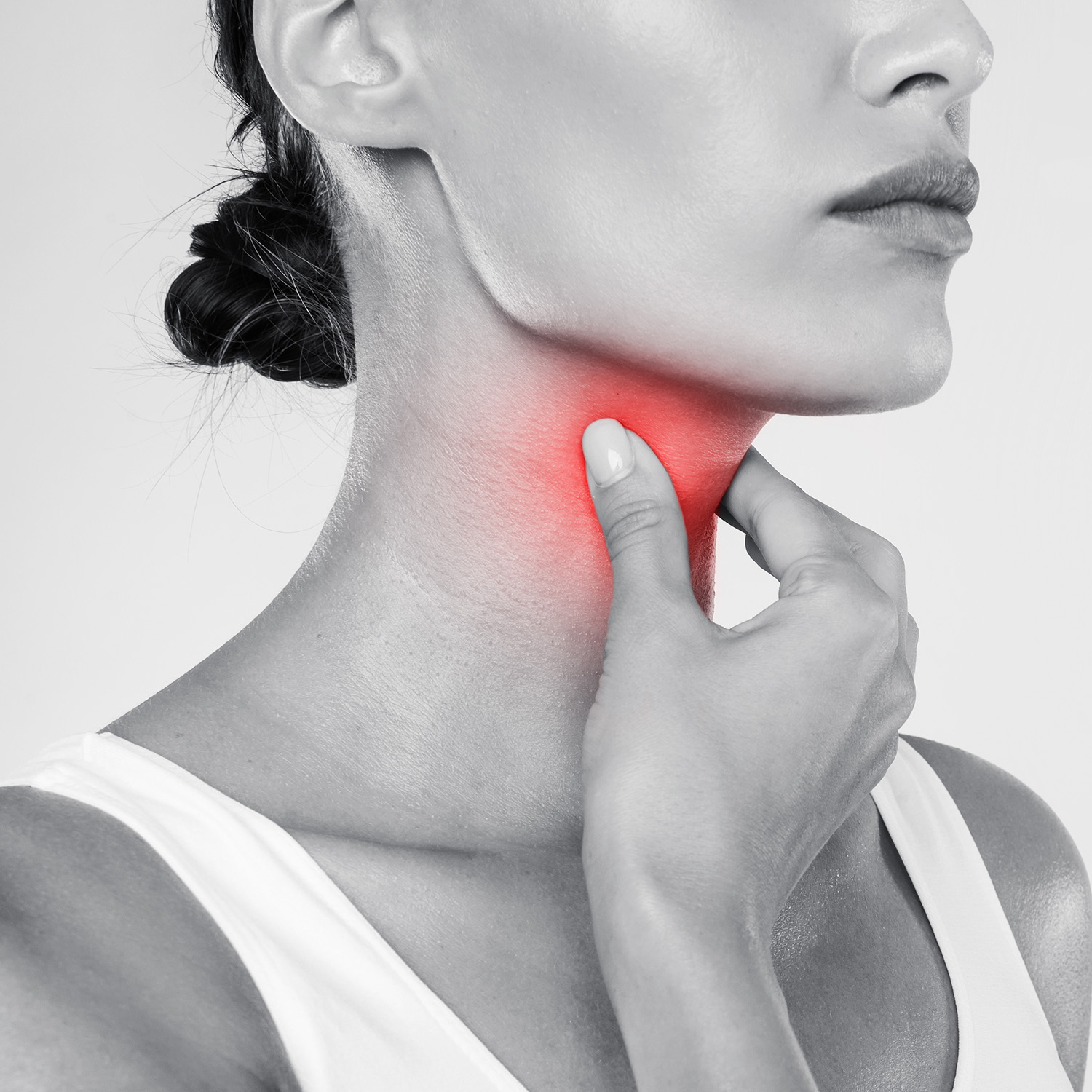
Standard pH testing measures reflux above the lower esophageal sphincter. If your symptoms are in your throat, that’s the wrong place to be measuring.
The esophagus is built to handle reflux. It can tolerate 40 to 50 episodes a day without much complaint. The larynx and pharynx are not built for it at all, and can develop symptoms from as little as one episode a day. That gap is why laryngopharyngeal reflux, or silent reflux, produces chronic throat clearing, hoarseness, cough, globus sensation, postnasal drip and ear pressure in people who have little or no heartburn. It’s also why these patients cycle through ENT, pulmonology and allergy first, get told their endoscopy is normal, and land on a diagnosis of allergies or asthma.
Dr. Grandhige uses a customized 24-hour pH impedance dual-channel probe that records at two levels: above the lower esophageal sphincter and above the upper esophageal sphincter. The impedance component matters because it detects non-acid reflux. Bile, pepsin and trypsin irritate laryngeal tissue and are invisible to acid-only testing.
The outcome difference is the reason for the extra work. Patients with throat symptoms are commonly quoted a 50 percent chance that surgery helps, because without dual-level data nobody knows whether reflux is reaching the larynx at all. With this testing, roughly 50 to 60 percent of silent reflux patients turn out to have findings that warrant a procedure, and symptom improvement in that selected group runs closer to 80 percent. Fewer patients get operated on. The ones who do are far more likely to improve. Our silent reflux and LPR page explains the symptom pattern in more detail.
Four anti-reflux procedures, and the six-step process that picks one
There’s no best reflux operation. There’s a right operation for a specific anatomy, and sometimes the right answer is no operation. Dr. Grandhige performs all four major anti-reflux procedures, which means the decision isn’t constrained by what’s familiar.
Fundoplication rebuilds the valve using your own stomach tissue. It isn’t one operation. Nissen is a full 360-degree wrap, Toupet a posterior 270, Watson an anterior 270, and Dor an anterior partial. The configuration is chosen from your manometry results before you’re in the operating room, because a weak esophagus cannot push food through a full wrap comfortably. It’s the most durable of the four, handles large hiatal hernias, and has decades of outcome data behind it. Operative time runs 1.5 to 2 hours, most patients go home the same day, and diet advances over 2 to 3 months. Dr. Grandhige has performed more than 600.
LINX is a ring of magnetic titanium beads that resists opening when stomach pressure rises, then opens when you swallow. Because it doesn’t wrap the stomach, most patients keep the ability to burp and vomit once early swelling settles, and gas bloating is less of a problem. One misconception is worth correcting: hernia size does not disqualify you from LINX, provided the hernia is repaired during the same operation. Motility is what decides. LINX needs an esophagus strong enough to push food through the resistance. Current devices are MRI compatible to 1.5 Tesla, and the device can be removed if needed. Dr. Grandhige has performed more than 600 and is one of the busiest LINX surgeons in the country.
TIF, or transoral incisionless fundoplication, is done entirely through the mouth with the EsophyX device. No abdominal incisions, 45 to 60 minutes, same-day discharge. The tradeoff is specific and non-negotiable: because it works from the inside, it cannot repair a hiatal hernia and does not address the diaphragm. The ASGE guideline on the diagnosis and management of GERD sets the boundary clearly, suggesting TIF for confirmed GERD with a hiatal hernia of 2 centimeters or less and a Hill grade I or II flap valve. Larger hernias and Hill grade III or IV point toward combined repair or surgical therapy. Dr. Grandhige has performed more than 200 TIF procedures and declines the ones that fall outside those criteria, including patients who are obese or who have Barrett’s esophagus, severe esophagitis or strictures.
RefluxStop restores the position of the gastroesophageal junction without encircling or compressing the esophagus. It’s being added to the practice following FDA approval in 2026. More on the timing below.
The procedure gets chosen through a six-step process, in this order:
- Prove reflux is real. Objective pH testing, symptom correlation, and whether the reflux is acid, non-acid or bile. If reflux isn’t proven, no surgery is recommended regardless of how severe the symptoms are.
- Map the anatomy. Hernia size and shape, esophageal length, and the relationship between stomach, diaphragm and esophagus.
- Measure esophageal function. Manometry determines whether a full or partial wrap is safe, whether a magnetic device is appropriate, and whether surgery should be avoided.
- Match symptoms to physiology. Which symptoms are very likely reflux, which are unlikely, and which are multifactorial. You’ll be told all three before any decision.
- Weigh your priorities. Durability, medication elimination, the ability to burp and vomit, side-effect tolerance, reversibility. Preference refines the choice inside what’s medically safe. It doesn’t override anatomy.
- Choose a procedure, or choose none. Observation and medical management stay on the table through the entire process.
What changed in 2026 that most search results have not caught up to
Three things moved in the last two years that rarely appear in reflux content, and all three could change your options.
RefluxStop received FDA Premarket Approval on August 20, 2026. It’s an implant that holds the gastroesophageal junction in its natural position without encircling the esophagus, which is the design feature behind the swallowing difficulty, gas bloating and inability to belch that traditional wraps can cause. Approval rested on five-year data covering roughly 1,800 European patients. Implantica announced the approval and the start of US commercial activity, and the US launch began in September 2026 at the American Foregut Society annual meeting. Dr. Grandhige is a founding member of that society and is adding the procedure to the practice.
Vonoprazan is a different class of medication. Sold as Voquezna, it’s the first potassium-competitive acid blocker approved in the United States, cleared in November 2023 for erosive GERD and in July 2024 for heartburn associated with non-erosive GERD. It blocks acid by a different mechanism than a PPI, doesn’t need acid to activate, and can be taken with or without food. It’s still acid suppression. It will not strengthen a sphincter or repair a hernia. If you’ve never been offered it and medication is your preferred path, it’s a reasonable question for your prescribing physician.
The ASGE guideline now names specific numbers for TIF candidacy. Hernia of 2 centimeters or less, Hill grade I or II, confirmed GERD. It also asks that endoscopy reports document hiatal hernia dimensions using Hill grading rather than describing them loosely. If you’re being offered an incisionless procedure, ask whether your hernia was measured and what your Hill grade is. That single question filters out a large share of the cases that go badly.
Getting here from Brandon
The office is at 1315 South Howard Avenue, Suite 101, Tampa, FL 33606, and it’s a straight run west from Brandon on the Selmon Expressway.
Two local details worth planning around. The Selmon is all-electronic tolling, so there are no cash booths. And its Reversible Express Lanes run westbound during the morning commute from Brandon into Tampa, then eastbound in the evening and on weekends, which fits a morning appointment and an afternoon drive home almost exactly. The Tampa Hillsborough Expressway Authority maintains the Brandon Parkway feeder lanes off Lumsden Road, Providence Road, Town Center Boulevard and Lakewood Drive.
The office is in a yellow brick building next to Sally O’Neill’s Pizza. Parking is behind the restaurant. Office hours are 9 AM to 6 PM, Monday through Friday, and the phone number is 813.922.2920.

Where your surgery happens. Dr. Grandhige holds surgical privileges at HCA Florida Brandon Hospital, St. Joseph’s Main, St. Joseph’s South and HCA South Tampa. All foregut and anti-reflux procedures are performed at HCA South Tampa, with the same operating room team, the same anesthesiologists experienced in foregut cases, and the same physician assistant in every case. That consistency is deliberate. If you live in Brandon, plan on Tampa for the operation itself.
Your timeline. New patients are usually seen within 2 weeks and always within 4. If your testing is already complete, one consultation is typically enough, and surgery can often be scheduled as early as 4 weeks out. If testing hasn’t been done, expect two visits about 4 weeks apart, with surgery around 8 weeks from the first. Insurance authorization is handled entirely by the office and is secured before anything is scheduled, though it can take 4 to 6 weeks on more complex cases.
Before your visit, send your records to info@tampareflux.com. Dr. Grandhige personally reviews everything before you walk in: prior endoscopy and pathology reports, pH testing including Bravo or catheter studies, manometry results, barium swallow or other imaging, office notes from gastroenterology, ENT, pulmonology and allergy, and a list of current medications and prior surgeries. Studies from years ago are still useful for understanding progression. Signed record releases get started immediately, but fax-based systems and incompatible electronic records mean patient-supplied records consistently arrive faster and more complete. You can read more about Dr. Grandhige’s training and background before you come in.
Frequently asked questions
Medically reviewed by Gopal Grandhige, MD, FACS. Board-certified general surgeon. BS, Johns Hopkins University. MD, University of Michigan, Ann Arbor. General surgery residency and fellowships in burn and critical care and in foregut and minimally invasive surgery, Yale-New Haven Hospital. Founding member, American Foregut Society. Member, Society of American Gastrointestinal and Endoscopic Surgeons. Fellow, American College of Surgeons. Practicing foregut and anti-reflux surgery in Tampa Bay since 2009. Board certification can be verified through the American Board of Surgery, and Florida licensure through the Florida Department of Health.
This page is educational and is not a substitute for individual medical evaluation.


An endoscopy cannot tell you if you have reflux. It can only tell you if you have complications of GERD.
If you are unhappy with your reflux symptoms, come in and we can discuss testing and treatments that can accurately diagnose your problem.
#reflux #gerd #hiatalhernia #gastroparesis #linx


CALL US AT 813-922-2920
www.tampareflux.com
If you have a hiatal hernia and fit one of these categories, you should know your options.
Dr. Grandhige is an expert in his field and performs 200 of these surgeries a year. He is the only surgeon in the Tampa Bay Area who offers all surgical options - LINX, Fundoplications, TIF and will be one of 20 surgeons in America introducing the latest procedure RefluxStop in 2026.
We accept most insurances but will verify yours before you come in. These procedures are considered medically necessary and covered by your insurance. You can expect to pay your in-network deductibles and nothing else.
#hiatalhernia #reflux #GERD #LINX #refluxstop

What causes reflux ?
1. Weak lower esophageal sphincter
2. Hiatal hernia
3. Flattening of the Angle of His
4. Poor esophageal motility
5. Gastroparesis (slow stomach)
NOT increased acid production


Don’t let GERD get in the way of living your life. Request your appointment with us today on the link below.
.
.
.
.
https://tampareflux.com/contact-us/

Anyone can be victim to GERD and though weight loss can help reduce GERD symptoms. Many athletes with high impact workouts may continue to have these symptoms. This may be a symptom of a hiatal hernia or other issue. We are more then happy to assist you in finding your solution, just click the link below.
.
.
.
https://tampareflux.com/contact-us/
##healthylifestyle #workout #athletereflux #PPIs #heartburn #LINX #fundoplication #TIF #GERD#tampaheartburn #linx #TIF #fundoplication #tampabayreflux #GERD #acidreflux #acidrefluxsurgery #stopreflux
#nonsurgicalweightloss #ESG #gastricballoon #weightlossjourney #vsg #vsgjourney #spatz3 #orbera #orberaballoon #grandhige #DrG
#tampabayrefluxinstitute #guthealth #roboticsurgery

Heartburn may seem like an annoyance. But if you find yourself having symptoms on a daily basis, it may be time to to talk to Dr. Grandhige as it could be a symptom of something worse.
.
.
.
#chronicheartburn #gerdsymptoms #heartburnrelief #reflux #PPIs #heartburn #LINX #fundoplication #TIF #GERD#tampaheartburn #linx #TIF #fundoplication #tampabayreflux #GERD #acidreflux #acidrefluxsurgery #stopreflux
#nonsurgicalweightloss #ESG #gastricballoon #weightlossjourney #vsg #vsgjourney #spatz3 #orbera #orberaballoon #grandhige #DrG
#tampabayrefluxinstitute #guthealth #roboticsurgery

If you are tired of avoiding your favorite foods or taking daily medications, we can help.
We are the Tampa experts in reflux ! With years of experience and thousands of patients treated successfully, we offer all FDA approved anti-reflux procedures.
Call 813-922-2920 to schedule your appointment
All major insurances accepted.

Not all patients need surgical intervention. Many patients are living a heartburn free life with their PPIs. However 40% of patients taking PPIs are not getting the relief they need. If you are one of those, you have options! Come in and find out more.
.
.
.
.
#letushelpyou #medsnotworking #reflux #PPIs #heartburn #LINX #fundoplication #TIF #GERD#tampaheartburn #linx #TIF #fundoplication #tampabayreflux #GERD #acidreflux #acidrefluxsurgery #stopreflux
#nonsurgicalweightloss #ESG #gastricballoon #weightlossjourney #vsg #vsgjourney #spatz3 #orbera #orberaballoon #grandhige #DrG
#tampabayrefluxinstitute #guthealth #roboticsurgery

#heartburn #stopreflux #hiatalherniarepair #severeheartburn #reflux #tampabayreflux #acidrefluxsurgery #tampaheartburn #GERD #PPIs #achalasia #LINX #TIF #tampareflux #fundoplication #stomach #digestivehealth #ESG #obesity #overweight #weightlossjourney #gastricballoon
