
Written By: Jeffrey Atlas, Health Content Writer
Medically Reviewed By: Dr. Gopal Grandhige, MD, FACS, Board-Certified Surgeon
Last Reviewed: September 26, 2026
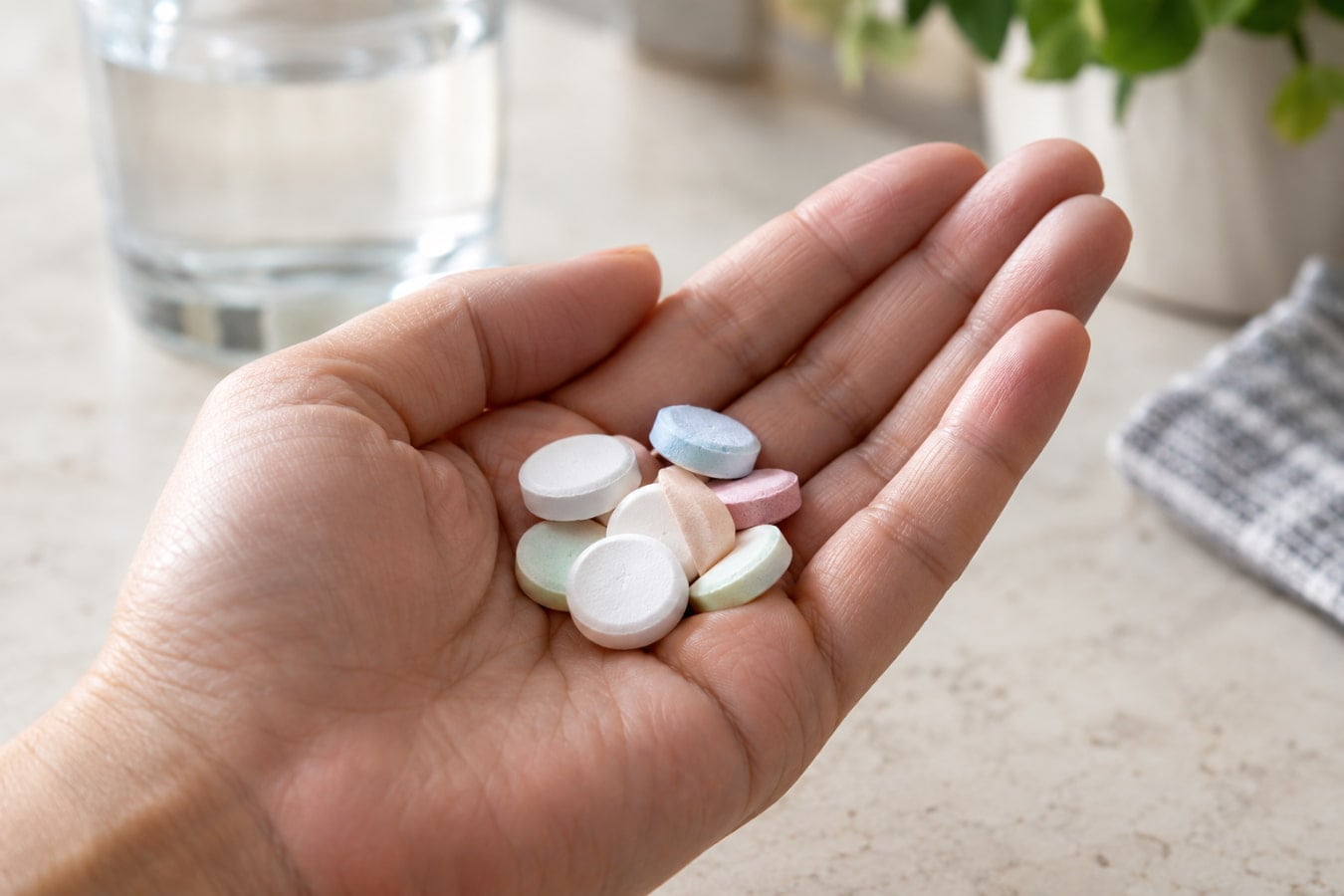
Antacids work by neutralizing acid that’s already sitting in your stomach. They’re weak bases. Stomach acid is hydrochloric acid. Put them together and you get salt, water, and in some formulas carbon dioxide. Heartburn eases within minutes because the acid gets chemically weakened on contact.
No receptors. No pumps. No waiting.
I’m a board-certified surgeon, and at Tampa Bay Reflux Institute I meet people who’ve been chewing these tablets four nights a week for six years straight. So I’ll say the part the drugstore aisle won’t. Antacids handle the symptom well. They do nothing about why acid is climbing into your esophagus.
What Are Antacids?
Antacids are over-the-counter medicines that raise stomach pH by neutralizing acid that has already been released. They use calcium, magnesium, aluminum, or sodium salts to do it. Relief begins in minutes and fades inside an hour or two. They’re built for occasional symptoms, not daily control of chronic reflux disease.
About 20% of US adults have GERD, per the National Institute of Diabetes and Digestive and Kidney Diseases. Plenty of them started with a bottle of chewables and never went further.
One thing this article skips: which brand to buy. I’ll explain why below.
How Antacids Work in Your Stomach
The reaction is plain chemistry. Calcium carbonate meets hydrochloric acid and becomes calcium chloride, water, and carbon dioxide. That last one is why you belch after chewing a tablet. Magnesium and aluminum hydroxide do the same job without the gas.
Raising pH does something else patients rarely hear about. Pepsin, the enzyme that breaks down protein, goes quiet above roughly pH 4. Calmer pepsin means less irritation to esophageal tissue that’s already raw.
I used to tell patients an antacid cools the fire. Actually, that framing isn’t quite right. Your stomach keeps making acid the whole time, around 45 milliequivalents an hour after a meal. The antacid mops up what’s there, then gets emptied out. The tap never turned off.
Which Antacid Ingredient Is Right for You?
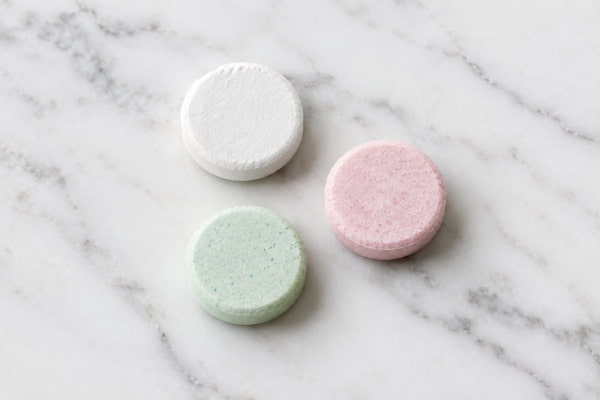
Magnesium salts act fastest and quit soonest. Aluminum is slower off the line and lasts longer. Calcium carbonate sits in between with the strongest neutralizing punch per gram. Sodium bicarbonate is the sprinter, and effervescent forms start reacting in seconds.
Some products add alginate, which isn’t an antacid at all. Made from kelp, it floats on stomach contents and forms a physical raft over the acid pocket. For people whose main complaint is regurgitation rather than burning, that raft often does more than neutralization alone.
Now the part that saves you money. The 2022 ACG clinical guideline says antacids serve on-demand symptom relief only, with little evidence favoring one type over another. Pick whichever doesn’t upset your gut and stop reading packaging. Magnesium loosens stools, aluminum binds them, and combination products exist because those two cancel out.
How Fast Do Antacids Work?
Fast heartburn relief is real. It’s also the problem. On an empty stomach, antacids hold their effect for only 20 to 60 minutes. Food changes the math. A dose an hour after eating plus another at the three-hour mark stretches coverage to roughly four hours.
Why so short? Relief depends entirely on how long the medicine stays in your stomach. Once your stomach empties, the antacid leaves with everything else while acid production continues unopposed.
This hits harder for anyone whose stomach empties slowly. With delayed gastric emptying, food and acid both linger, and one dose behaves nothing like the label suggests.
Doubling up barely helps. It extends the window a little and raises your mineral load a lot.
Antacids, H2 Blockers, and PPIs Compared
Three drug classes, three different jobs. Antacids neutralize acid that exists. H2 blockers and PPIs cut how much gets made.
| Class | Starts working | Lasts | What it does |
| Antacids | Within minutes | 20 to 60 minutes on an empty stomach, up to 4 hours with meal timing | Neutralizes acid already present |
| H2 blockers (famotidine) | 30 to 60 minutes | 10 to 12 hours | Blocks the histamine signal to acid-producing cells |
| PPIs (omeprazole) | 1 to 4 days for full effect | About 24 hours per dose | Shuts down the acid pumps themselves |
Antacids vs H2 Blockers
An H2 blocker needs half an hour to an hour, then holds for 10 to 12 hours. Nightly use builds tolerance, which is why patients tell me it stopped working after a few months. It didn’t stop working. Their receptors adapted.
Antacids vs PPIs
PPIs bind irreversibly to active acid pumps, so full suppression takes several days of steady dosing. Strongest option available, and still not a cure. A population study in Gastroenterology found 54.1% of people on daily PPIs had ongoing reflux symptoms. More than half. If acid suppression alone solved reflux, that number would be tiny.
Part of the gap is silent reflux, where what comes up isn’t acidic enough for neutralization or suppression to change much.

When Should You Take an Antacid?
After symptoms start, or right after a meal you know brings on heartburn. The old advice about taking one so it neutralizes acid as it’s being produced is wrong. Antacids can’t touch production. They work on what’s already in the tank.
Four rules I give patients:
- Take it after eating, not before. An empty stomach empties fast and carries the medicine out with it.
- Separate antacids from other medications by at least two hours. Calcium, magnesium, and aluminum bind certain antibiotics and thyroid drugs and block absorption.
- Don’t chase relief with a second dose 20 minutes later.
- Needing it more than twice a week means booking an evaluation, not buying a bigger bottle.
About triggers. Spicy food gets blamed constantly, and the evidence is thinner than the reputation. A study in Clinical Gastroenterology and Hepatology found calorie density drove esophageal acid exposure independent of fat percentage. Portion size and stomach fullness matter more than heat. And a large hiatal hernia will beat any diet plan you throw at it.
Side Effects and Real Risks in 2026
These aren’t candy, and the label undersells the danger for a few groups.
Calcium overload is the one I see missed most. Milk-alkali syndrome brings high blood calcium, metabolic alkalosis, and kidney injury together. Over-the-counter calcium products now account for up to 10% of hypercalcemia cases. Reported cases usually involve more than 4 to 5 grams of calcium carbonate a day, which sounds impossible until you count what someone with untreated reflux actually chews.
Baking soda deserves its own warning. One teaspoon carries roughly 1,259 mg of sodium, over half the daily recommendation for most adults. Skip it if you have high blood pressure, heart failure, or kidney disease.
Anyone with reduced kidney function should avoid magnesium and aluminum antacids, since damaged kidneys can’t clear either mineral.
Then there’s acid rebound, where the data conflicts. A 1970 New England Journal of Medicine study measured roughly double the acid output in the third hour after calcium carbonate in ulcer patients. A 1997 crossover study using 24-hour pH monitoring found no rebound at all. My read: rebound doesn’t explain most treatment failures. Progressive disease does.
What Your Antacid Habit Is Telling You
Count your doses this week. That number says more than any description of your symptoms.
Understanding how antacids work makes the ceiling obvious. They neutralize acid for under an hour, then leave. Reaching for them daily means the problem isn’t acid strength. It’s a valve that no longer closes, and chemistry can’t rebuild a valve.
Testing is where that gets answered. pH monitoring and manometry show whether reflux is happening and how your esophagus moves. From there, options run from an incisionless repair done through the mouth to a surgical wrap that rebuilds the barrier. Tampa Bay Reflux Institute exists to eliminate reflux and GERD, not to help you ration tablets.
Twice a week is a habit. Daily is a diagnosis waiting to happen.
FAQs
How do antacids work for heartburn?
They neutralize acid that’s already in your stomach. Weak bases like calcium carbonate, magnesium hydroxide, or aluminum hydroxide react with the acid to form salt and water, raising stomach pH within minutes.
How long do antacids last?
Only 20 to 60 minutes on an empty stomach. Taking a dose an hour after a meal and again three hours later can stretch coverage to about four hours, depending on how fast your stomach empties.
Can I take antacids every day?
They’re built for on-demand relief, not daily use — that’s how the 2022 ACG guideline positions them. Over-the-counter calcium products account for up to 10% of hypercalcemia cases, usually tied to more than 4 to 5 grams of calcium carbonate a day. Needing them more than twice a week is a reason to get evaluated.
Do antacids help silent reflux?
Often not much. Silent reflux (LPR) frequently involves material that isn’t acidic enough for neutralization to change. Throat clearing, hoarseness, or a lump sensation usually calls for reflux testing rather than a stronger antacid.
How do antacids work differently from PPIs?
Antacids neutralize acid that already exists and work within minutes. PPIs block the pumps that make acid and need 1 to 4 days of steady dosing for full effect. A population study in Gastroenterology found 54.1% of daily PPI users still had ongoing reflux symptoms, which shows acid suppression alone doesn’t fix a failing valve.
Is baking soda a safe antacid?
It neutralizes acid quickly, but one teaspoon carries roughly 1,259 mg of sodium — over half the daily recommendation for most adults. Avoid it if you have high blood pressure, heart failure, or kidney disease. Heavy or repeated use can push blood chemistry toward metabolic alkalosis.


An endoscopy cannot tell you if you have reflux. It can only tell you if you have complications of GERD.
If you are unhappy with your reflux symptoms, come in and we can discuss testing and treatments that can accurately diagnose your problem.
#reflux #gerd #hiatalhernia #gastroparesis #linx

CALL US AT 813-922-2920
www.tampareflux.com
If you have a hiatal hernia and fit one of these categories, you should know your options.
Dr. Grandhige is an expert in his field and performs 200 of these surgeries a year. He is the only surgeon in the Tampa Bay Area who offers all surgical options - LINX, Fundoplications, TIF and will be one of 20 surgeons in America introducing the latest procedure RefluxStop in 2026.
We accept most insurances but will verify yours before you come in. These procedures are considered medically necessary and covered by your insurance. You can expect to pay your in-network deductibles and nothing else.
#hiatalhernia #reflux #GERD #LINX #refluxstop
What causes reflux ?
1. Weak lower esophageal sphincter
2. Hiatal hernia
3. Flattening of the Angle of His
4. Poor esophageal motility
5. Gastroparesis (slow stomach)
NOT increased acid production
Don’t let GERD get in the way of living your life. Request your appointment with us today on the link below.
.
.
.
.
https://tampareflux.com/contact-us/
Anyone can be victim to GERD and though weight loss can help reduce GERD symptoms. Many athletes with high impact workouts may continue to have these symptoms. This may be a symptom of a hiatal hernia or other issue. We are more then happy to assist you in finding your solution, just click the link below.
.
.
.
https://tampareflux.com/contact-us/
##healthylifestyle #workout #athletereflux #PPIs #heartburn #LINX #fundoplication #TIF #GERD#tampaheartburn #linx #TIF #fundoplication #tampabayreflux #GERD #acidreflux #acidrefluxsurgery #stopreflux
#nonsurgicalweightloss #ESG #gastricballoon #weightlossjourney #vsg #vsgjourney #spatz3 #orbera #orberaballoon #grandhige #DrG
#tampabayrefluxinstitute #guthealth #roboticsurgery
Heartburn may seem like an annoyance. But if you find yourself having symptoms on a daily basis, it may be time to to talk to Dr. Grandhige as it could be a symptom of something worse.
.
.
.
#chronicheartburn #gerdsymptoms #heartburnrelief #reflux #PPIs #heartburn #LINX #fundoplication #TIF #GERD#tampaheartburn #linx #TIF #fundoplication #tampabayreflux #GERD #acidreflux #acidrefluxsurgery #stopreflux
#nonsurgicalweightloss #ESG #gastricballoon #weightlossjourney #vsg #vsgjourney #spatz3 #orbera #orberaballoon #grandhige #DrG
#tampabayrefluxinstitute #guthealth #roboticsurgery
If you are tired of avoiding your favorite foods or taking daily medications, we can help.
We are the Tampa experts in reflux ! With years of experience and thousands of patients treated successfully, we offer all FDA approved anti-reflux procedures.
Call 813-922-2920 to schedule your appointment
All major insurances accepted.
Not all patients need surgical intervention. Many patients are living a heartburn free life with their PPIs. However 40% of patients taking PPIs are not getting the relief they need. If you are one of those, you have options! Come in and find out more.
.
.
.
.
#letushelpyou #medsnotworking #reflux #PPIs #heartburn #LINX #fundoplication #TIF #GERD#tampaheartburn #linx #TIF #fundoplication #tampabayreflux #GERD #acidreflux #acidrefluxsurgery #stopreflux
#nonsurgicalweightloss #ESG #gastricballoon #weightlossjourney #vsg #vsgjourney #spatz3 #orbera #orberaballoon #grandhige #DrG
#tampabayrefluxinstitute #guthealth #roboticsurgery
#heartburn #stopreflux #hiatalherniarepair #severeheartburn #reflux #tampabayreflux #acidrefluxsurgery #tampaheartburn #GERD #PPIs #achalasia #LINX #TIF #tampareflux #fundoplication #stomach #digestivehealth #ESG #obesity #overweight #weightlossjourney #gastricballoon


