
Do You Actually Need Hiatal Hernia Surgery?
Dr. Grandhige recommends surgical repair for every hiatal hernia larger than 3 centimeters. At that size the hernia almost always contributes mechanically to reflux, medication alone rarely controls it, and the hernia tends to grow. Large hernias also raise the risk of gastric volvulus, and they can produce an atonic stomach that may not recover even after the hernia is fixed.
He also recommends repair in three other situations:
- Any hiatal hernia paired with significant reflux symptoms, particularly regurgitation. Small hernias cause real problems when the sphincter is failing too.
- Any hernia associated with severe esophagitis, Barrett’s esophagus, or a peptic stricture.
- Any hernia found during an evaluation for reflux surgery, because leaving the diaphragm unrepaired undercuts the durability of whatever else is done.
Almost every patient with reflux has a hiatal hernia, even when it is small enough that endoscopy misses it. You can read more about how a weakened hiatus breaks the reflux barrier before your consultation.
Now the other half of the answer. Dr. Grandhige will not operate when reflux has not been objectively proven, no matter how convincing the symptoms are. Esophageal hypersensitivity, functional chest pain, motility disorders, rumination, and achalasia all produce reflux-like symptoms, and none of them improve with an anti-reflux repair. He is blunt about the consequence: the patients he declines to operate on are often the unhappiest people who leave his office. They would be unhappier after an operation that fixed nothing.
The SAGES guidelines for the surgical treatment of hiatal hernias set out the same principle at the society level: size and type of hernia, degree of symptoms, and failure of non-surgical control all have to be weighed together, not individually.
Why a Normal Endoscopy Does Not Rule Out a Hiatal Hernia
Upper endoscopy answers one question. Has reflux caused visible damage? It does not measure whether reflux is happening, how often, or why. Small hiatal hernias are not visible on every endoscopy, and patients already taking acid suppression frequently have a completely normal-looking esophagus.
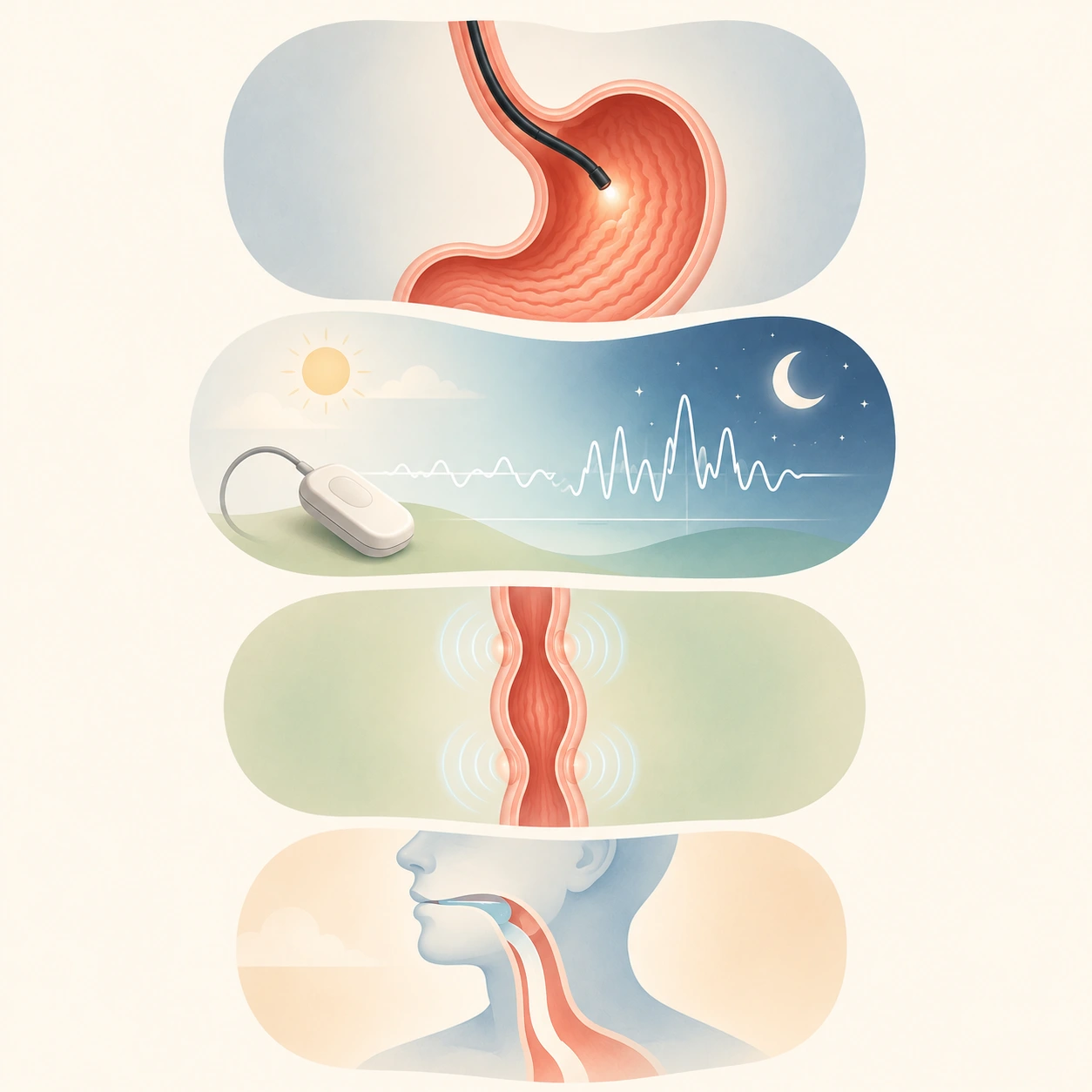
Four tests answer four different questions, and Dr. Grandhige uses them for different reasons.
Upper endoscopy shows anatomy and complications: esophagitis, Barrett’s, ulcers, strictures. It also allows biopsies and placement of a pH probe. It is a starting point, not a verdict.
Esophageal pH monitoring is the actual diagnostic test for GERD. Using either a wireless Bravo capsule or a catheter-based probe, it records for 48 to 72 hours while you eat, sleep, work, and exercise normally. It measures how often reflux happens, how long each episode lasts, how acidic it is, when it happens, and whether your symptoms line up with the events. A pre-surgical baseline also gives you something to compare against afterward.
Esophageal manometry measures whether your esophagus has the strength and coordination to handle added resistance at the bottom. This is the test that decides whether a full or partial wrap is safe and whether a magnetic device is appropriate at all. It also catches achalasia, esophageal spasm, ineffective motility, and jackhammer esophagus, all of which can mimic reflux and none of which are helped by reflux surgery.
Barium swallow is used selectively rather than routinely, mainly for patients reporting food sticking, suspected strictures, unclear anatomy, or prior foregut surgery. It shows swallowing as it happens, and it exposes a gap patients rarely hear about: only about 60 percent of the time is the spot where you feel food catching the place it is actually catching. Patients who feel food stuck at the throat often turn out on esophagram to have a delay low in the esophagus.

If Your Symptoms Are in Your Throat, Standard Testing Probably Missed Them
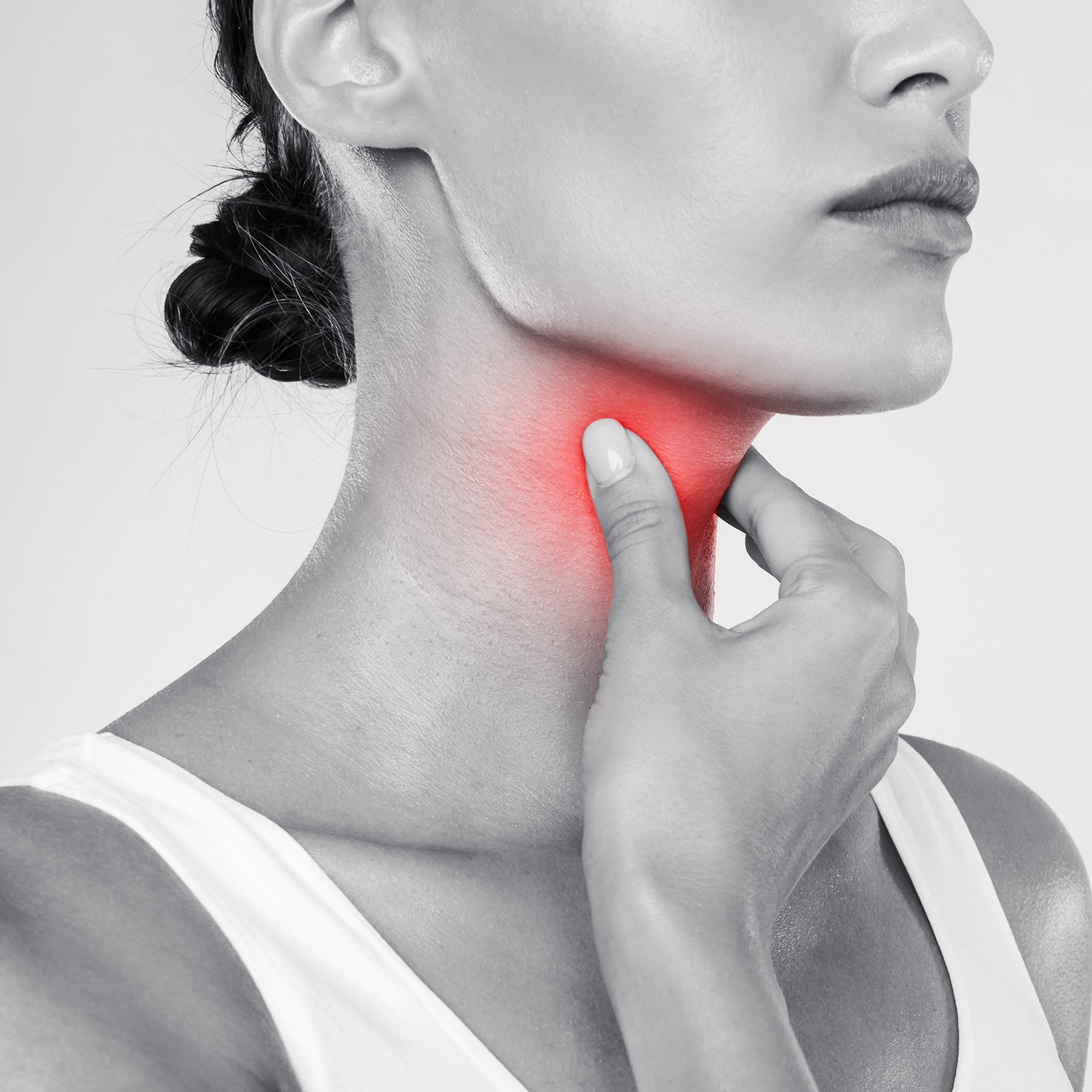
Standard reflux testing measures reflux above the lower esophageal sphincter only. If your symptoms are throat clearing, hoarseness, chronic cough, postnasal drip, ear pressure, or a lump-in-the-throat feeling, that test can come back clean while reflux is reaching your voice box.
The physiology explains why. Your esophagus can tolerate 40 to 50 reflux episodes a day. Your larynx and pharynx can produce symptoms from a single episode a day. Silent reflux, or LPR, is not milder reflux. It is reflux arriving somewhere far more sensitive.
Dr. Grandhige uses a customized 24-hour pH impedance dual-channel probe that measures reflux at two levels: above the lower esophageal sphincter and above the upper esophageal sphincter. The impedance channel also picks up non-acid reflux, including bile, pepsin, and trypsin, which acid-only testing cannot see at all. The catheter is placed in the office through the nose, and you record symptoms while eating, sleeping, speaking, and exercising as usual.
The difference this makes is measurable. Patients with throat symptoms are routinely told that anti-reflux surgery has roughly a 50 percent chance of helping. Using dual-channel testing to select candidates, Dr. Grandhige puts the improvement rate at approximately 80 percent. The reason is not a better operation. It is that only about 50 to 60 percent of the LPR patients he tests have results that justify surgery. The rest are told no.
This testing is technically demanding and takes careful interpretation, which is part of why most centers do not perform it. One more thing to plan for: LPR symptoms generally take 4 to 6 months to improve after surgery, while typical heartburn and regurgitation often resolve almost immediately.
Coming From Clearwater: How Many Trips, and What to Send Ahead
Most Clearwater patients make two or three trips across the bay before surgery day, and the number depends entirely on how much testing you have already had.
The office is at 1315 South Howard Avenue, Suite 101, Tampa, FL 33606, in the yellow brick building next to Sally O’Neill’s Pizza, with parking behind the restaurant. From most of Clearwater that is roughly 30 to 45 minutes on the Courtney Campbell Causeway, longer at rush hour.
If your testing is already done. One consultation. Dr. Grandhige reviews your endoscopy, pH study, manometry, and imaging before you arrive, confirms the diagnosis at that visit, and sets the plan. Surgery can be scheduled as early as 4 weeks out.
If your testing is not done. The first visit covers records review, education, and test planning. A second visit about 4 weeks later reviews the results and finalizes the repair. Surgery lands around 8 weeks from your first appointment. Where a study can be done near you in Pinellas rather than in Tampa, his team arranges it there to save you the drive. Insurance authorization begins once the diagnosis is confirmed and can add time to the schedule.
Surgery day itself is at HCA South Tampa Hospital. That trip is not optional. New patient appointments are usually available within 2 weeks and always within 4.
Send your records to info@tampareflux.com before your first visit: prior endoscopy and pathology reports, pH testing results including Bravo or catheter studies, manometry results, barium swallow or other imaging, office notes from your gastroenterologist, ENT, pulmonologist, or allergist, a current and prior medication list, and a list of prior surgeries. Studies from years ago are still useful for showing how the disease has moved. Records requested through signed releases arrive late or incomplete often enough that patients who gather their own get a far more definite answer at the first visit.
Frequently Asked Questions
Medically reviewed by Gopal Grandhige, MD, FACS. Dr. Grandhige earned his BS in Biology at Johns Hopkins University and his MD at the University of Michigan, then completed general surgery residency and fellowships in both burn and critical care and foregut and minimally invasive surgery at Yale-New Haven Hospital. He is a Fellow of the American College of Surgeons, a member of SAGES, and a founding member of the American Foregut Society. He has practiced foregut surgery in Tampa Bay since 2009 and founded Tampa Bay Reflux Institute in 2022. Board certification can be verified independently through the American Board of Surgery certification lookup.


An endoscopy cannot tell you if you have reflux. It can only tell you if you have complications of GERD.
If you are unhappy with your reflux symptoms, come in and we can discuss testing and treatments that can accurately diagnose your problem.
#reflux #gerd #hiatalhernia #gastroparesis #linx


CALL US AT 813-922-2920
www.tampareflux.com
If you have a hiatal hernia and fit one of these categories, you should know your options.
Dr. Grandhige is an expert in his field and performs 200 of these surgeries a year. He is the only surgeon in the Tampa Bay Area who offers all surgical options - LINX, Fundoplications, TIF and will be one of 20 surgeons in America introducing the latest procedure RefluxStop in 2026.
We accept most insurances but will verify yours before you come in. These procedures are considered medically necessary and covered by your insurance. You can expect to pay your in-network deductibles and nothing else.
#hiatalhernia #reflux #GERD #LINX #refluxstop

What causes reflux ?
1. Weak lower esophageal sphincter
2. Hiatal hernia
3. Flattening of the Angle of His
4. Poor esophageal motility
5. Gastroparesis (slow stomach)
NOT increased acid production


Don’t let GERD get in the way of living your life. Request your appointment with us today on the link below.
.
.
.
.
https://tampareflux.com/contact-us/

Anyone can be victim to GERD and though weight loss can help reduce GERD symptoms. Many athletes with high impact workouts may continue to have these symptoms. This may be a symptom of a hiatal hernia or other issue. We are more then happy to assist you in finding your solution, just click the link below.
.
.
.
https://tampareflux.com/contact-us/
##healthylifestyle #workout #athletereflux #PPIs #heartburn #LINX #fundoplication #TIF #GERD#tampaheartburn #linx #TIF #fundoplication #tampabayreflux #GERD #acidreflux #acidrefluxsurgery #stopreflux
#nonsurgicalweightloss #ESG #gastricballoon #weightlossjourney #vsg #vsgjourney #spatz3 #orbera #orberaballoon #grandhige #DrG
#tampabayrefluxinstitute #guthealth #roboticsurgery

Heartburn may seem like an annoyance. But if you find yourself having symptoms on a daily basis, it may be time to to talk to Dr. Grandhige as it could be a symptom of something worse.
.
.
.
#chronicheartburn #gerdsymptoms #heartburnrelief #reflux #PPIs #heartburn #LINX #fundoplication #TIF #GERD#tampaheartburn #linx #TIF #fundoplication #tampabayreflux #GERD #acidreflux #acidrefluxsurgery #stopreflux
#nonsurgicalweightloss #ESG #gastricballoon #weightlossjourney #vsg #vsgjourney #spatz3 #orbera #orberaballoon #grandhige #DrG
#tampabayrefluxinstitute #guthealth #roboticsurgery

If you are tired of avoiding your favorite foods or taking daily medications, we can help.
We are the Tampa experts in reflux ! With years of experience and thousands of patients treated successfully, we offer all FDA approved anti-reflux procedures.
Call 813-922-2920 to schedule your appointment
All major insurances accepted.

Not all patients need surgical intervention. Many patients are living a heartburn free life with their PPIs. However 40% of patients taking PPIs are not getting the relief they need. If you are one of those, you have options! Come in and find out more.
.
.
.
.
#letushelpyou #medsnotworking #reflux #PPIs #heartburn #LINX #fundoplication #TIF #GERD#tampaheartburn #linx #TIF #fundoplication #tampabayreflux #GERD #acidreflux #acidrefluxsurgery #stopreflux
#nonsurgicalweightloss #ESG #gastricballoon #weightlossjourney #vsg #vsgjourney #spatz3 #orbera #orberaballoon #grandhige #DrG
#tampabayrefluxinstitute #guthealth #roboticsurgery

#heartburn #stopreflux #hiatalherniarepair #severeheartburn #reflux #tampabayreflux #acidrefluxsurgery #tampaheartburn #GERD #PPIs #achalasia #LINX #TIF #tampareflux #fundoplication #stomach #digestivehealth #ESG #obesity #overweight #weightlossjourney #gastricballoon
