
Written By: Jeffrey Atlas, Health Content Writer
Medically Reviewed By: Dr. Gopal Grandhige, MD, FACS, Board-Certified Surgeon
Last Reviewed: July 29, 2026
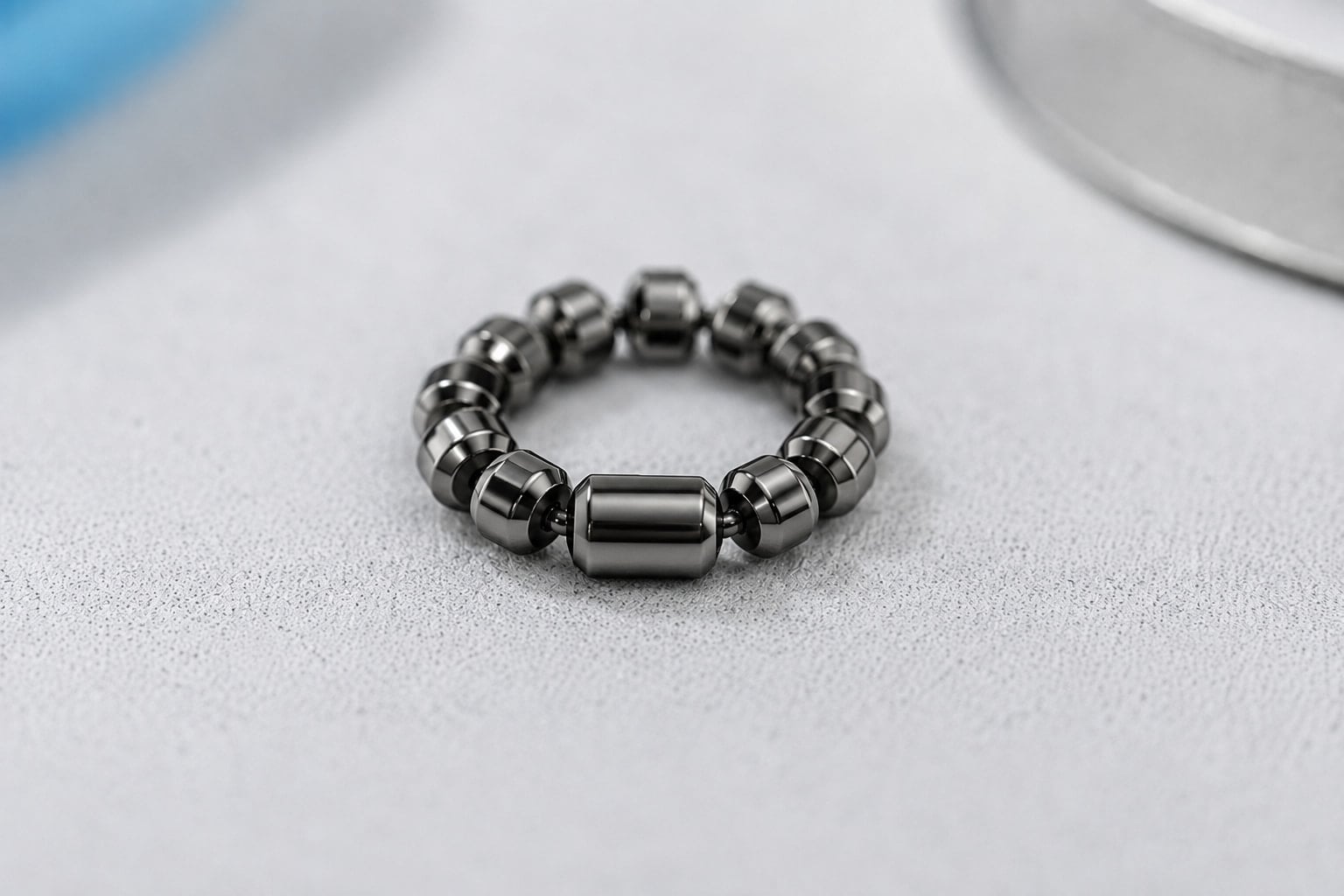
The LINX procedure treats chronic acid reflux by placing a small ring of magnetic titanium beads around the bottom of your esophagus. The magnets hold your weak valve closed so stomach acid stays down, then let go for a second when you swallow. That’s it. No cutting or rerouting of your stomach. Most people go home the same day and stop their reflux medication within weeks.
LINX is a two-way magnetic device that strengthens the lower esophageal sphincter, the muscle that’s supposed to keep acid in your stomach. Surgeons implant it through five tiny incisions in under an hour. It stops reflux without changing your anatomy, and it can be taken out later if it ever needs to be.
This isn’t a piece about pillow wedges or elimination diets. Those help some people. If you’re reading this, you’ve probably tried them and you’re still waking up at 2 a.m. with acid in your throat. Reflux doesn’t always look like heartburn, either. Some people have silent reflux that shows up as a chronic cough or a hoarse voice. I’ve watched patients push through years of rising medication doses before anyone floated the idea of surgery. That delay is the real problem.
What Is the LINX Procedure?
The LINX procedure is a minimally invasive surgery. It uses a magnetic implant to fix the root cause of reflux, a weak valve where your stomach meets your esophagus. It’s built for people with chronic GERD that hasn’t backed off with medication.
Picture the beads as a bracelet of tiny magnets looped around your lower esophagus. At rest, they pull toward each other and hold the valve shut, so acid can’t climb up. When you swallow, the pressure of food pushes the beads apart, the valve opens, and everything passes down like normal. Then the magnets snap it closed again.
The device doesn’t change how your stomach is built. That matters more than it sounds, because it keeps your future options open.
The band comes in different sizes. During surgery, Dr. Grandhige measures your esophagus and picks the fit that’s snug but not tight.
How the Surgery Actually Works
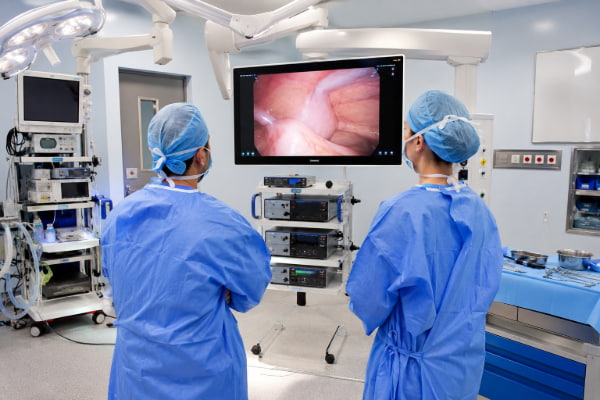
LINX goes in through keyhole surgery, usually in 30 to 60 minutes, with five small cuts in the belly and very little disturbance to the tissue around it.
Here’s the flow of the operation, step by step:
- You’re placed under general anesthesia.
- Five small incisions are made in the abdomen (two around 1 cm, three around half a cm).
- The surgeon finds the spot just above the stomach where the natural valve sits, using minimal dissection to protect the nerves, ligaments, and stomach shape.
- A sizing tool measures the esophagus, and the right device size is chosen.
- The LINX band is wrapped around the esophagus and locked into a closed ring.
- If there’s a hiatal hernia, it gets stitched and repaired in the same operation.
That hernia repair is a bigger deal than most articles let on. A lot of reflux is driven by a hiatal hernia that’s let the stomach slide up through the diaphragm. Fixing the mechanics and adding the device together is why the results last. In a study of 200 patients with hernias larger than 3 centimeters, 94% were completely off daily reflux medication afterward, with no device erosions reported.

The First Few Weeks of Recovery
Recovery from the LINX procedure is faster than most people expect. Most patients go home the same day, handle the soreness with regular pain relievers, and get back to light activity within a few days.
The part patients get wrong is the eating. For the first day, you’ll stick to soft foods, things you can squish between your fingers, like yogurt, soup, or soft noodles. After that, you go back to regular meals with two habits that matter. Take small bites and chew well. Dry, crumbly foods like bread and crackers are the ones that hang up early on, so ease into those. A few sips of warm liquid before a meal help relax the muscle around the device. Skip carbonated drinks for a while, since they cause gas and bloating.
And this sounds odd, but eating is the therapy. Every swallow opens and closes the device, which keeps the scar tissue that forms around it soft and flexible. Patients who eat five to seven small meals a day heal better. Skip meals or live on liquids, and that scar tissue can tighten, which is exactly what leads to swallowing trouble down the road.
Relief usually starts right away. You can stop your reflux medication as soon as you feel ready. No slow taper.
The Real Risks Worth Knowing
The most common problem after the LINX procedure is trouble swallowing, called dysphagia. It’s usually temporary, but it’s real, and any good surgeon will tell you about it upfront.
Early on, your esophagus isn’t used to pushing food past a new barrier, so it has to build strength, like any muscle. At the same time, your body forms a capsule of scar tissue around the device. Both peak around four to six weeks, which is when swallowing feels worst. For most people it settles on its own, especially if they keep eating small, frequent meals.
The numbers give a fair picture. A safety and effectiveness analysis from SAGES found early swallowing trouble is common but fades fast, landing near 10% of patients at one year and about 4% by three years. Somewhere between 6 and 12% need a quick outpatient stretch of the device with a balloon.
Some patients feel bloated or gassy afterward, like with any anti-reflux surgery. But because LINX is a two-way valve, you keep the ability to belch and throw up, which the older wrap surgeries often take away.
A few rare risks deserve a mention. The device can erode into the esophagus, though this is uncommon. One long-term review put the seven-year risk of erosion at around 0.28%. A small number of people need the device removed, usually for stubborn swallowing problems, and that runs about 4 to 5% over several years. If it ever comes to that, removal is a clean, one-step operation, and the surgeon can switch you to a wrap in the same sitting.
One more thing, because the old advice on this is flat wrong. You may have read that a LINX device rules out MRI scans. Not anymore. Depending on the model, modern devices are cleared for MRI machines up to either 0.7 or 1.5 Tesla. LINX also won’t set off airport security, and you’re handed an implant card just in case.

Does LINX Still Hold Up in 2026?
Yes. The long-term data on the LINX procedure is strong, with high satisfaction and durable relief tracked well past five years, and in some studies beyond ten.
This used to be the weak spot in the LINX story, because the device was new and nobody had decades of follow-up. That’s changed. We have real numbers now. In the five-year data from the original trial, roughly 88% of patients had stopped their reflux medication completely, and their reflux quality-of-life scores dropped from severe to near zero. Follow-up out to nine years shows around 79% still off daily medication, with acid levels back to normal in nearly 9 of 10 patients.
People call LINX a “cure.” Actually, that word oversells it. A cure implies the disease is gone for good. What LINX really does is fix the mechanical failure that lets acid escape, and as long as the device is in place and working, the reflux stays controlled. That’s a durable fix, not a miracle.
In our experience at Tampa Bay Reflux Institute, the patients who do best are the ones chosen carefully in the first place. That’s the part the marketing tends to skip.
Choosing Between LINX and Fundoplication
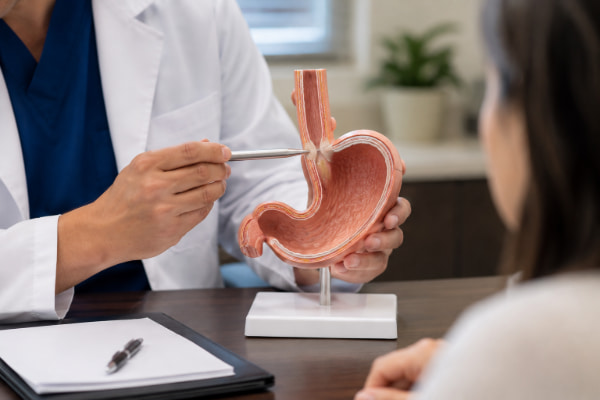
LINX and fundoplication both stop reflux, but they work differently. LINX adds a magnetic device and leaves your anatomy alone. A fundoplication wraps part of your stomach around the esophagus to rebuild the valve.
| Factor | LINX | Fundoplication |
| How invasive | Keyhole, minimal dissection | Keyhole, stomach is wrapped |
| Changes your anatomy | No | Yes |
| Hospital stay | Often same day | Often 1 to 2 days |
| Bloating and gas | Less | More |
| Can you still belch/vomit | Yes | Often reduced |
| Early swallowing trouble | More common | Less common |
| Removable | Yes | Not easily |
| Best fit | Smaller hernias, selected patients | Larger hernias, severe disease |
So which is better? It depends on you, and anyone who hands you a blanket answer is selling something. A 2024 analysis in the International Journal of Surgery pooled dozens of studies and found people with LINX were more likely to get off their medication, more satisfied overall, less bloated, and better able to belch and vomit than those who had a wrap. The trade-off was more early swallowing trouble.
For people with a big hiatal hernia or severe disease, a fundoplication still holds up beautifully and may be the smarter pick. For folks with a smaller hernia who want a faster recovery and normal belching, LINX often wins. And if you’d rather skip incisions altogether, an incisionless option like TIF is worth asking about, though it fits a narrower group.
One thing almost nobody asks their surgeon is how many of these they do a year. They should. Outcomes track with experience. A high-volume reflux surgeon has fewer complications and better long-term results than someone doing a handful of these between other cases. Dr. Grandhige is a board-certified surgeon focused on reflux, and that focus is the whole point.
If you’ve been stuck on climbing doses of reflux medication for years and still feel it, the LINX procedure is worth a real conversation. It won’t be right for everyone, and the goal isn’t to talk you into surgery. It’s to make sure a mechanical problem gets a mechanical fix instead of one more prescription. Tampa Bay Reflux Institute helps you eliminate reflux and GERD, and figuring out whether the LINX system is your answer starts with one honest look at your anatomy, your symptoms, and what you want your life to actually feel like.
FAQs
Is the LINX procedure permanent?
The LINX procedure is designed to be a long-term solution, and the device is meant to stay in place for life. Unlike a fundoplication, though, it can be removed if problems come up, and removal is a single, clean operation. About 4 to 5% of patients have the device taken out over several years, most often because of ongoing swallowing trouble.
How long does dysphagia last after the LINX procedure?
Some difficulty swallowing is normal after the LINX procedure and usually peaks around four to six weeks. For most people it fades on its own, dropping to roughly 10% of patients at one year and about 4% by three years. Eating small, frequent meals speeds this up, and a small share (around 6 to 12%) may need a quick balloon stretch of the device.
Can you get an MRI with a LINX device?
Yes. Modern LINX devices are cleared for MRI scans up to either 0.7 or 1.5 Tesla, depending on which model you have. Older advice that a LINX implant rules out MRI is out of date. You’ll also get an implant card, and the device won’t trigger airport security.
Does LINX work if you have a hiatal hernia?
Yes, and the hernia is repaired during the same surgery. In a study of 200 patients with hiatal hernias larger than 3 centimeters, 94% were completely off daily reflux medication afterward, with no device erosions reported. Fixing the hernia and adding the device together is a big reason results hold up.
How long is recovery after LINX surgery?
Most patients go home the same day and return to light activity within a few days. You’ll eat soft foods for the first day, then move back to a regular diet with smaller bites and slower chewing. Relief from reflux usually starts right away, and you can stop your reflux medication as soon as you feel ready.
Is LINX better than fundoplication?
Neither one is better for everyone. A 2024 analysis in the International Journal of Surgery found LINX patients were more likely to stop their medication, more satisfied, less bloated, and better able to belch and vomit, but they had more early swallowing trouble. Fundoplication is often the stronger choice for larger hernias or more severe reflux.


An endoscopy cannot tell you if you have reflux. It can only tell you if you have complications of GERD.
If you are unhappy with your reflux symptoms, come in and we can discuss testing and treatments that can accurately diagnose your problem.
#reflux #gerd #hiatalhernia #gastroparesis #linx

CALL US AT 813-922-2920
www.tampareflux.com
If you have a hiatal hernia and fit one of these categories, you should know your options.
Dr. Grandhige is an expert in his field and performs 200 of these surgeries a year. He is the only surgeon in the Tampa Bay Area who offers all surgical options - LINX, Fundoplications, TIF and will be one of 20 surgeons in America introducing the latest procedure RefluxStop in 2026.
We accept most insurances but will verify yours before you come in. These procedures are considered medically necessary and covered by your insurance. You can expect to pay your in-network deductibles and nothing else.
#hiatalhernia #reflux #GERD #LINX #refluxstop
What causes reflux ?
1. Weak lower esophageal sphincter
2. Hiatal hernia
3. Flattening of the Angle of His
4. Poor esophageal motility
5. Gastroparesis (slow stomach)
NOT increased acid production
Don’t let GERD get in the way of living your life. Request your appointment with us today on the link below.
.
.
.
.
https://tampareflux.com/contact-us/
Anyone can be victim to GERD and though weight loss can help reduce GERD symptoms. Many athletes with high impact workouts may continue to have these symptoms. This may be a symptom of a hiatal hernia or other issue. We are more then happy to assist you in finding your solution, just click the link below.
.
.
.
https://tampareflux.com/contact-us/
##healthylifestyle #workout #athletereflux #PPIs #heartburn #LINX #fundoplication #TIF #GERD#tampaheartburn #linx #TIF #fundoplication #tampabayreflux #GERD #acidreflux #acidrefluxsurgery #stopreflux
#nonsurgicalweightloss #ESG #gastricballoon #weightlossjourney #vsg #vsgjourney #spatz3 #orbera #orberaballoon #grandhige #DrG
#tampabayrefluxinstitute #guthealth #roboticsurgery
Heartburn may seem like an annoyance. But if you find yourself having symptoms on a daily basis, it may be time to to talk to Dr. Grandhige as it could be a symptom of something worse.
.
.
.
#chronicheartburn #gerdsymptoms #heartburnrelief #reflux #PPIs #heartburn #LINX #fundoplication #TIF #GERD#tampaheartburn #linx #TIF #fundoplication #tampabayreflux #GERD #acidreflux #acidrefluxsurgery #stopreflux
#nonsurgicalweightloss #ESG #gastricballoon #weightlossjourney #vsg #vsgjourney #spatz3 #orbera #orberaballoon #grandhige #DrG
#tampabayrefluxinstitute #guthealth #roboticsurgery
If you are tired of avoiding your favorite foods or taking daily medications, we can help.
We are the Tampa experts in reflux ! With years of experience and thousands of patients treated successfully, we offer all FDA approved anti-reflux procedures.
Call 813-922-2920 to schedule your appointment
All major insurances accepted.
Not all patients need surgical intervention. Many patients are living a heartburn free life with their PPIs. However 40% of patients taking PPIs are not getting the relief they need. If you are one of those, you have options! Come in and find out more.
.
.
.
.
#letushelpyou #medsnotworking #reflux #PPIs #heartburn #LINX #fundoplication #TIF #GERD#tampaheartburn #linx #TIF #fundoplication #tampabayreflux #GERD #acidreflux #acidrefluxsurgery #stopreflux
#nonsurgicalweightloss #ESG #gastricballoon #weightlossjourney #vsg #vsgjourney #spatz3 #orbera #orberaballoon #grandhige #DrG
#tampabayrefluxinstitute #guthealth #roboticsurgery
#heartburn #stopreflux #hiatalherniarepair #severeheartburn #reflux #tampabayreflux #acidrefluxsurgery #tampaheartburn #GERD #PPIs #achalasia #LINX #TIF #tampareflux #fundoplication #stomach #digestivehealth #ESG #obesity #overweight #weightlossjourney #gastricballoon


