

Written By: Jeffrey Atlas, Health Content Writer
Medically Reviewed By: Dr. Gopal Grandhige, MD, FACS, Board-Certified Surgeon
Last Reviewed: July 7, 2026
Does gluten cause acid reflux? For most people, no. Gluten isn’t a direct cause of reflux. But if you have celiac disease or gluten sensitivity, gluten can trigger, worsen, or flat-out imitate reflux, and the science behind that has gotten a lot sharper in the past two years.
I’ve treated reflux long enough to know the patient blaming their morning toast is sometimes dead right and sometimes chasing the wrong culprit. Both happen every week in my clinic. This article sorts out which camp you’re probably in.
Gluten does not cause acid reflux in the general population. In people with celiac disease or non-celiac gluten sensitivity, gluten can inflame the small intestine, slow stomach emptying, and weaken the valve at the top of the stomach. Stomach acid then escapes upward into the esophagus, and you feel heartburn.
Roughly 18% to 28% of adults in North America live with reflux, so you’re in large company. The question was never whether reflux is common. It’s finding your specific driver.
What’s Really Happening When You Get Acid Reflux?
Acid reflux is stomach acid moving backward into your esophagus, the tube that carries food from your throat to your stomach. Your esophagus has no armor against acid. Your stomach does. So when acid splashes up where it doesn’t belong, you get that burn behind the breastbone.
A ring of muscle sits between the two, called the lower esophageal sphincter. It opens for food, then snaps shut. When it loosens or opens at the wrong moment, acid gets through. Smoking, pregnancy, extra weight, and a hiatal hernia can all weaken that valve. Certain foods can too. So can the sluggish digestion that comes with some food reactions, which is where gluten enters the picture for a subset of people.
When Does Heartburn Turn Into GERD?
Heartburn once in a while after a big meal is normal. Gastroesophageal reflux disease is the diagnosis when it strikes often, roughly twice a week or more, or when acid starts damaging the lining of your esophagus.
Watch for a sour taste in your mouth, a cough that won’t quit, a hoarse voice, or trouble swallowing. Those signs deserve a real evaluation, not another roll of antacids.
One mistake I see constantly: people stay on acid blockers for years without anyone asking what’s actually causing the burn. If celiac disease is the engine, the pill just hides the smoke.
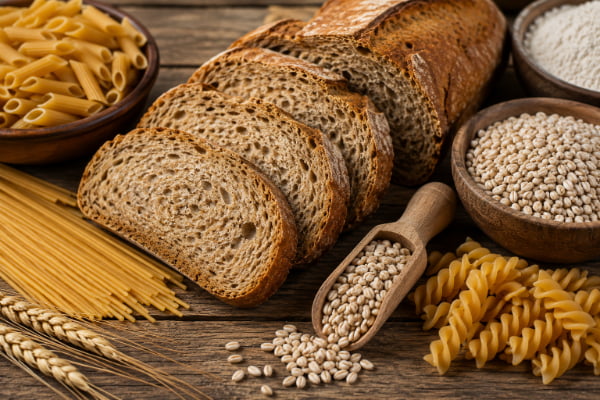
Gluten Explained, and Why It Bothers Some Bodies
Gluten is a protein found in wheat, barley, and rye. It gives bread its stretch and chew. Most people digest it without a second thought. A meaningful minority don’t, and they don’t all react the same way.
There are three separate reactions, and the difference decides your care.
| Reaction | What happens in the body | How fast | Link to reflux | How it’s diagnosed |
| Celiac disease | Immune system attacks the small intestine when gluten is eaten | Builds over time | Strong; reflux is common and improves off gluten | Blood antibodies plus biopsy, done while still eating gluten |
| Wheat allergy | Rapid IgE immune reaction, similar to a peanut allergy | Minutes | Not a typical reflux cause | Allergy testing with a specialist |
| Non-celiac gluten sensitivity | Symptoms without the intestinal damage or allergy antibodies | Hours to days | Possible; some people improve off gluten | Diagnosis of exclusion after ruling out the other two |
Notice reflux shows up in the celiac and sensitivity rows, not the allergy row. A wheat allergy is a fast, dangerous immune response. If your lips or throat swell or you struggle to breathe after eating, that’s an emergency. Call 911. Don’t file that under “intolerance.”
So, Does Gluten Cause Acid Reflux? The 2026 Verdict
Short answer: not on its own, but for the right person the link is real and now well-documented.
A 2024 systematic review in the Lancet journal eClinicalMedicine pooled the evidence and found people with untreated celiac disease are roughly three times more likely to have reflux symptoms than people without it. Stay gluten-free for a year, and that risk drops more than fivefold. A separate 2024 review of 31 studies framed it another way: celiac patients still eating gluten had about ten times the reflux of celiac patients who had gone gluten-free.
That’s not a decorative statistic. It says the reflux tracks the gluten.
The mechanism isn’t mysterious. Three things happen.
Slow Stomach Emptying Builds Pressure
In someone who reacts to gluten, digestion drags. Food lingers in the stomach while acid keeps being produced. Volume climbs, pressure climbs, and the valve at the top gives way. If your stomach empties too slowly on its own, gluten can pile onto a problem you already had.
Inflammation and the “Leaky Gut” Question
Gluten reactions inflame the gut lining. Some people call this “leaky gut,” a term you’ll see plastered across wellness blogs. I’d pump the brakes there. The increased-permeability idea has some real science behind it and a lot of marketing built on top of it. What we can say with confidence: gut inflammation doesn’t stay put. It can irritate the esophagus and make that valve misbehave.
Your Gut Bacteria Get Involved
Your gut runs on trillions of bacteria. A gluten reaction can throw off that balance and crank up gas production. More gas means more upward pressure on the stomach, which nudges acid past the valve. Bloating and reflux often travel together for exactly this reason.
Finding Out If Gluten Is Your Trigger
You don’t need to guess. You need a sequence. Skipping steps is how people end up gluten-free for no reason, or worse, masking a serious diagnosis.
- Get a real diagnosis first. Don’t cut gluten yet.
- Track your symptoms for two weeks.
- Run a structured elimination.
Step 1: Get a Real Diagnosis First
See a physician before you touch your diet. Reflux can come from a hiatal hernia, an ulcer, bile backing up, or celiac disease, and each one needs different treatment.
This part matters more than people realize. Celiac blood tests only work while gluten is in your system. Go gluten-free first, and you can flip a real celiac case into a false negative, then spend years without the diagnosis you needed. At Tampa Bay Reflux Institute, we test before we subtract.
Step 2: Keep a Two-Week Symptom Diary
Write down everything you eat and the exact time heartburn hits. Food reactions can lag. An allergy strikes in minutes, but an intolerance can take a day or two to surface. That Monday pasta might be behind your Tuesday burn. A plain notebook beats memory every time.
Step 3: Run a Structured Elimination
If gluten looks guilty, pull every source of wheat, barley, and rye for two to four weeks. Keep the diary going. You’re watching for one thing: does the frequency and intensity of your reflux actually drop? If it doesn’t budge, gluten probably isn’t your problem, and that’s useful information too.

Are Food Intolerance Blood Tests Worth It?
Most of the time, no. And I say that knowing a whole industry is built on selling them.
You’ve seen the ads. Mail in a finger-prick sample, get back a color-coded list of 200-plus “reactive” foods. These are usually IgG antibody tests. The catch is that major gastroenterology and allergy organizations don’t endorse IgG testing to diagnose food intolerance. A high IgG number often just means you eat that food a lot. It’s a memory marker, not a verdict.
The test that does matter for the gluten question is celiac screening: specific blood antibodies and, when needed, a biopsy, ordered by a physician while you’re still eating gluten. That’s the validated path. If you want to spend money on an answer, spend it there.
Now, a fair caveat. Some people with treatment-resistant reflux do turn up gluten antibodies and improve on a gluten-free trial. In a 2023 study in the Journal of Voice, patients with stubborn silent reflux who went gluten-free showed objective improvement 77% of the time, versus 44% for those who didn’t. So testing has a place in refractory cases. As a first move for ordinary heartburn, it’s a poor use of your money.
Managing Reflux for the Long Haul
If gluten turns out to be a trigger, cutting it is step one, not the finish line. The goal is a digestive system that works, not a life organized around dodging one grain.
Habits That Actually Move the Needle
This is where I push back on standard advice. The endless “avoid these trigger foods” lists have surprisingly weak trial evidence behind them. When researchers actually test lifestyle changes, two consistently rise to the top: losing excess weight and raising the head of your bed. In weight-loss trials, esophageal acid exposure dropped measurably, in one study from 8.0% of the day down to 5.5%. A wedge under the mattress cut acid time in a controlled trial. Not eating within three hours of lying down helps too.
Compare that to food avoidance, where the data is thin and mixed. A few items do earn their reputation. Fatty and fried foods slow the stomach and loosen the valve, and alcohol both relaxes the valve and irritates the lining. One study in BMC Gastroenterology found drinkers were about 32% more likely to develop reflux.
Chocolate, coffee, and peppermint all relax that valve in lab settings, so they’re worth testing on yourself, but the population data is shakier than the confident advice suggests. Spicy food is the one I’d stop apologizing for. It doesn’t mechanically cause reflux. It can sting an already-raw esophagus, which feels the same but isn’t. And a small irony: the peppermint tea people sip to calm heartburn can loosen the valve and make things worse.
Track your own reactions. Your list won’t match your neighbor’s.
What to Eat When You Cut Gluten
Reach for foods that are naturally gluten-free instead of the processed “gluten-free” packaged stuff, which is often just as rough on digestion. Plain options work: rice, quinoa, buckwheat, potatoes, most fruits and vegetables, eggs, fish, and lean meats.
One myth worth killing: ginger. It gets sold as a reflux cure everywhere. The evidence for ginger easing reflux specifically is weak, most of it centers on nausea, and in higher doses ginger can relax the valve and backfire. Small amounts may settle your stomach. Don’t count on it to fix reflux.
A word on long-term acid blockers. They’re useful and sometimes necessary. But years of suppressing stomach acid can leave you low on magnesium, calcium, and the very acid you need to break down protein. They’re a tool, not a permanent fix, and if you need one indefinitely, that’s a reason to ask why.

When Should You See a Reflux Specialist?
If you’ve cleaned up your diet, tracked your symptoms, and reflux still runs your life, it’s time. Roughly 30% to 40% of reflux patients don’t get full relief from acid-blocking medication, and staying on a pill that isn’t working is its own problem.
A specialist can run objective tests, like pH monitoring and a swallow study, to see what’s really going on. If a loose valve or a hernia is the culprit, no diet fixes the mechanics. Procedures that repair the valve exist for the right candidates, and the workup always comes first.
Dr. Gopal Grandhige is a board-certified surgeon, and the team at Tampa Bay Reflux Institute is built to get people off the merry-go-round of guesswork and endless refills and actually eliminate the reflux driving it. So does gluten cause acid reflux for you? Maybe, maybe not. Either way, stop guessing and get an answer. When you’re ready, reach out to our team.
FAQs
Does gluten cause acid reflux if you don’t have celiac disease?
It can, but it’s less common. Some people have non-celiac gluten sensitivity and still get reflux from gluten, even with normal celiac tests. A 2024 Lancet review found the reflux-gluten link is strongest in celiac disease, where untreated patients had about three times the reflux of people without it. If your reflux is stubborn, gluten is worth ruling in or out with a doctor.
How soon after eating gluten does acid reflux start?
It varies. Unlike an allergy, which hits within minutes, a gluten reaction can lag by hours or even a day or two. That delay is why a two-week food and symptom diary beats relying on memory.
Will my acid reflux go away if I stop eating gluten?
For some people, yes. In one long-term study, reflux symptoms resolved in about 86% of celiac patients, and those who stayed gluten-free avoided the relapses seen in the comparison group. But if your reflux comes from a hiatal hernia or a weak valve, cutting gluten alone won’t fix the mechanics. Get evaluated before assuming gluten is the whole story.
Can gluten cause silent reflux or LPR?
Yes, for people who are sensitive to it. Silent reflux, or laryngopharyngeal reflux, shows up as throat clearing, hoarseness, or a lump-in-the-throat feeling rather than classic heartburn. In a 2023 Journal of Voice study, patients with treatment-resistant silent reflux who went gluten-free improved objectively 77% of the time, compared with 44% who didn’t. Testing for gluten sensitivity makes sense when reflux won’t respond to standard care.
Should I get an IgG food intolerance test for my acid reflux?
Probably not as a first step. Major gastroenterology groups don’t recommend IgG blood tests to diagnose food intolerance, since a high result often just reflects foods you eat often. The validated path for the gluten question is celiac screening ordered by a physician while you’re still eating gluten.
Does gluten cause acid reflux, or should I look at other triggers first?
For most people without celiac disease or gluten sensitivity, other factors matter more. Excess weight, late-night meals, and a hiatal hernia drive far more reflux than gluten does across the general population. Weight loss and elevating the head of your bed have stronger evidence than most food-avoidance advice. If those don’t help, that’s your signal to see a reflux specialist.


An endoscopy cannot tell you if you have reflux. It can only tell you if you have complications of GERD.
If you are unhappy with your reflux symptoms, come in and we can discuss testing and treatments that can accurately diagnose your problem.
#reflux #gerd #hiatalhernia #gastroparesis #linx

CALL US AT 813-922-2920
www.tampareflux.com
If you have a hiatal hernia and fit one of these categories, you should know your options.
Dr. Grandhige is an expert in his field and performs 200 of these surgeries a year. He is the only surgeon in the Tampa Bay Area who offers all surgical options - LINX, Fundoplications, TIF and will be one of 20 surgeons in America introducing the latest procedure RefluxStop in 2026.
We accept most insurances but will verify yours before you come in. These procedures are considered medically necessary and covered by your insurance. You can expect to pay your in-network deductibles and nothing else.
#hiatalhernia #reflux #GERD #LINX #refluxstop
What causes reflux ?
1. Weak lower esophageal sphincter
2. Hiatal hernia
3. Flattening of the Angle of His
4. Poor esophageal motility
5. Gastroparesis (slow stomach)
NOT increased acid production
Don’t let GERD get in the way of living your life. Request your appointment with us today on the link below.
.
.
.
.
https://tampareflux.com/contact-us/
Anyone can be victim to GERD and though weight loss can help reduce GERD symptoms. Many athletes with high impact workouts may continue to have these symptoms. This may be a symptom of a hiatal hernia or other issue. We are more then happy to assist you in finding your solution, just click the link below.
.
.
.
https://tampareflux.com/contact-us/
##healthylifestyle #workout #athletereflux #PPIs #heartburn #LINX #fundoplication #TIF #GERD#tampaheartburn #linx #TIF #fundoplication #tampabayreflux #GERD #acidreflux #acidrefluxsurgery #stopreflux
#nonsurgicalweightloss #ESG #gastricballoon #weightlossjourney #vsg #vsgjourney #spatz3 #orbera #orberaballoon #grandhige #DrG
#tampabayrefluxinstitute #guthealth #roboticsurgery
Heartburn may seem like an annoyance. But if you find yourself having symptoms on a daily basis, it may be time to to talk to Dr. Grandhige as it could be a symptom of something worse.
.
.
.
#chronicheartburn #gerdsymptoms #heartburnrelief #reflux #PPIs #heartburn #LINX #fundoplication #TIF #GERD#tampaheartburn #linx #TIF #fundoplication #tampabayreflux #GERD #acidreflux #acidrefluxsurgery #stopreflux
#nonsurgicalweightloss #ESG #gastricballoon #weightlossjourney #vsg #vsgjourney #spatz3 #orbera #orberaballoon #grandhige #DrG
#tampabayrefluxinstitute #guthealth #roboticsurgery
If you are tired of avoiding your favorite foods or taking daily medications, we can help.
We are the Tampa experts in reflux ! With years of experience and thousands of patients treated successfully, we offer all FDA approved anti-reflux procedures.
Call 813-922-2920 to schedule your appointment
All major insurances accepted.
Not all patients need surgical intervention. Many patients are living a heartburn free life with their PPIs. However 40% of patients taking PPIs are not getting the relief they need. If you are one of those, you have options! Come in and find out more.
.
.
.
.
#letushelpyou #medsnotworking #reflux #PPIs #heartburn #LINX #fundoplication #TIF #GERD#tampaheartburn #linx #TIF #fundoplication #tampabayreflux #GERD #acidreflux #acidrefluxsurgery #stopreflux
#nonsurgicalweightloss #ESG #gastricballoon #weightlossjourney #vsg #vsgjourney #spatz3 #orbera #orberaballoon #grandhige #DrG
#tampabayrefluxinstitute #guthealth #roboticsurgery
#heartburn #stopreflux #hiatalherniarepair #severeheartburn #reflux #tampabayreflux #acidrefluxsurgery #tampaheartburn #GERD #PPIs #achalasia #LINX #TIF #tampareflux #fundoplication #stomach #digestivehealth #ESG #obesity #overweight #weightlossjourney #gastricballoon


