
Gastroparesis Specialists In St. Petersburg, FL
If you live in St. Petersburg and your stomach still won’t empty after months of medication, the next step is not another prokinetic. It’s a test that tells you whether the muscle at the stomach’s exit is the actual problem, and a surgeon who treats that muscle for a living.
What gastroparesis actually is, in plain terms
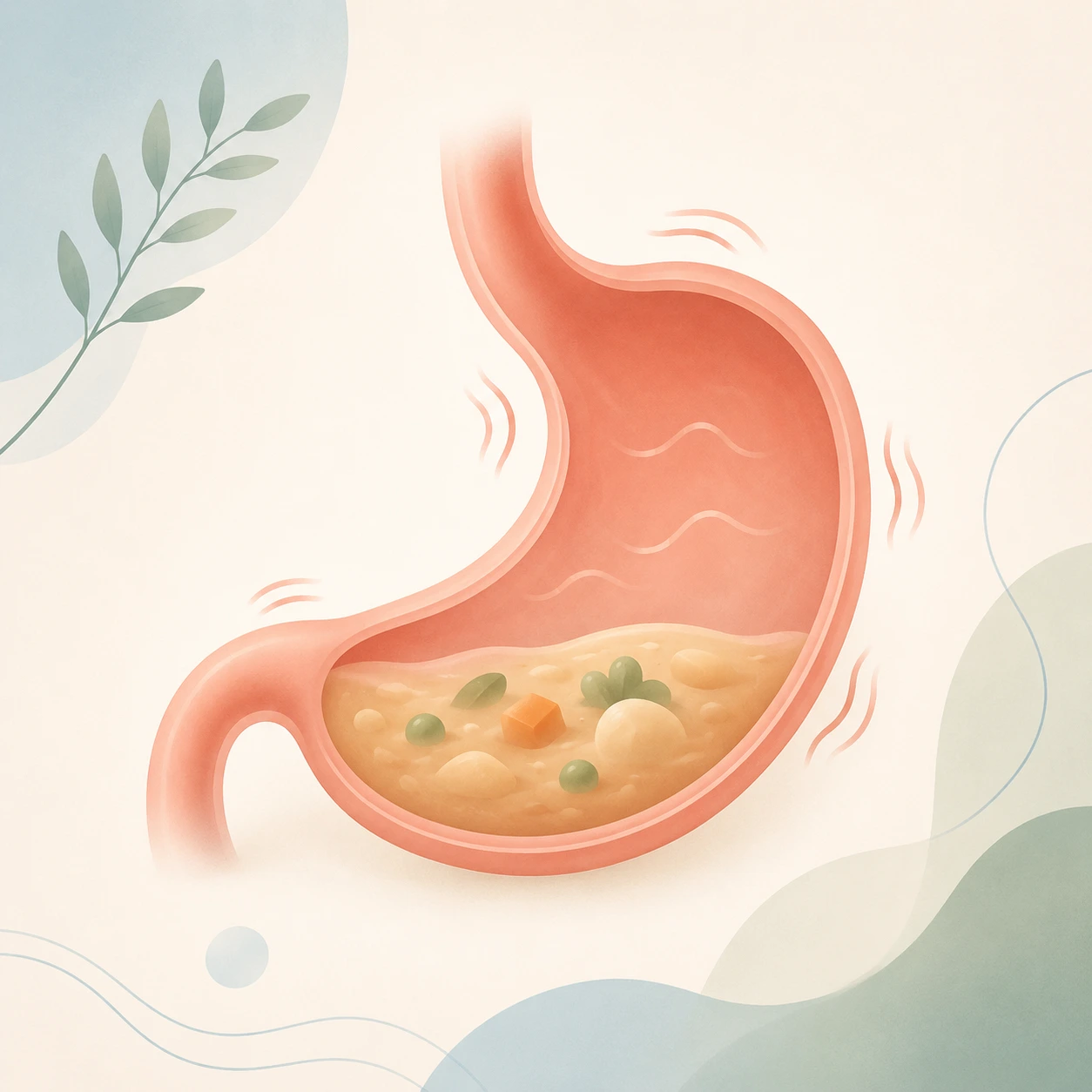
Gastroparesis is delayed gastric emptying: the stomach’s muscle contractions are sluggish or absent, so food sits there for hours longer than it should.
That backup is what produces the symptoms, including nausea, bloating, feeling full after a few bites, and sometimes vomiting food eaten hours earlier. Because those symptoms overlap heavily with acid reflux, gastroparesis is often misread as GERD, IBS, or simple indigestion, which is one reason so many patients cycle through the wrong treatments before the real diagnosis lands. In many cases the cause is never identified. Sometimes it follows diabetes or a prior surgery, and certain medications, including opioid pain relievers, some antidepressants, and some blood pressure drugs, slow the stomach and can make existing gastroparesis worse.
The practical takeaway: symptoms alone cannot confirm gastroparesis, and they cannot tell you how severe it is. That requires objective testing, which is where a proper evaluation begins.
Diagnosis starts with a 4-hour gastric emptying study, not a guess
The test that confirms gastroparesis is a 4-hour gastric emptying study, and a shorter version can miss the diagnosis.
In this study you eat a light meal containing a small amount of radioactive marker, often eggs and toast, and a scanner tracks how fast the meal leaves your stomach over four hours. A two-hour study, still used in some settings, can read as normal in a stomach that is clearly delayed at the four-hour mark. If you have already had this test in St. Petersburg, bring the actual report, because it shapes every decision that follows and can spare you a repeat.
Upper endoscopy is not how gastroparesis is diagnosed, but it often raises the suspicion. If a patient who has fasted for several hours still has food in the stomach during a scope done for other reasons, gastroparesis becomes the likely explanation. Endoscopy’s real job in this workup is to rule out a physical blockage and to check for the reflux damage that delayed emptying can cause.
Dr. Grandhige’s rule is the same one that governs his entire practice: test first, treat second. Objective confirmation comes before any discussion of a procedure, because the goal is to operate only on patients a procedure can actually help.
G-POEM: the incisionless procedure for medication-resistant gastroparesis
Not everyone needs a procedure, and that is the point
A procedure is not the automatic answer to gastroparesis, and a surgeon who treats it that way is the wrong surgeon.
Dr. Grandhige evaluates anatomy, symptom severity, prior treatments, and whether something other than the pylorus is driving the problem before recommending anything. Some patients do better with continued medical management or dietary changes. The aim is not to perform a procedure on everyone who walks in. It is to recommend G-POEM only when the testing says it is likely to help, and to say so plainly when it isn’t.
This restraint is the same standard across his practice. As he frames it, knowing when not to operate is as important as the operation itself, and the patients he declines to operate on are sometimes the ones a procedure would have failed. For gastroparesis, where no treatment is a cure and the goal is meaningful symptom relief, that honesty protects you from a procedure that wouldn’t have changed how you feel.
If diet and nutrition are where you are starting, that matters too. Keeping adequate nutrition is the first goal in gastroparesis care, and smaller frequent meals, well-cooked and low-fat foods, and limiting carbonation and alcohol help many patients before any procedure is on the table.
One surgeon, one hospital, one team
Dr. Grandhige performs all of his procedures at HCA Florida South Tampa Hospital, with the same operating room team, the same anesthesiologists, and his own physician assistant in every case.
This is deliberate, not a matter of convenience. He used to operate across four area hospitals and consolidated to one because outcomes in foregut procedures come from a system, not a solo surgeon. When the whole team knows the procedure intimately, equipment is set up correctly every time, operative flow is predictable, and problems get caught early rather than reacted to. For an endoscopic procedure where small technical differences carry downstream effects, that consistency is one of the strongest predictors of a smooth case.
The continuity continues after you go home. His physician assistant assists in every operation and knows your specific anatomy and recovery course, so when you call with a question you reach someone who already understands your case rather than a rotating provider. For an out-of-area patient driving in from St. Petersburg, that direct line back to the people who did your procedure removes a real source of post-procedure anxiety.

Coming to Tampa Bay Reflux Institute from St. Petersburg
The office is at 1315 South Howard Avenue, Suite 101, Tampa, FL 33606, in a yellow brick building next to Sally O’Neill’s Pizza, with parking behind the restaurant.
From St. Petersburg it is a roughly 20 to 30 minute drive over the Howard Frankland Bridge, in the South Tampa SoHo district off Bayshore. To make the trip efficient, the team coordinates testing so you are not driving back and forth, and when a study can be done closer to home in Pinellas, they arrange that and review the results before your visit. To save a step, email prior records, including any gastric emptying study, endoscopy and pathology reports, and notes from your GI or other physicians, to info@tampareflux.com ahead of your consultation so Dr. Grandhige can review everything beforehand.
Most patients move from consultation to a treatment decision within two visits, and the practice aims to see new patients within two weeks and almost always within four. If your testing is already complete, a single visit is often enough to confirm the diagnosis and lay out your options.
FAQS
You don’t have to keep guessing
If you are in St. Petersburg, cycling through gastroparesis medications that no longer work, the path forward is a clear diagnosis and an honest answer about whether a procedure will help. That is what a foregut specialist provides: objective testing, a treatment matched to what your testing actually shows, and the judgment to recommend a procedure only when it is likely to work. Read more about your options on our gastroparesis treatment page or our conditions we treat overview.


An endoscopy cannot tell you if you have reflux. It can only tell you if you have complications of GERD.
If you are unhappy with your reflux symptoms, come in and we can discuss testing and treatments that can accurately diagnose your problem.
#reflux #gerd #hiatalhernia #gastroparesis #linx


CALL US AT 813-922-2920
www.tampareflux.com
If you have a hiatal hernia and fit one of these categories, you should know your options.
Dr. Grandhige is an expert in his field and performs 200 of these surgeries a year. He is the only surgeon in the Tampa Bay Area who offers all surgical options - LINX, Fundoplications, TIF and will be one of 20 surgeons in America introducing the latest procedure RefluxStop in 2026.
We accept most insurances but will verify yours before you come in. These procedures are considered medically necessary and covered by your insurance. You can expect to pay your in-network deductibles and nothing else.
#hiatalhernia #reflux #GERD #LINX #refluxstop

What causes reflux ?
1. Weak lower esophageal sphincter
2. Hiatal hernia
3. Flattening of the Angle of His
4. Poor esophageal motility
5. Gastroparesis (slow stomach)
NOT increased acid production


Don’t let GERD get in the way of living your life. Request your appointment with us today on the link below.
.
.
.
.
https://tampareflux.com/contact-us/

Anyone can be victim to GERD and though weight loss can help reduce GERD symptoms. Many athletes with high impact workouts may continue to have these symptoms. This may be a symptom of a hiatal hernia or other issue. We are more then happy to assist you in finding your solution, just click the link below.
.
.
.
https://tampareflux.com/contact-us/
##healthylifestyle #workout #athletereflux #PPIs #heartburn #LINX #fundoplication #TIF #GERD#tampaheartburn #linx #TIF #fundoplication #tampabayreflux #GERD #acidreflux #acidrefluxsurgery #stopreflux
#nonsurgicalweightloss #ESG #gastricballoon #weightlossjourney #vsg #vsgjourney #spatz3 #orbera #orberaballoon #grandhige #DrG
#tampabayrefluxinstitute #guthealth #roboticsurgery

Heartburn may seem like an annoyance. But if you find yourself having symptoms on a daily basis, it may be time to to talk to Dr. Grandhige as it could be a symptom of something worse.
.
.
.
#chronicheartburn #gerdsymptoms #heartburnrelief #reflux #PPIs #heartburn #LINX #fundoplication #TIF #GERD#tampaheartburn #linx #TIF #fundoplication #tampabayreflux #GERD #acidreflux #acidrefluxsurgery #stopreflux
#nonsurgicalweightloss #ESG #gastricballoon #weightlossjourney #vsg #vsgjourney #spatz3 #orbera #orberaballoon #grandhige #DrG
#tampabayrefluxinstitute #guthealth #roboticsurgery

If you are tired of avoiding your favorite foods or taking daily medications, we can help.
We are the Tampa experts in reflux ! With years of experience and thousands of patients treated successfully, we offer all FDA approved anti-reflux procedures.
Call 813-922-2920 to schedule your appointment
All major insurances accepted.

Not all patients need surgical intervention. Many patients are living a heartburn free life with their PPIs. However 40% of patients taking PPIs are not getting the relief they need. If you are one of those, you have options! Come in and find out more.
.
.
.
.
#letushelpyou #medsnotworking #reflux #PPIs #heartburn #LINX #fundoplication #TIF #GERD#tampaheartburn #linx #TIF #fundoplication #tampabayreflux #GERD #acidreflux #acidrefluxsurgery #stopreflux
#nonsurgicalweightloss #ESG #gastricballoon #weightlossjourney #vsg #vsgjourney #spatz3 #orbera #orberaballoon #grandhige #DrG
#tampabayrefluxinstitute #guthealth #roboticsurgery

#heartburn #stopreflux #hiatalherniarepair #severeheartburn #reflux #tampabayreflux #acidrefluxsurgery #tampaheartburn #GERD #PPIs #achalasia #LINX #TIF #tampareflux #fundoplication #stomach #digestivehealth #ESG #obesity #overweight #weightlossjourney #gastricballoon
