

Written By: Jeffrey Atlas, Health Content Writer
Medically Reviewed By: Dr. Gopal Grandhige, MD, FACS, Board-Certified Surgeon
Last Reviewed: June 23, 2026
Short answer: dehydration doesn’t directly cause heartburn, but it can absolutely make it worse. When you’re low on fluids, your body makes less saliva, the protective mucus in your throat and stomach gets thinner, and food sits in your stomach longer. All three of those tip you closer to a reflux episode. So if you’ve been blaming spicy food and big meals for your heartburn, your water bottle deserves a hard look too.
Most articles on this topic stop there and tell you to drink more water. I’m going to push back on some of that advice, because a few of the “facts” floating around online are flat wrong. And drinking water the wrong way can actually trigger reflux instead of calming it.
What’s the link between dehydration and heartburn?
Dehydration makes reflux worse. It doesn’t start it.
Here’s the thing people get backward. Heartburn happens when stomach acid escapes upward past a valve called the lower esophageal sphincter (the LES). That valve weakening or relaxing at the wrong time is the real cause. Dehydration doesn’t open that valve. What it does is strip away the defenses your body uses to deal with acid once it sneaks through.
I’ve talked with plenty of patients who swore their reflux was “just dehydration.” It rarely is. But poor hydration stacks the deck against you, and for someone already dealing with reflux, that’s enough to turn a quiet day into a miserable one.
Your saliva is the first thing to go. It carries bicarbonate, a natural acid neutralizer, and every time you swallow it washes acid back down and coats your esophagus. Less water means less saliva, which means acid lingers longer on tissue that wasn’t built to handle it. This protective system is real and well documented, and you can read the physiology behind salivary bicarbonate in the StatPearls reference on GERD.
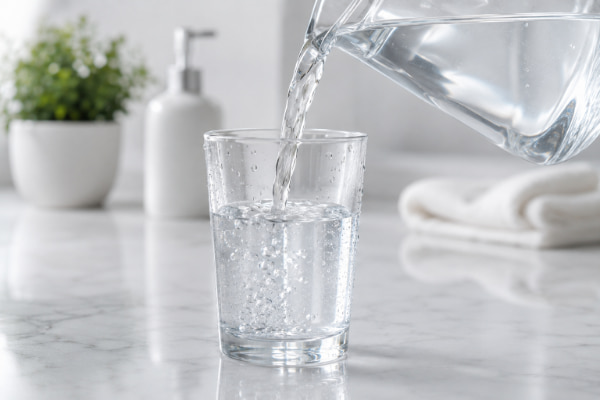
Why does dehydration cause heartburn symptoms?
Because your whole digestive tract runs on water. Take it away and three things break down at once.
Less saliva, weaker acid control. Saliva is mostly water plus bicarbonate. Dry out, and you produce less of it. Your mouth and throat lose their cheapest line of defense against acid.
Thinner protective mucus. Your stomach and esophagus are coated in a mucus layer that keeps acid off the actual tissue. That layer needs water to stay thick and effective. Skimp on fluids and it thins out, leaving sensitive tissue exposed to irritation.
Slower digestion. When you’re dehydrated, your stomach empties more slowly. Food and acid hang around longer, building pressure under that LES valve. The longer things sit, the more chances acid has to push back up. Delayed stomach emptying is a known driver of reflux, and dehydration feeds right into it.
Notice none of these are the cause of GERD. They’re amplifiers. If you have a weak LES, a hiatal hernia, or another foregut problem, dehydration just makes a bad situation louder. People dealing with a hiatal hernia often find their symptoms swing hard with hydration, diet, and meal timing, which is exactly why water alone never fixes the root issue.
Does drinking water help heartburn?
Yes, but with a catch most people never hear about.
Sipping water during a flare can wash acid down and briefly dilute what’s in your stomach, easing the burn. Over weeks, staying properly hydrated supports saliva and mucus production, so symptoms show up less often. That part is true.
Now the catch. Chugging a big glass of water, especially with a meal, can backfire. Here’s why: filling your stomach with a large volume of liquid stretches it out. That stretching, called gastric distention, increases pressure and triggers the LES to relax more often. Gastroenterologists at Vanderbilt and Ohio State have both pointed out that water isn’t acidic, but the way it stretches the stomach can drive reflux in people prone to it. So the move isn’t “drink more water faster.” It’s sip steadily throughout the day and go easy during meals.
Actually, let me correct a framing you’ll see everywhere. A lot of sites tell you to add salt, sugar, and lemon to your water so your body “holds onto it.” For an athlete sweating buckets, electrolytes make sense. For the average person with reflux, dumping acidic lemon juice into your water is a strange call when acid is the whole problem. Skip it. Plain water, sipped slowly, does the job.
How much water do you actually need?
For most healthy adults, the National Academies of Sciences, Engineering, and Medicine puts total daily water at about 125 ounces (roughly 15.5 cups) for men and 91 ounces (about 11.5 cups) for women. You can see the official intake recommendations laid out by the National Academies.
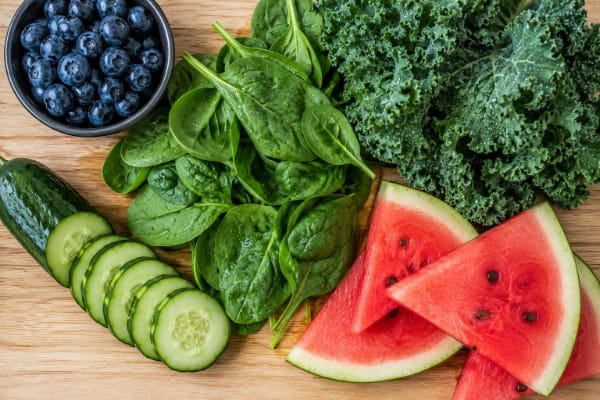
But read that number carefully, because here’s what trips people up. That’s total water, and about 20% of it comes from food, not your glass. Cucumber, watermelon, leafy greens, soups, and most fruits are loaded with water. So nobody needs to white-knuckle their way through 15 glasses a day.
| Group | Total daily water target | From beverages (roughly) |
| Adult men | ~125 oz (15.5 cups) | ~13 cups |
| Adult women | ~91 oz (11.5 cups) | ~9 cups |
| Very active or hot climate | Higher | Add as needed |
| Older adults | Same target, weaker thirst signal | Monitor closely |
Your needs climb if you fit any of these:
- Body size and activity. Bigger and more active bodies lose more water and need more back.
- Climate. Hot, dry air pulls fluid out of you faster.
- Diet. High-salt or high-protein eating demands more water to process.
- Illness. Fever, vomiting, or diarrhea spike your needs fast.
The simplest gauge is your urine. Pale yellow means you’re good. Dark yellow means drink more. And don’t slam it all at once. Sip across the day so your kidneys actually use it instead of flushing it straight through.
The dehydration stat nobody bothers to check
You’ve probably read that “75% of Americans are chronically dehydrated.” It gets repeated on wellness blogs constantly. I used to see it cited in patient materials too.
It’s not backed by solid science. The medical reference StatPearls states plainly that despite how often that 75% figure gets thrown around, no scientific evidence in the literature supports it. The number that actually holds up: dehydration is common in older adults, with prevalence estimates around 17% to 28%. That’s a real public health concern, but it’s a far cry from three-quarters of the country.
Why does this matter for your heartburn? Because chasing a made-up hydration crisis distracts from the real question. If your reflux is frequent, the issue usually isn’t that you’re parched. It’s a mechanical problem with how your stomach and esophagus are working.
And while we’re correcting myths: coffee. The old line is that coffee dehydrates you because caffeine is a diuretic. For regular coffee drinkers, that effect is mild enough that it doesn’t meaningfully dent your hydration, as the Cleveland Clinic and multiple studies have shown. Coffee’s real problem for reflux is different. It relaxes the LES, which is a separate mechanism from dehydration entirely. So your morning cup might be triggering reflux, just not for the reason you were told.

When hydration isn’t the answer
If you’re well hydrated and still battling heartburn several times a week, water was never going to fix it. Reflux that frequent points to something structural.
GERD affects a lot of people. The NIDDK reports that around 20% of the U.S. population has reflux symptoms at least weekly, and newer clinical guidelines put the figure between 18% and 28% of adults. For a big chunk of those people, the cause is a weak valve, a hiatal hernia, or a motility problem in the esophagus, none of which responds to drinking more water.
This is also where reflux gets missed. Some people don’t get classic heartburn at all. They get a chronic cough, a hoarse voice, or a lump-in-the-throat feeling. That’s silent reflux, or LPR, and it fools both patients and doctors regularly. If that sounds like you, hydration tweaks won’t touch it.
Here’s my contrarian take, and I’ll stand behind it: the standard advice to take an acid-suppressing pill forever and call it a day fails a lot of people. Research shows that 30% to 55% of patients still have symptoms despite proper medication. That’s a huge group being told to keep doing something that isn’t working. When pills stop cutting it, the answer usually isn’t a stronger pill. It’s finding out mechanically what’s broken.
What to actually do about persistent heartburn
Stay hydrated. Sip water through the day, ease off during meals, and eat water-rich foods. That’s the smart baseline, and it genuinely helps reflux feel less aggressive.
But don’t mistake hydration for a cure. If heartburn is a regular part of your week, the smart move is finding the root cause, not stacking more home remedies on top of a mechanical problem.
At Tampa Bay Reflux Institute, we use objective testing like pH monitoring and esophageal manometry to see what your reflux is really doing, instead of guessing. Dr. Gopal Grandhige is a board-certified surgeon who focuses on exactly these foregut problems, and the goal is simple: help you eliminate reflux and GERD, not manage it forever. If dehydration is part of your heartburn picture, great, that’s an easy fix. But if it’s not, you deserve to know what is. Many people put off getting their reflux properly evaluated for years, and that delay can let things quietly get worse. Can dehydration cause heartburn? It can make it worse. Finding out what’s actually driving yours is how you make it stop.
FAQs
Can dehydration cause heartburn or just make it worse?
Dehydration makes heartburn worse rather than causing it outright. It reduces saliva and protective stomach mucus and slows digestion, all of which let acid irritate your esophagus more easily. The real cause of heartburn is a weak or relaxed lower esophageal sphincter, not low fluid levels.
Does drinking water stop heartburn fast?
Sipping water during a flare can bring quick, partial relief by washing acid down and briefly diluting stomach contents. It usually won’t fully stop an episode. Avoid gulping large amounts, since filling the stomach can stretch it and actually trigger more reflux.
How much water should I drink if I have acid reflux?
The National Academies recommends about 125 ounces of total water daily for men and 91 ounces for women, with roughly 20% coming from food. For reflux specifically, how you drink matters more than the total. Sip steadily through the day and go light on fluids during meals.
Is it true that 75% of people are chronically dehydrated?
No. The medical reference StatPearls states there’s no scientific evidence supporting the widely repeated 75% claim. Verified data shows dehydration is most common in older adults, affecting roughly 17% to 28% of them, not the general population.
Does coffee cause dehydration and heartburn?
For regular drinkers, coffee’s diuretic effect is mild and doesn’t meaningfully dehydrate you, according to the Cleveland Clinic and several studies. Coffee can still trigger reflux, but through a different route: it relaxes the lower esophageal sphincter, letting acid escape upward.
When should I see a doctor about heartburn instead of just drinking more water?
If you have heartburn more than once or twice a week despite lifestyle changes, it’s time to get evaluated. Around 20% of US adults have weekly reflux symptoms, and frequent cases often come from a weak valve or hiatal hernia that water can’t fix. Objective testing can identify the real cause.
Can dehydration cause silent reflux or LPR?
Dehydration can worsen silent reflux symptoms like a chronic cough, hoarseness, or throat clearing by thinning the protective mucus in your throat. It isn’t the underlying cause, though. LPR stems from acid and pepsin reaching the upper airway, which needs targeted evaluation rather than hydration alone.


An endoscopy cannot tell you if you have reflux. It can only tell you if you have complications of GERD.
If you are unhappy with your reflux symptoms, come in and we can discuss testing and treatments that can accurately diagnose your problem.
#reflux #gerd #hiatalhernia #gastroparesis #linx

CALL US AT 813-922-2920
www.tampareflux.com
If you have a hiatal hernia and fit one of these categories, you should know your options.
Dr. Grandhige is an expert in his field and performs 200 of these surgeries a year. He is the only surgeon in the Tampa Bay Area who offers all surgical options - LINX, Fundoplications, TIF and will be one of 20 surgeons in America introducing the latest procedure RefluxStop in 2026.
We accept most insurances but will verify yours before you come in. These procedures are considered medically necessary and covered by your insurance. You can expect to pay your in-network deductibles and nothing else.
#hiatalhernia #reflux #GERD #LINX #refluxstop
What causes reflux ?
1. Weak lower esophageal sphincter
2. Hiatal hernia
3. Flattening of the Angle of His
4. Poor esophageal motility
5. Gastroparesis (slow stomach)
NOT increased acid production
Don’t let GERD get in the way of living your life. Request your appointment with us today on the link below.
.
.
.
.
https://tampareflux.com/contact-us/
Anyone can be victim to GERD and though weight loss can help reduce GERD symptoms. Many athletes with high impact workouts may continue to have these symptoms. This may be a symptom of a hiatal hernia or other issue. We are more then happy to assist you in finding your solution, just click the link below.
.
.
.
https://tampareflux.com/contact-us/
##healthylifestyle #workout #athletereflux #PPIs #heartburn #LINX #fundoplication #TIF #GERD#tampaheartburn #linx #TIF #fundoplication #tampabayreflux #GERD #acidreflux #acidrefluxsurgery #stopreflux
#nonsurgicalweightloss #ESG #gastricballoon #weightlossjourney #vsg #vsgjourney #spatz3 #orbera #orberaballoon #grandhige #DrG
#tampabayrefluxinstitute #guthealth #roboticsurgery
Heartburn may seem like an annoyance. But if you find yourself having symptoms on a daily basis, it may be time to to talk to Dr. Grandhige as it could be a symptom of something worse.
.
.
.
#chronicheartburn #gerdsymptoms #heartburnrelief #reflux #PPIs #heartburn #LINX #fundoplication #TIF #GERD#tampaheartburn #linx #TIF #fundoplication #tampabayreflux #GERD #acidreflux #acidrefluxsurgery #stopreflux
#nonsurgicalweightloss #ESG #gastricballoon #weightlossjourney #vsg #vsgjourney #spatz3 #orbera #orberaballoon #grandhige #DrG
#tampabayrefluxinstitute #guthealth #roboticsurgery
If you are tired of avoiding your favorite foods or taking daily medications, we can help.
We are the Tampa experts in reflux ! With years of experience and thousands of patients treated successfully, we offer all FDA approved anti-reflux procedures.
Call 813-922-2920 to schedule your appointment
All major insurances accepted.
Not all patients need surgical intervention. Many patients are living a heartburn free life with their PPIs. However 40% of patients taking PPIs are not getting the relief they need. If you are one of those, you have options! Come in and find out more.
.
.
.
.
#letushelpyou #medsnotworking #reflux #PPIs #heartburn #LINX #fundoplication #TIF #GERD#tampaheartburn #linx #TIF #fundoplication #tampabayreflux #GERD #acidreflux #acidrefluxsurgery #stopreflux
#nonsurgicalweightloss #ESG #gastricballoon #weightlossjourney #vsg #vsgjourney #spatz3 #orbera #orberaballoon #grandhige #DrG
#tampabayrefluxinstitute #guthealth #roboticsurgery
#heartburn #stopreflux #hiatalherniarepair #severeheartburn #reflux #tampabayreflux #acidrefluxsurgery #tampaheartburn #GERD #PPIs #achalasia #LINX #TIF #tampareflux #fundoplication #stomach #digestivehealth #ESG #obesity #overweight #weightlossjourney #gastricballoon


