

Written By: Jeffrey Atlas, Health Content Writer
Medically Reviewed By: Dr. Gopal Grandhige, MD, FACS, Board-Certified Surgeon
Last Reviewed: April 28, 2026
A hiatal hernia occurs when part of your stomach pushes upward through the hiatus, an opening in your diaphragm, causing symptoms like chronic heartburn, acid reflux, chest discomfort, and difficulty swallowing. Most cases can be managed at home through dietary changes, sleeping on your left side with your head elevated 6 to 8 inches, weight management, and avoiding meals within 2 to 3 hours of bedtime. When lifestyle adjustments aren’t enough, proton pump inhibitors (PPIs) provide effective relief for about 8 weeks, and surgery resolves symptoms in up to 90% of severe cases.
Hiatal hernias become more common with age, affecting roughly 9% of adults over 50. While minor hernias often cause no symptoms, larger ones can lead to persistent gastroesophageal reflux disease (GERD) and, in rare cases, dangerous gastrointestinal blockages that require surgical repair.
This guide covers every evidence-based treatment option, from watchful waiting and diet modifications to the best sleeping positions, medications, and surgical procedures, so you can find the right approach for your symptoms.
The Watchful Waiting Approach
Watchful waiting refers to a strategy where your doctor keeps an eye on the hernia without prescribing any active treatment.
Advantages
This approach pairs well with dietary or lifestyle modifications. It also lets you sidestep surgery and avoid medications that may produce unwanted side effects.
Drawbacks
Hernias left untreated can sometimes worsen over time or lead to ongoing issues like persistent heartburn.
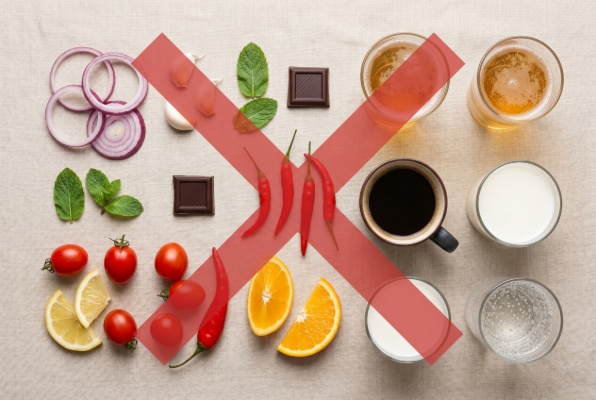
Dietary Recommendations for Hiatal Hernia
The hallmark symptom of a hiatal hernia is GERD. Adjusting what you eat can sometimes ease or reduce GERD-related discomfort.
Avoid the following foods and drinks may help calm your symptoms:
- onions and garlic
- foods high in sodium
- mint or peppermint
- chocolate
- spicy or fried dishes
- tomatoes
- citrus fruits
- alcoholic beverages
- coffee and other caffeinated drinks
- whole milk
- fizzy or carbonated drinks
Discover more about which foods to include in a hiatal hernia friendly diet.
Advantages
Adjusting your diet can help cut down on the chronic heartburn that often accompanies hiatal hernias. Studies suggest that lowering your intake of simple sugars, boosting your fiber consumption, and reshaping your overall eating habits may ease GERD symptoms.
Drawbacks
Modifying your diet to combat GERD carries minimal risk. That said, abruptly cutting out caffeine might trigger withdrawal symptoms.

Lifestyle and Home-Based Adjustments
GERD stemming from mild hernias can frequently be controlled through lifestyle changes. These modifications may include:
- shedding extra pounds if you’re carrying excess weight, possibly through non-surgical weight loss options
- propping up your head while you sleep
- skipping meals within 2 to 3 hours of bedtime
- cutting out foods that trigger symptoms
- opting for smaller portions
Advantages
Lifestyle tweaks alone may be enough to keep your symptoms in check, sparing you from medication or surgical intervention.
Drawbacks
Relying solely on lifestyle changes might not fully resolve your symptoms and could postpone needed medical care.
Best Sleeping Positions for Hiatal Hernia Relief
For many people with a hiatal hernia, nighttime is when symptoms become most disruptive. Lying flat eliminates gravity’s natural ability to keep stomach acid where it belongs, often leading to heartburn, coughing, and restless sleep. Fortunately, simple adjustments to how you sleep can make a significant difference. Sleeping on your left side is widely considered the best position because it positions the stomach below the esophagus, allowing acid to pool away from the lower esophageal sphincter. Research published in the American Journal of Gastroenterology has shown that left-side sleeping reduces esophageal acid exposure and speeds up acid clearance compared to sleeping on the right side, back, or stomach. In addition to side positioning, elevating the head of your bed by 6 to 8 inches, using a wedge pillow, bed risers, or an adjustable base, can further reduce reflux episodes throughout the night. On the other hand, right-side sleeping and stomach sleeping should be avoided, as both positions can increase abdominal pressure and encourage acid to flow back into the esophagus. People dealing with silent reflux (LPR) may find these same positional strategies particularly helpful for nighttime symptom control.
Advantages
Adjusting your sleeping position is a low-cost, drug-free strategy that can deliver noticeable relief from nighttime reflux and improve overall sleep quality. Left-side sleeping combined with head elevation works with gravity to keep stomach contents in place, which may reduce dependency on nighttime antacids and prevent damage to the esophagus from chronic acid exposure.
Drawbacks
While changing your sleep position carries minimal risk, it can take time to adjust, especially for lifelong stomach or right-side sleepers. Stacking too many pillows under your head instead of using a proper wedge can cause neck strain and may even worsen reflux by bending your torso. People with shoulder, hip, or back issues should consult a healthcare provider before committing to a single sleep position long-term.

Prescription Drug Options
The American College of Gastroenterology advises beginning treatment for GERD with an 8-week regimen of proton pump inhibitors (PPIs). They suggest using the smallest effective dose that delivers symptom relief.
Advantages
PPIs are typically effective at easing GERD symptoms tied to hiatal hernias. A variety of PPIs have demonstrated success in treating GERD, such as:
- omeprazole
- esomeprazole
- rabeprazole
- zegerid
- pantoprazole
Drawbacks
PPIs are generally well tolerated, and serious side effects are uncommon. Possible side effects include:
- skin rash
- dizziness
- headaches
- nausea
- stomach pain
- gas
- constipation
- diarrhea
Surgical Treatment for Hiatal Hernia
Hiatal hernias fall into two main categories: sliding hernias and paraesophageal hernias.
A sliding hernia forms when the upper portion of your stomach slides up through the diaphragm.
A paraesophageal hernia happens when your stomach shifts next to the esophagus, or when another organ pushes through the diaphragm.
Surgery is typically advised for:
- individuals with sliding hernias and GERD that doesn’t improve with conservative care
- individuals with paraesophageal hernias that produce symptoms
- severe hernias that block the GI tract
- all large or paraesophageal hernias in patients younger than 60
Read more about surgical options for hiatal hernias on our blog.
Advantages
For those with moderate to severe hernias, surgery can provide significant symptom relief. It can also be a life-saving procedure for people facing serious complications such as GI tract obstruction. Common procedures include fundoplication, the LINX reflux management system, and the TIF (EsophyX®) procedure, each tailored to specific patient anatomy and symptom severity.
Studies indicate that surgery may decrease symptoms by up to 90% over a 10-year period.
Drawbacks
Most complications associated with hiatal hernia surgery are minor and not always directly linked to the procedure itself. Possible complications include:
- a collapsed lung, occurring in fewer than 2% of cases
- damage to the stomach or esophagus, in roughly 1% of surgeries
- injury to the spleen or liver, in around 2.3% of cases, which is seldom serious
- difficulty swallowing
Patients with related conditions such as achalasia or gastroparesis should discuss how these conditions may affect surgical planning with their specialist.

Get Expert Hiatal Hernia Care at Tampa Bay Reflux Institute
If your hiatal hernia symptoms are interfering with your daily life or aren’t improving with diet, medication, or lifestyle changes, it may be time to consult a specialist. At Tampa Bay Reflux Institute, Dr. Gopal Grandhige is a nationally recognized expert in the diagnosis and surgical treatment of GERD, hiatal hernias, silent reflux (LPR), achalasia, and gastroparesis. With over a decade of focused experience and more than 600 fundoplications, 600 LINX procedures, and 200 TIF (EsophyX®) procedures performed, Dr. Grandhige is the only board-certified surgeon in the Tampa Bay area who regularly performs all three of these advanced anti-reflux procedures. Whether you’re exploring conservative treatment options or considering surgery for a more severe hiatal hernia, our team of top hiatal hernia doctors in Tampa develops individualized treatment plans tailored to your unique symptoms and anatomy. Don’t let chronic reflux or a hiatal hernia keep you from living comfortably.
Conclusion
Managing a hiatal hernia is highly achievable with the right approach. For most people, simple changes, adjusting your diet, sleeping on your left side with your head elevated, maintaining a healthy weight, and avoiding late-night meals, can significantly reduce symptoms. When these aren’t enough, proton pump inhibitors offer reliable relief, and surgery remains a proven solution for severe or complicated cases.
The most important step is not ignoring persistent symptoms. If chronic reflux or discomfort is affecting your daily life, consulting a specialist ensures you get a treatment plan tailored to your condition, so you can get back to living comfortably.
FAQs
Can a hiatal hernia heal on its own without treatment?
No, a hiatal hernia cannot heal on its own since it involves a structural change in the diaphragm. However, mild cases often remain symptom-free and can be managed indefinitely with lifestyle and dietary adjustments.
Is sleeping on the left side really better for hiatal hernia symptoms?
Yes, left-side sleeping positions the stomach below the esophagus, which helps prevent stomach acid from flowing upward. This simple adjustment can significantly reduce nighttime heartburn and improve sleep quality.
How long does it take for PPIs to relieve hiatal hernia symptoms?
Most people notice improvement within a few days, but full symptom relief typically takes 4 to 8 weeks of consistent use. Doctors generally recommend the lowest effective dose to minimize potential side effects.
When should I consider surgery for a hiatal hernia?
Surgery is usually recommended when GERD symptoms persist despite medication, when a paraesophageal hernia causes symptoms, or when the hernia risks blocking the GI tract. Patients under 60 with large hernias are also strong candidates for surgical repair.
What foods should I absolutely avoid with a hiatal hernia?
You should limit or avoid spicy foods, citrus fruits, tomatoes, chocolate, caffeine, alcohol, and carbonated beverages, as these commonly trigger reflux. Eating smaller, low-fat meals and avoiding food within 2 to 3 hours of bedtime also helps prevent symptom flare-ups.


An endoscopy cannot tell you if you have reflux. It can only tell you if you have complications of GERD.
If you are unhappy with your reflux symptoms, come in and we can discuss testing and treatments that can accurately diagnose your problem.
#reflux #gerd #hiatalhernia #gastroparesis #linx

CALL US AT 813-922-2920
www.tampareflux.com
If you have a hiatal hernia and fit one of these categories, you should know your options.
Dr. Grandhige is an expert in his field and performs 200 of these surgeries a year. He is the only surgeon in the Tampa Bay Area who offers all surgical options - LINX, Fundoplications, TIF and will be one of 20 surgeons in America introducing the latest procedure RefluxStop in 2026.
We accept most insurances but will verify yours before you come in. These procedures are considered medically necessary and covered by your insurance. You can expect to pay your in-network deductibles and nothing else.
#hiatalhernia #reflux #GERD #LINX #refluxstop
What causes reflux ?
1. Weak lower esophageal sphincter
2. Hiatal hernia
3. Flattening of the Angle of His
4. Poor esophageal motility
5. Gastroparesis (slow stomach)
NOT increased acid production
Don’t let GERD get in the way of living your life. Request your appointment with us today on the link below.
.
.
.
.
https://tampareflux.com/contact-us/
Anyone can be victim to GERD and though weight loss can help reduce GERD symptoms. Many athletes with high impact workouts may continue to have these symptoms. This may be a symptom of a hiatal hernia or other issue. We are more then happy to assist you in finding your solution, just click the link below.
.
.
.
https://tampareflux.com/contact-us/
##healthylifestyle #workout #athletereflux #PPIs #heartburn #LINX #fundoplication #TIF #GERD#tampaheartburn #linx #TIF #fundoplication #tampabayreflux #GERD #acidreflux #acidrefluxsurgery #stopreflux
#nonsurgicalweightloss #ESG #gastricballoon #weightlossjourney #vsg #vsgjourney #spatz3 #orbera #orberaballoon #grandhige #DrG
#tampabayrefluxinstitute #guthealth #roboticsurgery
Heartburn may seem like an annoyance. But if you find yourself having symptoms on a daily basis, it may be time to to talk to Dr. Grandhige as it could be a symptom of something worse.
.
.
.
#chronicheartburn #gerdsymptoms #heartburnrelief #reflux #PPIs #heartburn #LINX #fundoplication #TIF #GERD#tampaheartburn #linx #TIF #fundoplication #tampabayreflux #GERD #acidreflux #acidrefluxsurgery #stopreflux
#nonsurgicalweightloss #ESG #gastricballoon #weightlossjourney #vsg #vsgjourney #spatz3 #orbera #orberaballoon #grandhige #DrG
#tampabayrefluxinstitute #guthealth #roboticsurgery
If you are tired of avoiding your favorite foods or taking daily medications, we can help.
We are the Tampa experts in reflux ! With years of experience and thousands of patients treated successfully, we offer all FDA approved anti-reflux procedures.
Call 813-922-2920 to schedule your appointment
All major insurances accepted.
Not all patients need surgical intervention. Many patients are living a heartburn free life with their PPIs. However 40% of patients taking PPIs are not getting the relief they need. If you are one of those, you have options! Come in and find out more.
.
.
.
.
#letushelpyou #medsnotworking #reflux #PPIs #heartburn #LINX #fundoplication #TIF #GERD#tampaheartburn #linx #TIF #fundoplication #tampabayreflux #GERD #acidreflux #acidrefluxsurgery #stopreflux
#nonsurgicalweightloss #ESG #gastricballoon #weightlossjourney #vsg #vsgjourney #spatz3 #orbera #orberaballoon #grandhige #DrG
#tampabayrefluxinstitute #guthealth #roboticsurgery
#heartburn #stopreflux #hiatalherniarepair #severeheartburn #reflux #tampabayreflux #acidrefluxsurgery #tampaheartburn #GERD #PPIs #achalasia #LINX #TIF #tampareflux #fundoplication #stomach #digestivehealth #ESG #obesity #overweight #weightlossjourney #gastricballoon


