

Written By: Jeffrey Atlas, Health Content Writer
Medically Reviewed By: Dr. Gopal Grandhige, MD, FACS, Board-Certified Surgeon
Last Reviewed: April 16, 2026
A hiatal hernia is a condition where the upper part of the stomach pushes through the hiatus, an opening in the diaphragm, into the chest cavity. It’s usually caused by age-related muscle weakening, obesity, pregnancy, or pressure from coughing, straining, or heavy lifting. Common signs include heartburn, acid reflux, bloating, burping, difficulty swallowing, and chest discomfort, though small hernias often cause no symptoms at all.
Treatment ranges from dietary changes and medications like antacids or proton pump inhibitors to surgical repair (typically laparoscopic fundoplication) for severe or paraesophageal cases. Below, we break down the causes, warning signs, diagnosis, and treatment options in detail.
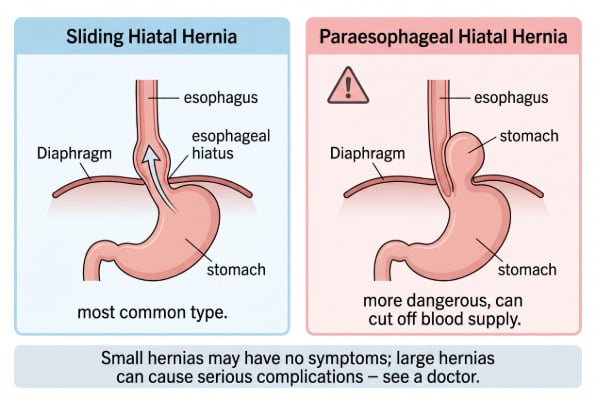
The Sliding Variety of Hiatal Hernia
This type ranks among the most frequently diagnosed forms of hiatal hernia. The condition develops when both the stomach and the lower portion of the esophagus glide upward into the chest cavity by passing through the diaphragm.
The Paraesophageal Form of Hiatal Hernia
This variety is considerably more hazardous than the sliding type and is sometimes referred to as a strangulated hernia. With this condition, a portion of the stomach forces its way through the hiatus and positions itself beside the esophagus. When the stomach is compressed in this manner, it can potentially be cut off from its blood supply.
These hernias can result in serious complications based on their dimensions; they may range from small to large. Minor hiatal hernias typically don’t trigger significant issues, and you likely won’t be aware of them until doctors identify them using medical imaging techniques.
Cases involving sizable hiatal hernias can pose a serious threat and require prompt treatment, since the condition has the potential to cause both food and stomach acid to flow backward into the esophagus. This could ultimately result in severe heartburn for the sufferer.
Should you continually experience any of these symptoms, scheduling a visit with your physician for a proper diagnosis is your best course of action. Self-medicating isn’t advisable, since it may offer brief relief but postponing proper treatment will only lead to additional complications. Continue reading to discover which symptoms you should be watching out for.
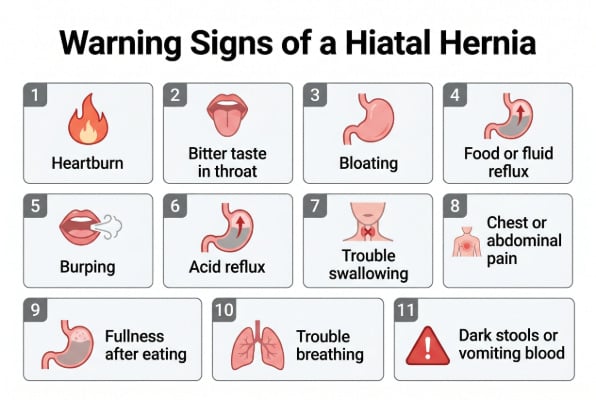
Warning Signs Associated with a Hiatal Hernia
Typically, a hiatal hernia doesn’t display any symptoms. However, when you’re dealing with a larger hernia, you may notice the following indicators and symptoms:
- Heartburn.
- Detecting a bitter or sour flavor within the back of the throat.
- Bloating.
- Food or fluids flowing back up into the mouth.
- Burping.
- Acid reflux, where stomach acids travel backward into the esophagus.
- Trouble swallowing.
- Uneasiness accompanied by chest or abdominal pain.
- Sensation of fullness immediately following a meal.
- Trouble breathing.
- Dark-colored stools or throwing up blood are indicators of gastrointestinal bleeding.
Should you or someone close to you develop any of the above symptoms, it’s time to schedule an appointment with your doctor.
What Triggers This Condition
Hiatal Hernias frequently occur in individuals aged 50 and above or those who are obese. Typically, they result from elevated pressure within the abdominal cavity.
Because of this abdominal pressure, your stomach protrudes upward through the diaphragm as a result of weakened muscular tissue. No definitive theory currently explains what causes hiatal hernias, but the following factors could potentially trigger them:
- Diaphragm alterations that come with aging.
- Trauma resulting from surgical procedures.
- An unusually large hiatus (which joins the stomach and esophagus) present from birth.
- When you cough, throw up, spit, strain during bowel movements, or hoist heavy objects, you apply consistent and powerful pressure on the nearby muscles.
- You may also develop a hiatal hernia while pregnant because of excess fluid in the abdomen.
How Is a Hiatal Hernia Identified?
Various examinations assist in identifying the existence of a hiatal hernia. The most widely used ones include the following:
- Barium Swallow with X-Ray Test: This examination is performed by having patients drink a special solution followed by an X-ray procedure, which allows your doctor to get a clearer view of your esophagus and stomach. It improves the visibility of irregularities such as ulcers and tumors. It can additionally gauge the size of the hiatal hernia and determine whether the hernia is triggering stomach twisting.
- Endoscopy: An endoscope is a lengthy, slender, bendable tool that is passed through the throat to examine the body’s internal organs using a camera mounted on it. An endoscopy may be performed to examine the upper digestive tract (esophagus and stomach) in order to diagnose the inflammation along with its dimensions.
- Esophageal Manometry: Much like endoscopy, esophageal manometry also utilizes a tube that gets inserted into the esophagus to measure the pressure. This examination assists in gauging the contractions of the esophageal muscle while you’re swallowing, which is especially important for conditions like achalasia.
- pH Test: Identifies symptoms of acid reflux and gauges the acid levels within the esophagus, which can also help detect silent reflux.
Gastric Emptying Studies: Monitor how quickly food exits the stomach. For patients dealing with nausea or vomiting, these findings carry particular significance. Factors beyond a hiatal hernia, such as gastroparesis, might also be behind nausea and vomiting.

Ways to Treat a Hiatal Hernia
Since the indicators and symptoms of a hiatal hernia can be relatively unclear, numerous patients don’t realize they’re dealing with one until they experience intense pain or heartburn.
Based on the level of severity, this condition can be addressed through these three approaches:
- Diet
- Medications
- Surgery
Dietary Approach
The objective here is to consume foods that won’t worsen the condition. Check out the dos and don’ts below for a clearer picture.
Dos
- Plentiful quantities of water.
- Load your plate with foods high in fiber such as green beans, peas, carrots, broccoli, grains, rice, pasta, and crackers.
- You may enjoy cereals including bran and oatmeal.
- Reduced-fat milk and yogurt.
- Lean cuts of meat, fish, and chicken.
- Fat-free and creamy cheeses.
- You can indulge in sweet treats that aren’t packed with sugar, however chocolates are completely off-limits.
- Weight control, shed any excess pounds. Consider consulting about incisionless weight loss procedures or head to your gym to complete your weekly cardio routine (following your physician’s guidance).
Don’ts
- Stay away from eating spicy dishes, chocolates, caffeine, and citrus fruits (given their acidic nature). Additionally, steer clear of dishes prepared with onions and tomatoes, particularly tomato sauce.
- It’s essential to stop smoking and eliminate alcohol consumption.
- You should never recline immediately after a meal.
- Attempt to reduce your portion sizes.
- We suggest staying away from fried or fast foods, peppermint, fizzy drinks, mustard, and vinegar.
- Schedule your meals 3-4 hours prior to bedtime and refrain from snacking in bed.
- Steer clear of wearing tight belts or bottoms that might elevate abdominal pressure.
Pharmaceutical Options
A hiatal hernia is commonly linked with heartburn and acid reflux/GERD symptoms. In the majority of instances, the physician would suggest that you obtain the following medications:
- Antacids: These pharmaceutical products counteract the acid found in the stomach. Taking antacids can offer swift relief. Make sure to use them within permitted amounts since consuming them excessively could result in unwanted side effects like diarrhea, nausea, and kidney issues.
- H-2 receptor blockers: These are medications that reduce acid generation within the stomach.
- Proton Pump Inhibitors: These suppress acid secretion and repair the esophagus. They’re significantly more effective compared to H-2 receptor blockers and deliver relief over longer periods, thereby enabling the damaged esophageal tissues to heal.
Surgical Intervention
Paraesophageal or sizable hiatal hernias call for surgical intervention. Doctors opt for surgery as a treatment route only given the following circumstances:
- Non-responsiveness to Medications (Antacids, H-2 blockers, and Proton Pump Inhibitors).
- Significant Inflammation.
- Constriction of the esophagus (which might result in obstruction of blood flow).
- Severe and persistent esophageal reflux.
When esophageal reflux goes untreated, it may result in complications such as inflammation (esophagitis), esophageal ulcers, scar tissue formation, and bleeding.
The objective of the surgical treatment is to:
- Return the hiatal hernia back into the abdominal cavity.
- Strengthen the lower valve of the esophagus.
- Seal the gap in the diaphragm muscle.
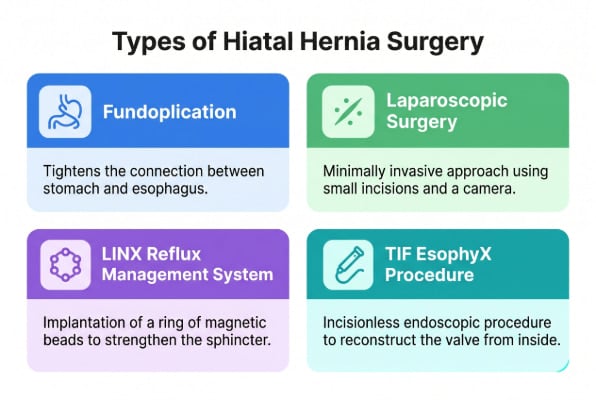
Types of Surgical Operations for Addressing Hiatal Hernia
In general, two kinds of surgical operations are carried out. They are:
- Fundoplication
- Laparoscopic Surgery
Other minimally invasive options such as the LINX Reflux Management System and the TIF EsophyX procedure may also be considered depending on the patient’s condition.
The Fundoplication Procedure
This operation entails wrapping the fundus (top portion of the stomach) around the lower section of the esophagus. The procedure forms a permanently tight valve (sphincter); as a result, stomach contents are unable to travel back up into the esophagus (reflux).
Fundoplication surgery typically calls for a sizable incision across the chest. These types of procedures might be necessary in certain very serious situations, enabling the surgery to be conducted with better visibility. Additionally, these operations demand a lengthier recovery timeline.
The Laparoscopic Technique
The majority of doctors favor this minimally invasive technique since it only necessitates a small incision. It additionally carries low infection risks, entails less pain, and only requires a brief hospital recovery stay.
Throughout a laparoscopic operation, the surgeon makes 5 to 6 tiny incisions on the abdomen. The laparoscope (a tool that displays the internal organs as a video feed) along with other surgical instruments are fed through these small incisions.
Using additional surgical tools, the surgeon wraps the fundus around the esophagus, and the sphincter gets tightened. For more information on this and similar procedures, visit our blog.
Conclusion
A hiatal hernia can range from a minor, symptomless condition to a serious medical concern that requires immediate attention. While the sliding type is more common and often manageable, the paraesophageal form can lead to dangerous complications if left untreated. Recognizing the warning signs early, such as persistent heartburn, acid reflux, difficulty swallowing, or chest discomfort, is key to getting the right diagnosis and care.
The good news is that most hiatal hernias respond well to a combination of lifestyle changes, dietary adjustments, and medication. Maintaining a healthy weight, avoiding trigger foods, eating smaller meals, and steering clear of smoking and alcohol can significantly reduce symptoms. For more severe cases, surgical options like fundoplication and laparoscopic procedures offer effective long-term relief. If you suspect you may have a hiatal hernia, consult your physician rather than relying on self-medication, as proper diagnosis and timely treatment are essential to preventing further complications and protecting your overall digestive health.
FAQs
Can a hiatal hernia heal on its own without treatment?
No, a hiatal hernia cannot heal on its own, but small ones often cause no symptoms and may not require treatment. Lifestyle changes and medications can effectively manage symptoms in most cases.
Is a hiatal hernia a life-threatening condition?
Most hiatal hernias are not life-threatening, especially the sliding type. However, large paraesophageal hernias can become dangerous if the stomach’s blood supply gets cut off and may require emergency surgery.
What foods should I completely avoid if I have a hiatal hernia?
You should avoid spicy foods, chocolate, caffeine, citrus fruits, tomatoes, onions, fried foods, and carbonated drinks. Alcohol and peppermint should also be eliminated since they can worsen acid reflux symptoms.
Can exercise make a hiatal hernia worse?
Heavy lifting and intense abdominal strain can worsen a hiatal hernia by increasing pressure in the abdomen. However, moderate cardio and weight-management exercises are beneficial when done under your doctor’s guidance.
How long does recovery take after hiatal hernia surgery?
Recovery from laparoscopic surgery is typically quicker, with most patients returning to normal activities within 2 to 3 weeks. Traditional open fundoplication surgery requires a longer recovery period of 4 to 6 weeks or more.


An endoscopy cannot tell you if you have reflux. It can only tell you if you have complications of GERD.
If you are unhappy with your reflux symptoms, come in and we can discuss testing and treatments that can accurately diagnose your problem.
#reflux #gerd #hiatalhernia #gastroparesis #linx

CALL US AT 813-922-2920
www.tampareflux.com
If you have a hiatal hernia and fit one of these categories, you should know your options.
Dr. Grandhige is an expert in his field and performs 200 of these surgeries a year. He is the only surgeon in the Tampa Bay Area who offers all surgical options - LINX, Fundoplications, TIF and will be one of 20 surgeons in America introducing the latest procedure RefluxStop in 2026.
We accept most insurances but will verify yours before you come in. These procedures are considered medically necessary and covered by your insurance. You can expect to pay your in-network deductibles and nothing else.
#hiatalhernia #reflux #GERD #LINX #refluxstop
What causes reflux ?
1. Weak lower esophageal sphincter
2. Hiatal hernia
3. Flattening of the Angle of His
4. Poor esophageal motility
5. Gastroparesis (slow stomach)
NOT increased acid production
Don’t let GERD get in the way of living your life. Request your appointment with us today on the link below.
.
.
.
.
https://tampareflux.com/contact-us/
Anyone can be victim to GERD and though weight loss can help reduce GERD symptoms. Many athletes with high impact workouts may continue to have these symptoms. This may be a symptom of a hiatal hernia or other issue. We are more then happy to assist you in finding your solution, just click the link below.
.
.
.
https://tampareflux.com/contact-us/
##healthylifestyle #workout #athletereflux #PPIs #heartburn #LINX #fundoplication #TIF #GERD#tampaheartburn #linx #TIF #fundoplication #tampabayreflux #GERD #acidreflux #acidrefluxsurgery #stopreflux
#nonsurgicalweightloss #ESG #gastricballoon #weightlossjourney #vsg #vsgjourney #spatz3 #orbera #orberaballoon #grandhige #DrG
#tampabayrefluxinstitute #guthealth #roboticsurgery
Heartburn may seem like an annoyance. But if you find yourself having symptoms on a daily basis, it may be time to to talk to Dr. Grandhige as it could be a symptom of something worse.
.
.
.
#chronicheartburn #gerdsymptoms #heartburnrelief #reflux #PPIs #heartburn #LINX #fundoplication #TIF #GERD#tampaheartburn #linx #TIF #fundoplication #tampabayreflux #GERD #acidreflux #acidrefluxsurgery #stopreflux
#nonsurgicalweightloss #ESG #gastricballoon #weightlossjourney #vsg #vsgjourney #spatz3 #orbera #orberaballoon #grandhige #DrG
#tampabayrefluxinstitute #guthealth #roboticsurgery
If you are tired of avoiding your favorite foods or taking daily medications, we can help.
We are the Tampa experts in reflux ! With years of experience and thousands of patients treated successfully, we offer all FDA approved anti-reflux procedures.
Call 813-922-2920 to schedule your appointment
All major insurances accepted.
Not all patients need surgical intervention. Many patients are living a heartburn free life with their PPIs. However 40% of patients taking PPIs are not getting the relief they need. If you are one of those, you have options! Come in and find out more.
.
.
.
.
#letushelpyou #medsnotworking #reflux #PPIs #heartburn #LINX #fundoplication #TIF #GERD#tampaheartburn #linx #TIF #fundoplication #tampabayreflux #GERD #acidreflux #acidrefluxsurgery #stopreflux
#nonsurgicalweightloss #ESG #gastricballoon #weightlossjourney #vsg #vsgjourney #spatz3 #orbera #orberaballoon #grandhige #DrG
#tampabayrefluxinstitute #guthealth #roboticsurgery
#heartburn #stopreflux #hiatalherniarepair #severeheartburn #reflux #tampabayreflux #acidrefluxsurgery #tampaheartburn #GERD #PPIs #achalasia #LINX #TIF #tampareflux #fundoplication #stomach #digestivehealth #ESG #obesity #overweight #weightlossjourney #gastricballoon


