

Written By: Jeffrey Atlas, Health Content Writer
Medically Reviewed By: Dr. Gopal Grandhige, MD, FACS, Board-Certified Surgeon
Last Reviewed: April 15, 2026
Yes, GERD can lead to anemia. Chronic acid reflux can cause anemia in three main ways:
- Bleeding from esophageal ulcers and erosions
- Reduced iron absorption due to low stomach acid
- Long-term use of proton pump inhibitors (PPIs), linked to higher iron deficiency risk in a 2018 study of 26,000+ participants
Gastroesophageal reflux disease (GERD) is a condition in which stomach acid flows backward into the esophagus. When left untreated, it can damage the esophageal lining, trigger slow blood loss, and impair iron absorption, eventually leading to iron deficiency anemia. Warning signs include fatigue, pale skin, dizziness, and shortness of breath alongside typical reflux symptoms.
Does GERD Lead to Anemia?
GERD may contribute to anemia by interfering with your body’s capacity to absorb iron properly. As stomach acid moves up into the esophagus, it has the potential to harm the lining, producing ulcers or erosions.
These wounds may trigger long-term blood loss and, along with reduced iron absorption, can ultimately cause iron deficiency anemia.
Ulcers and Esophagitis
Untreated or severe GERD may result in persistent esophageal inflammation (esophagitis) along with ulcers. Occasionally, these complications can cause gradual, ongoing bleeding, eventually producing iron deficiency anemia.
A 2022 study involving 172 children diagnosed with GERD revealed that 23 of them were also anemic. These results point to a connection between chronic acid reflux and anemia in children, particularly in cases involving reflux esophagitis.
Nutrient Malabsorption
GERD may contribute to malabsorption issues by interrupting normal digestive function. When gastric acid flows backward into the esophagus, it can also make its way into the upper digestive tract, where it may disturb the digestion and absorption of nutrients, iron included.
This diminished iron availability impacts the body’s capacity to generate sufficient healthy red blood cells, which can ultimately cause anemia. Patients with related conditions such as gastroparesis may experience even more pronounced absorption challenges.
Insufficient Stomach Acid
Gastric acid serves a crucial function in pulling iron from the foods we eat. It works to transform dietary iron into a form the body can easily absorb.
When stomach acid production is insufficient, the effectiveness of iron absorption may suffer. This could result in lower iron uptake from meals, which over time may lead to depleted iron stores. Learning more about heartburn and acid reflux can help you understand how acid levels impact digestion.
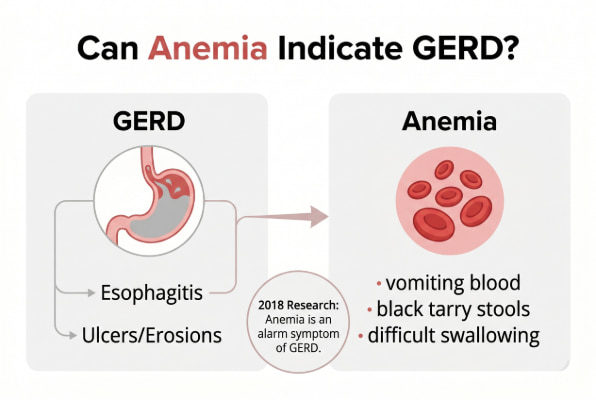
Can Anemia Indicate GERD?
Anemia by itself isn’t a direct indicator of GERD. However, it can develop as a result of GERD-related complications, including ongoing blood loss from ulcers or erosions within the esophagus.
Esophagitis, which is a significant GERD complication, may result in bleeding within the gastrointestinal tract. This can produce anemia, along with signs such as throwing up blood or dark substances and passing stools that are black and tarry. Related structural issues like hiatal hernias can further increase the risk of esophageal bleeding and reflux complications.
According to 2018 research, anemia is regarded as one of the “alarm symptoms” associated with GERD. Alarm symptoms refer to a collection of warning signs that indicate the need for immediate assessment by a healthcare provider, including painful or difficult swallowing.
Signs of GERD
GERD symptoms can differ between individuals but frequently include:
- heartburn
- a bitter or sour taste in the mouth
- trouble swallowing or sensations of food lodging in the throat
- painful swallowing
- chest discomfort
- persistent cough
- voice alterations or hoarseness
- shortness of breath and wheezing
- laryngitis
- dental issues
If you experience voice changes or chronic cough without typical heartburn, you may be dealing with silent reflux (LPR), a lesser-known variant of GERD. Other conditions like achalasia can produce similar swallowing difficulties and should be ruled out through proper testing.
Signs of Anemia
Common indicators of anemia include:
- weakness and fatigue
- pale complexion
- shortness of breath
- irregular or rapid heartbeat
- lightheadedness or dizziness
- headaches
- cold extremities
- chest discomfort
- brittle hair and nails
- strange cravings (pica)
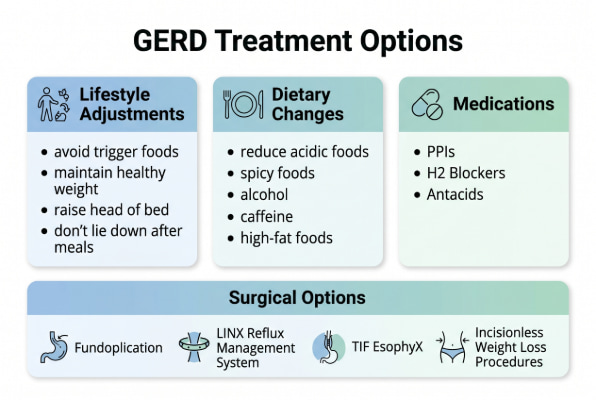
GERD Treatment Options
Managing GERD generally involves medications, dietary adjustments, and lifestyle changes.
Lifestyle adjustments may include:
- steering clear of trigger foods
- keeping a healthy weight for your body type
- raising the head of your bed while sleeping
- refraining from lying down following meals
Dietary changes may involve cutting back on acidic and spicy foods, alcohol, caffeine, and high-fat foods. For more guidance, review these foods that help with acid reflux to build a reflux-friendly meal plan.
Medications frequently prescribed for GERD work to reduce acid production and ease symptoms:
- PPIs
- H2 blockers
- antacids
For patients who don’t respond well to medication, surgical options such as fundoplication procedures, the LINX Reflux Management System, or TIF using EsophyX may provide lasting relief. Some patients with obesity-related reflux may also benefit from incisionless weight loss procedures that address the underlying cause.
Treating Anemia
When anemia is identified and linked to iron deficiency, iron supplementation may be advised. Your healthcare professional will determine the appropriate type and dosage of iron supplements based on your iron levels and personal needs.
Iron supplementation comes in various forms, including intravenous infusions or oral tablets, depending on how severe the anemia is and your body’s capacity to absorb iron through the digestive tract.
Additional treatment approaches for anemia may involve:
- eating more iron-rich foods such as poultry, red meat, fish, spinach, beans, and fortified cereals
- vitamin B12 supplementation
- blood transfusions (in severe instances)
You can also consult MedlinePlus heartburn resources for additional information on managing reflux symptoms that may contribute to anemia.
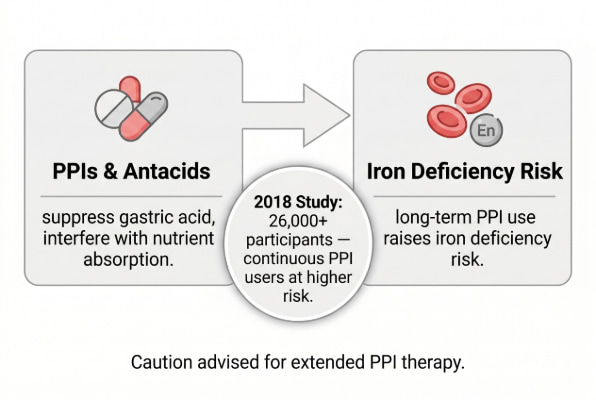
Can GERD Medications Cause Anemia?
The use of PPIs and antacids to suppress gastric acid can interfere with digestion and impact nutrient absorption.
In a 2018 study that included over 26,000 participants, investigators discovered that long-term PPI usage raised the likelihood of iron deficiency. The risk was greater for continuous PPI users compared with non-users and those who used them intermittently. Resources like WebMD’s heartburn basics and Cedars-Sinai’s GERD overview offer additional context on how acid-suppressing medications function.
These results underscore the importance of exercising caution when prescribing extended PPI therapy because of the possible risk of iron deficiency developing.
Can Iron Worsen GERD?
Iron supplements have the potential to worsen GERD symptoms in certain individuals.
Iron can irritate the gastrointestinal tract, and some forms of iron supplements, like ferrous sulfate, may produce gastrointestinal side effects including acid reflux, stomach pain, and heartburn. Reviewing UCLA Health’s acid reflux information can help you understand how different medications and supplements interact with existing reflux.
Taking Control: Proactive Steps to Protect Your Digestive and Blood Health
Managing the connection between GERD and anemia starts with being proactive rather than reactive about your health. Chronic blood loss is one of the leading causes of anemia in gastroenterology patients, and conditions such as ulcers can lead to persistent blood loss, often in amounts too small to be immediately noticeable. This is why regular check-ups and open communication with your healthcare provider are essential, especially if you’ve been managing acid reflux for an extended period. Managing both GERD and anemia often requires a comprehensive approach that includes lifestyle modifications, dietary changes, and proper medical supervision, and working with experienced specialists to find the right balance of treatments is essential for optimal outcomes. Simple changes like incorporating iron-rich foods into your diet, staying hydrated, avoiding known GERD triggers, and scheduling periodic blood work can make a significant difference in your long-term well-being. For those with co-occurring structural issues, treatments for abdominal hernia and heartburn may offer additional relief. Reduced oxygen supply to the brain from untreated anemia can lead to cognitive impairment and increase the risk of dementia in the elderly, making early intervention even more critical. By partnering with a qualified medical professional who understands the interplay between digestive health and blood health, as outlined in Stanford Health Care’s GERD resources, you can develop a personalized strategy that addresses both conditions simultaneously, giving you the best chance at relief, recovery, and lasting vitality. Exploring the Tampa Bay Reflux Institute blog is another great way to stay informed.

Take the Next Step Toward Lasting Relief at Tampa Bay Reflux Institute
If you’re struggling with chronic acid reflux and concerned about complications like anemia, don’t wait for your symptoms to worsen. At Tampa Bay Reflux Institute, Dr. Gopal Grandhige has become a national expert in the diagnosis and surgical treatment of GERD and its atypical variants, including Laryngopharyngeal Reflux (LPR/Silent Reflux). With over a decade of experience and more than 600 fundoplications, 600 LINX procedures, and 200 TIF procedures performed, Dr. Grandhige is recognized among the best hiatal hernia doctors in Tampa FL and is the only board-certified surgeon in the Tampa Bay area who regularly performs all three of these cutting-edge, long-term anti-reflux procedures.
Whether you’re dealing with persistent heartburn, difficulty swallowing, or worried that long-term GERD may be affecting your overall health, including your iron levels and energy, our team is dedicated to providing individualized treatment strategies based on your unique symptoms and anatomy. Stop letting acid reflux control your life and contact us today to take the first step toward real, lasting relief.
Conclusion
The connection between GERD and anemia is an important one that shouldn’t be overlooked, especially for those managing chronic acid reflux. While GERD itself doesn’t directly cause anemia, its complications, such as esophageal ulcers, erosions, and impaired nutrient absorption, can gradually lead to iron deficiency and other forms of anemia over time. Additionally, long-term use of common GERD medications like proton pump inhibitors may further compromise iron absorption, creating a cycle that affects both digestive and blood health.
Recognizing the symptoms of both conditions early and seeking appropriate medical evaluation is key to preventing serious complications. A comprehensive approach that combines lifestyle modifications, dietary adjustments, proper medication management, and regular monitoring can make a significant difference in your overall well-being. If you’ve been living with persistent GERD symptoms or suspect that your acid reflux may be impacting your iron levels and energy, consulting with an experienced specialist is the best path forward. With the right guidance and personalized treatment plan, you can effectively manage both conditions and reclaim your quality of life.
FAQs
Can GERD directly cause anemia?
GERD doesn’t directly cause anemia, but its complications like esophageal ulcers and erosions can lead to chronic blood loss. This ongoing blood loss, combined with impaired iron absorption, can eventually result in iron deficiency anemia.
How do PPIs contribute to anemia?
Proton pump inhibitors reduce stomach acid production, which is essential for properly absorbing iron from food. Long-term PPI use has been linked to an increased risk of iron deficiency, particularly in continuous users.
What are the warning signs that GERD may be causing anemia?
Warning signs include unusual fatigue, pale skin, dizziness, and shortness of breath alongside your typical GERD symptoms. Vomiting blood or passing black, tarry stools are serious red flags that require immediate medical attention.
Can iron supplements make GERD symptoms worse?
Yes, iron supplements, especially ferrous sulfate, can irritate the gastrointestinal tract and trigger acid reflux, heartburn, and stomach pain. Speak with your doctor about alternative iron forms or delivery methods if you experience worsening symptoms.
Should I stop taking my GERD medication if I develop anemia?
No, never stop prescribed medications without consulting your healthcare provider first. Your doctor can evaluate your condition and adjust your treatment plan, which may include changing medications, adding iron supplementation, or exploring alternative therapies.


An endoscopy cannot tell you if you have reflux. It can only tell you if you have complications of GERD.
If you are unhappy with your reflux symptoms, come in and we can discuss testing and treatments that can accurately diagnose your problem.
#reflux #gerd #hiatalhernia #gastroparesis #linx

CALL US AT 813-922-2920
www.tampareflux.com
If you have a hiatal hernia and fit one of these categories, you should know your options.
Dr. Grandhige is an expert in his field and performs 200 of these surgeries a year. He is the only surgeon in the Tampa Bay Area who offers all surgical options - LINX, Fundoplications, TIF and will be one of 20 surgeons in America introducing the latest procedure RefluxStop in 2026.
We accept most insurances but will verify yours before you come in. These procedures are considered medically necessary and covered by your insurance. You can expect to pay your in-network deductibles and nothing else.
#hiatalhernia #reflux #GERD #LINX #refluxstop
What causes reflux ?
1. Weak lower esophageal sphincter
2. Hiatal hernia
3. Flattening of the Angle of His
4. Poor esophageal motility
5. Gastroparesis (slow stomach)
NOT increased acid production
Don’t let GERD get in the way of living your life. Request your appointment with us today on the link below.
.
.
.
.
https://tampareflux.com/contact-us/
Anyone can be victim to GERD and though weight loss can help reduce GERD symptoms. Many athletes with high impact workouts may continue to have these symptoms. This may be a symptom of a hiatal hernia or other issue. We are more then happy to assist you in finding your solution, just click the link below.
.
.
.
https://tampareflux.com/contact-us/
##healthylifestyle #workout #athletereflux #PPIs #heartburn #LINX #fundoplication #TIF #GERD#tampaheartburn #linx #TIF #fundoplication #tampabayreflux #GERD #acidreflux #acidrefluxsurgery #stopreflux
#nonsurgicalweightloss #ESG #gastricballoon #weightlossjourney #vsg #vsgjourney #spatz3 #orbera #orberaballoon #grandhige #DrG
#tampabayrefluxinstitute #guthealth #roboticsurgery
Heartburn may seem like an annoyance. But if you find yourself having symptoms on a daily basis, it may be time to to talk to Dr. Grandhige as it could be a symptom of something worse.
.
.
.
#chronicheartburn #gerdsymptoms #heartburnrelief #reflux #PPIs #heartburn #LINX #fundoplication #TIF #GERD#tampaheartburn #linx #TIF #fundoplication #tampabayreflux #GERD #acidreflux #acidrefluxsurgery #stopreflux
#nonsurgicalweightloss #ESG #gastricballoon #weightlossjourney #vsg #vsgjourney #spatz3 #orbera #orberaballoon #grandhige #DrG
#tampabayrefluxinstitute #guthealth #roboticsurgery
If you are tired of avoiding your favorite foods or taking daily medications, we can help.
We are the Tampa experts in reflux ! With years of experience and thousands of patients treated successfully, we offer all FDA approved anti-reflux procedures.
Call 813-922-2920 to schedule your appointment
All major insurances accepted.
Not all patients need surgical intervention. Many patients are living a heartburn free life with their PPIs. However 40% of patients taking PPIs are not getting the relief they need. If you are one of those, you have options! Come in and find out more.
.
.
.
.
#letushelpyou #medsnotworking #reflux #PPIs #heartburn #LINX #fundoplication #TIF #GERD#tampaheartburn #linx #TIF #fundoplication #tampabayreflux #GERD #acidreflux #acidrefluxsurgery #stopreflux
#nonsurgicalweightloss #ESG #gastricballoon #weightlossjourney #vsg #vsgjourney #spatz3 #orbera #orberaballoon #grandhige #DrG
#tampabayrefluxinstitute #guthealth #roboticsurgery
#heartburn #stopreflux #hiatalherniarepair #severeheartburn #reflux #tampabayreflux #acidrefluxsurgery #tampaheartburn #GERD #PPIs #achalasia #LINX #TIF #tampareflux #fundoplication #stomach #digestivehealth #ESG #obesity #overweight #weightlossjourney #gastricballoon


