
Written By: Jeffrey Atlas, Health Content Writer
Medically Reviewed By: Dr. Gopal Grandhige, MD, FACS, Board-Certified Surgeon
Last Reviewed: April 7, 2026
If you’ve been diagnosed with a hiatal hernia and love lifting, you’re probably wondering whether you need to hang up your gym shoes. The short answer: most people can continue to lift weights with a hiatal hernia, but how you lift matters more than whether you lift.
Since over 95% of hiatal hernias are the sliding type, weight training typically won’t cause damage to the hernia itself. The real issue is that lifting increases abdominal pressure, which can push stomach acid back into your esophagus and flare up reflux symptoms. With the right modifications, lighter loads, proper breathing, good form, and clearance from your doctor, you can likely keep training without making things worse.
So what exactly is a hiatal hernia, and why does any of this matter? Let’s break it down.
What Causes Them?
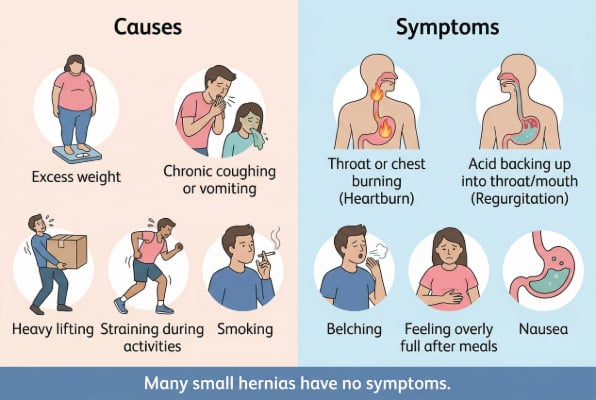
The exact cause of hiatal hernias remains unclear. Some individuals are simply more anatomically prone to developing one, and certain abdominal injuries can raise the risk. Carrying excess weight, especially around the midsection, creates added pressure in the abdominal cavity, increasing the likelihood of hernia formation. Episodes of coughing, vomiting, heavy lifting, or straining can also contribute. Smokers face elevated risks as well.
How can you tell if you have one? Many people with hiatal hernias experience gastroesophageal reflux disease (GERD) symptoms, including a burning sensation in the throat or chest, particularly when lying down or bending forward. Whether you have GERD with or without a hiatal hernia, the symptoms tend to overlap: acidic liquid backing up into your esophagus and mouth, chest burning, belching, feeling overly full, and occasional nausea. Plenty of small hiatal hernias produce minimal or no symptoms, so you could have one without ever realizing it.
Why Age Matters: Understanding Your Long-Term Risk
Research consistently shows that hiatal hernia prevalence climbs steadily as we age. One study found a significant linear association between increasing age and hiatal hernia prevalence, with rates rising from 14% in adults aged 18–39 to 42% in those over 80. A large-scale study following over 3,200 participants confirmed this trend, with hiatal hernia prevalence increasing from 2.4% in the sixth decade of life to 16.6% by the ninth decade. This age-related increase is attributed to the gradual loss of muscular flexibility and connective tissue elasticity around the diaphragm’s esophageal opening. A comprehensive meta-analysis further found that individuals over 50 have more than twice the odds of developing a hiatal hernia compared to younger adults. Understanding this natural progression underscores why proactive lifestyle management, including maintaining a healthy weight and exercising safely, becomes increasingly important as you get older.
The Connection Between Hiatal Hernias and Acid Reflux
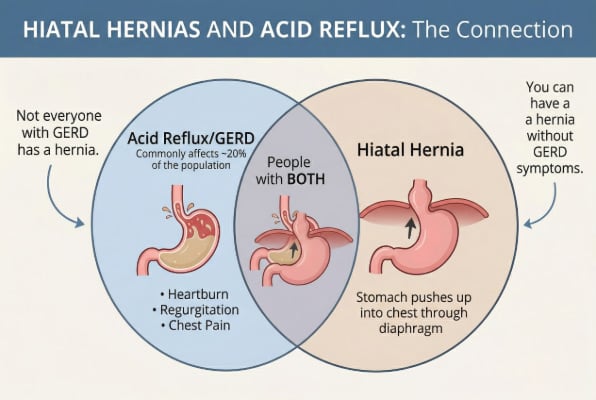
Approximately 20% of people deal with acid reflux or GERD, but not everyone with these conditions has a hiatal hernia. Conversely, you can have a hiatal hernia without experiencing any GERD symptoms. Some people only discover their hiatal hernia during an endoscopy performed for unrelated reasons.
But what happens when your doctor confirms you have a hiatal hernia? You’ll likely wonder whether weight training, especially with heavy loads, is safe, since lifting heavy increases abdominal pressure.
Weight Training with a Hiatal Hernia
Here’s some reassuring news: if you have a small sliding hiatal hernia, lifting weights likely won’t cause damage, though it may intensify your acid reflux symptoms. Weightlifting raises intraabdominal pressure, which can push stomach acid back into your esophagus and trigger familiar reflux symptoms: chest burning, sour taste, nausea, bloating, or regurgitation. That said, always consult your doctor before training with weights, particularly if your hernia is large or your reflux symptoms are significant.
As noted earlier, most hiatal hernias are the sliding variety. About 5% are para-esophageal hernias, where the stomach passes through the opening and doesn’t easily slide back down. This type poses greater risks because it can compromise blood flow to the stomach.
Before starting any weight training program with a hiatal hernia, have a conversation with your doctor. Based on your specific hernia type and symptom severity, they might suggest modifications, like avoiding lifts near your one-rep max that could cause straining. They may recommend lighter weights with higher repetitions instead. Exercises that significantly increase abdominal pressure, such as sit-ups, crunches, and leg raises, might also be off the table.
If your doctor approves continued weightlifting, prioritize perfect form and proper breathing. Holding your breath spikes abdominal pressure and can aggravate hernia symptoms. When lifting objects, bend at the knees rather than the waist.
Additional Strategies for Managing Hiatal Hernia Symptoms
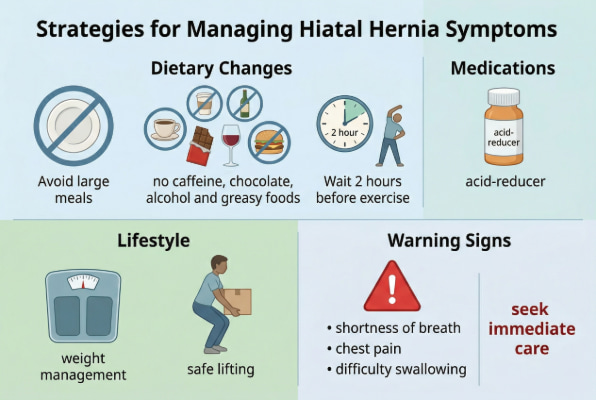
Steer clear of oversized meals, as they expand your stomach and increase abdominal pressure. This is especially crucial before exercising if you have a hiatal hernia. Allow at least two hours after eating before any physical activity. Certain foods and drinks can worsen symptoms, including caffeinated beverages, chocolate, acidic foods, alcohol, and greasy dishes.
For persistent reflux and heartburn, your doctor might prescribe acid-reducing medications. These can help prevent damage to your esophageal lining from prolonged acid exposure, damage that may elevate your risk of esophageal cancer. That’s why addressing chronic acid reflux matters. If severe or stubborn symptoms don’t respond to medication, surgical repair is an option, though fewer than 5% of people need it. Discuss all these possibilities with your healthcare provider.
Remember that lifestyle modifications, particularly weight management, can significantly reduce acid reflux severity associated with hiatal hernias. Since weight training supports weight management, get clear guidance from your doctor about appropriate lifting intensity. With a small sliding hiatal hernia, you’ll probably receive approval to continue lifting, as long as you avoid straining under excessive weight.
Finally, seek immediate medical attention if you experience shortness of breath, chest pain, or difficulty swallowing. Large hiatal hernias can allow enough stomach tissue to push through the diaphragm and compress your lungs, situations that may require surgical intervention.

Seeking Expert Care for Your Hiatal Hernia or Acid Reflux?
If you’re struggling with persistent GERD symptoms or have been diagnosed with a hiatal hernia, getting specialized care can make all the difference. Tampa Bay Reflux Institute, led by Dr. Grandhige, focuses exclusively on diagnosing and treating reflux conditions, including hiatal hernias, GERD, and silent reflux (LPR).
As a national expert in reflux management, Dr. Grandhige offers cutting-edge surgical solutions for patients who haven’t found relief through lifestyle changes or medications alone. In addition to reflux treatment, the institute also treats conditions like achalasia and gastroparesis. Treatment options include:
Robotic Fundoplication Surgery – A minimally invasive procedure that reinforces the lower esophageal sphincter to prevent acid reflux
LINX® Procedure – A flexible band of magnetic titanium beads placed around the sphincter to strengthen its function
TIF EsophyX Procedure – A completely incision-free endoscopic procedure to reconstruct and strengthen a weakened sphincter
With over a decade of experience and more than 1,400 anti-reflux procedures performed, Dr. Grandhige develops individualized treatment plans tailored to each patient’s unique symptoms and anatomy.
Conclusion
Living with a hiatal hernia doesn’t mean you have to give up weight training, but it does require a thoughtful approach. Since most hiatal hernias are the sliding type and often produce minimal symptoms, many people can continue lifting weights safely with proper modifications. The key is working closely with the best hiatal hernia doctors in Tampa to understand your specific situation, focusing on good form, breathing properly, and avoiding excessive strain. Combined with lifestyle changes like maintaining a healthy weight, eating smaller meals, and timing your workouts appropriately, you can manage your symptoms effectively while staying active. If conservative measures aren’t enough, modern surgical options offer excellent outcomes for those who need them. To learn more about your treatment options or schedule a consultation, reach out to our team today.
FAQs
Can weight training cause a hiatal hernia?
Heavy lifting that increases abdominal pressure can contribute to hernia formation, especially if you already have weakened diaphragm tissue. However, proper technique and avoiding excessive strain can minimize this risk.
Should I stop lifting weights if I have a hiatal hernia?
Not necessarily, most people with small sliding hiatal hernias can continue lifting with modifications. Consult your doctor to determine what intensity and exercises are safe for your specific condition.
What exercises should I avoid with a hiatal hernia?
Exercises that significantly increase abdominal pressure, like heavy lifts near your max, sit-ups, crunches, and leg raises, may need to be avoided. Your doctor can provide personalized guidance based on your hernia type and symptoms.
How long should I wait to exercise after eating?
Wait at least two hours after eating before any physical activity to reduce abdominal pressure. This helps prevent acid reflux symptoms during your workout.
When should I seek immediate medical help for my hiatal hernia?
Seek emergency care if you experience shortness of breath, chest pain, or difficulty swallowing. These symptoms could indicate a large hernia compressing your lungs, which may require surgery.


An endoscopy cannot tell you if you have reflux. It can only tell you if you have complications of GERD.
If you are unhappy with your reflux symptoms, come in and we can discuss testing and treatments that can accurately diagnose your problem.
#reflux #gerd #hiatalhernia #gastroparesis #linx

CALL US AT 813-922-2920
www.tampareflux.com
If you have a hiatal hernia and fit one of these categories, you should know your options.
Dr. Grandhige is an expert in his field and performs 200 of these surgeries a year. He is the only surgeon in the Tampa Bay Area who offers all surgical options - LINX, Fundoplications, TIF and will be one of 20 surgeons in America introducing the latest procedure RefluxStop in 2026.
We accept most insurances but will verify yours before you come in. These procedures are considered medically necessary and covered by your insurance. You can expect to pay your in-network deductibles and nothing else.
#hiatalhernia #reflux #GERD #LINX #refluxstop
What causes reflux ?
1. Weak lower esophageal sphincter
2. Hiatal hernia
3. Flattening of the Angle of His
4. Poor esophageal motility
5. Gastroparesis (slow stomach)
NOT increased acid production
Don’t let GERD get in the way of living your life. Request your appointment with us today on the link below.
.
.
.
.
https://tampareflux.com/contact-us/
Anyone can be victim to GERD and though weight loss can help reduce GERD symptoms. Many athletes with high impact workouts may continue to have these symptoms. This may be a symptom of a hiatal hernia or other issue. We are more then happy to assist you in finding your solution, just click the link below.
.
.
.
https://tampareflux.com/contact-us/
##healthylifestyle #workout #athletereflux #PPIs #heartburn #LINX #fundoplication #TIF #GERD#tampaheartburn #linx #TIF #fundoplication #tampabayreflux #GERD #acidreflux #acidrefluxsurgery #stopreflux
#nonsurgicalweightloss #ESG #gastricballoon #weightlossjourney #vsg #vsgjourney #spatz3 #orbera #orberaballoon #grandhige #DrG
#tampabayrefluxinstitute #guthealth #roboticsurgery
Heartburn may seem like an annoyance. But if you find yourself having symptoms on a daily basis, it may be time to to talk to Dr. Grandhige as it could be a symptom of something worse.
.
.
.
#chronicheartburn #gerdsymptoms #heartburnrelief #reflux #PPIs #heartburn #LINX #fundoplication #TIF #GERD#tampaheartburn #linx #TIF #fundoplication #tampabayreflux #GERD #acidreflux #acidrefluxsurgery #stopreflux
#nonsurgicalweightloss #ESG #gastricballoon #weightlossjourney #vsg #vsgjourney #spatz3 #orbera #orberaballoon #grandhige #DrG
#tampabayrefluxinstitute #guthealth #roboticsurgery
If you are tired of avoiding your favorite foods or taking daily medications, we can help.
We are the Tampa experts in reflux ! With years of experience and thousands of patients treated successfully, we offer all FDA approved anti-reflux procedures.
Call 813-922-2920 to schedule your appointment
All major insurances accepted.
Not all patients need surgical intervention. Many patients are living a heartburn free life with their PPIs. However 40% of patients taking PPIs are not getting the relief they need. If you are one of those, you have options! Come in and find out more.
.
.
.
.
#letushelpyou #medsnotworking #reflux #PPIs #heartburn #LINX #fundoplication #TIF #GERD#tampaheartburn #linx #TIF #fundoplication #tampabayreflux #GERD #acidreflux #acidrefluxsurgery #stopreflux
#nonsurgicalweightloss #ESG #gastricballoon #weightlossjourney #vsg #vsgjourney #spatz3 #orbera #orberaballoon #grandhige #DrG
#tampabayrefluxinstitute #guthealth #roboticsurgery
#heartburn #stopreflux #hiatalherniarepair #severeheartburn #reflux #tampabayreflux #acidrefluxsurgery #tampaheartburn #GERD #PPIs #achalasia #LINX #TIF #tampareflux #fundoplication #stomach #digestivehealth #ESG #obesity #overweight #weightlossjourney #gastricballoon


