

Written By: Jeffrey Atlas, Health Content Writer
Medically Reviewed By: Dr. Gopal Grandhige, MD, FACS, Board-Certified Surgeon
Last Reviewed: April 6, 2026
Hiatal hernias aren’t directly inherited, but your genes may still play a meaningful role. Research shows that certain inherited traits, including connective tissue structure and diaphragm anatomy, can increase susceptibility. In one notable study, 23 out of 38 family members across five generations had confirmed hiatal hernias, with a clear inheritance pattern emerging.
So what exactly gets passed down, and how do you know if you’re at risk? Understanding the genetic and lifestyle factors behind hiatal hernias is essential for prevention and early detection.
Is There a Genetic Link to Hiatal Hernias?
To explore whether hiatal hernias have hereditary connections, we must first understand the condition itself. A hiatal hernia develops when the upper portion of the stomach pushes through the hiatus, the opening in the diaphragm. This muscular structure separates your chest cavity from your abdominal region. Two primary types exist: sliding hiatal hernias and paraesophageal hiatal hernias.
With sliding hiatal hernias, a section of the stomach moves upward into the chest through the hiatus. Paraesophageal hernias present greater concerns because the stomach pushes through the diaphragm and positions itself beside the esophagus. This positioning can compress the esophagus and potentially cut off blood supply to the stomach.
Can Hiatal Hernias Be Passed Down Through Generations?
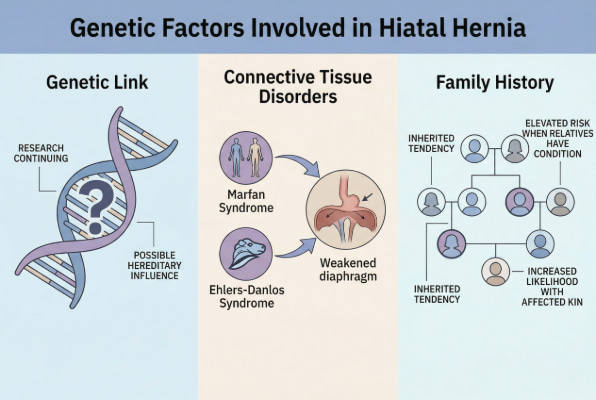
Current research on hiatal hernias hasn’t definitively established that this condition is inherited, though multiple studies indicate a potential genetic component. Your genes might make you susceptible to conditions that eventually result in hiatal hernias. Certain genetic disorders that compromise connective tissue strength (including Marfan Syndrome or Ehlers-Danlos Syndrome) can significantly increase the likelihood of stomach herniation through the diaphragm.
The diaphragm’s structure also deserves consideration. Certain people are born with inherent weakness in their diaphragm or possess an unusually wide hiatus. Either characteristic can elevate the chances of developing a hiatal hernia.
Family medical history can serve as a predictor of potential health issues. When parents or siblings have hiatal hernias, other family members may face somewhat elevated odds of developing the same condition. Therefore, while hiatal hernias aren’t directly passed down genetically, inherited physical characteristics may increase susceptibility.
What Research Says About Familial Hiatal Hernias
While hiatal hernias aren’t inherited the same way as conditions like eye color or blood type, compelling scientific evidence suggests they can run in families. In one landmark study, researchers examined 38 members of a family across five generations and found that 23 of them had radiologically confirmed hiatal hernias. Notably, every person with a hiatal hernia had at least one affected parent, and direct male-to-male transmission was documented, pointing to an autosomal dominant pattern of inheritance. Another case study on familial hiatal hernias documented four siblings who all developed severe congenital sliding hiatal hernias, with their father also having the condition, further suggesting a common genetic factor. Research has also shown that individuals with a first-degree relative (such as a parent or sibling) who has a hiatal hernia are more likely to develop the condition themselves. These findings reinforce the importance of sharing your family medical history with your doctor, especially if close relatives have been diagnosed with hiatal hernias or chronic acid reflux disease.
Recognizing Symptoms and Getting a Diagnosis
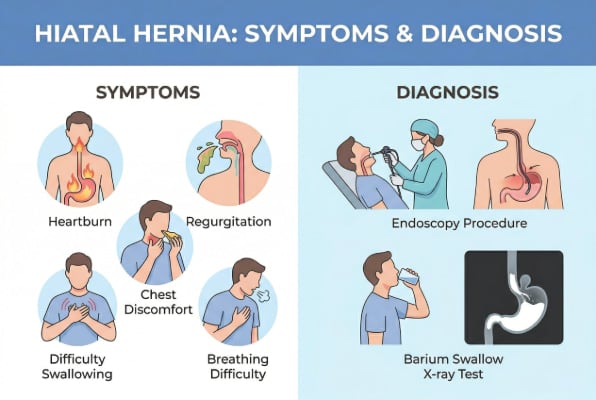
Many individuals with hiatal hernias experience no obvious symptoms whatsoever. When symptoms manifest, they may include heartburn, food or liquid regurgitation, silent reflux, swallowing difficulties, chest or abdominal discomfort, and breathing difficulties. Some patients may also experience symptoms similar to achalasia or gastroparesis, making accurate diagnosis essential. In rarer instances, hiatal hernias can cause blood in vomit or dark red to black stool.
To diagnose a hiatal hernia, physicians typically employ imaging procedures such as endoscopy or barium swallow tests, a specialized X-ray technique. These diagnostic approaches allow medical professionals to examine the stomach’s position and confirm whether herniation has occurred.
Who Faces the Greatest Risk for Hiatal Hernias?
While hiatal hernias can develop in virtually anyone, specific populations face heightened vulnerability. Adults over 50, for instance, experience hiatal hernias more frequently than younger individuals. This increased prevalence stems from the natural weakening of muscles and tissues supporting the stomach and diaphragm that occurs with aging.
Those carrying excess weight also face elevated risk due to additional pressure placed on the abdominal region. Pregnancy similarly increases risk because the developing baby progressively pushes the stomach upward throughout gestation. For individuals struggling with weight management, incisionless weight loss procedures may help reduce abdominal pressure and lower hernia risk.
Certain lifestyle habits like smoking or repeated physical strain may contribute to stomach herniation. Dietary patterns such as consuming overly large meals and reclining immediately afterward can also heighten risk.
Additionally, people who have undergone surgical procedures on the abdomen or chest, or those who have sustained significant injuries, may have compromised diaphragm strength that increases susceptibility to hiatal hernias.
What Actually Causes Hiatal Hernias?
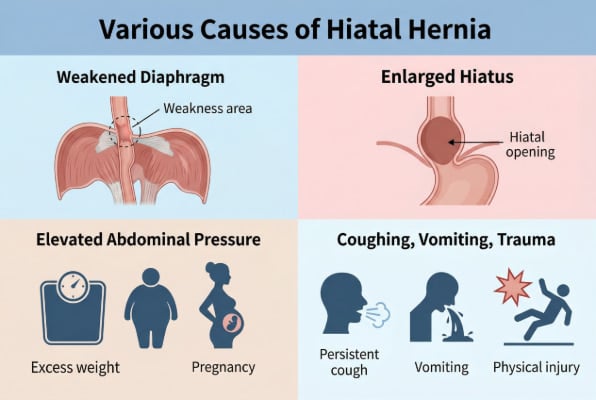
The precise origin of hiatal hernias remains partially unclear, but several distinct elements can contribute to this condition’s development:
Weakened Diaphragm: When the diaphragm lacks strength, the stomach’s upper section can more easily push into the chest cavity.
Enlarged Hiatus: Some people naturally have an unusually wide hiatus opening, which facilitates hernia formation.
Elevated Abdominal Pressure: Excess weight or pregnancy creates heightened pressure within the abdominal cavity, potentially forcing the stomach upward through the hiatus.
Persistent Coughing, Vomiting, or Physical Trauma: These activities and injuries can spike abdominal pressure, contributing to heartburn and hernia development.
Frequently, multiple factors combine to cause or worsen hiatal hernias. Since virtually anyone can develop this condition, maintaining awareness of digestive health remains important for everyone.
At What Age Do Hiatal Hernias Typically Appear?
Although hiatal hernias can emerge at any life stage, they most commonly affect individuals beyond age 50. Because older adults often experience muscular deterioration and may be managing serious health conditions, hiatal hernias occur with greater frequency in this age group compared to younger populations. Understanding these age-related risk factors can help you take preventive measures earlier in life.

Specialized Hiatal Hernia Treatment at Tampa Bay Reflux Institute
Whether your hiatal hernia stems from inherited anatomical traits or lifestyle factors, finding the right treatment is crucial for long-term relief. At Tampa Bay Reflux Institute, Dr. Gopal Grandhige brings over a decade of specialized experience in diagnosing and surgically treating hiatal hernias and GERD. Notably, approximately 90% of patients with GERD also have a hiatal hernia, making consultation with our specialists essential for addressing the root cause of your symptoms.
Dr. Grandhige performs hiatal hernia repairs both robotically and laparoscopically, tailoring the approach based on each patient’s unique anatomy. Following the hernia repair, an anti-reflux procedure, such as the LINX procedure, Nissen fundoplication, or transoral incisionless fundoplication, is typically added since most hiatal hernia patients also experience reflux. As one of the best hiatal hernia doctors in Tampa, Dr. Grandhige has successfully treated thousands of patients and offers a streamlined, concierge experience at Tampa Bay Reflux Institute. For more information about surgical treatment guidelines, patients can also consult professional medical society recommendations.
Conclusion
Understanding the relationship between genetics and hiatal hernias can help you take proactive steps toward prevention and early detection. While hiatal hernias aren’t directly inherited like eye color or blood type, research strongly suggests that family history plays a meaningful role in your susceptibility. Inherited traits such as connective tissue disorders, diaphragm weakness, or an enlarged hiatus can increase your likelihood of developing this condition. If you have close relatives with hiatal hernias or chronic reflux, sharing this information with your doctor is essential for proper monitoring and care.
Beyond genetics, lifestyle factors, including maintaining a healthy weight, avoiding smoking, eating smaller meals, and managing abdominal pressure, can significantly reduce your risk. Whether your hiatal hernia has hereditary roots or stems from other causes, seeking expert evaluation ensures you receive the most effective treatment for lasting relief. To learn more about your options, visit our reflux health blog or schedule a consultation today. For additional educational resources, WebMD’s hiatal hernia guide provides helpful information for patients exploring their treatment options.
FAQs
Are hiatal hernias hereditary?
Hiatal hernias aren’t directly inherited, but genetic factors like connective tissue disorders or a naturally weak diaphragm can increase susceptibility. If close family members have the condition, your risk may be somewhat elevated.
What are the main symptoms of a hiatal hernia?
Common symptoms include heartburn, acid reflux, difficulty swallowing, and chest discomfort. However, many people with hiatal hernias experience no symptoms at all.
At what age do hiatal hernias usually develop?
Hiatal hernias most commonly occur in adults over age 50 due to natural muscle weakening. However, they can develop at any age depending on individual risk factors.
Can lifestyle changes help prevent hiatal hernias?
Yes, maintaining a healthy weight, eating smaller meals, avoiding lying down after eating, and not smoking can reduce your risk. Managing activities that increase abdominal pressure is also beneficial.
How are hiatal hernias diagnosed?
Doctors typically use imaging tests such as endoscopy or barium swallow X-rays to diagnose hiatal hernias. These procedures allow them to visualize the stomach’s position relative to the diaphragm.


An endoscopy cannot tell you if you have reflux. It can only tell you if you have complications of GERD.
If you are unhappy with your reflux symptoms, come in and we can discuss testing and treatments that can accurately diagnose your problem.
#reflux #gerd #hiatalhernia #gastroparesis #linx

CALL US AT 813-922-2920
www.tampareflux.com
If you have a hiatal hernia and fit one of these categories, you should know your options.
Dr. Grandhige is an expert in his field and performs 200 of these surgeries a year. He is the only surgeon in the Tampa Bay Area who offers all surgical options - LINX, Fundoplications, TIF and will be one of 20 surgeons in America introducing the latest procedure RefluxStop in 2026.
We accept most insurances but will verify yours before you come in. These procedures are considered medically necessary and covered by your insurance. You can expect to pay your in-network deductibles and nothing else.
#hiatalhernia #reflux #GERD #LINX #refluxstop
What causes reflux ?
1. Weak lower esophageal sphincter
2. Hiatal hernia
3. Flattening of the Angle of His
4. Poor esophageal motility
5. Gastroparesis (slow stomach)
NOT increased acid production
Don’t let GERD get in the way of living your life. Request your appointment with us today on the link below.
.
.
.
.
https://tampareflux.com/contact-us/
Anyone can be victim to GERD and though weight loss can help reduce GERD symptoms. Many athletes with high impact workouts may continue to have these symptoms. This may be a symptom of a hiatal hernia or other issue. We are more then happy to assist you in finding your solution, just click the link below.
.
.
.
https://tampareflux.com/contact-us/
##healthylifestyle #workout #athletereflux #PPIs #heartburn #LINX #fundoplication #TIF #GERD#tampaheartburn #linx #TIF #fundoplication #tampabayreflux #GERD #acidreflux #acidrefluxsurgery #stopreflux
#nonsurgicalweightloss #ESG #gastricballoon #weightlossjourney #vsg #vsgjourney #spatz3 #orbera #orberaballoon #grandhige #DrG
#tampabayrefluxinstitute #guthealth #roboticsurgery
Heartburn may seem like an annoyance. But if you find yourself having symptoms on a daily basis, it may be time to to talk to Dr. Grandhige as it could be a symptom of something worse.
.
.
.
#chronicheartburn #gerdsymptoms #heartburnrelief #reflux #PPIs #heartburn #LINX #fundoplication #TIF #GERD#tampaheartburn #linx #TIF #fundoplication #tampabayreflux #GERD #acidreflux #acidrefluxsurgery #stopreflux
#nonsurgicalweightloss #ESG #gastricballoon #weightlossjourney #vsg #vsgjourney #spatz3 #orbera #orberaballoon #grandhige #DrG
#tampabayrefluxinstitute #guthealth #roboticsurgery
If you are tired of avoiding your favorite foods or taking daily medications, we can help.
We are the Tampa experts in reflux ! With years of experience and thousands of patients treated successfully, we offer all FDA approved anti-reflux procedures.
Call 813-922-2920 to schedule your appointment
All major insurances accepted.
Not all patients need surgical intervention. Many patients are living a heartburn free life with their PPIs. However 40% of patients taking PPIs are not getting the relief they need. If you are one of those, you have options! Come in and find out more.
.
.
.
.
#letushelpyou #medsnotworking #reflux #PPIs #heartburn #LINX #fundoplication #TIF #GERD#tampaheartburn #linx #TIF #fundoplication #tampabayreflux #GERD #acidreflux #acidrefluxsurgery #stopreflux
#nonsurgicalweightloss #ESG #gastricballoon #weightlossjourney #vsg #vsgjourney #spatz3 #orbera #orberaballoon #grandhige #DrG
#tampabayrefluxinstitute #guthealth #roboticsurgery
#heartburn #stopreflux #hiatalherniarepair #severeheartburn #reflux #tampabayreflux #acidrefluxsurgery #tampaheartburn #GERD #PPIs #achalasia #LINX #TIF #tampareflux #fundoplication #stomach #digestivehealth #ESG #obesity #overweight #weightlossjourney #gastricballoon


