

Written By: Jeffrey Atlas, Health Content Writer
Medically Reviewed By: Dr. Gopal Grandhige, MD, FACS, Board-Certified Surgeon
Last Reviewed: March 29, 2026
Hiatal Hernia Syndrome (HHS) occurs when the stomach pushes through the diaphragm, causing a cascade of symptoms that extend far beyond acid reflux, including heart palpitations, shortness of breath, anxiety, and chest pain. Because the hernia often “slides” in and out of position, it frequently escapes detection during examinations, leading to misdiagnosis or dismissal of symptoms.
The 15 Symptoms of Hiatal Hernia Syndrome
- Acid reflux
- Sore throat
- Difficulty swallowing
- Silent reflux, leading to esophageal inflammation
- Chest tightness or discomfort
- Tingling sensations in extremities
- Symptoms mimicking myocardial infarction
- Shortness of breath or “air hunger”
- Elevated stress hormones leading to anxiety
- Heart palpitations
- Insomnia, exacerbated when lying flat
- Chest pain
- Lightheadedness or dizziness
- Chronic constipation or diarrhea
- Difficulty bending over
Unlike typical GERD, Hiatal Hernia Syndrome creates symptoms throughout the body because the displaced stomach impairs diaphragm function, reduces oxygen intake, and activates the body’s stress response. Many patients visit the ER multiple times for heart-related concerns before the true cause is identified.
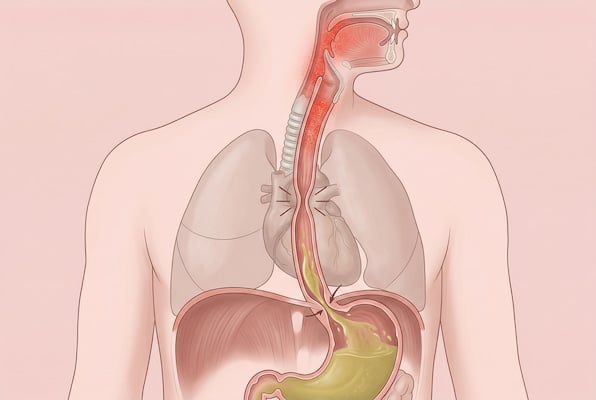
Acid Reflux
Acid reflux is one of the more obvious symptoms. Because of acid reflux, you can have a sore throat and trouble swallowing. Acid reflux can manifest in different ways, you can get a large flow of acid up the esophagus, which is quite unpleasant and similar to vomiting.
Silent Reflux
You can also have what’s called “silent reflux,” which is when acid slowly creeps up your esophagus. It still creates inflammation because the esophagus is not supposed to be bathed in acid. According to Mayo Clinic, this type of reflux can cause significant damage over time.
Trouble Swallowing and Sore Throat
Difficulty swallowing can occur where food gets stuck, which can be very uncomfortable. A hoarse voice is also common with this condition. In some cases, these swallowing difficulties may indicate conditions like achalasia, which requires specialized evaluation.
Tightness in the Chest, Chest Pain, and Tingling
Because the esophagus is a tube that runs quite far at the back of your chest cavity, inflammation can cause tightness in your chest, chest pain, and tingling in your fingers and toes, especially with some pressure in the chest.
Many people experiencing these symptoms rush to the ER, and that’s the right thing to do. Heart disease is the number one killer, so getting checked quickly to rule out a heart attack is always advisable.
The problem is what happens next, when they tell you your heart is perfectly fine.
Shortness of Breath
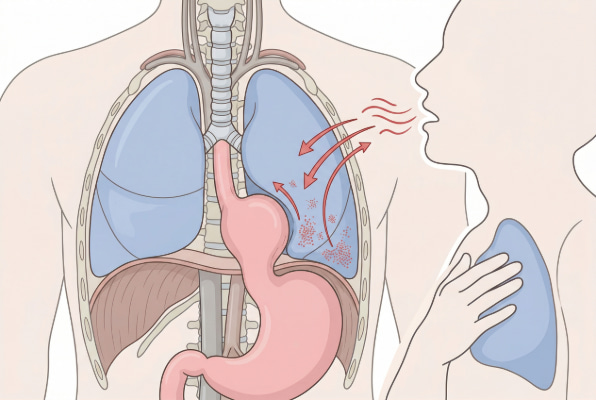
Because the stomach is in spasm and pushing up on the diaphragm, that sheet of muscle that allows air to come in and go out, the spasming freezes up the diaphragm and you can feel short of breath. It’s called “air hunger,” where you suddenly find yourself needing to take a deep breath. Cleveland Clinic notes that larger hiatal hernias are more likely to cause these respiratory symptoms.
Stress Hormones and Anxiety
Because of insufficient air intake, your stress hormones start getting activated. With stress hormones getting excited, you can feel a sense of anxiety when nothing in your immediate environment warrants it. There’s nothing happening externally, this is all internal. You start thinking, “Why do I feel panicky? Why am I so anxious?”
It’s a horrible feeling, especially when you can’t attach it to anything. So you start thinking it’s all in your head. It absolutely is not.
This all starts in the digestive tract. The stomach is spasming and pushing up on the diaphragm. Your diaphragm can’t move as freely as it should. Your stress hormones alert you that you’re not getting quite enough air.
Consider this: we can live a week without water, a month without food. But how many minutes can you survive without air? Not many. If you’re a Navy Seal, maybe six minutes. The average human, much less.
So of course your stress hormones try to get your attention and say, “Something’s not right. We want to alert you to that fact.” That’s where the anxiety comes in.
Heart Palpitations
You can also get heart palpitations. Again, this brings us back to the ER to rule out heart problems, which for a first occurrence is the right thing to do.
Some people have been back to the ER 5-10 times ruling out a heart attack. It happens in the middle of the night or whenever, and it’s very scary. But when the heart has been checked out, the lungs have been checked out, and you’re told everything is fine, that’s why understanding this condition matters. Many people are stuck in that cycle. Johns Hopkins Medicine explains how hiatal hernias can produce symptoms that mimic cardiac conditions.
What often happens after a few trips to the ER? Patients are told they’re under stress and given psychiatric medication. These drugs sometimes carry side effects including suicidal tendencies. While these medications have their place, they’ve been shown in studies to be less effective than placebos in many cases.
Many patients report, “I’m not really a stressed-out individual. I’m not a high-anxiety person. Now this is making me anxious because this anxiety comes upon me, I have heart palpitations, I can’t breathe, and my life is not the same. I’ve lost my life.” This sentiment is common. “This is not my life. This is not the life I want to lead. I can’t be active.”
Of course you’re upset. Of course you’re a little depressed. But that doesn’t mean the problem originates in your head. That’s a secondary effect of the physical condition.
Insomnia
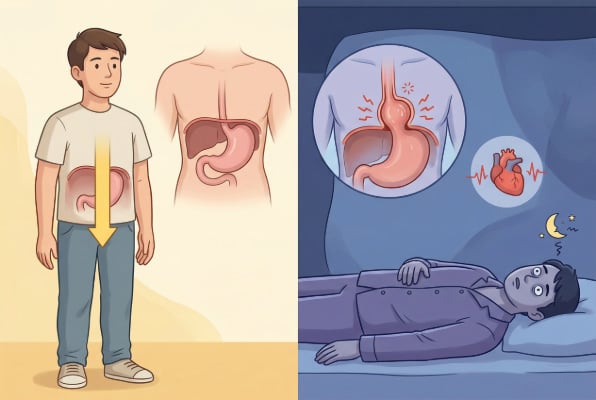
Insomnia is another symptom. During the day, while the stomach pushes on the diaphragm, gravity helps pull everything down when you’re upright.
As soon as you get horizontal at night to sleep, things get pushed up more easily because gravity is no longer pulling in the right direction. You can get heart palpitations, shortness of breath, and panic attacks at night.
For some people, symptoms are exacerbated at night literally because of their position. Some people have figured this out and started sleeping on a slant, which can relieve symptoms. But this doesn’t address the root cause, that’s not the way you want to live your life.
Lightheadedness and Dizziness
You can experience chest pain, lightheadedness, and dizziness, again because of insufficient oxygen. The anxiety component can also cause hyperventilation.
This cascade of symptoms is why it’s called Hiatal Hernia Syndrome, the coming together of all these symptoms that, when you’re in the midst of it, would be impossible to trace back to the gut on your own.
It’s not until you hear this explanation that it makes sense. Research published in the National Library of Medicine provides detailed clinical information about this condition’s pathophysiology.
More About Heart Palpitations
Heart palpitations deserve special attention because they cause significant concern. For years, patients would visit gastroenterologists or the ER and say, “I have bloating, gas, discomfort when eating. You keep telling me my heart is fine. Could this possibly be related to my stomach and gastrointestinal issues?” Without fail, they would be told, “No. A hiatal hernia would never create that.”
This doesn’t make sense from an anatomical standpoint. The stomach is on the left side, with the diaphragm in between. And what’s right above it? The heart. They’re not far apart anatomically.
It’s not a big stretch to understand how a spasming stomach pushes the diaphragm up, which then impinges upon the heart itself.
Recent medical discussions have highlighted the cardio-gastric reflex, the fact that an elevated stomach can trigger heart palpitations, AFib, and other serious cardiac events. A study on gastrocardiac syndrome explores this connection in detail.
Being told your heart is fine is one thing, but when heart palpitations keep happening, especially if they progress to AFib (atrial fibrillation), you are putting stress on the heart.
You don’t yet have a problem, but without addressing the root cause, you’re continuing to stress your heart and your stress hormones, which will create secondary and tertiary imbalances. That’s why getting to the root cause is essential.
Difficulty Bending Over
Another very common issue is difficulty bending over. One patient reported, “I can’t even bend over to pick up my dog’s bowl off the ground without my heart being set off.”
Things are so constricted and there’s so much pressure that extra bending, tying shoes, reaching for something on the ground, can trigger heart palpitations. MedlinePlus provides patient education resources about recognizing these symptoms.
The Problem with Conventional Approaches
This is quite a cascade of symptoms. Unfortunately, conventional medicine will often tell you, even if they find a hiatal hernia, that all these symptoms have nothing to do with it. This is not accurate. Many people are suffering because of this misinformation. Then they give up and accept psychiatric medication, adding insult to injury.
The good news is that treatment exists. There are several surgical options for reflux that can address this condition and help patients get their lives back. For appropriate candidates, the LINX procedure offers a minimally invasive solution. Additionally, procedures like transoral incisionless fundoplication provide effective relief without traditional incisions. Harvard Health offers a comprehensive overview of various treatment approaches.

Constipation and Diarrhea
Chronic constipation and/or diarrhea is an important symptom that’s often overlooked. Many people who have had constipation since childhood, and didn’t even know it was constipation because families don’t discuss bowel habits openly, have been suffering with this condition. Over time, it increases pressure within the abdomen due to chronic inefficient passing of stool. This can be a strong underlying root cause. Digestive motility issues like gastroparesis can also contribute to these symptoms.
Someone you know likely has this condition. They might be suffering silently or just putting up with being on PPIs (proton pump inhibitors), which are acid-reducing medications that don’t really help their other symptoms. WebMD provides additional information about managing these symptoms.
This condition is not that hard to address with the right approach. Healthline offers guidance on lifestyle modifications and treatment options. For those also dealing with weight-related digestive issues, incisionless weight loss procedures may provide additional benefits.
Get Expert Help for Hiatal Hernia and Reflux
If you’re experiencing symptoms of Hiatal Hernia Syndrome, GERD, or Silent Reflux, Tampa Bay Reflux Institute can help. Dr. Grandhige is a national expert in the diagnosis and surgical treatment of reflux conditions, including hiatal hernias and Laryngopharyngeal Reflux (LPR/Silent Reflux). You can find more information on our reflux blog or explore our resources on hiatal hernia specialists in Tampa.
For those dealing with related conditions, we also offer treatment for abdominal hernia and heartburn. Schedule a consultation today to discuss your treatment options.
Conclusion
Hiatal Hernia Syndrome is a complex condition that extends far beyond simple acid reflux, creating a cascade of interconnected symptoms that can significantly impact quality of life. From respiratory difficulties and heart palpitations to anxiety and sleep disturbances, these symptoms all trace back to a single root cause: the stomach pushing up against the diaphragm. Understanding this connection is crucial because conventional approaches often miss the diagnosis entirely, particularly with sliding hiatal hernias that come and go. The SAGES guidelines provide clinical recommendations for the surgical treatment of hiatal hernias. Rather than masking symptoms with antacids or psychiatric medications, addressing the underlying mechanical issue offers the best path to recovery. If you’re experiencing multiple symptoms from this list, especially after being told your heart and lungs are fine, Hiatal Hernia Syndrome may be the missing piece of your health puzzle.
FAQs
Why is Hiatal Hernia Syndrome often misdiagnosed?
The “sliding” nature of the hernia means it can retract during examinations, making it difficult to detect. Additionally, many doctors don’t connect the wide range of symptoms back to a digestive cause.
Can a hiatal hernia really cause heart palpitations?
Yes, the cardio-gastric reflex explains how a spasming stomach pushing on the diaphragm can impinge on the heart and trigger palpitations or even AFib.
Why do symptoms often worsen at night?
When lying flat, gravity no longer helps keep the stomach down, allowing it to push up more easily against the diaphragm and cause shortness of breath or palpitations.
Are antacids an effective treatment for this condition?
Not necessarily, antacids may be counterproductive if the patient actually has low stomach acid, and they don’t address the mechanical root cause.
Can Hiatal Hernia Syndrome be treated without surgery?
Yes, natural interventions that target the root cause can significantly improve symptoms without requiring drugs or surgical procedures.


An endoscopy cannot tell you if you have reflux. It can only tell you if you have complications of GERD.
If you are unhappy with your reflux symptoms, come in and we can discuss testing and treatments that can accurately diagnose your problem.
#reflux #gerd #hiatalhernia #gastroparesis #linx

CALL US AT 813-922-2920
www.tampareflux.com
If you have a hiatal hernia and fit one of these categories, you should know your options.
Dr. Grandhige is an expert in his field and performs 200 of these surgeries a year. He is the only surgeon in the Tampa Bay Area who offers all surgical options - LINX, Fundoplications, TIF and will be one of 20 surgeons in America introducing the latest procedure RefluxStop in 2026.
We accept most insurances but will verify yours before you come in. These procedures are considered medically necessary and covered by your insurance. You can expect to pay your in-network deductibles and nothing else.
#hiatalhernia #reflux #GERD #LINX #refluxstop
What causes reflux ?
1. Weak lower esophageal sphincter
2. Hiatal hernia
3. Flattening of the Angle of His
4. Poor esophageal motility
5. Gastroparesis (slow stomach)
NOT increased acid production
Don’t let GERD get in the way of living your life. Request your appointment with us today on the link below.
.
.
.
.
https://tampareflux.com/contact-us/
Anyone can be victim to GERD and though weight loss can help reduce GERD symptoms. Many athletes with high impact workouts may continue to have these symptoms. This may be a symptom of a hiatal hernia or other issue. We are more then happy to assist you in finding your solution, just click the link below.
.
.
.
https://tampareflux.com/contact-us/
##healthylifestyle #workout #athletereflux #PPIs #heartburn #LINX #fundoplication #TIF #GERD#tampaheartburn #linx #TIF #fundoplication #tampabayreflux #GERD #acidreflux #acidrefluxsurgery #stopreflux
#nonsurgicalweightloss #ESG #gastricballoon #weightlossjourney #vsg #vsgjourney #spatz3 #orbera #orberaballoon #grandhige #DrG
#tampabayrefluxinstitute #guthealth #roboticsurgery
Heartburn may seem like an annoyance. But if you find yourself having symptoms on a daily basis, it may be time to to talk to Dr. Grandhige as it could be a symptom of something worse.
.
.
.
#chronicheartburn #gerdsymptoms #heartburnrelief #reflux #PPIs #heartburn #LINX #fundoplication #TIF #GERD#tampaheartburn #linx #TIF #fundoplication #tampabayreflux #GERD #acidreflux #acidrefluxsurgery #stopreflux
#nonsurgicalweightloss #ESG #gastricballoon #weightlossjourney #vsg #vsgjourney #spatz3 #orbera #orberaballoon #grandhige #DrG
#tampabayrefluxinstitute #guthealth #roboticsurgery
If you are tired of avoiding your favorite foods or taking daily medications, we can help.
We are the Tampa experts in reflux ! With years of experience and thousands of patients treated successfully, we offer all FDA approved anti-reflux procedures.
Call 813-922-2920 to schedule your appointment
All major insurances accepted.
Not all patients need surgical intervention. Many patients are living a heartburn free life with their PPIs. However 40% of patients taking PPIs are not getting the relief they need. If you are one of those, you have options! Come in and find out more.
.
.
.
.
#letushelpyou #medsnotworking #reflux #PPIs #heartburn #LINX #fundoplication #TIF #GERD#tampaheartburn #linx #TIF #fundoplication #tampabayreflux #GERD #acidreflux #acidrefluxsurgery #stopreflux
#nonsurgicalweightloss #ESG #gastricballoon #weightlossjourney #vsg #vsgjourney #spatz3 #orbera #orberaballoon #grandhige #DrG
#tampabayrefluxinstitute #guthealth #roboticsurgery
#heartburn #stopreflux #hiatalherniarepair #severeheartburn #reflux #tampabayreflux #acidrefluxsurgery #tampaheartburn #GERD #PPIs #achalasia #LINX #TIF #tampareflux #fundoplication #stomach #digestivehealth #ESG #obesity #overweight #weightlossjourney #gastricballoon


