

A paraesophageal hiatal hernia occurs when part of the stomach pushes through the diaphragm and sits beside the esophagus in the chest cavity. Unlike the more common Type I sliding hernia (95% of cases), paraesophageal hernias (Types II, III, and IV) carry higher risk of complications including strangulation, where trapped organs lose blood supply, a medical emergency requiring immediate surgery. Symptoms include chest pain, difficulty swallowing solid foods, feeling full quickly, upper GI bleeding, and severe heartburn. Most hiatal hernias are managed with lifestyle changes like weight loss, avoiding trigger foods, and elevating the head during sleep. Surgical options include laparoscopic Nissen fundoplication, TIF procedures, and the LINX system. Those most at risk include adults over 50, women, pregnant individuals, and people carrying excess weight.
Understanding Hiatal Hernia
Once food travels down the esophagus, it arrives at the lower esophageal sphincter, a ring-shaped muscle that opens to let food enter the stomach. Here, digestive juices, acids, and enzymes kick off the digestion process. Food typically remains in the stomach for approximately four hours.
From there, food should continue its journey through the small and large intestines. But when a hiatal hernia exists, stomach contents can partially flow backward into the esophagus, creating problems.
A hiatal hernia essentially represents a structural abnormality that interferes with the proper functioning of the lower esophagus and upper stomach. This disruption affects normal food movement and compromises the barrier that prevents stomach contents from traveling back up. When a gastric hernia is present, acid freely flows into the esophagus, damages the lining, and triggers noticeable symptoms. According to the Cleveland Clinic, this backward flow of acid is one of the primary causes of chronic heartburn in affected patients.
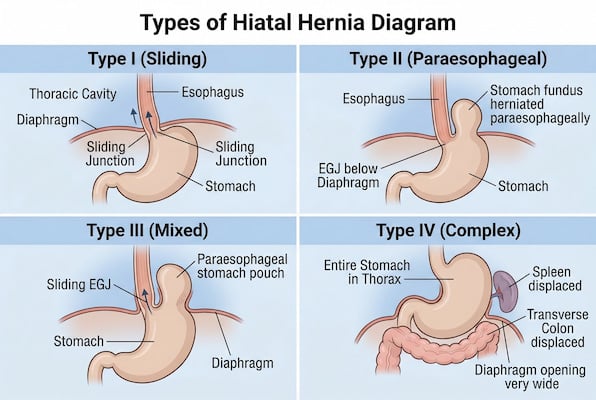
Categories of Hiatal Hernia
Two main classifications exist, broken down into four distinct types:
Sliding hiatal hernia (Type I) – This occurs when the esophageal-stomach junction abnormally rises above the diaphragm, allowing a portion of the stomach to “slide” upward into the esophageal area.
Paraesophageal hiatal hernia (Types II, III, and IV) – In these cases, part of the stomach pushes above the diaphragm and positions itself alongside the esophagus.
The vast majority of patients, around 95 percent, have Type I or sliding hernias. With this variation, the stomach periodically moves into the chest through the diaphragmatic opening. This type frequently involves the entire upper stomach portion.
Types II, III, and IV, collectively called paraesophageal hernias, develop when a substantial portion of the stomach, or sometimes nearly the whole organ, migrates through the diaphragm’s opening into the chest. In Type II hernias, unlike Type I, the esophageal entrance to the stomach stays positioned below the diaphragm. Research published by the National Institutes of Health provides detailed anatomical classifications of these hernia types.
Type III represents a mixed form, combining characteristics of both Types I and II. It typically begins as a sliding hernia but progressively worsens as more stomach tissue shifts sideways from the esophagus into the chest. The most extreme version is called an “upside-down stomach,” where the entire stomach relocates to the chest.
Type IV involves a massive diaphragmatic hernia where additional abdominal organs, like the spleen or colon, also migrate into the chest cavity. These extensive hernias generally produce more intense symptoms.
Organs positioned this way risk becoming pinched or twisted, causing severe pain. This situation constitutes a medical emergency and typically necessitates surgical intervention. A hiatal hernia becomes urgent when the intestines or esophagus become trapped, cutting off their blood supply. The Johns Hopkins Medicine resource explains when emergency care becomes necessary.
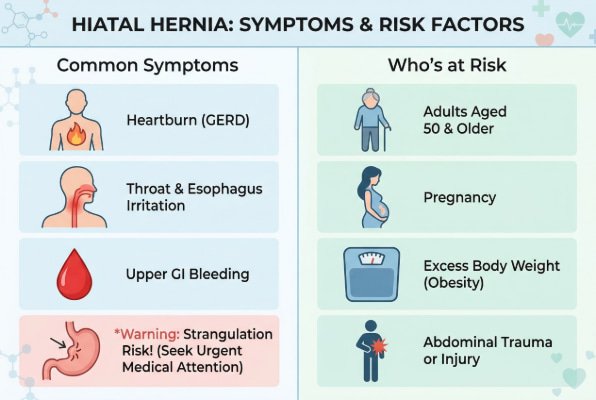
Warning Signs and Symptoms
Common symptoms and complications experienced by hiatal hernia patients include:
- Gastroesophageal reflux disease (GERD) – Frequently develops because of weakened pressure at the stomach’s entrance, allowing stomach acid to leak into the esophagus and causing vomiting along with intense heartburn. Learn more about GERD treatment options available today.
- Esophageal inflammation – Results from repeated exposure to refluxed stomach acid. Some patients also develop silent reflux or LPR, which causes throat symptoms without typical heartburn.
- Mucosal bleeding – Ranges from minor to significant hemorrhaging from the lining.
- Strangulation – A serious complication requiring surgery, occurring when the paraesophageal hernia becomes pinched by the diaphragm and loses adequate blood supply.
Individuals most commonly affected include:
- Adults over 50, particularly women
- Pregnant women
- Those carrying excess weight
- People who’ve sustained significant abdominal trauma
Larger hiatal hernias may produce these concerning symptoms:
- Upper abdominal or chest pain
- Swallowing difficulties, especially with solid foods
- Feeling full after just a few bites
- Upper digestive tract bleeding (appearing as fresh red blood in vomit or dark, tarry stools)
- Anemia
The National Institute of Diabetes and Digestive and Kidney Diseases provides comprehensive information about recognizing these warning signs.
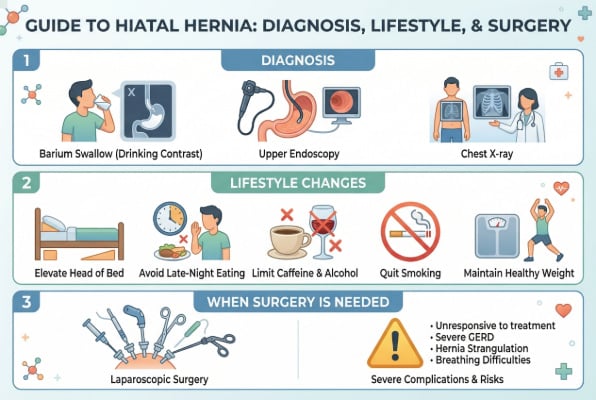
How It’s Diagnosed and Treated
A significant percentage of people develop smaller hiatal hernias after reaching 50, though this condition can appear at any age. It’s more prevalent among women. Harvard Health notes that many people with small hernias remain completely asymptomatic.
Diagnostic methods include barium swallow studies, endoscopy, and chest X-rays.
Treatment isn’t necessary in most situations. Instead, managing GERD symptoms becomes the priority. This involves minimizing acid reflux, eliminating foods that aggravate the stomach, and adopting lifestyle modifications that reduce stomach acid production. Certain exercises and yoga practices can also provide relief from acid reflux.
Before turning to medications, patients should first modify their daily habits. Carrying extra weight and living a sedentary lifestyle raise the chances of developing a hiatal hernia. For those looking to address weight-related risk factors, incisionless weight loss procedures may offer additional benefits. Mild cases respond well to elevating the head during sleep (15-30 cm), avoiding meals two to three hours before bedtime, steering clear of strong gastric stimulants (coffee, alcohol), problematic foods (fatty items, chocolate), and quitting smoking. WebMD offers practical dietary guidelines for managing symptoms.
Medical advances have reduced the overall need for surgical procedures. Only select cases warrant surgery based on a physician’s evaluation of severity. Patients with related motility disorders such as achalasia or gastroparesis may require specialized evaluation to determine the most appropriate treatment approach.
Surgery becomes necessary for paraesophageal hernia complications when patients develop GERD-related ulcers, stomach narrowing, or strangulation, essentially emergency situations. The best hiatal hernia doctors in Tampa perform these procedures using minimally invasive techniques with laparoscopic tools.
Modern Surgical Treatment Options for Hiatal Hernia
When lifestyle modifications and medications fail to control symptoms, several advanced surgical options now exist for hiatal hernia repair. Laparoscopic Nissen fundoplication remains the gold standard for treating GERD associated with hiatal hernia, involving a 360-degree wrap of the stomach fundus around the esophagus to reinforce the lower esophageal sphincter. The TIF procedure using EsophyX offers a less invasive alternative, performed entirely through the mouth without any external incisions, potentially leading to faster and less painful recovery. Small hiatal hernias can often be repaired during the TIF procedure, though hernias larger than 2 centimeters may require a combined laparoscopic approach. The LINX Reflux Management System represents another innovative option, using magnetic beads to augment the esophageal sphincter, and studies indicate that LINX results in significant symptom relief and improved quality of life with fewer long-term complications than other surgical options. Information from the NHS confirms these surgical approaches are widely accepted treatment standards. Determining the optimal surgical technique requires individualized treatment plans based on each patient’s specific symptoms and anatomical variations.

When to Seek Medical Attention
Consult a healthcare provider immediately if you experience persistent nausea or vomiting, severe heartburn, breathing difficulties, sharp abdominal pain, or any recurring symptoms described above. Healthline provides additional guidance on recognizing emergency symptoms.
If you’re in the Tampa Bay area and struggling with hiatal hernia symptoms or chronic acid reflux, Tampa Bay Reflux Institute offers specialized care focused exclusively on reflux-related conditions. Dr. Grandhige, a nationally recognized expert in GERD and its variants, provides advanced surgical treatment options including robotic fundoplications, the LINX Reflux Management System, and TIF/EsophyX® procedures. With over a decade of experience developing individualized treatment plans, Dr. Grandhige can help determine the best approach for your specific symptoms and anatomy. Schedule an appointment today to explore your options.
Prepare to share the following information with your doctor: all symptoms you’ve noticed (including those seemingly unrelated to a hiatal hernia), current medications for other conditions, your weight, the age when symptoms first appeared, recent eating habits, how the condition has progressed, and any complications you’ve encountered. For additional resources, visit our reflux health blog or review information on abdominal hernia and heartburn treatment. The MedlinePlus database also offers patient-friendly educational materials.
Conclusion
Hiatal hernias, while common, vary significantly in severity and treatment needs. The majority of cases involve Type I sliding hernias that can be effectively managed through lifestyle modifications such as weight management, dietary changes, and adjusting sleep positions. However, paraesophageal hernias (Types II-IV) require closer monitoring due to their potential for serious complications like strangulation, which constitutes a medical emergency. Modern surgical techniques, including laparoscopic Nissen fundoplication, TIF procedures, and the LINX system, offer effective solutions when conservative measures fail. If you experience persistent symptoms such as severe heartburn, difficulty swallowing, or chest pain, seeking prompt medical evaluation is essential for proper diagnosis and treatment.
FAQs
What is the most common type of hiatal hernia?
Type I or sliding hiatal hernia accounts for approximately 95 percent of all cases. In this type, the stomach periodically slides upward through the diaphragmatic opening into the chest.
Can a hiatal hernia heal without surgery?
Most hiatal hernias don’t require surgery and can be managed with lifestyle changes and medications. Surgery is typically reserved for severe cases with complications like strangulation or uncontrolled GERD.
What foods should I avoid with a hiatal hernia?
You should avoid fatty foods, chocolate, coffee, alcohol, and other strong gastric stimulants. Eating smaller meals and not lying down within two to three hours of eating also helps reduce symptoms.
When does a hiatal hernia become an emergency?
A hiatal hernia becomes urgent when organs become trapped or twisted, cutting off blood supply. This strangulation causes severe pain and requires immediate surgical intervention.
Who is most at risk for developing a hiatal hernia?
Adults over 50, particularly women, are most commonly affected. Other risk factors include pregnancy, excess body weight, and significant abdominal trauma.


An endoscopy cannot tell you if you have reflux. It can only tell you if you have complications of GERD.
If you are unhappy with your reflux symptoms, come in and we can discuss testing and treatments that can accurately diagnose your problem.
#reflux #gerd #hiatalhernia #gastroparesis #linx

CALL US AT 813-922-2920
www.tampareflux.com
If you have a hiatal hernia and fit one of these categories, you should know your options.
Dr. Grandhige is an expert in his field and performs 200 of these surgeries a year. He is the only surgeon in the Tampa Bay Area who offers all surgical options - LINX, Fundoplications, TIF and will be one of 20 surgeons in America introducing the latest procedure RefluxStop in 2026.
We accept most insurances but will verify yours before you come in. These procedures are considered medically necessary and covered by your insurance. You can expect to pay your in-network deductibles and nothing else.
#hiatalhernia #reflux #GERD #LINX #refluxstop
What causes reflux ?
1. Weak lower esophageal sphincter
2. Hiatal hernia
3. Flattening of the Angle of His
4. Poor esophageal motility
5. Gastroparesis (slow stomach)
NOT increased acid production
Don’t let GERD get in the way of living your life. Request your appointment with us today on the link below.
.
.
.
.
https://tampareflux.com/contact-us/
Anyone can be victim to GERD and though weight loss can help reduce GERD symptoms. Many athletes with high impact workouts may continue to have these symptoms. This may be a symptom of a hiatal hernia or other issue. We are more then happy to assist you in finding your solution, just click the link below.
.
.
.
https://tampareflux.com/contact-us/
##healthylifestyle #workout #athletereflux #PPIs #heartburn #LINX #fundoplication #TIF #GERD#tampaheartburn #linx #TIF #fundoplication #tampabayreflux #GERD #acidreflux #acidrefluxsurgery #stopreflux
#nonsurgicalweightloss #ESG #gastricballoon #weightlossjourney #vsg #vsgjourney #spatz3 #orbera #orberaballoon #grandhige #DrG
#tampabayrefluxinstitute #guthealth #roboticsurgery
Heartburn may seem like an annoyance. But if you find yourself having symptoms on a daily basis, it may be time to to talk to Dr. Grandhige as it could be a symptom of something worse.
.
.
.
#chronicheartburn #gerdsymptoms #heartburnrelief #reflux #PPIs #heartburn #LINX #fundoplication #TIF #GERD#tampaheartburn #linx #TIF #fundoplication #tampabayreflux #GERD #acidreflux #acidrefluxsurgery #stopreflux
#nonsurgicalweightloss #ESG #gastricballoon #weightlossjourney #vsg #vsgjourney #spatz3 #orbera #orberaballoon #grandhige #DrG
#tampabayrefluxinstitute #guthealth #roboticsurgery
If you are tired of avoiding your favorite foods or taking daily medications, we can help.
We are the Tampa experts in reflux ! With years of experience and thousands of patients treated successfully, we offer all FDA approved anti-reflux procedures.
Call 813-922-2920 to schedule your appointment
All major insurances accepted.
Not all patients need surgical intervention. Many patients are living a heartburn free life with their PPIs. However 40% of patients taking PPIs are not getting the relief they need. If you are one of those, you have options! Come in and find out more.
.
.
.
.
#letushelpyou #medsnotworking #reflux #PPIs #heartburn #LINX #fundoplication #TIF #GERD#tampaheartburn #linx #TIF #fundoplication #tampabayreflux #GERD #acidreflux #acidrefluxsurgery #stopreflux
#nonsurgicalweightloss #ESG #gastricballoon #weightlossjourney #vsg #vsgjourney #spatz3 #orbera #orberaballoon #grandhige #DrG
#tampabayrefluxinstitute #guthealth #roboticsurgery
#heartburn #stopreflux #hiatalherniarepair #severeheartburn #reflux #tampabayreflux #acidrefluxsurgery #tampaheartburn #GERD #PPIs #achalasia #LINX #TIF #tampareflux #fundoplication #stomach #digestivehealth #ESG #obesity #overweight #weightlossjourney #gastricballoon


