

Written By: Jeffrey Atlas, Health Content Writer
Medically Reviewed By: Dr. Gopal Grandhige, MD, FACS, Board-Certified Surgeon
Last Reviewed: March 9, 2026
Gastroparesis, meaning “stomach paralysis,” is a digestive condition where weakened stomach muscles cause food to remain in the stomach far longer than normal. This condition is extremely common among people with restrictive eating disorders, with research suggesting it is nearly universal in individuals who have lost 10–20% of their body weight through caloric restriction.
The relationship is bidirectional: prolonged food restriction can cause gastroparesis by slowing the body’s functions to conserve energy, while gastroparesis symptoms (bloating, early fullness, nausea) can trigger disordered eating patterns. Studies show up to 50% of patients presenting with gastroparesis symptoms also show signs of an eating disorder, and up to 40% of adults with gastroparesis develop ARFID (Avoidant Restrictive Food Intake Disorder).
Common symptoms include feeling full after small amounts of food, abdominal bloating, nausea, vomiting, and constipation. Treatment typically involves dietary modifications, medications to stimulate stomach motility, and addressing any underlying eating disorder.

Understanding the Connection Between Gastroparesis and Eating Disorders
Gastroparesis is a stomach condition that shows up surprisingly often among individuals dealing with eating disorders. The term “gastroparesis” translates directly to “stomach paralysis,” and that’s essentially what happens. According to the National Institute of Diabetes and Digestive and Kidney Diseases, this condition significantly disrupts the normal movement of your stomach muscles. Whether you’re experiencing gastroparesis yourself, caring for someone who is, or just learning about this condition for the first time, this guide will help you recognize the symptoms and understand how gastroparesis and eating disorders are connected.
So, What Exactly is Gastroparesis?
Gastroparesis is a condition where your stomach muscles slow down significantly. Normally, strong muscle contractions in your stomach walls push food along into the small intestine. But when you have gastroparesis, those muscles don’t contract with their usual strength. The result? Food and liquids sit in your stomach much longer than they should, which throws off your entire digestive process.
Because gastroparesis often flies under the radar, it’s difficult to pinpoint exactly how many people have it. Current estimates suggest around 5 million Americans are affected. People with eating disorders that involve avoiding or restricting food, such as anorexia, bulimia, and ARFID, tend to experience gastroparesis at much higher rates than everyone else.
Other groups who face increased risk include:
- People living with Type 1 or Type 2 diabetes
- Those with nervous system conditions like Parkinson’s disease
- Anyone who has had stomach or small intestine surgery, which can damage the vagus nerve (the nerve responsible for controlling your stomach and intestinal muscles)
- Patients who have undergone radiation therapy on their chest or stomach area during cancer treatment
- Individuals taking medications that slow intestinal movement, such as narcotic pain medications

How Do Restrictive Eating Disorders Cause Gastroparesis?
Gastroparesis is incredibly common among people who have restricted their food intake over time. In fact, it’s one of the most frequent physical signs of a restrictive eating disorder. When someone limits food for an extended period, the lack of vital nutrients causes the whole body to slow down in an effort to conserve energy. Just as your heart rate, blood circulation, and brain function all decelerate during nutritional deprivation, so do your stomach and intestinal contractions, leading to delayed stomach emptying.
One study of people with anorexia nervosa and gastroparesis found that food stayed in the stomach for four hours or longer, roughly twice the normal amount of time. This delayed motility can sometimes mimic other conditions like achalasia, where the esophagus also struggles to move food properly.
Here’s something important to keep in mind: gastroparesis can happen to people of all body types, not just those who appear clinically underweight.
The Research: How Common is the Gastroparesis-Eating Disorder Connection?
The link between gastroparesis and eating disorders is more significant than many people realize. Clinical research shows that about half of those presenting with gastroparesis symptoms also show signs of a feeding or eating disorder. Even more striking, research suggests that up to 99% of those with anorexia nervosa and avoidant restrictive food intake disorder (ARFID) experience some form of gastrointestinal issue. Gastroparesis is felt to be nearly universal in those who have restricted calories resulting in significant weight loss, generally 10-20% of body weight. The relationship also works in reverse: up to 40% of adults with gastroparesis have been reported to develop symptoms of ARFID, a non-body image-based eating disorder. A 2024 study found that 77% of patients with gastroparesis screened positive for ARFID, and in most cases, the gastroparesis diagnosis came first, before the eating difficulties developed. This two-way relationship highlights why proper diagnosis and treatment of gastroparesis is so critical, whether it’s the cause or the result of disordered eating patterns.
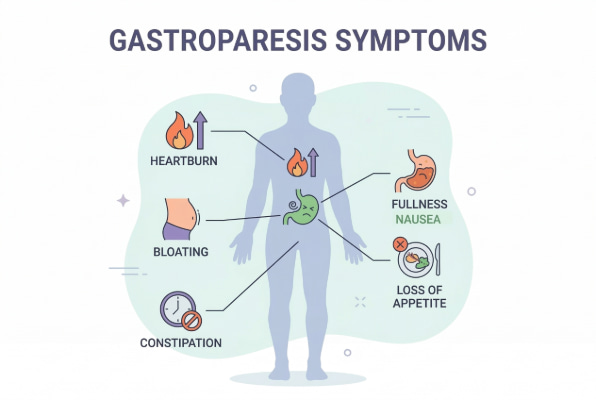
What Does Gastroparesis Feel Like?
Gastroparesis symptoms can range from barely noticeable to severe. The most common signs of delayed stomach emptying include:
- Feeling extremely full after eating just a small amount of food (early satiety)
- Bloating and discomfort in your upper stomach
- Visible abdominal swelling
- Loss of appetite
- Constipation and infrequent bowel movements
- Nausea or an upset stomach
- Vomiting
- Heartburn or GERD (gastroesophageal reflux disease)
Why Gastroparesis Can Be Especially Challenging for Those with Eating Disorders
The symptoms of gastroparesis can be particularly troubling when an eating disorder is involved. For someone struggling with body image concerns, a bloated, distended stomach can create tremendous stress and anxiety. On top of that, people in recovery who are learning to trust their body’s hunger signals may find it incredibly difficult to do so when they’re dealing with stomach pain and feeling full too quickly.
Stomach paralysis symptoms can also trigger an eating disorder in someone who didn’t have one before. Research shows that patients reporting gastroparesis symptoms have higher rates of ARFID. The discomfort from GI symptoms can lead someone to start restricting their eating, which then increases their risk for both developing an eating disorder and making their GI symptoms even worse. For some patients, incisionless weight loss procedures may be considered as part of a comprehensive treatment plan when obesity complicates digestive function.

How Tampa Bay Reflux Institute Can Help
Treating gastroparesis, especially when an eating disorder is also present, requires addressing the full picture. At Tampa Bay Reflux Institute, we understand how complex this condition can be, and we’re here to guide you through every step.
We offer comprehensive stomach motility care, including diagnostic testing to confirm your condition, medication management to stimulate stomach muscle activity and ease symptoms like nausea and vomiting, and surgical interventions when appropriate. Our team of specialists works with you to develop a personalized treatment plan that may include dietary adjustments featuring easily digestible foods alongside the medical support you need.
Many patients with gastroparesis also experience related conditions such as hiatal hernias or silent reflux, which our experienced physicians can evaluate and treat. We offer advanced treatment options including the LINX Reflux Management System and TIF procedure for patients with concurrent reflux issues. For those seeking top hiatal hernia specialists in Tampa, we provide cutting-edge diagnostic and treatment options. We also provide care for abdominal hernia and heartburn conditions that often accompany gastroparesis.
We know that increasing your nutritional intake while battling gastroparesis isn’t easy. That’s why our compassionate team is committed to making your path to relief as smooth as possible. If you or someone you love is struggling with gastroparesis, reach out to us today. We’re here to help you feel like yourself again.
Conclusion
Gastroparesis and eating disorders share a complex, bidirectional relationship that requires careful attention and comprehensive care. Whether gastroparesis develops as a result of nutritional restriction or triggers disordered eating patterns due to its uncomfortable symptoms, understanding this connection is the first step toward effective treatment. The physical discomfort of delayed stomach emptying, including bloating, early fullness, and nausea, can make recovery particularly challenging for those working to rebuild a healthy relationship with food.
The good news is that gastroparesis is treatable, and with the right support, symptoms can improve significantly. As nutrition is restored and the body receives adequate fuel, stomach motility often begins to normalize. The American College of Gastroenterology recommends seeking help from healthcare providers who understand both the physical and psychological dimensions of this condition. For more information about digestive health conditions and treatments, visit our health resources blog or explore resources from Harvard Health and MedlinePlus. If you recognize these symptoms in yourself or someone you care about, seeking help is essential for lasting recovery.
FAQs
What is gastroparesis?
Gastroparesis is a condition where stomach muscles don’t contract with normal strength, causing food and liquids to remain in the stomach much longer than they should.
How common is gastroparesis in people with eating disorders?
Gastroparesis is felt to be nearly universal in those who have restricted calories resulting in significant weight loss, generally 10-20% of body weight.
What are the main symptoms of gastroparesis?
The most common symptoms include feeling extremely full after eating small amounts, bloating, upper stomach discomfort, nausea, vomiting, and constipation.
Can gastroparesis cause an eating disorder?
Yes, up to 40% of adults with gastroparesis develop symptoms of ARFID, as the discomfort from GI symptoms can lead to food restriction.
Is gastroparesis treatable?
Treatment options include diagnostic testing, medication management to stimulate stomach muscles and ease symptoms, dietary adjustments, and surgical interventions when appropriate.


An endoscopy cannot tell you if you have reflux. It can only tell you if you have complications of GERD.
If you are unhappy with your reflux symptoms, come in and we can discuss testing and treatments that can accurately diagnose your problem.
#reflux #gerd #hiatalhernia #gastroparesis #linx

CALL US AT 813-922-2920
www.tampareflux.com
If you have a hiatal hernia and fit one of these categories, you should know your options.
Dr. Grandhige is an expert in his field and performs 200 of these surgeries a year. He is the only surgeon in the Tampa Bay Area who offers all surgical options - LINX, Fundoplications, TIF and will be one of 20 surgeons in America introducing the latest procedure RefluxStop in 2026.
We accept most insurances but will verify yours before you come in. These procedures are considered medically necessary and covered by your insurance. You can expect to pay your in-network deductibles and nothing else.
#hiatalhernia #reflux #GERD #LINX #refluxstop
What causes reflux ?
1. Weak lower esophageal sphincter
2. Hiatal hernia
3. Flattening of the Angle of His
4. Poor esophageal motility
5. Gastroparesis (slow stomach)
NOT increased acid production
Don’t let GERD get in the way of living your life. Request your appointment with us today on the link below.
.
.
.
.
https://tampareflux.com/contact-us/
Anyone can be victim to GERD and though weight loss can help reduce GERD symptoms. Many athletes with high impact workouts may continue to have these symptoms. This may be a symptom of a hiatal hernia or other issue. We are more then happy to assist you in finding your solution, just click the link below.
.
.
.
https://tampareflux.com/contact-us/
##healthylifestyle #workout #athletereflux #PPIs #heartburn #LINX #fundoplication #TIF #GERD#tampaheartburn #linx #TIF #fundoplication #tampabayreflux #GERD #acidreflux #acidrefluxsurgery #stopreflux
#nonsurgicalweightloss #ESG #gastricballoon #weightlossjourney #vsg #vsgjourney #spatz3 #orbera #orberaballoon #grandhige #DrG
#tampabayrefluxinstitute #guthealth #roboticsurgery
Heartburn may seem like an annoyance. But if you find yourself having symptoms on a daily basis, it may be time to to talk to Dr. Grandhige as it could be a symptom of something worse.
.
.
.
#chronicheartburn #gerdsymptoms #heartburnrelief #reflux #PPIs #heartburn #LINX #fundoplication #TIF #GERD#tampaheartburn #linx #TIF #fundoplication #tampabayreflux #GERD #acidreflux #acidrefluxsurgery #stopreflux
#nonsurgicalweightloss #ESG #gastricballoon #weightlossjourney #vsg #vsgjourney #spatz3 #orbera #orberaballoon #grandhige #DrG
#tampabayrefluxinstitute #guthealth #roboticsurgery
If you are tired of avoiding your favorite foods or taking daily medications, we can help.
We are the Tampa experts in reflux ! With years of experience and thousands of patients treated successfully, we offer all FDA approved anti-reflux procedures.
Call 813-922-2920 to schedule your appointment
All major insurances accepted.
Not all patients need surgical intervention. Many patients are living a heartburn free life with their PPIs. However 40% of patients taking PPIs are not getting the relief they need. If you are one of those, you have options! Come in and find out more.
.
.
.
.
#letushelpyou #medsnotworking #reflux #PPIs #heartburn #LINX #fundoplication #TIF #GERD#tampaheartburn #linx #TIF #fundoplication #tampabayreflux #GERD #acidreflux #acidrefluxsurgery #stopreflux
#nonsurgicalweightloss #ESG #gastricballoon #weightlossjourney #vsg #vsgjourney #spatz3 #orbera #orberaballoon #grandhige #DrG
#tampabayrefluxinstitute #guthealth #roboticsurgery
#heartburn #stopreflux #hiatalherniarepair #severeheartburn #reflux #tampabayreflux #acidrefluxsurgery #tampaheartburn #GERD #PPIs #achalasia #LINX #TIF #tampareflux #fundoplication #stomach #digestivehealth #ESG #obesity #overweight #weightlossjourney #gastricballoon


