

Written By: Jeffrey Atlas, Health Content Writer
Medically Reviewed By: Dr. Gopal Grandhige, MD, FACS, Board-Certified Surgeon
Last Reviewed: February 24, 2026
Peptic ulcers and heartburn (GERD) are often confused but are distinct conditions requiring different treatments. Ulcers are open sores on the stomach lining or small intestine, primarily caused by H. pylori bacteria or prolonged NSAID use. Heartburn occurs when stomach acid flows back into the esophagus, triggered by certain foods, obesity, or lifestyle factors.
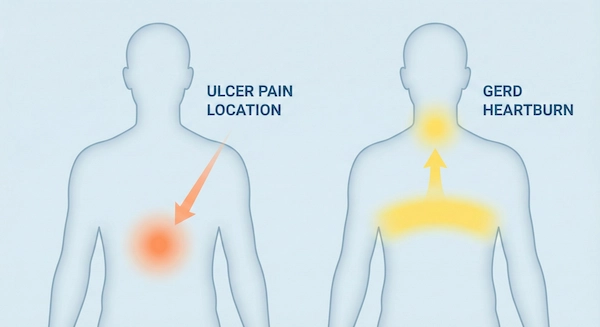
How to tell them apart: Ulcer pain is a dull or burning ache in the upper abdomen that may improve after eating. Heartburn causes burning chest pain that worsens after meals or when lying down, often with acid regurgitation.
Both conditions are treated with acid-suppressing medications like PPIs and H2 blockers, but ulcers caused by H. pylori also require antibiotics. Consult a doctor for persistent symptoms. Untreated ulcers can cause bleeding or perforation, while chronic GERD can damage the esophagus.
Recognizing the Symptoms
Both stomach ulcers and GERD can produce overlapping symptoms, making it important to understand the differences.
Ulcer Symptoms
Stomach ulcers often cause indigestion-related issues, including:
- Dull or burning ache in the upper abdomen (between your breastbone and navel) that comes and goes
- Uncomfortable fullness after meals
- Feeling satisfied too quickly while eating
- Excessive belching
- Bloating in the stomach area
- Nausea or vomiting
Ulcer pain is usually located in the upper abdomen rather than in the chest. You may notice it on an empty stomach or a few hours after a meal. Interestingly, sometimes people notice that their pain from an ulcer gets better when they eat something.
Some people with ulcers experience no symptoms until complications arise. Seek emergency medical care if you notice:
- Sharp or sudden abdominal pain that persists
- Vomit containing blood
- Bloody stools
- Lightheadedness or fainting
- Rapid heartbeat or signs of shock
- Worsening ulcer symptoms
These are called silent ulcers. You might not experience any symptoms until you develop complications like bleeding or a perforation.
Heartburn Symptoms
Gastroesophageal reflux disease primarily causes a burning sensation extending from your mid-chest to your lower throat, along with regurgitation, when you taste stomach acid or partially digested food in your mouth.
One common symptom of GERD is burning pain that rises up into the chest. It may get worse after a large meal or if you lie down right after eating.
Additional GERD symptoms may include:
- Hoarse voice
- Nausea
- Persistent coughing or hiccups
- Bad breath
- Stomach bloating
- Difficulty swallowing
These symptoms typically intensify:
- When lying down
- Immediately after eating
- When bending forward
GERD can cause heartburn, regurgitation, and sometimes a sore throat or sour taste in your mouth. Ulcers do not cause these but can cause a feeling of fullness and nausea or vomiting instead. Some patients also experience silent reflux (LPR), which presents with throat symptoms rather than typical heartburn.
What Causes These Conditions?
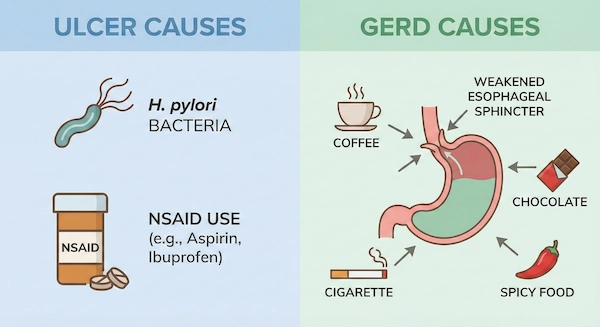
The underlying triggers for stomach ulcers and GERD differ significantly, though ulcers themselves can sometimes produce heartburn.
Ulcer Causes
The primary drivers of stomach ulcers are:
- Helicobacter pylori (H. pylori) bacterial infections
- Prolonged NSAID use
Your risk increases if you:
- Take NSAIDs at high doses
- Use multiple NSAIDs simultaneously
- Combine certain NSAIDs with other ulcer-promoting medications
- Use NSAIDs while infected with H. pylori
Additional risk factors include:
- Tobacco use
- History of previous ulcers
- Advancing age
Heartburn Causes
When you have GERD, stomach acids and juices back up into the esophagus. This can irritate and wear away the lining of the esophagus and cause sores. According to Hopkins Medicine, this backflow occurs when the lower esophageal sphincter weakens or relaxes inappropriately.
Several factors can trigger or aggravate GERD:
- Tobacco use
- Certain foods and beverages:
- Chocolate
- Coffee
- Alcoholic drinks
- Tomatoes
- Fatty or spicy dishes
- Pregnancy
- Carrying excess weight
- Anxiety and stress
- Hormonal fluctuations (particularly estrogen and progesterone)
- Hiatal hernia
Certain medications also increase GERD risk:
- NSAIDs
- Benzodiazepines
- Asthma medications
- Calcium channel blockers
- Tricyclic antidepressants

How Doctors Diagnose Each Condition
Healthcare providers use different approaches to identify stomach ulcers versus GERD. The reflux specialists at Tampa Reflux offer comprehensive diagnostic services for both conditions.
Diagnosing Ulcers
Physicians typically start by asking about:
- Your symptoms
- Any prior ulcer or H. pylori history
- Current medications (especially NSAIDs)
- Family history of ulcers, H. pylori infections, or digestive tract cancers
A physical examination may follow, where the doctor listens to abdominal sounds and checks for swelling, pain, or tenderness.
Diagnostic tests might include:
- Blood work
- Stool analysis
- Urea breath tests
- Upper GI series with barium swallow
- Upper GI endoscopy with biopsy
An upper endoscopy allows a healthcare professional to look at the lining of the stomach and take biopsies if necessary. They can tell whether your stomach pain is due to general inflammation or an ulcer by directly examining the stomach. Doctors may also evaluate for swallowing disorders like achalasia, which can present with similar symptoms.
Diagnosing Heartburn
GERD diagnosis often relies on symptom evaluation and medical history review. Additional testing may include upper GI endoscopy or esophageal pH monitoring.
Esophageal pH monitoring detects stomach acid presence in your esophagus. Doctors may:
- Insert a catheter through your nose into the esophagus to measure both acid and nonacid reflux
- Place a wireless capsule on your esophageal lining during endoscopy to track acid reflux
Treatment Approaches
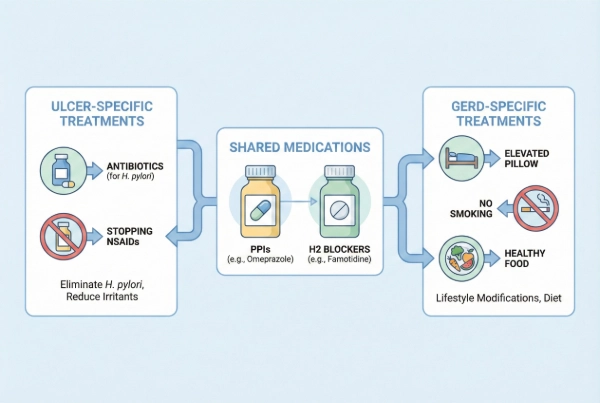
Medical professionals address stomach ulcers and GERD with distinct strategies. There are many similarities in the treatment for both conditions, and they both rely on acid-suppressing medications. For expert guidance, consider consulting with the best hiatal hernia doctors in Tampa FL who also specialize in comprehensive reflux care.
Treating Ulcers
Doctors typically prescribe medications that promote ulcer healing or target the root cause.
Acid-reducing medications include:
- Proton pump inhibitors (PPIs)
- H2 blockers
Surgery is rarely necessary but may be considered for ulcers that resist treatment. Untreated ulcers can lead to serious complications such as bleeding or perforation, so early diagnosis and treatment are crucial.
For H. pylori-related ulcers, treatment usually involves:
- Two or more antibiotics
- PPIs
- Bismuth subsalicylate
When NSAIDs cause the ulcer, your doctor may recommend:
- Discontinuing these medications
- Switching to alternatives
- Lowering your dosage
Your stomach lining will begin to heal when the cause of the ulcer goes away. If your ulcer is due to NSAID use and you stop taking NSAIDs, this might be enough for the ulcer to heal by itself.
Treating Heartburn
GERD management combines medication, lifestyle modifications, and occasionally surgery.
Recommended medications include:
- Antacids
- PPIs
- H2 blockers
Antacids neutralize stomach acid and relieve heartburn. If you want to take medicine only when your symptoms bother you, antacids are a good choice. The American Gastroenterological Association provides detailed guidelines on appropriate medication use.
Lifestyle adjustments that help:
- Quit smoking
- Achieve and maintain a healthy weight
- Avoid trigger foods and beverages
- Elevate your head 6–8 inches while sleeping using extra pillows or a foam wedge
- Avoid late-night meals
If you’re reaching for antacids too often, it’s time to see a doctor. Persistent acid reflux symptoms can damage the esophagus and may require a more advanced treatment plan.
When conservative treatments fail, surgical options such as fundoplication surgery offer long-term relief. Other minimally invasive procedures include the LINX Reflux Management System and TIF EsophyX procedure, which provide effective alternatives to traditional surgery.
Patients dealing with abdominal hernia and heartburn treatment may require specialized approaches. Additionally, those with delayed stomach emptying should explore gastroparesis treatment options, as this condition can worsen reflux symptoms. For patients struggling with obesity-related reflux, incisionless weight loss procedures may help address the underlying cause.
Don’t ignore digestive symptoms that persist for more than a few days. Whether you’re dealing with ulcers or GERD, getting expert care early makes all the difference in preventing complications and finding lasting relief. For more information on digestive health, visit the NHS guide on heartburn and acid reflux or MedlinePlus heartburn resources.
Ready to find relief? Contact us today to schedule a consultation, or visit our digestive health blog for more resources. Learn more about our experienced team and the advanced treatment options we offer.
Conclusion
Understanding the difference between ulcers and heartburn is essential for managing your digestive health effectively. While both conditions share some overlapping symptoms like stomach discomfort and nausea, they have distinct causes, warning signs, and treatment approaches. Ulcers develop as open sores in your stomach lining, primarily caused by H. pylori bacteria or excessive NSAID use, while GERD occurs when stomach acid repeatedly flows back into your esophagus.
Recognizing your specific symptoms can help you seek the right care sooner. If you experience persistent digestive issues, don’t self-diagnose or ignore the warning signs. Consult a healthcare professional who can perform the necessary tests and recommend an appropriate treatment plan tailored to your condition. Early intervention not only provides relief but also prevents potentially serious complications down the road.
FAQs
Can ulcers cause heartburn?
Yes, stomach ulcers can sometimes trigger heartburn as a symptom. However, heartburn is more commonly associated with GERD than with ulcers.
How do I know if I have an ulcer or GERD?
Ulcer pain typically occurs in the upper abdomen and may improve after eating, while GERD causes burning chest pain that worsens after meals. A doctor can confirm your diagnosis through an endoscopy or other diagnostic tests.
Can stress cause ulcers or heartburn?
Stress doesn’t directly cause ulcers but can worsen symptoms and trigger GERD flare-ups. The primary causes of ulcers are H. pylori infections and prolonged NSAID use.
Are ulcers more serious than GERD?
Both conditions require proper treatment, but untreated ulcers can lead to severe complications like internal bleeding or perforation. GERD, if left untreated, can damage the esophagus over time.
Can I treat ulcers and GERD with the same medication?
Both conditions often respond to acid-suppressing medications like PPIs and H2 blockers. However, ulcers caused by H. pylori also require antibiotics, so proper diagnosis is essential.


An endoscopy cannot tell you if you have reflux. It can only tell you if you have complications of GERD.
If you are unhappy with your reflux symptoms, come in and we can discuss testing and treatments that can accurately diagnose your problem.
#reflux #gerd #hiatalhernia #gastroparesis #linx

CALL US AT 813-922-2920
www.tampareflux.com
If you have a hiatal hernia and fit one of these categories, you should know your options.
Dr. Grandhige is an expert in his field and performs 200 of these surgeries a year. He is the only surgeon in the Tampa Bay Area who offers all surgical options - LINX, Fundoplications, TIF and will be one of 20 surgeons in America introducing the latest procedure RefluxStop in 2026.
We accept most insurances but will verify yours before you come in. These procedures are considered medically necessary and covered by your insurance. You can expect to pay your in-network deductibles and nothing else.
#hiatalhernia #reflux #GERD #LINX #refluxstop
What causes reflux ?
1. Weak lower esophageal sphincter
2. Hiatal hernia
3. Flattening of the Angle of His
4. Poor esophageal motility
5. Gastroparesis (slow stomach)
NOT increased acid production
Don’t let GERD get in the way of living your life. Request your appointment with us today on the link below.
.
.
.
.
https://tampareflux.com/contact-us/
Anyone can be victim to GERD and though weight loss can help reduce GERD symptoms. Many athletes with high impact workouts may continue to have these symptoms. This may be a symptom of a hiatal hernia or other issue. We are more then happy to assist you in finding your solution, just click the link below.
.
.
.
https://tampareflux.com/contact-us/
##healthylifestyle #workout #athletereflux #PPIs #heartburn #LINX #fundoplication #TIF #GERD#tampaheartburn #linx #TIF #fundoplication #tampabayreflux #GERD #acidreflux #acidrefluxsurgery #stopreflux
#nonsurgicalweightloss #ESG #gastricballoon #weightlossjourney #vsg #vsgjourney #spatz3 #orbera #orberaballoon #grandhige #DrG
#tampabayrefluxinstitute #guthealth #roboticsurgery
Heartburn may seem like an annoyance. But if you find yourself having symptoms on a daily basis, it may be time to to talk to Dr. Grandhige as it could be a symptom of something worse.
.
.
.
#chronicheartburn #gerdsymptoms #heartburnrelief #reflux #PPIs #heartburn #LINX #fundoplication #TIF #GERD#tampaheartburn #linx #TIF #fundoplication #tampabayreflux #GERD #acidreflux #acidrefluxsurgery #stopreflux
#nonsurgicalweightloss #ESG #gastricballoon #weightlossjourney #vsg #vsgjourney #spatz3 #orbera #orberaballoon #grandhige #DrG
#tampabayrefluxinstitute #guthealth #roboticsurgery
If you are tired of avoiding your favorite foods or taking daily medications, we can help.
We are the Tampa experts in reflux ! With years of experience and thousands of patients treated successfully, we offer all FDA approved anti-reflux procedures.
Call 813-922-2920 to schedule your appointment
All major insurances accepted.
Not all patients need surgical intervention. Many patients are living a heartburn free life with their PPIs. However 40% of patients taking PPIs are not getting the relief they need. If you are one of those, you have options! Come in and find out more.
.
.
.
.
#letushelpyou #medsnotworking #reflux #PPIs #heartburn #LINX #fundoplication #TIF #GERD#tampaheartburn #linx #TIF #fundoplication #tampabayreflux #GERD #acidreflux #acidrefluxsurgery #stopreflux
#nonsurgicalweightloss #ESG #gastricballoon #weightlossjourney #vsg #vsgjourney #spatz3 #orbera #orberaballoon #grandhige #DrG
#tampabayrefluxinstitute #guthealth #roboticsurgery
#heartburn #stopreflux #hiatalherniarepair #severeheartburn #reflux #tampabayreflux #acidrefluxsurgery #tampaheartburn #GERD #PPIs #achalasia #LINX #TIF #tampareflux #fundoplication #stomach #digestivehealth #ESG #obesity #overweight #weightlossjourney #gastricballoon


