

Written By: Jeffrey Atlas, Health Content Writer
Medically Reviewed By: Dr. Gopal Grandhige, MD, FACS, Board-Certified Surgeon
Last Reviewed: February 23, 2026
Laparoscopic hiatal hernia repair is a minimally invasive surgery that repositions the stomach below the diaphragm and tightens the hiatal opening to prevent recurrence. The procedure achieves 90–95% success rates, with 80–85% of patients maintaining symptom relief after 10 years.
Surgery becomes necessary when conservative treatments fail to control severe GERD, chronic heartburn, or difficulty swallowing, or when complications like strangulation risk, Barrett’s esophagus, or esophagitis develop.
The laparoscopic approach involves 3–5 small abdominal incisions, repositioning the stomach, and often wrapping the upper stomach around the lower esophagus (fundoplication) to strengthen the valve against acid reflux. Most patients go home the same day, return to work within 1–2 weeks, and fully recover in 4–6 weeks.
What Is Hiatal Hernia Repair Surgery?
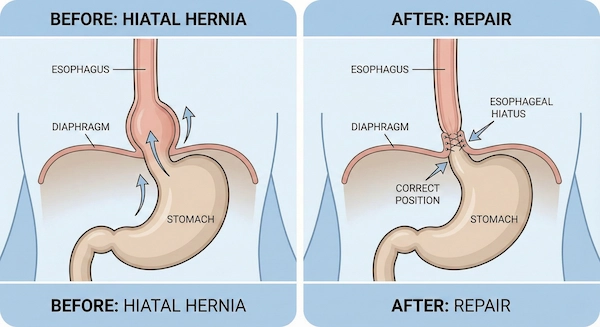
Hiatal hernia repair is a minimally invasive surgical procedure performed using laparoscopic or robotic techniques to correct this common digestive condition. This happens when a portion of the stomach pushes through an opening in the diaphragm and enters the chest cavity. The diaphragm is the large muscle barrier that separates your abdominal cavity from your chest cavity, and this displacement can lead to various symptoms, including chest pain, a burning sensation, acid traveling back up into the throat, and difficulty swallowing.
If you’re dealing with hiatal hernia symptoms, it’s important to book a consultation as soon as possible.
During the surgical procedure, surgeons reposition the stomach to its proper location and tighten the diaphragmatic opening (known as the hiatus) to prevent the hernia from coming back. The surgeon may also wrap the upper part of the stomach around the lower portion of the esophagus, creating a tighter sphincter to keep reflux from occurring.
Understanding Hiatal Hernia
A hiatal hernia develops when part of your stomach protrudes upward through the hiatus, the natural opening in the diaphragm where the esophagus connects to the stomach. This is a very common condition, especially as you get older, and it doesn’t always cause symptoms. Research indicates that 55%-60% of people over 50 years of age have a hiatal hernia, but only 9% experience noticeable symptoms.
Several factors can contribute to this condition:
- Weakening of the diaphragm muscles from aging or trauma
- Elevated abdominal pressure caused by heavy lifting, excess weight, pregnancy, or straining
- Being born with a larger hiatal opening than usual
- Persistent, long-term coughing
Types of Hiatal Hernias
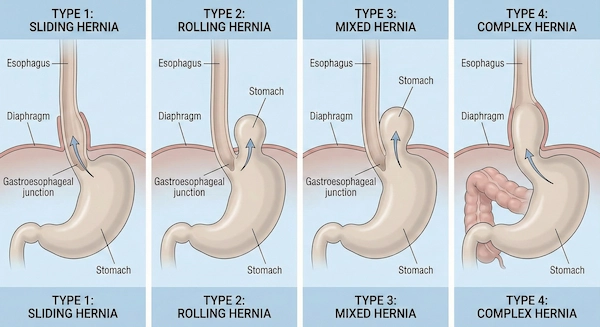
Medical professionals classify hiatal hernias into four distinct types:
Type 1 (Sliding Hiatal Hernia): Occurs when the portion of the esophagus that connects to the stomach slides up and down through the esophageal hiatus. The vast majority of hiatal hernias fall into this category.
Type 2 (Rolling Hiatal Hernia): Develops when the upper portion of the stomach pushes through the esophageal hiatus alongside the esophagus and forms a bulge next to it.
Type 3: Occurs when the gastroesophageal junction slides up through the esophageal hiatus and another section of the stomach also bulges through.
Type 4: Involves the stomach and another abdominal organ, such as the pancreas or spleen, bulging through the esophageal hiatus. These are rare.
Symptoms of Hiatal Hernia
Many individuals with hiatal hernias experience no symptoms at all. However, when symptoms do occur, they commonly include:
- Heartburn, especially after eating
- Regurgitation of food or liquids into the mouth
- Backflow of stomach acid into the esophagus (acid reflux)
- Difficulty swallowing (dysphagia)
- Chest or abdominal pain
- Persistent cough
- Belching and bloating
When hiatal hernia symptoms persist over a long time, stomach acids may back up and cause gastroesophageal reflux disease or damage the lining of the esophagus. Some patients may also experience silent reflux, which occurs without typical heartburn symptoms.

When Is Hiatal Hernia Surgery Necessary?
Many small hiatal hernias don’t need treatment. Surgery is typically reserved for people with severe cases that haven’t responded well to other treatments. According to health experts, surgical intervention may be required when:
- Symptoms such as GERD, nausea, or chronic heartburn become severe or don’t go away
- Conservative treatments like medications and lifestyle modifications fail to provide relief
- There’s a danger of strangulation, where the stomach becomes trapped and loses blood supply, which demands emergency surgical intervention
- Complications arise, including ulcers, bleeding, esophagitis, Barrett’s esophagus, or breathing and swallowing difficulties
How to Prepare for Hiatal Hernia Repair Surgery
Before your hiatal hernia procedure, your physician will:
- Conduct a comprehensive physical examination and order required tests (bloodwork, imaging studies)
- Go over your medical history, current medications, and any allergies
- Direct you to discontinue certain medications (such as blood thinners) prior to surgery
- Require you to fast for a minimum of 8-12 hours before the operation
- Give you pre-operative guidelines, including bathing with antibacterial soap and arranging for someone to drive you home
- Explain the procedural risks and secure your informed consent
Robotic or Laparoscopic Hiatal Hernia Repair (Minimally Invasive Approach)
A minimally invasive approach has become the standard of care in elective hiatal hernia repairs. In a laparoscopic repair, recovery is quicker and there’s less risk of infection because the procedure is less invasive.
This procedure includes:
- Making 3 to 5 tiny incisions in the abdomen
- Carbon dioxide gas is introduced into the abdominal cavity to create space, helping the surgeon see the organs more clearly
- Utilizing a laparoscope (a slender, illuminated tube equipped with a camera)
- Moving the stomach back into position and reinforcing the hiatus
- Wrapping the upper portion of the stomach (fundus) around the lower esophagus to strengthen the valve and minimize acid reflux
- Benefits include quicker recovery time, minimal scarring, and reduced postoperative discomfort
- Different approaches such as partial or complete fundoplication (like Nissen or Toupet procedures) may be chosen based on individual patient needs
Success Rates
Studies estimate that laparoscopic hiatal hernia surgery achieves a success rate of 90%–95%. Long-term data suggests that 80%–85% of patients will continue to have relief from symptoms 10 years after surgery. Laparoscopic elective repairs have mortality rates as low as 0.57%, significantly lower than open repairs.
Recovery Following Hiatal Hernia Surgery
Recovery from hiatal hernia surgery usually takes four to six weeks, but many patients feel better very quickly and can return to work in one to two weeks.
After your operation:
- You’ll be given pain medication and antibiotics to ward off infection
- You may feel pain from the carbon dioxide gas that remains in your belly, though this discomfort should subside within a few days
- A gradual return to normal activities is advised, so avoid lifting heavy objects or engaging in strenuous exercise for several weeks
- Walking starts on day one after surgery, and you should gradually increase your activity level back to baseline
- A follow-up appointment will be scheduled to check your healing and watch for any complications
Post-Operative Diet Guidelines
- You will need to stay on a liquid or soft diet for approximately 3 weeks after surgery
- Recommended foods include mashed potatoes, eggs, cottage cheese, tuna, and thick soups
- Swallowing may feel tight initially due to esophageal swelling, but this improves as healing progresses
- Avoid carbonated beverages for at least three weeks
Patients with conditions like gastroparesis may require additional dietary considerations during recovery.
Potential Risks and Complications
Although uncommon, hiatal hernia surgery carries certain risks, including:
- Infection at the incision or mesh placement site
- Bleeding or formation of blood clots
- Swallowing difficulties
- Return of acid reflux symptoms
- Damage to nearby tissues or organs
- Formation of scar tissue
- Adverse reactions to anesthesia
Benefits of Hiatal Hernia Surgery
- Lasting relief from acid reflux, GERD, and heartburn symptoms
- Prevention of hernia-related health issues
- Improved overall quality of life
- Decreased dependence on medications

When to Seek Medical Attention
Seek emergency care immediately if you experience sudden severe pain or skin color changes around the abdominal hernia area, as these indicate a strangulated hernia requiring immediate intervention. Contact your healthcare provider if you experience worsening symptoms, signs of infection at incision sites, persistent swallowing difficulty, or fever during recovery.
Conclusion
Laparoscopic hiatal hernia repair offers an effective, minimally invasive solution for patients suffering from persistent symptoms that don’t respond to conservative treatments. With success rates of 90–95% and most patients experiencing lasting relief for a decade or more, this procedure has become the gold standard for surgical intervention. The combination of small incisions, faster recovery times, and reduced postoperative discomfort makes it a compelling option when surgery becomes necessary. If you’re experiencing chronic heartburn, acid reflux, or difficulty swallowing, consulting with your healthcare provider can help determine whether this procedure is right for you.
For those seeking expert care, the best hiatal hernia doctors in Tampa offer comprehensive evaluations and personalized treatment plans. Additional resources about hiatal hernia diagnosis and treatment can help you make informed decisions. The NHS provides guidance on managing this condition, while Healthline offers detailed information about symptoms and recovery.
Alternative treatment options include the LINX Reflux Management System, TIF EsophyX procedure, and incisionless weight loss procedures for patients who may benefit from different approaches. You may also explore related conditions such as achalasia that can affect esophageal function. For more information, visit Tampa Reflux to learn about our specialists or read our latest articles on the reflux treatment blog. Additional information is available through MedlinePlus.
FAQs
How long does laparoscopic hiatal hernia surgery take?
The procedure typically takes one to two hours, depending on the complexity of the hernia. Most patients go home the same day or after an overnight stay.
Will I need to take medications after surgery?
Many patients can reduce or eliminate acid reflux medications after successful surgery. Your doctor will evaluate your progress during follow-up appointments and adjust your medications accordingly.
Can a hiatal hernia come back after surgery?
While recurrence is possible, it occurs in only about 5–15% of cases over time. Following post-operative guidelines and maintaining a healthy weight can help minimize this risk.
When can I return to normal eating after surgery?
You’ll follow a liquid and soft food diet for approximately three weeks after surgery. As swelling decreases and healing progresses, you’ll gradually transition back to regular foods.
Is hiatal hernia surgery painful?
Most patients experience mild to moderate discomfort that’s well-controlled with pain medication. The minimally invasive approach results in significantly less pain compared to traditional open surgery.


An endoscopy cannot tell you if you have reflux. It can only tell you if you have complications of GERD.
If you are unhappy with your reflux symptoms, come in and we can discuss testing and treatments that can accurately diagnose your problem.
#reflux #gerd #hiatalhernia #gastroparesis #linx

CALL US AT 813-922-2920
www.tampareflux.com
If you have a hiatal hernia and fit one of these categories, you should know your options.
Dr. Grandhige is an expert in his field and performs 200 of these surgeries a year. He is the only surgeon in the Tampa Bay Area who offers all surgical options - LINX, Fundoplications, TIF and will be one of 20 surgeons in America introducing the latest procedure RefluxStop in 2026.
We accept most insurances but will verify yours before you come in. These procedures are considered medically necessary and covered by your insurance. You can expect to pay your in-network deductibles and nothing else.
#hiatalhernia #reflux #GERD #LINX #refluxstop
What causes reflux ?
1. Weak lower esophageal sphincter
2. Hiatal hernia
3. Flattening of the Angle of His
4. Poor esophageal motility
5. Gastroparesis (slow stomach)
NOT increased acid production
Don’t let GERD get in the way of living your life. Request your appointment with us today on the link below.
.
.
.
.
https://tampareflux.com/contact-us/
Anyone can be victim to GERD and though weight loss can help reduce GERD symptoms. Many athletes with high impact workouts may continue to have these symptoms. This may be a symptom of a hiatal hernia or other issue. We are more then happy to assist you in finding your solution, just click the link below.
.
.
.
https://tampareflux.com/contact-us/
##healthylifestyle #workout #athletereflux #PPIs #heartburn #LINX #fundoplication #TIF #GERD#tampaheartburn #linx #TIF #fundoplication #tampabayreflux #GERD #acidreflux #acidrefluxsurgery #stopreflux
#nonsurgicalweightloss #ESG #gastricballoon #weightlossjourney #vsg #vsgjourney #spatz3 #orbera #orberaballoon #grandhige #DrG
#tampabayrefluxinstitute #guthealth #roboticsurgery
Heartburn may seem like an annoyance. But if you find yourself having symptoms on a daily basis, it may be time to to talk to Dr. Grandhige as it could be a symptom of something worse.
.
.
.
#chronicheartburn #gerdsymptoms #heartburnrelief #reflux #PPIs #heartburn #LINX #fundoplication #TIF #GERD#tampaheartburn #linx #TIF #fundoplication #tampabayreflux #GERD #acidreflux #acidrefluxsurgery #stopreflux
#nonsurgicalweightloss #ESG #gastricballoon #weightlossjourney #vsg #vsgjourney #spatz3 #orbera #orberaballoon #grandhige #DrG
#tampabayrefluxinstitute #guthealth #roboticsurgery
If you are tired of avoiding your favorite foods or taking daily medications, we can help.
We are the Tampa experts in reflux ! With years of experience and thousands of patients treated successfully, we offer all FDA approved anti-reflux procedures.
Call 813-922-2920 to schedule your appointment
All major insurances accepted.
Not all patients need surgical intervention. Many patients are living a heartburn free life with their PPIs. However 40% of patients taking PPIs are not getting the relief they need. If you are one of those, you have options! Come in and find out more.
.
.
.
.
#letushelpyou #medsnotworking #reflux #PPIs #heartburn #LINX #fundoplication #TIF #GERD#tampaheartburn #linx #TIF #fundoplication #tampabayreflux #GERD #acidreflux #acidrefluxsurgery #stopreflux
#nonsurgicalweightloss #ESG #gastricballoon #weightlossjourney #vsg #vsgjourney #spatz3 #orbera #orberaballoon #grandhige #DrG
#tampabayrefluxinstitute #guthealth #roboticsurgery
#heartburn #stopreflux #hiatalherniarepair #severeheartburn #reflux #tampabayreflux #acidrefluxsurgery #tampaheartburn #GERD #PPIs #achalasia #LINX #TIF #tampareflux #fundoplication #stomach #digestivehealth #ESG #obesity #overweight #weightlossjourney #gastricballoon


