

Written By: Jeffrey Atlas, Health Content Writer
Medically Reviewed By: Dr. Gopal Grandhige, MD, FACS, Board-Certified Surgeon
Last Reviewed: February 19, 2026
Hiatal hernia surgery cannot be performed without general anesthesia. Unlike groin or inguinal hernia repairs that may use local or regional anesthesia, hiatal hernia repair requires general anesthesia because the surgery involves operating near the diaphragm, the muscle that controls breathing. General anesthesia ensures complete muscle relaxation and patient stillness during delicate work near the esophagus and stomach.
For patients concerned about anesthesia, the good news is that modern laparoscopic techniques have made hiatal hernia surgery safer and faster than ever, with most patients going home the same day or the next morning. At Tampa Reflux, our specialists use the latest minimally invasive approaches to ensure optimal patient outcomes.
What Is a Hiatal Hernia?
A hiatal hernia occurs when the upper part of your stomach pushes through an opening (called the hiatus) in your diaphragm, the muscle that separates your chest cavity from your abdomen. Normally, your esophagus passes through this opening to connect to your stomach. When a hiatal hernia develops, part of the stomach bulges upward into the chest cavity.
There are several types of hiatal hernias:
Type I (Sliding Hiatal Hernia): The most common type, accounting for about 95% of all hiatal hernias. The stomach intermittently slides up into the chest through the diaphragmatic opening.
Type II, III, and IV (Paraesophageal Hernias): Less common, comprising about 5% of hiatal hernias, but potentially more serious. Part of the stomach sits next to the esophagus and can become larger over time, potentially compressing the esophagus or cutting off blood flow to the stomach.

Common Symptoms of Hiatal Hernia
Many people with hiatal hernias never experience symptoms. However, those who do commonly report symptoms related to gastroesophageal reflux disease (GERD), including:
- Heartburn, especially after eating
- Acid reflux or regurgitation
- Difficulty swallowing
- Chest pain (non-cardiac)
- Feeling full quickly after eating
- Nausea
- Belching
- Hoarseness or sore throat
Does Hiatal Hernia Surgery Require General Anesthesia?
Unlike some other abdominal hernia repairs that can be performed under local or regional anesthesia, hiatal hernia surgery typically requires general anesthesia. Here’s why:
Why General Anesthesia Is Standard
Hiatal hernia repair involves operating near the diaphragm, the muscle you use to breathe. The surgery requires:
- Complete muscle relaxation of the diaphragm
- The patient to remain completely still during delicate work near the esophagus and stomach
- Insufflation (inflating the abdomen with carbon dioxide gas) for laparoscopic procedures
- Access to the upper abdomen and sometimes the chest area
General anesthesia ensures the diaphragm is fully relaxed, allowing surgeons to safely repair the hernia and perform procedures like fundoplication (wrapping part of the stomach around the esophagus to prevent reflux).
Are There Any Alternatives?
For high-risk patients who cannot tolerate prolonged general anesthesia, some specialized centers may explore:
- Modified surgical approaches that minimize operative time
- Endoscopic procedures for certain patients with less severe hernias
- Opioid-free anesthesia protocols that allow for same-day discharge and faster recovery
However, these alternatives are typically reserved for specific situations and are not standard practice for most hiatal hernia repairs.
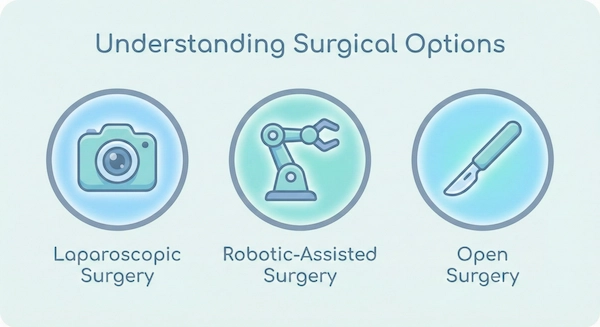
Types of Hiatal Hernia Surgery
1. Laparoscopic Nissen Fundoplication
This is the most common and “gold-standard” surgical treatment for hiatal hernia with GERD. The surgeon:
- Makes several small incisions in the abdomen
- Uses a laparoscope (thin tube with camera) to visualize the area
- Pulls the stomach back down into the abdominal cavity
- Wraps the upper portion of the stomach (fundus) around the lower esophagus
- Repairs the hiatal opening by stitching the diaphragm muscles closer together
Recovery: Most patients go home the day after surgery and return to normal activities within 2-4 weeks. Studies show success rates of 80-95% for symptom relief, with approximately 85-90% of patients reporting satisfaction with their surgical results.
2. Robotic-Assisted Surgery
Some surgeons use robotic techniques, controlling a surgical robot to perform the repair. This offers enhanced precision and visualization.
3. Open Surgery
For large or complicated hernias, traditional open surgery with a larger incision may be necessary. This typically requires a longer hospital stay (7-10 days) and recovery period.
When Is Surgery Necessary?
According to Hopkins Medicine, most people with hiatal hernias (over 95%) do not need surgery. Surgery is typically recommended when:
- Symptoms don’t respond to medications or lifestyle changes
- There’s risk of serious complications like strangulation (blood supply cut off)
- Severe esophageal damage, ulcers, or Barrett’s esophagus is present
- The hernia is large or causing significant symptoms like difficulty swallowing
- You prefer a long-term solution over lifelong medication
If you’re experiencing persistent symptoms, consulting with a hiatal hernia specialist in Tampa can help determine whether surgery is the right option for you.

What to Expect: Before, During, and After Surgery
Before Surgery
- Complete diagnostic tests (endoscopy, pH monitoring, esophagram, manometry)
- Follow pre-operative diet instructions (often to reduce liver size)
- Stop eating and drinking 8 hours before surgery
- Quit smoking if applicable
- Discuss all medications with your surgical team
During Surgery
- You’ll receive general anesthesia and be completely asleep
- The procedure typically takes 1-3 hours depending on complexity
- Small incisions are made in your upper abdomen for laparoscopic surgery
After Surgery
Immediate Recovery:
- You may stay one night in the hospital (some procedures allow same-day discharge)
- Expect some shoulder pain from the gas used during surgery
- Start with clear liquids, progressing to soft foods
First Few Weeks:
- Follow a soft diet for 2-8 weeks
- Difficulty swallowing is common initially due to swelling (resolves in 6-8 weeks)
- Avoid lifting more than 10-20 pounds for 6-8 weeks
- Most patients return to normal activities within 2-4 weeks
Benefits of Hiatal Hernia Surgery
- Long-term relief: Surgery can cure reflux, unlike medications that only manage symptoms
- No more daily medication: Most patients can stop taking acid-suppressing drugs
- High success rate: Studies show 80-95% of patients experience significant symptom relief, with 85-90% patient satisfaction rates
- Minimally invasive: Laparoscopic techniques mean less pain and faster recovery
- Prevents complications: Reduces risk of Barrett’s esophagus and esophageal cancer
Potential Risks and Side Effects
While serious complications are rare, possible risks include:
- Difficulty swallowing (usually temporary)
- Bloating or gas
- Inability to vomit or belch (usually improves over time)
- Recurrence of hernia or reflux symptoms (10-20% over time)
- Rare complications: bleeding, infection, injury to surrounding organs
For more detailed information on surgical risks, the National Institute of Diabetes and Digestive and Kidney Diseases provides comprehensive resources on hiatal hernia treatment outcomes.
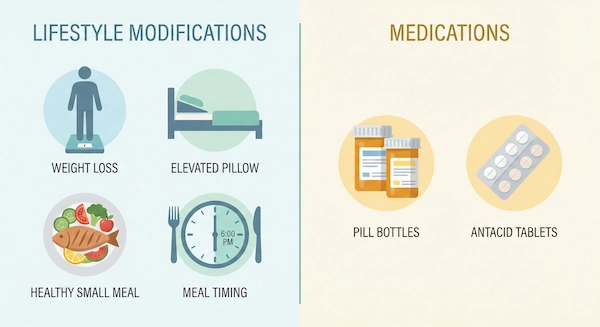
Non-Surgical Treatment Options
Before surgery is considered, doctors typically recommend:
Lifestyle Modifications:
- Weight loss
- Elevating the head of bed during sleep
- Avoiding meals 2-3 hours before bedtime
- Eliminating trigger foods (chocolate, caffeine, spicy foods, alcohol)
- Eating smaller, more frequent meals
Medications:
- Proton pump inhibitors (PPIs)
- H2 receptor blockers
- Antacids
For patients with silent reflux (LPR) or related conditions like achalasia and gastroparesis, additional treatment approaches may be necessary.
Alternative Surgical Procedures
Beyond traditional fundoplication, patients may also benefit from newer treatment options such as the LINX Reflux Management System or TIF (Transoral Incisionless Fundoplication), which offer less invasive alternatives for qualifying patients. For those also seeking weight management solutions, incisionless weight loss procedures may complement reflux treatment.
According to Harvard Health, the choice of surgical approach depends on the severity of your condition and overall health status.
Conclusion
While hiatal hernia surgery generally requires general anesthesia due to the complexity of operating near the diaphragm, modern minimally invasive techniques have made the procedure safer and recovery faster than ever. If you’re experiencing persistent symptoms despite medication and lifestyle changes, surgery may offer long-term relief and significantly improve your quality of life.
Consult with a qualified gastroenterologist or surgeon to discuss whether hiatal hernia repair is right for you. They can evaluate your specific situation, explain the risks and benefits, and help you make an informed decision about your treatment options. To learn more about treatment options, visit our reflux treatment blog or contact Tampa Reflux to schedule a consultation with our expert team.
For additional resources on hiatal hernia diagnosis and treatment, WebMD, Healthline, the NHS, and MedlinePlus offer helpful patient education materials. Healthcare professionals may also reference clinical literature from NCBI for evidence-based treatment guidelines.
FAQs
Can hiatal hernia surgery be done without general anesthesia?
No, hiatal hernia surgery requires general anesthesia to relax the diaphragm and ensure patient safety during the procedure. Unlike groin hernias, the location near the diaphragm makes alternative anesthesia options unsuitable.
How long does hiatal hernia surgery take?
The procedure typically takes between 90 minutes and 3 hours, depending on the hernia size and complexity. Most patients are discharged the day after surgery.
What is the success rate of hiatal hernia surgery?
Studies show 80-95% of patients experience significant symptom relief, with 85-90% reporting satisfaction with their results. Most patients no longer need daily acid-suppressing medications after surgery.
How long is the recovery after hiatal hernia surgery?
Most patients return to normal activities within 2-4 weeks after laparoscopic surgery. A soft diet is recommended for 2-8 weeks while swelling subsides.
Do all hiatal hernias require surgery?
No, over 95% of people with hiatal hernias do not need surgery. Surgery is typically only recommended when symptoms are severe or don’t respond to medications and lifestyle changes.


An endoscopy cannot tell you if you have reflux. It can only tell you if you have complications of GERD.
If you are unhappy with your reflux symptoms, come in and we can discuss testing and treatments that can accurately diagnose your problem.
#reflux #gerd #hiatalhernia #gastroparesis #linx

CALL US AT 813-922-2920
www.tampareflux.com
If you have a hiatal hernia and fit one of these categories, you should know your options.
Dr. Grandhige is an expert in his field and performs 200 of these surgeries a year. He is the only surgeon in the Tampa Bay Area who offers all surgical options - LINX, Fundoplications, TIF and will be one of 20 surgeons in America introducing the latest procedure RefluxStop in 2026.
We accept most insurances but will verify yours before you come in. These procedures are considered medically necessary and covered by your insurance. You can expect to pay your in-network deductibles and nothing else.
#hiatalhernia #reflux #GERD #LINX #refluxstop
What causes reflux ?
1. Weak lower esophageal sphincter
2. Hiatal hernia
3. Flattening of the Angle of His
4. Poor esophageal motility
5. Gastroparesis (slow stomach)
NOT increased acid production
Don’t let GERD get in the way of living your life. Request your appointment with us today on the link below.
.
.
.
.
https://tampareflux.com/contact-us/
Anyone can be victim to GERD and though weight loss can help reduce GERD symptoms. Many athletes with high impact workouts may continue to have these symptoms. This may be a symptom of a hiatal hernia or other issue. We are more then happy to assist you in finding your solution, just click the link below.
.
.
.
https://tampareflux.com/contact-us/
##healthylifestyle #workout #athletereflux #PPIs #heartburn #LINX #fundoplication #TIF #GERD#tampaheartburn #linx #TIF #fundoplication #tampabayreflux #GERD #acidreflux #acidrefluxsurgery #stopreflux
#nonsurgicalweightloss #ESG #gastricballoon #weightlossjourney #vsg #vsgjourney #spatz3 #orbera #orberaballoon #grandhige #DrG
#tampabayrefluxinstitute #guthealth #roboticsurgery
Heartburn may seem like an annoyance. But if you find yourself having symptoms on a daily basis, it may be time to to talk to Dr. Grandhige as it could be a symptom of something worse.
.
.
.
#chronicheartburn #gerdsymptoms #heartburnrelief #reflux #PPIs #heartburn #LINX #fundoplication #TIF #GERD#tampaheartburn #linx #TIF #fundoplication #tampabayreflux #GERD #acidreflux #acidrefluxsurgery #stopreflux
#nonsurgicalweightloss #ESG #gastricballoon #weightlossjourney #vsg #vsgjourney #spatz3 #orbera #orberaballoon #grandhige #DrG
#tampabayrefluxinstitute #guthealth #roboticsurgery
If you are tired of avoiding your favorite foods or taking daily medications, we can help.
We are the Tampa experts in reflux ! With years of experience and thousands of patients treated successfully, we offer all FDA approved anti-reflux procedures.
Call 813-922-2920 to schedule your appointment
All major insurances accepted.
Not all patients need surgical intervention. Many patients are living a heartburn free life with their PPIs. However 40% of patients taking PPIs are not getting the relief they need. If you are one of those, you have options! Come in and find out more.
.
.
.
.
#letushelpyou #medsnotworking #reflux #PPIs #heartburn #LINX #fundoplication #TIF #GERD#tampaheartburn #linx #TIF #fundoplication #tampabayreflux #GERD #acidreflux #acidrefluxsurgery #stopreflux
#nonsurgicalweightloss #ESG #gastricballoon #weightlossjourney #vsg #vsgjourney #spatz3 #orbera #orberaballoon #grandhige #DrG
#tampabayrefluxinstitute #guthealth #roboticsurgery
#heartburn #stopreflux #hiatalherniarepair #severeheartburn #reflux #tampabayreflux #acidrefluxsurgery #tampaheartburn #GERD #PPIs #achalasia #LINX #TIF #tampareflux #fundoplication #stomach #digestivehealth #ESG #obesity #overweight #weightlossjourney #gastricballoon


