

Written By: Jeffrey Atlas, Health Content Writer
Medically Reviewed By: Dr. Gopal Grandhige, MD, FACS, Board-Certified Surgeon
Last Reviewed: February 15, 2026
Women with hiatal hernias typically experience pain in three primary locations: the chest area (often described as a burning sensation similar to heartburn), the upper abdomen directly beneath the rib cage, and occasionally the mid-back region between the shoulder blades. This pain occurs when the upper portion of the stomach pushes through the diaphragm muscle into the chest cavity, causing acid reflux and pressure on surrounding tissues.
Quick Answer Summary:
- Chest pain: Burning sensation that may be mistaken for heart problems
- Upper abdominal discomfort: Dull, ongoing, or cramping pain below the ribs
- Mid-back pain: Referred discomfort between shoulder blades (less common)
- Throat and esophagus: Sensation of fullness or difficulty swallowing
Pain intensity varies based on meal size, body position (especially when lying down), and hernia severity. Women over 50, pregnant women, and those with excess weight face higher risk. While lifestyle modifications and medications manage most cases effectively, persistent symptoms require medical evaluation to prevent complications like esophagitis or chronic GERD.
Defining a Hiatal Hernia
A hiatal hernia develops when the upper stomach portion protrudes through the diaphragm muscle into the thoracic cavity. The diaphragm, a muscular barrier dividing the abdominal and chest regions, contains a small passage called the hiatus where the esophagus travels through. To comprehend the exact positioning of a hiatal hernia, examine the connection point between the esophagus and stomach. When this passage expands or loses strength, stomach tissue can push through into the chest region.
Hiatal hernia positioning falls into two primary categories:
Sliding Hiatal Hernia: Both the stomach and lower esophageal portion move upward into the thoracic cavity.
Paraesophageal Hiatal Hernia: A section of the stomach protrudes through the hiatal opening alongside the esophagus, which may lead to more significant medical concerns.
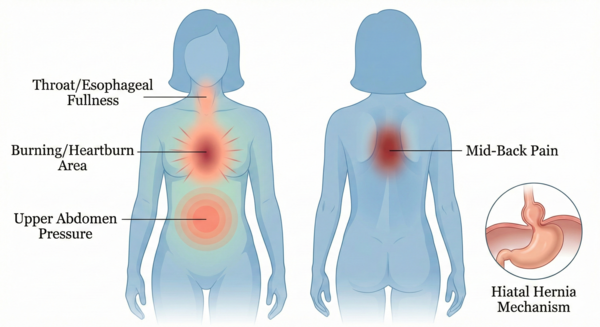
Female Hiatal Hernia Discomfort: Common Areas Affected
Discomfort from hiatal hernias shows considerable variation. When examining where women experience hiatal hernia pain, certain body regions commonly reflect the anatomical consequences of this condition. Here’s a detailed look at typical pain locations:
Chest Region Discomfort
Numerous women describe a burning feeling or uneasiness in the chest region, frequently confused with heartburn or cardiovascular problems. This pain positioning happens because gastric acid flows backward into the esophagus as a result of the hernia. The discomfort may worsen following substantial meals or when reclining.
Upper Stomach Area Pain
Discomfort in the upper abdominal region, specifically beneath the rib cage, represents another frequent symptom women experience. This uneasiness stems from pressure applied to the diaphragm and adjacent tissues as the stomach pushes upward. Women typically characterize this pain as dull, ongoing, or cramping in nature.
Mid-Back Discomfort
Though occurring less frequently, pain from a hiatal hernia can sometimes present as referred discomfort in the back. Women encountering this symptom typically describe radiating uneasiness between shoulder blades or within the middle back area, demonstrating that hernia-related discomfort isn’t exclusively limited to frontal body regions.
Esophageal and Throat Issues
Many women sense discomfort or a sensation of fullness in their throat, particularly following meals. Due to the pressure created by the hiatal hernia’s position, silent reflux causes persistent esophageal irritation.
Therefore, where do women feel hiatal hernia pain? It typically impacts regions including the chest, upper abdomen, mid-back area, and throat. Each symptom’s intensity varies based on elements like portion sizes, body position, and hernia severity. Women noticing these symptoms should seek medical consultation for precise diagnosis and customized treatment strategies.
Recognizing where hiatal hernia discomfort manifests in women makes identifying and managing symptoms more straightforward.
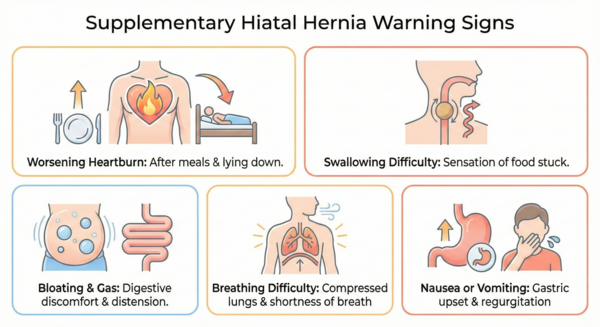
Recognizing Additional Warning Signs
Beyond the specific pain locations, women may also encounter these symptoms:
Heartburn: A burning feeling in the chest that escalates after eating or when lying horizontally.
Swallowing Difficulties (Dysphagia): A feeling that food becomes stuck in the throat or chest area, similar to symptoms of achalasia.
Bloating and Gas: Digestive uneasiness, often misidentified as routine indigestion.
Breathing Difficulties: Larger hiatal hernias may compress the lungs, resulting in respiratory challenges.
Nausea or Vomiting: Serious cases can trigger gastric upset, sometimes resembling gastroparesis symptoms.
Contributing Factors for Women’s Hiatal Hernias
Multiple elements can elevate hiatal hernia risk in women and affect where pain manifests:
Age: Women beyond 50 face higher likelihood of developing hiatal hernias because of muscle deterioration.
Pregnancy: Increased abdominal pressure during pregnancy may trigger hiatal hernia development.
Excess Weight: Additional abdominal mass creates diaphragmatic strain, pushing hiatal hernia structures upward. Incisionless weight loss procedures may help reduce this risk.
Chronic Coughing or Straining: Actions that elevate intra-abdominal pressure, including heavy lifting or continuous coughing, can contribute.
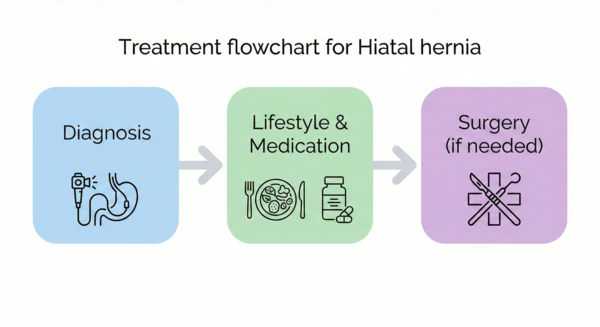
Medical Assessment and Available Treatments
Identifying the Condition
To identify a hiatal hernia’s exact location in individual patients and determine pain positioning, physicians may suggest:
Endoscopy: A camera device visualizes the esophagus and stomach interior.
Barium Swallow X-ray: Assists in detecting irregularities and confirming hiatal hernia presence.
pH Testing: Evaluates acid concentrations in the esophagus to determine reflux severity.
Managing Hiatal Hernias
Treatment for women with hiatal hernias emphasizes symptom control and addressing underlying pain sources:
Lifestyle Modifications:
- Eliminate trigger foods including caffeine, alcoholic beverages, and spicy dishes.
- Consume smaller meal quantities and refrain from lying down right after eating.
- Keep a healthy body weight to minimize abdominal pressure.
Medication Options:
- Antacids: Counteract stomach acid.
- H2 Blockers or Proton Pump Inhibitors (PPIs): Decrease acid production.
Surgical Interventions: For advanced cases, surgical hernia correction, such as fundoplication surgery, may become necessary. The LINX reflux management system offers another minimally invasive option.
Recognizing When Professional Help Is Needed
If you encounter ongoing chest discomfort, swallowing challenges, or intense heartburn, consulting a specialist becomes crucial. Understanding where hiatal hernia pain occurs helps identify potential complications early, including:
- Esophagitis (esophageal inflammation)
- Strangulation (blood supply interruption to herniated stomach tissue)
- Chronic gastroesophageal reflux disease (GERD)
Where does hiatal hernia pain appear in women? It commonly presents in the chest, upper abdomen, or back regions. Early recognition of pain locations and obtaining professional medical guidance can prevent complications. Dr. Gopal Grandhige is here to support you through every phase of your recovery process.

Seeking Specialized Treatment with Dr. Gopal Grandhige
If you’re worried about hiatal hernia symptoms or seeking clarity on pain location specifics, Dr. Gopal Grandhige provides customized care to diagnose and address this condition effectively. Choosing treatment with Dr. Grandhige ensures you receive skilled care for abdominal hernia and heartburn through advanced minimally invasive techniques.
Selecting treatment with Dr. Gopal Grandhige guarantees you receive expert attention from a highly qualified and compassionate surgeon specializing in cutting-edge TIF EsophyX procedures for hernia and gastrointestinal disorders. With comprehensive experience and a patient-focused methodology, Dr. Grandhige combines innovative techniques with individualized care to achieve superior results.
His dedication to professional excellence has established recognition as a trusted authority in his specialty, ensuring optimal care throughout your health journey. Learn more about our practice and how we address concerns about women’s hiatal hernia pain location to help women obtain relief and restore their life quality.
Don’t allow discomfort to diminish your quality of life. Schedule an appointment with Dr. Gopal Grandhige to address your pain concerns and examine your treatment possibilities. Visit our blog for more information about reflux and hernia conditions.
Conclusion
Understanding where hernia pain occurs in women is essential for early recognition and effective management of this condition. Women typically experience discomfort in the chest area, upper abdomen beneath the rib cage, and occasionally in the mid-back region between the shoulder blades. These symptoms, which can include heartburn, swallowing difficulties, and breathing challenges, often vary in intensity depending on factors such as meal size, body position, and hernia severity. While lifestyle modifications and medications can effectively manage many cases, persistent or severe symptoms warrant professional medical evaluation to prevent complications like esophagitis or chronic GERD. With proper diagnosis and treatment from the best hiatal hernia doctors in Tampa like Dr. Gopal Grandhige, women can find relief from hiatal hernia discomfort and significantly improve their quality of life. For comprehensive medical information, refer to trusted resources like the National Library of Medicine.
FAQs
What is the most common location of hiatal hernia pain in women?
Women most commonly experience hiatal hernia pain in the chest area as a burning sensation and in the upper abdomen just beneath the rib cage. Some women also report referred pain in the mid-back area between the shoulder blades.
Can a hiatal hernia be mistaken for heart problems?
Yes, the chest pain and burning sensation from a hiatal hernia are frequently confused with cardiovascular issues because of their similar location. If you experience persistent chest discomfort, it’s important to seek medical evaluation for proper diagnosis.
What lifestyle changes can help manage hiatal hernia symptoms?
Eating smaller meals, avoiding trigger foods like caffeine and spicy dishes, and maintaining a healthy weight are effective strategies. Additionally, avoid lying down immediately after eating to reduce acid reflux symptoms.
When should I consider surgery for a hiatal hernia?
Surgery becomes necessary for advanced cases where lifestyle modifications and medications fail to control symptoms, or when complications arise. Procedures like Nissen fundoplication may be recommended by your specialist for severe or paraesophageal hernias.
Are women more susceptible to hiatal hernias than men?
Women over 50 face increased risk due to muscle deterioration with age, and pregnancy-related abdominal pressure can trigger development. However, hiatal hernias affect both genders, though symptom presentation may vary between males and females.


An endoscopy cannot tell you if you have reflux. It can only tell you if you have complications of GERD.
If you are unhappy with your reflux symptoms, come in and we can discuss testing and treatments that can accurately diagnose your problem.
#reflux #gerd #hiatalhernia #gastroparesis #linx

CALL US AT 813-922-2920
www.tampareflux.com
If you have a hiatal hernia and fit one of these categories, you should know your options.
Dr. Grandhige is an expert in his field and performs 200 of these surgeries a year. He is the only surgeon in the Tampa Bay Area who offers all surgical options - LINX, Fundoplications, TIF and will be one of 20 surgeons in America introducing the latest procedure RefluxStop in 2026.
We accept most insurances but will verify yours before you come in. These procedures are considered medically necessary and covered by your insurance. You can expect to pay your in-network deductibles and nothing else.
#hiatalhernia #reflux #GERD #LINX #refluxstop
What causes reflux ?
1. Weak lower esophageal sphincter
2. Hiatal hernia
3. Flattening of the Angle of His
4. Poor esophageal motility
5. Gastroparesis (slow stomach)
NOT increased acid production
Don’t let GERD get in the way of living your life. Request your appointment with us today on the link below.
.
.
.
.
https://tampareflux.com/contact-us/
Anyone can be victim to GERD and though weight loss can help reduce GERD symptoms. Many athletes with high impact workouts may continue to have these symptoms. This may be a symptom of a hiatal hernia or other issue. We are more then happy to assist you in finding your solution, just click the link below.
.
.
.
https://tampareflux.com/contact-us/
##healthylifestyle #workout #athletereflux #PPIs #heartburn #LINX #fundoplication #TIF #GERD#tampaheartburn #linx #TIF #fundoplication #tampabayreflux #GERD #acidreflux #acidrefluxsurgery #stopreflux
#nonsurgicalweightloss #ESG #gastricballoon #weightlossjourney #vsg #vsgjourney #spatz3 #orbera #orberaballoon #grandhige #DrG
#tampabayrefluxinstitute #guthealth #roboticsurgery
Heartburn may seem like an annoyance. But if you find yourself having symptoms on a daily basis, it may be time to to talk to Dr. Grandhige as it could be a symptom of something worse.
.
.
.
#chronicheartburn #gerdsymptoms #heartburnrelief #reflux #PPIs #heartburn #LINX #fundoplication #TIF #GERD#tampaheartburn #linx #TIF #fundoplication #tampabayreflux #GERD #acidreflux #acidrefluxsurgery #stopreflux
#nonsurgicalweightloss #ESG #gastricballoon #weightlossjourney #vsg #vsgjourney #spatz3 #orbera #orberaballoon #grandhige #DrG
#tampabayrefluxinstitute #guthealth #roboticsurgery
If you are tired of avoiding your favorite foods or taking daily medications, we can help.
We are the Tampa experts in reflux ! With years of experience and thousands of patients treated successfully, we offer all FDA approved anti-reflux procedures.
Call 813-922-2920 to schedule your appointment
All major insurances accepted.
Not all patients need surgical intervention. Many patients are living a heartburn free life with their PPIs. However 40% of patients taking PPIs are not getting the relief they need. If you are one of those, you have options! Come in and find out more.
.
.
.
.
#letushelpyou #medsnotworking #reflux #PPIs #heartburn #LINX #fundoplication #TIF #GERD#tampaheartburn #linx #TIF #fundoplication #tampabayreflux #GERD #acidreflux #acidrefluxsurgery #stopreflux
#nonsurgicalweightloss #ESG #gastricballoon #weightlossjourney #vsg #vsgjourney #spatz3 #orbera #orberaballoon #grandhige #DrG
#tampabayrefluxinstitute #guthealth #roboticsurgery
#heartburn #stopreflux #hiatalherniarepair #severeheartburn #reflux #tampabayreflux #acidrefluxsurgery #tampaheartburn #GERD #PPIs #achalasia #LINX #TIF #tampareflux #fundoplication #stomach #digestivehealth #ESG #obesity #overweight #weightlossjourney #gastricballoon


