

Written By: Jeffrey Atlas, Health Content Writer
Medically Reviewed By: Dr. Gopal Grandhige, MD, FACS, Board-Certified Surgeon
Last Reviewed: February 14, 2026
A hiatal hernia occurs when part of your stomach pushes through the diaphragm into your chest cavity. For women ages 30-45, this condition is common and typically manageable without surgery. The sliding type, where the stomach and lower esophagus shift upward, affects most women in this age group and often develops due to pregnancy, weight gain, or heavy lifting.
Most common symptoms: heartburn, acid reflux, chest discomfort after meals, bloating, and difficulty swallowing. Many women experience these symptoms but don’t realize a hiatal hernia may be the cause, often mistaking it for simple GERD.
Immediate management works: Small dietary changes, eating smaller meals, avoiding lying down after eating, and elevating your head while sleeping can significantly reduce symptoms within 2-4 weeks. Most women successfully manage the condition through lifestyle modifications alone.
Understanding Hiatal Hernias
A hiatal hernia develops when a portion of your stomach protrudes upward through your diaphragm into the chest cavity. Your diaphragm serves as the muscular barrier dividing your chest and abdominal regions while supporting respiratory function. Within this muscle exists a natural gap called the hiatus, allowing your esophagus to pass through and connect with your stomach.
The condition occurs when stomach tissue bulges through this natural opening.
Two primary categories exist:
Sliding hiatal hernia (the predominant form): Both the stomach and the lower esophageal section shift upward into the chest area.
Paraesophageal hernia (occurring less frequently but presenting greater risks): Stomach tissue protrudes alongside the esophagus and may become constricted.
Women within the 30-45 age bracket typically receive diagnoses for the sliding variety.
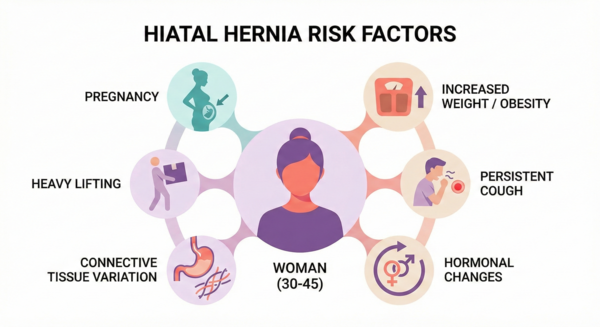
Risk Factors for Women Between 30 and 45
While hiatal hernias grow increasingly prevalent with advancing age, women in this particular age range may develop the condition because of:
- Previous or ongoing pregnancy, which elevates abdominal pressure
- Increased body weight or obesity
- Regular lifting of heavy objects
- Persistent coughing or straining episodes (constipation included)
- Variations in connective tissue structure
Hormonal fluctuations may additionally influence digestive processes and acid reflux patterns, which frequently coincide with hiatal hernia manifestations.
Why Women Ages 30-45 Are at Higher Risk
Research shows that hiatal hernia prevalence is significantly higher in women than men, with studies indicating women have nearly double the risk. For women in their 30s and 40s specifically, several factors converge to elevate risk during this life stage, particularly the cumulative effects of pregnancy-related abdominal pressure changes. The condition’s increased prevalence in women is largely attributed to elevated intraabdominal pressure during pregnancy, and many women in the 30-45 age bracket have either recently given birth or experienced multiple pregnancies. During pregnancy, the growing uterus displaces upward on the stomach and diaphragm, combined with hormonal weakening of the lower esophageal sphincter, which enhances the risk of both hernia development and reflux symptoms. Additionally, weight-related factors play a significant role, as studies show higher body mass index is associated with both hiatal hernia presence and progression over time. This age group often faces competing demands of career, family, and physical activity that may contribute to weight gain or involve frequent heavy lifting, both of which increase abdominal pressure. Understanding these risk factors empowers women in this demographic to take proactive steps in managing their digestive health before symptoms become severe.
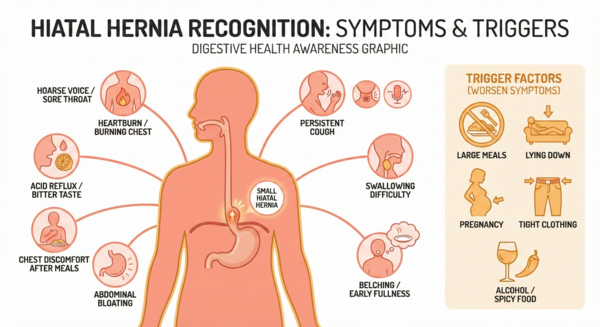
Recognizing Hiatal Hernia Symptoms
Numerous hiatal hernias produce zero noticeable symptoms. When manifestations do emerge, they typically connect to acid reflux conditions (GERD).
Frequent symptoms encompass:
- Heartburn (a burning sensation within the chest)
- Acid reflux (experiencing sour or bitter tastes)
- Chest discomfort following meals
- Abdominal bloating
- Increased belching frequency
- Premature feelings of fullness
- Swallowing difficulties
- Persistent coughing
- Voice hoarseness or throat soreness
Symptom intensity may escalate:
- Following substantial meals
- In reclined positions
- Throughout pregnancy
- With constricting garments
- After consuming alcohol or spicy cuisine
Given the symptom overlap with GERD, numerous women remain unaware that a hiatal hernia might be the underlying cause.
Identifying Serious Warning Signs
The majority of hiatal hernias pose minimal danger. Nevertheless, specific symptoms demand immediate medical evaluation.
Obtain urgent medical assistance if experiencing:
- Intense or abrupt chest pain
- Continuous vomiting episodes
- Blood in vomit
- Dark, tar-like stool appearance
- Progressive swallowing difficulties
- Respiratory distress
- Acute abdominal pain
Paraesophageal hernias occasionally restrict blood circulation to stomach portions. Though uncommon, this situation constitutes a medical emergency requiring immediate intervention.
When uncertain, consulting a physician remains the safest approach.

Diagnostic Procedures for Hiatal Hernias
Medical professionals may confirm a hiatal hernia through:
- Upper endoscopy examination
- Barium swallow radiographic study
- Esophageal manometry testing
- CT imaging (under specific circumstances)
Frequently, hiatal hernias are discovered during investigations for reflux-related symptoms.
Your Care Strategy: Actionable Steps
Following a hiatal hernia diagnosis, or if you suspect having one, these practical, research-supported strategies can provide relief.
1. Modify Your Eating Patterns
Minor adjustments can decrease stomach pressure and minimize reflux episodes.
- Consume smaller portions more frequently throughout the day
- Refrain from reclining for 2-3 hours post-meal
- Chew food slowly and completely
- Skip large evening meals close to bedtime
2. Recognize Food Triggers
Typical trigger foods include:
- Spicy cuisine
- Fried or high-fat dishes
- Chocolate products
- Coffee beverages
- Alcoholic drinks
- Carbonated beverages
- Tomato-containing foods
Complete elimination isn’t necessary immediately. Monitor your symptom patterns and make incremental modifications.
3. Achieve a Healthy Body Weight
Extra abdominal weight creates increased pressure on both stomach and diaphragm structures. Even moderate weight reduction (5-10% of total body weight) can dramatically decrease symptoms.
Steer clear of extreme dieting approaches. Gradual, consistent modifications prove safer and more maintainable. Incisionless weight loss procedures may be an option for some patients.
4. Optimize Sleep Positioning
Nighttime reflux commonly affects those with hiatal hernias.
- Raise your bed’s head section 6-8 inches
- Utilize a wedge-style pillow (avoid simply stacking regular pillows)
- Rest on your left side
These positions help prevent acid from flowing backward into the esophagus.
5. Choose Loose-Fitting Clothes
Restrictive waistbands, compression garments, or tight belts raise abdominal pressure and may intensify symptoms.
6. Address Constipation Issues
Straining elevates internal abdominal pressure.
- Gradually incorporate more fiber
- Maintain adequate hydration
- Engage in regular physical movement
7. Explore Medication Options (Under Medical Supervision)
Physicians may suggest:
- Antacids for immediate symptom relief
- H2-blocking medications
- Proton pump inhibitors (PPIs)
These pharmaceutical options decrease stomach acid production, alleviating symptoms without correcting the actual hernia.
Extended medication use requires healthcare professional oversight.
Surgical Intervention: When Is It Required?
Surgical procedures remain uncommon for sliding hiatal hernias except when:
- Symptoms prove severe and unrelenting
- Pharmaceutical treatments fail to provide relief
- Complications develop, such as significant inflammation
- A paraesophageal hernia exists
Surgical correction generally involves repositioning the stomach and reinforcing the diaphragmatic opening. Fundoplication surgery is one common approach, while LINX reflux management and TIF procedures offer less invasive alternatives. Most women won’t require this intervention according to research on hiatal hernias.

Pregnancy-Related Considerations
Pregnancy elevates abdominal pressure levels, potentially aggravating hiatal hernia symptoms.
For pregnant women:
- Prioritize smaller meal portions
- Prevent lying down immediately after eating
- Sleep in a slightly elevated position
- Consult your OB-GYN before using any medications
Symptom improvement typically occurs following childbirth as explained in medical literature on hiatus hernias.
Can Hiatal Hernias Resolve Naturally?
A hiatal hernia rarely “heals” spontaneously. However:
- Symptom severity can substantially decrease
- Lifestyle modifications can minimize flare-up frequency
- Numerous individuals maintain comfortable lives without surgical intervention
The emphasis centers on controlling symptoms and avoiding complications. For patients with related conditions like achalasia or gastroparesis, specialized treatment approaches may be necessary.
Conclusion
A hiatal hernia diagnosis between ages 30 and 45 may feel overwhelming, but understanding your condition empowers you to take control of your health. Most women in this age group experience the sliding type, which typically responds well to lifestyle modifications and doesn’t require surgical intervention. By implementing dietary adjustments, maintaining a healthy weight, optimizing sleep positions, and working closely with experienced specialists, you can effectively manage symptoms and maintain your quality of life. Remember that every woman’s experience is unique. What works for one person may need adjustment for another. Stay attuned to your body’s signals, track what triggers your symptoms, and don’t hesitate to seek medical guidance when needed. For comprehensive information on abdominal hernia and heartburn treatment, visit our specialized resources. Additional clinical information is available through MedlinePlus and peer-reviewed research. With the right care strategy tailored to your lifestyle, you can live comfortably and confidently despite having a hiatal hernia. For more information and resources, visit our blog or learn more about our practice at Tampa Reflux Center.
FAQs
Can a hiatal hernia go away on its own?
No, hiatal hernias rarely heal or disappear without intervention. However, symptoms can significantly improve with proper lifestyle changes and management strategies, allowing most women to live comfortably without surgery.
Is it safe to exercise with a hiatal hernia?
Yes, exercise is generally safe and beneficial, but avoid high-impact activities and heavy lifting that increase abdominal pressure. Low-impact exercises like walking, swimming, and gentle yoga are excellent choices that won’t aggravate symptoms.
Will I need surgery for my hiatal hernia?
Most women with sliding hiatal hernias never require surgery and manage successfully with lifestyle modifications and medications. Surgery is typically reserved for severe cases unresponsive to treatment or when complications develop.
Can I get pregnant if I have a hiatal hernia?
Yes, having a hiatal hernia doesn’t prevent pregnancy, though symptoms may worsen temporarily due to increased abdominal pressure. Most symptoms improve after childbirth, and your healthcare provider can help manage discomfort during pregnancy safely.
How long does it take for lifestyle changes to improve symptoms?
Many women notice improvement within 2-4 weeks of implementing dietary and lifestyle modifications consistently. However, individual responses vary, and it may take several months to identify your specific triggers and optimal management approach.


An endoscopy cannot tell you if you have reflux. It can only tell you if you have complications of GERD.
If you are unhappy with your reflux symptoms, come in and we can discuss testing and treatments that can accurately diagnose your problem.
#reflux #gerd #hiatalhernia #gastroparesis #linx

CALL US AT 813-922-2920
www.tampareflux.com
If you have a hiatal hernia and fit one of these categories, you should know your options.
Dr. Grandhige is an expert in his field and performs 200 of these surgeries a year. He is the only surgeon in the Tampa Bay Area who offers all surgical options - LINX, Fundoplications, TIF and will be one of 20 surgeons in America introducing the latest procedure RefluxStop in 2026.
We accept most insurances but will verify yours before you come in. These procedures are considered medically necessary and covered by your insurance. You can expect to pay your in-network deductibles and nothing else.
#hiatalhernia #reflux #GERD #LINX #refluxstop
What causes reflux ?
1. Weak lower esophageal sphincter
2. Hiatal hernia
3. Flattening of the Angle of His
4. Poor esophageal motility
5. Gastroparesis (slow stomach)
NOT increased acid production
Don’t let GERD get in the way of living your life. Request your appointment with us today on the link below.
.
.
.
.
https://tampareflux.com/contact-us/
Anyone can be victim to GERD and though weight loss can help reduce GERD symptoms. Many athletes with high impact workouts may continue to have these symptoms. This may be a symptom of a hiatal hernia or other issue. We are more then happy to assist you in finding your solution, just click the link below.
.
.
.
https://tampareflux.com/contact-us/
##healthylifestyle #workout #athletereflux #PPIs #heartburn #LINX #fundoplication #TIF #GERD#tampaheartburn #linx #TIF #fundoplication #tampabayreflux #GERD #acidreflux #acidrefluxsurgery #stopreflux
#nonsurgicalweightloss #ESG #gastricballoon #weightlossjourney #vsg #vsgjourney #spatz3 #orbera #orberaballoon #grandhige #DrG
#tampabayrefluxinstitute #guthealth #roboticsurgery
Heartburn may seem like an annoyance. But if you find yourself having symptoms on a daily basis, it may be time to to talk to Dr. Grandhige as it could be a symptom of something worse.
.
.
.
#chronicheartburn #gerdsymptoms #heartburnrelief #reflux #PPIs #heartburn #LINX #fundoplication #TIF #GERD#tampaheartburn #linx #TIF #fundoplication #tampabayreflux #GERD #acidreflux #acidrefluxsurgery #stopreflux
#nonsurgicalweightloss #ESG #gastricballoon #weightlossjourney #vsg #vsgjourney #spatz3 #orbera #orberaballoon #grandhige #DrG
#tampabayrefluxinstitute #guthealth #roboticsurgery
If you are tired of avoiding your favorite foods or taking daily medications, we can help.
We are the Tampa experts in reflux ! With years of experience and thousands of patients treated successfully, we offer all FDA approved anti-reflux procedures.
Call 813-922-2920 to schedule your appointment
All major insurances accepted.
Not all patients need surgical intervention. Many patients are living a heartburn free life with their PPIs. However 40% of patients taking PPIs are not getting the relief they need. If you are one of those, you have options! Come in and find out more.
.
.
.
.
#letushelpyou #medsnotworking #reflux #PPIs #heartburn #LINX #fundoplication #TIF #GERD#tampaheartburn #linx #TIF #fundoplication #tampabayreflux #GERD #acidreflux #acidrefluxsurgery #stopreflux
#nonsurgicalweightloss #ESG #gastricballoon #weightlossjourney #vsg #vsgjourney #spatz3 #orbera #orberaballoon #grandhige #DrG
#tampabayrefluxinstitute #guthealth #roboticsurgery
#heartburn #stopreflux #hiatalherniarepair #severeheartburn #reflux #tampabayreflux #acidrefluxsurgery #tampaheartburn #GERD #PPIs #achalasia #LINX #TIF #tampareflux #fundoplication #stomach #digestivehealth #ESG #obesity #overweight #weightlossjourney #gastricballoon


