

Written By: Jeffrey Atlas, Health Content Writer
Medically Reviewed By: Dr. Gopal Grandhige, MD, FACS, Board-Certified Surgeon
Last Reviewed: February 9, 2026
Heartburn and acid reflux are not the same thing, acid reflux is the medical condition, while heartburn is a symptom of that condition. Acid reflux (gastroesophageal reflux) occurs when stomach acid flows backward into the esophagus due to a malfunctioning lower esophageal sphincter (LES). This backflow can cause heartburn, which is a burning sensation in the chest behind the breastbone, but not everyone with acid reflux experiences heartburn.
Key distinctions:
- Acid reflux = the condition where stomach acid travels upward into the esophagus
- Heartburn = the burning chest sensation that results from this acid movement
- Acid reflux can cause other symptoms besides heartburn, including regurgitation (sour taste), difficulty swallowing, chronic cough, and throat irritation
- Frequent acid reflux (twice weekly or more) may indicate GERD (gastroesophageal reflux disease), requiring medical management
Common causes and triggers include large meals, lying down after eating, excess weight, trigger foods (citrus, chocolate, spicy/fatty foods, caffeine), alcohol, smoking, and certain medications. Relief strategies involve lifestyle modifications (eating smaller meals, avoiding trigger foods, waiting 3+ hours after eating before lying down, maintaining healthy weight) and over-the-counter medications (antacids, H2 blockers, proton pump inhibitors). Seek medical attention if you experience severe chest pain, difficulty swallowing, persistent symptoms despite treatment, or unexplained weight loss.
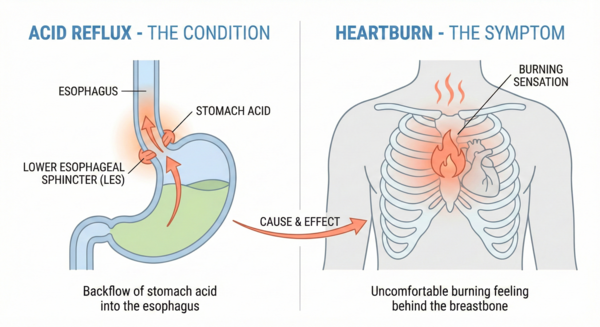
Decoding Acid Reflux and Heartburn
People frequently swap these terms as if they mean the same thing. But they’re actually distinct. Acid reflux represents a medical diagnosis. It develops when gastric acid travels upward into your esophagus. This triggers various symptoms, with heartburn being one of them.
Conversely, heartburn functions as a symptom rather than a standalone condition. It manifests as a burning feeling within your chest area. According to the Mayo Clinic, acid reflux most commonly causes this uncomfortable sensation.
Let’s examine each term individually for better clarity:
Defining Acid Reflux
Gastroesophageal reflux, commonly called acid reflux, qualifies as a digestive system disorder. It develops when your lower esophageal sphincter (LES) malfunctions.
Your LES acts as a muscular ring positioned at your stomach’s entrance. When this sphincter fails to seal completely, or opens excessively, gastric acid can travel upward into your esophagus. Symptoms like heartburn result from this process.
Defining Heartburn
Heartburn emerges as one symptom of acid reflux. It creates a burning feeling in your chest region, specifically behind your breastbone.
This uncomfortable feeling typically appears following meals and might persist anywhere from minutes to hours. The name is misleading, heartburn doesn’t involve your heart whatsoever.
Distinguishing Acid Reflux from Heartburn
Grasping how acid reflux differs from heartburn proves essential. Review these fundamental distinctions:
- Acid reflux qualifies as a medical condition, whereas heartburn serves as a symptom of that condition
- Acid reflux describes the upward flow of gastric acid into your esophagus
- Heartburn represents the burning chest sensation resulting from this acid movement
- Acid reflux doesn’t always produce heartburn. Additional symptoms might include bringing up food, swallowing difficulties, or persistent coughing
- Regular acid reflux episodes can result in a gastroesophageal reflux disease diagnosis
Comprehending these distinctions enables you to better control your symptoms and pursue proper treatment.

Warning Signs and Root Causes of Acid Reflux
Identifying acid reflux symptoms marks your first move toward controlling the condition. Understanding typical causes and triggers holds equal importance.
This awareness empowers you to implement lifestyle adjustments that reduce symptoms and enhance your daily life.
Identifying Acid Reflux Symptoms
Acid reflux symptoms differ among individuals. Watch for these typical indicators:
- Heartburn: burning chest sensation, frequently occurring post-meal
- Regurgitation: acidic, bitter taste rising into your throat or mouth
- Dysphagia: feeling like food gets stuck in your throat
- Persistent hiccups
- Nausea
- Unexplained weight reduction
- Wheezing, dry coughing, voice hoarseness, or ongoing throat soreness
Keep in mind that heartburn doesn’t affect everyone with acid reflux. Some individuals might encounter different symptoms such as chronic coughing or swallowing problems. If you experience throat-related symptoms without typical heartburn, you may have silent reflux (LPR).
Typical Causes and Triggers
Multiple factors contribute to acid reflux development. Consider these frequent causes and triggers:
- Consuming large portions or reclining immediately after eating
- Carrying excess body weight or obesity
- Eating heavily, then bending forward, lifting heavy objects, or lying flat
- Eating snacks near bedtime
- Consuming particular foods like citrus fruits, tomatoes, chocolate, mint, garlic, onions, or spicy and fatty items
- Drinking specific beverages including alcohol, carbonated drinks, coffee, or tea
- Smoking tobacco
- Pregnancy
- Using certain medicines such as aspirin, ibuprofen, specific muscle relaxants, or blood pressure drugs
Cleveland Clinic experts note that identifying your personal triggers allows you to make targeted modifications to your eating habits and lifestyle for symptom control. In some cases, anatomical issues like hiatal hernias can also contribute to persistent reflux symptoms. For those dealing with abdominal hernia and heartburn, specialized treatment may be necessary.

Managing and Treating Acid Reflux
Controlling acid reflux and heartburn typically requires multiple treatment approaches. Options include lifestyle modifications, non-prescription medications, and occasionally, prescribed medicines or surgical procedures.
Treatment aims to reduce symptoms, repair esophageal damage, and stop further complications.
Lifestyle Modifications for Symptom Relief
Adjusting your lifestyle can dramatically reduce acid reflux frequency and intensity. Try these effective approaches:
- Keep your weight healthy: Extra pounds create abdominal pressure, forcing your stomach upward and causing acid backup into your esophagus. For those struggling with weight management, incisionless weight loss procedures may offer a solution.
- Choose loose-fitting clothing: Tight waistbands also create abdominal and lower esophageal sphincter pressure
- Eliminate reflux-triggering foods and beverages: Common culprits include fried or fatty foods, tomato-based sauces, alcoholic drinks, chocolate, mint, garlic, onion, and caffeinated items
- Reduce portion sizes: Large meals increase stomach pressure and encourage reflux
- Stay upright after eating: Allow at least three hours between your last meal and lying down or sleeping
Johns Hopkins Medicine emphasizes that adopting these modifications can decrease how often and how severely acid reflux occurs.
Non-Prescription Medication Options
Over-the-counter drugs offer temporary relief for occasional acid reflux. Your options include antacids, H2 receptor blockers, and proton pump inhibitors (PPIs).
- Antacids (like Tums or Mylanta) neutralize gastric acid for quick relief
- H2 blockers (such as Pepcid AC or Zantac) reduce acid production
- PPIs (like Prilosec OTC) stop acid production and promote esophageal healing
Always follow medication instructions carefully and avoid using them beyond two weeks without medical consultation. For chronic symptoms requiring long-term management, specialized procedures like fundoplication surgery or the LINX Reflux Management System may be recommended by your physician.
Preventing Acid Reflux and Heartburn
Preventing these conditions typically involves recognizing and steering clear of your individual triggers. This requires dietary adjustments, lifestyle changes, and stress reduction methods.
Beyond treatment, prevention tactics help manage symptoms and decrease acid reflux frequency.
Nutritional Guidelines and Eating Patterns
Your diet significantly impacts acid reflux and heartburn control. Apply these practical tips:
- Eat smaller portions more often: Overfilling your stomach raises pressure and triggers acid reflux
- Cut out trigger foods: Frequent offenders include spicy dishes, citrus items, chocolate, caffeine, and greasy or fried foods
- Skip late-night eating: Lying down with food in your stomach encourages acid reflux
The American College of Gastroenterology recommends implementing these dietary changes to help prevent acid reflux and heartburn episodes.
Stress Reduction and Proper Posture
Stress intensifies acid reflux and heartburn symptoms. Practice techniques like controlled breathing, meditation, and yoga to keep stress under control.
Maintaining good posture also prevents acid reflux. Don’t slouch, and keep yourself upright, particularly after meals. This positioning helps stop stomach acid from backing up into your esophagus.

Taking Control of Acid Reflux and Heartburn
Understanding what separates acid reflux from heartburn is vital for proper management and treatment. Keep this in mind: heartburn is a symptom, acid reflux is the condition itself.
Harvard Health emphasizes that using appropriate knowledge, lifestyle changes, and medical care, you can effectively manage these conditions. Always get personalized guidance from a healthcare professional.
When You Need Urgent Medical Care
Occasional acid reflux happens commonly, but frequent episodes might signal something more serious. Get immediate medical help if you experience intense chest pain, particularly when combined with breathing difficulty or pain in your jaw or arm.
Additionally, if symptoms continue despite lifestyle changes and over-the-counter remedies, schedule an appointment with a healthcare provider. They’ll provide an accurate diagnosis and review alternative treatment approaches with you. WebMD and the NHS both provide comprehensive guidance on when to seek medical attention.
Need expert care for persistent acid reflux or GERD? Contact Tampa Bay Reflux Center for specialized evaluation and treatment. Our experienced team focuses exclusively on reflux conditions, providing comprehensive diagnostic services and advanced treatment options tailored to your specific needs, including minimally invasive procedures like TIF EsophyX. We also offer solutions for related conditions such as achalasia and gastroparesis. If you’re looking for the best hiatal hernia doctors in Tampa, FL, don’t let chronic symptoms impact your quality of life, visit our center today to schedule a consultation and explore effective solutions for lasting relief.
Conclusion
Understanding the distinction between acid reflux and heartburn empowers you to take control of your digestive health. While acid reflux is the underlying condition where stomach acid flows back into the esophagus, heartburn is simply one of its most common symptoms, that burning sensation in your chest. By recognizing your personal triggers, implementing lifestyle modifications, and utilizing appropriate treatments, you can significantly reduce the frequency and severity of symptoms.
Remember that occasional discomfort is normal, but persistent or severe symptoms warrant professional medical attention. According to the American Gastroenterological Association, don’t hesitate to consult a healthcare provider if over-the-counter remedies and lifestyle changes aren’t providing adequate relief, or if you experience warning signs like difficulty swallowing, unexplained weight loss, or chest pain. MedlinePlus also offers valuable resources for understanding these conditions. With the right approach and guidance, you can manage these conditions effectively and maintain a better quality of life. For more information and expert insights, visit our blog.
FAQs
Can I have acid reflux without experiencing heartburn?
Yes, acid reflux can occur without heartburn. Some people experience symptoms like chronic cough, regurgitation, difficulty swallowing, or throat irritation instead of the typical burning chest sensation.
How long should I wait after eating before lying down?
You should wait at least three hours after eating before lying down or going to bed. This allows your stomach time to empty and reduces the likelihood of acid flowing back into your esophagus.
Are antacids safe to use every day?
Antacids are generally safe for occasional use, but you shouldn’t rely on them for more than two weeks without consulting a doctor. Frequent need for antacids may indicate a more serious condition like GERD that requires medical evaluation.
What’s the difference between acid reflux and GERD?
GERD (gastroesophageal reflux disease) is chronic acid reflux that occurs frequently, typically twice a week or more. While occasional acid reflux is common, GERD is a more serious condition requiring medical management and monitoring.
Can stress actually cause acid reflux?
Stress doesn’t directly cause acid reflux, but it can worsen symptoms and trigger episodes. Managing stress through relaxation techniques, exercise, and proper sleep can help reduce the frequency and severity of reflux symptoms.


An endoscopy cannot tell you if you have reflux. It can only tell you if you have complications of GERD.
If you are unhappy with your reflux symptoms, come in and we can discuss testing and treatments that can accurately diagnose your problem.
#reflux #gerd #hiatalhernia #gastroparesis #linx

CALL US AT 813-922-2920
www.tampareflux.com
If you have a hiatal hernia and fit one of these categories, you should know your options.
Dr. Grandhige is an expert in his field and performs 200 of these surgeries a year. He is the only surgeon in the Tampa Bay Area who offers all surgical options - LINX, Fundoplications, TIF and will be one of 20 surgeons in America introducing the latest procedure RefluxStop in 2026.
We accept most insurances but will verify yours before you come in. These procedures are considered medically necessary and covered by your insurance. You can expect to pay your in-network deductibles and nothing else.
#hiatalhernia #reflux #GERD #LINX #refluxstop
What causes reflux ?
1. Weak lower esophageal sphincter
2. Hiatal hernia
3. Flattening of the Angle of His
4. Poor esophageal motility
5. Gastroparesis (slow stomach)
NOT increased acid production
Don’t let GERD get in the way of living your life. Request your appointment with us today on the link below.
.
.
.
.
https://tampareflux.com/contact-us/
Anyone can be victim to GERD and though weight loss can help reduce GERD symptoms. Many athletes with high impact workouts may continue to have these symptoms. This may be a symptom of a hiatal hernia or other issue. We are more then happy to assist you in finding your solution, just click the link below.
.
.
.
https://tampareflux.com/contact-us/
##healthylifestyle #workout #athletereflux #PPIs #heartburn #LINX #fundoplication #TIF #GERD#tampaheartburn #linx #TIF #fundoplication #tampabayreflux #GERD #acidreflux #acidrefluxsurgery #stopreflux
#nonsurgicalweightloss #ESG #gastricballoon #weightlossjourney #vsg #vsgjourney #spatz3 #orbera #orberaballoon #grandhige #DrG
#tampabayrefluxinstitute #guthealth #roboticsurgery
Heartburn may seem like an annoyance. But if you find yourself having symptoms on a daily basis, it may be time to to talk to Dr. Grandhige as it could be a symptom of something worse.
.
.
.
#chronicheartburn #gerdsymptoms #heartburnrelief #reflux #PPIs #heartburn #LINX #fundoplication #TIF #GERD#tampaheartburn #linx #TIF #fundoplication #tampabayreflux #GERD #acidreflux #acidrefluxsurgery #stopreflux
#nonsurgicalweightloss #ESG #gastricballoon #weightlossjourney #vsg #vsgjourney #spatz3 #orbera #orberaballoon #grandhige #DrG
#tampabayrefluxinstitute #guthealth #roboticsurgery
If you are tired of avoiding your favorite foods or taking daily medications, we can help.
We are the Tampa experts in reflux ! With years of experience and thousands of patients treated successfully, we offer all FDA approved anti-reflux procedures.
Call 813-922-2920 to schedule your appointment
All major insurances accepted.
Not all patients need surgical intervention. Many patients are living a heartburn free life with their PPIs. However 40% of patients taking PPIs are not getting the relief they need. If you are one of those, you have options! Come in and find out more.
.
.
.
.
#letushelpyou #medsnotworking #reflux #PPIs #heartburn #LINX #fundoplication #TIF #GERD#tampaheartburn #linx #TIF #fundoplication #tampabayreflux #GERD #acidreflux #acidrefluxsurgery #stopreflux
#nonsurgicalweightloss #ESG #gastricballoon #weightlossjourney #vsg #vsgjourney #spatz3 #orbera #orberaballoon #grandhige #DrG
#tampabayrefluxinstitute #guthealth #roboticsurgery
#heartburn #stopreflux #hiatalherniarepair #severeheartburn #reflux #tampabayreflux #acidrefluxsurgery #tampaheartburn #GERD #PPIs #achalasia #LINX #TIF #tampareflux #fundoplication #stomach #digestivehealth #ESG #obesity #overweight #weightlossjourney #gastricballoon


