

Written By: Dr. Ahmad Saad, Health Content Writer
Medically Reviewed By: Dr. Gopal Grandhige, MD, FACS, Board-Certified Surgeon
Last Reviewed: January 28, 2026
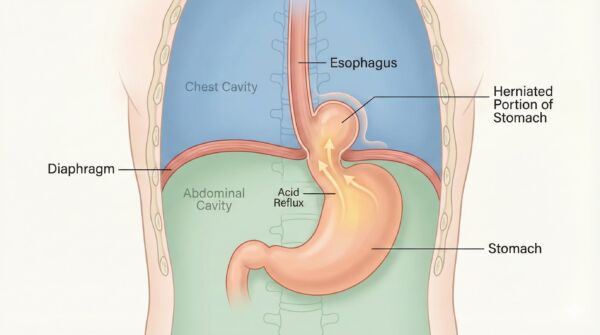
A hiatal hernia occurs when the upper stomach pushes through the diaphragm into the chest cavity through an opening called the hiatus. Small hernias typically cause no symptoms, while larger ones cause heartburn, acid reflux, chest pain, difficulty swallowing, nausea, and abdominal discomfort.
Common symptoms include:
- Heartburn and acid reflux (most common)
- Chest or abdominal pain
- Difficulty swallowing
- Persistent nausea and vomiting
When surgery is needed: Surgery becomes necessary when lifestyle changes and medications fail to control symptoms, or when complications like severe reflux, bleeding, or bowel strangulation occur.
Surgical risks to know: The most serious complication is accidental perforation of the stomach or bowel during surgery, which can cause infection and sepsis. Post-surgical warning signs include severe abdominal pain, fever, persistent vomiting, and inability to pass gas.
Hiatal hernias are frequently misdiagnosed because symptoms mimic heart conditions and other digestive disorders. Women, elderly patients, and overweight individuals face higher risk.
What Defines a Hiatal Hernia?
A hiatal hernia develops when your stomach’s upper portion pushes through the diaphragm, the large muscle creating a barrier between your chest and abdomen. Your esophagus passes through a small diaphragmatic opening called the hiatus before reaching your stomach. When a hiatal hernia occurs, stomach tissue forces its way up through this opening into your chest cavity.
Small hiatal hernias typically present no symptoms and often remain undetected until discovered during examinations for unrelated medical conditions. Conversely, larger hiatal hernias can cause stomach acid and food to flow backward into your esophagus, triggering heartburn and gastroesophageal reflux disease. Most cases respond well to lifestyle modifications or medications, though severe cases may require surgical intervention.
The Challenge of Hernia Recognition
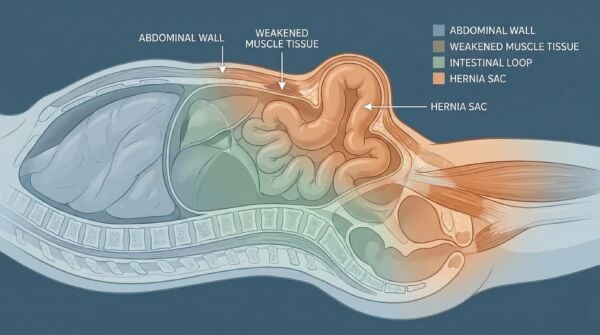
Despite widespread awareness of hernias, detailed understanding remains limited among the general population. These conditions often escape detection for extended periods, sometimes months or years, leaving patients unaware of their condition. Hernias occur when tissue or muscle weakens, creating gaps that allow organs to protrude. Most commonly, intestinal tissue pushes through the abdominal wall. While hernias predominantly affect the torso region between the chest and hips, they can also manifest in the groin area or upper thigh region.
Most hernias don’t pose immediate life-threatening risks, yet certain types demand surgical correction to prevent severe complications. According to Cleveland Clinic, some hernia classifications carry higher complication risks than others.
Medical Professional Responsibilities
Despite variations in hernia types and patient presentations, healthcare providers bear consistent obligations: conducting comprehensive patient examinations, ordering appropriate diagnostic tests, accurately interpreting results, providing timely diagnoses, and implementing proper preventive measures against potential complications. Additionally, surgeons must execute hernia repair procedures with precision, avoiding surgical mistakes and careless practices that lead to complications.
Healthcare teams must deliver detailed postoperative care instructions and ensure patients understand all procedure risks before obtaining informed consent. Neglecting any critical step in this process may constitute medical negligence, providing injured patients legal grounds to pursue compensation. Consulting an experienced malpractice attorney helps address hernia-related negligence concerns and protects your legal rights.
Hiatal Hernia Characteristics and Symptoms
Hernias fall into multiple categories determined by location and affected body structures. Hiatal hernias involve stomach tissue protruding into the chest cavity, occurring more frequently in elderly populations. The stomach portions cross through the diaphragm, the muscle controlling respiration and separating chest contents from abdominal organs. This hernia type commonly triggers gastroesophageal reflux, where stomach acids flow backward into the throat and mouth, creating the burning sensation known as heartburn.
Women and individuals carrying excess weight face elevated hiatal hernia risks. Many affected individuals remain symptom-free and unaware of their condition. Johns Hopkins Medicine notes that gastric reflux often serves as the initial indicator of hiatal hernia presence. Medical attention becomes essential when symptoms escalate to severe chest or abdominal pain, persistent nausea and vomiting, or bowel dysfunction including constipation or gas retention.
The Importance of Accurate Diagnostic Testing
Many patients suffering from hiatal hernia symptoms endure months of discomfort before receiving a proper diagnosis. The diagnostic process typically involves several specialized tests to confirm the presence and severity of a hiatal hernia. An upper endoscopy allows physicians to directly visualize the esophagus and stomach, identifying any herniated tissue and assessing damage from acid reflux. Barium swallow X-rays provide detailed images of the digestive tract, revealing abnormal positioning of stomach tissue above the diaphragm. Esophageal manometry measures the strength and coordination of esophageal muscles, helping determine if swallowing difficulties stem from the hernia. pH monitoring tests track acid levels in the esophagus over 24 hours, confirming the presence and severity of reflux. Given that hiatal hernias frequently masquerade as cardiac issues or other digestive disorders, obtaining the right combination of diagnostic tests is crucial. Patients experiencing persistent heartburn, chest pain, or difficulty swallowing should advocate for comprehensive testing rather than accepting symptom management alone. Early and accurate diagnosis enables timely intervention, preventing the progression to severe complications that might necessitate surgical correction.

Surgical Complications and Perforation Risks
Accidental perforations represent the second significant surgical risk factor. During hiatal hernia repair, surgeons must manually reposition any stomach or bowel sections that have migrated through the hiatus above the diaphragm. This repositioning process carries inherent risks of stomach or bowel injury or tearing.
Full-thickness tears should be visible to surgeons during procedures, allowing immediate repair before completing the operation. Partial-thickness tears often evade detection before surgical closure. These partial tears frequently deteriorate into full-thickness perforations following surgery. Full-thickness tears allow stomach or bowel contents to leak into the abdominal cavity, triggering infections that can escalate to sepsis without prompt diagnosis and treatment. The National Institute of Diabetes and Digestive and Kidney Diseases emphasizes that sepsis represents a life-threatening inflammatory response stemming from uncontrolled infection.
Post-Surgical Vigilance Requirements
Patients recovering from hiatal hernia repair surgery must monitor for infection indicators and immediately report concerns to their surgeon. Surgeons sometimes dismiss these reports inadequately, leading to detrimental patient outcomes.
Perforated stomach or bowel requires immediate diagnosis and aggressive treatment. Treatment protocols include emergency return to surgery for perforation repair, combined with intensive fluid resuscitation and antibiotic administration to combat sepsis and infection. Harvard Health recommends vigilant monitoring during the recovery period.

Seeking Expert Medical Care
Patients who have experienced complications following hiatal hernia surgery should seek specialized medical attention. Cases involving surgical errors and inadequate post-operative care require expertise from physicians who understand complex hernia conditions and their treatments.
At Tampa Bay Reflux Institute, our experienced medical professionals specialize in diagnosing and treating hiatal hernias and related gastrointestinal conditions. We provide comprehensive evaluations, advanced treatment options including the LINX Reflux Management System and TIF EsophyX procedures, and personalized care plans to address your specific needs. If you’ve suffered complications from previous hiatal hernia treatment or are experiencing symptoms of a hiatal hernia, our team can help you explore appropriate medical solutions.
We also specialize in treating related conditions such as silent reflux (LPR), achalasia, and gastroparesis. For patients seeking comprehensive digestive health solutions, we offer incisionless weight loss procedures and abdominal hernia heartburn treatment options.
Contact Tampa Bay Reflux Institute today at 813.922.2920 to schedule a consultation and discuss your treatment options. Our specialists are dedicated to helping patients achieve relief from reflux and hernia-related conditions through expert care and proven treatment approaches. For more information, visit our educational blog or explore resources from WebMD, the NHS, Healthline, MedlinePlus, and the National Center for Biotechnology Information.
Conclusion
Hiatal hernias require prompt diagnosis and appropriate medical intervention to prevent serious complications. Whether you’re experiencing symptoms for the first time or dealing with complications from previous treatment, seeking specialized care ensures you receive accurate diagnosis and effective treatment options. Early detection and proper management can significantly improve your quality of life and prevent the progression of gastroesophageal reflux and related conditions. Don’t ignore persistent heartburn, chest pain, or digestive issues. These symptoms warrant professional evaluation. Tampa Bay Reflux Institute stands ready to provide the expert care you need to address hiatal hernias and restore your digestive health.
FAQs
What are the main symptoms of a hiatal hernia?
The most common symptom is heartburn caused by acid reflux, though small hernias may produce no symptoms at all. Larger hernias can cause chest pain, difficulty swallowing, nausea, and abdominal discomfort.
Can a hiatal hernia be misdiagnosed?
Yes, hiatal hernias are frequently misdiagnosed because their symptoms mimic other conditions like heart problems or general digestive issues. Many cases go undetected for months or years until proper diagnostic imaging is performed.
When does a hiatal hernia require surgery?
Surgery becomes necessary when medications and lifestyle changes fail to control symptoms, or when complications like severe reflux, bleeding, or strangulation occur. Your physician will evaluate the hernia’s size and your symptom severity to determine if surgery is appropriate.
What complications can arise from hiatal hernia surgery?
The most serious complication is accidental perforation of the stomach or bowel during surgery, which can lead to infection and sepsis. Post-surgical complications may also include bleeding, difficulty swallowing, or hernia recurrence.
How can I tell if I have a surgical complication after hiatal hernia repair?
Watch for severe abdominal pain, fever, persistent nausea and vomiting, inability to pass gas or have bowel movements, or signs of infection. Contact your surgeon immediately if you experience any of these symptoms following surgery.


An endoscopy cannot tell you if you have reflux. It can only tell you if you have complications of GERD.
If you are unhappy with your reflux symptoms, come in and we can discuss testing and treatments that can accurately diagnose your problem.
#reflux #gerd #hiatalhernia #gastroparesis #linx

CALL US AT 813-922-2920
www.tampareflux.com
If you have a hiatal hernia and fit one of these categories, you should know your options.
Dr. Grandhige is an expert in his field and performs 200 of these surgeries a year. He is the only surgeon in the Tampa Bay Area who offers all surgical options - LINX, Fundoplications, TIF and will be one of 20 surgeons in America introducing the latest procedure RefluxStop in 2026.
We accept most insurances but will verify yours before you come in. These procedures are considered medically necessary and covered by your insurance. You can expect to pay your in-network deductibles and nothing else.
#hiatalhernia #reflux #GERD #LINX #refluxstop
What causes reflux ?
1. Weak lower esophageal sphincter
2. Hiatal hernia
3. Flattening of the Angle of His
4. Poor esophageal motility
5. Gastroparesis (slow stomach)
NOT increased acid production
Don’t let GERD get in the way of living your life. Request your appointment with us today on the link below.
.
.
.
.
https://tampareflux.com/contact-us/
Anyone can be victim to GERD and though weight loss can help reduce GERD symptoms. Many athletes with high impact workouts may continue to have these symptoms. This may be a symptom of a hiatal hernia or other issue. We are more then happy to assist you in finding your solution, just click the link below.
.
.
.
https://tampareflux.com/contact-us/
##healthylifestyle #workout #athletereflux #PPIs #heartburn #LINX #fundoplication #TIF #GERD#tampaheartburn #linx #TIF #fundoplication #tampabayreflux #GERD #acidreflux #acidrefluxsurgery #stopreflux
#nonsurgicalweightloss #ESG #gastricballoon #weightlossjourney #vsg #vsgjourney #spatz3 #orbera #orberaballoon #grandhige #DrG
#tampabayrefluxinstitute #guthealth #roboticsurgery
Heartburn may seem like an annoyance. But if you find yourself having symptoms on a daily basis, it may be time to to talk to Dr. Grandhige as it could be a symptom of something worse.
.
.
.
#chronicheartburn #gerdsymptoms #heartburnrelief #reflux #PPIs #heartburn #LINX #fundoplication #TIF #GERD#tampaheartburn #linx #TIF #fundoplication #tampabayreflux #GERD #acidreflux #acidrefluxsurgery #stopreflux
#nonsurgicalweightloss #ESG #gastricballoon #weightlossjourney #vsg #vsgjourney #spatz3 #orbera #orberaballoon #grandhige #DrG
#tampabayrefluxinstitute #guthealth #roboticsurgery
If you are tired of avoiding your favorite foods or taking daily medications, we can help.
We are the Tampa experts in reflux ! With years of experience and thousands of patients treated successfully, we offer all FDA approved anti-reflux procedures.
Call 813-922-2920 to schedule your appointment
All major insurances accepted.
Not all patients need surgical intervention. Many patients are living a heartburn free life with their PPIs. However 40% of patients taking PPIs are not getting the relief they need. If you are one of those, you have options! Come in and find out more.
.
.
.
.
#letushelpyou #medsnotworking #reflux #PPIs #heartburn #LINX #fundoplication #TIF #GERD#tampaheartburn #linx #TIF #fundoplication #tampabayreflux #GERD #acidreflux #acidrefluxsurgery #stopreflux
#nonsurgicalweightloss #ESG #gastricballoon #weightlossjourney #vsg #vsgjourney #spatz3 #orbera #orberaballoon #grandhige #DrG
#tampabayrefluxinstitute #guthealth #roboticsurgery
#heartburn #stopreflux #hiatalherniarepair #severeheartburn #reflux #tampabayreflux #acidrefluxsurgery #tampaheartburn #GERD #PPIs #achalasia #LINX #TIF #tampareflux #fundoplication #stomach #digestivehealth #ESG #obesity #overweight #weightlossjourney #gastricballoon


